Behavior
What are quick tips for Beagle legg-calvé-perthes disease?
Ensure your Beagle maintains a healthy weight and avoids excessive jumping or running. Regular vet check-ups can also help detect issues early.

Quick answer
What are quick tips for Beagle legg-calvé-perthes disease?
Ensure your Beagle maintains a healthy weight and avoids excessive jumping or running. Regular vet check-ups can also help detect issues early.
Beagle Legg-Calvé-Perthes disease can cause significant pain and mobility issues in your dog. Understanding this condition is essential for their well-being.
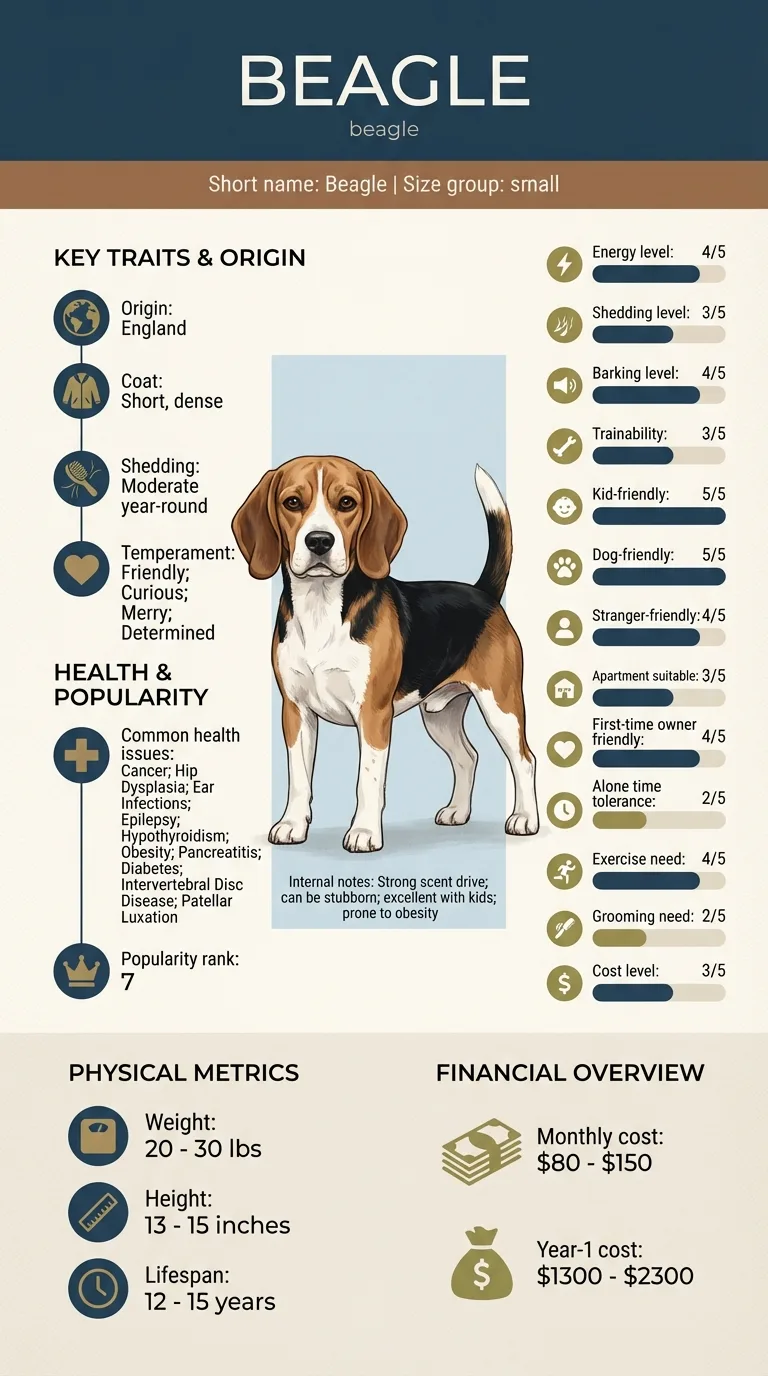
Owners of Beagles, especially those who notice their dogs limping or showing reluctance to play, often struggle with this problem. First-time dog owners might find it particularly challenging to identify and address the signs of this disease.
This guide is not medical advice. If your dog shows pain, sudden behavior change, or worsening symptoms, consult a licensed veterinarian.
Some links may be affiliate links. We may earn a commission at no extra cost to you. We only suggest products we believe are helpful for dog owners.
We research and check what we publish, but we do not warrant that any figure, date, price, or statement is accurate, complete, or current, and we accept no liability for any loss, cost, injury, or other harm arising from the use of this site. Use it as one reference among several. You remain responsible for your own decisions and for your dog's care - confirm anything that matters with a licensed veterinarian or another qualified professional before you act on it. Full disclaimer.
Check this first
Recognizing when Beagle legg-calvé-perthes disease becomes an emergency is crucial for your dog's health. If you notice severe symptoms, it’s time to call your vet right away. These red-flag signs include sudden inability to bear weight on the affected leg, extreme pain when touched, or noticeable swelling around the hip joint.
In addition, if your Beagle shows signs of lethargy, refuses to eat, or has a fever, these could indicate a serious issue that requires immediate attention. On the other hand, if your dog is limping mildly or showing slight discomfort but is still eating and engaging in regular activities, these cases can often be monitored at home.
Develop a plan with your vet for managing mild cases, which may include controlled exercise and pain management. Keep a close eye on your Beagle's behavior and report any changes promptly.
If any of these apply, call your vet or an emergency clinic now. The rest of this page is for the cases that are not an emergency.
Beagle legg-calvé-perthes disease is a condition where the hip bone undergoes necrosis, leading to pain and mobility issues. Daily life for affected Beagles may involve limping, reluctance to exercise, and difficulty in standing up after resting. These symptoms can be distressing for both the dog and the owner, as they impact the Beagle's ability to enjoy walks or playtime.
Legg-Calvé-Perthes disease is relatively common in small dog breeds, including Beagles. Studies suggest that about 1 in 1,000 Beagles may be affected, making it a noteworthy concern for potential and current owners.
Beagles can be predisposed to Legg-Calvé-Perthes disease due to their genetic makeup. This condition involves the degeneration of the hip bone, which can be more common in certain small breeds like Beagles. Other factors such as obesity can exacerbate the risk, making it crucial to monitor their weight.
Environmental factors also play a significant role. A lack of exercise can lead to obesity and muscle weakness, putting extra strain on the hips. Additionally, rough play or injuries can contribute to the development of this disease in Beagles.
If you notice ongoing limping, reluctance to play, or signs of pain, it's important to talk to a vet. They can provide a proper diagnosis and discuss treatment options for Beagle Legg-Calvé-Perthes disease.
Avoiding these common mistakes can help manage Beagle legg-calvé-perthes disease more effectively.
Start here: Beagle Most Common Genetic Disorders: What to Screen For
See all Beagle health problems, which breeds are prone to legg calv perthes disease, or the full Beagle breed guide for temperament, exercise needs and ownership costs.
With early diagnosis and treatment, you can expect improvement in your Beagle's mobility within 4 to 8 weeks. Continuous management may take several months.
Success means your Beagle regains a significant range of motion in their hip, experiences reduced pain, and can engage in regular activities without discomfort.
When Sarah adopted Bella, her Beagle, she noticed Bella limping and struggling to play like other dogs. After a vet visit, Sarah learned Bella had Legg-Calvé-Perthes disease. Determined to help Bella, Sarah followed a treatment plan that included medication, rest, and gradual exercise. Over the next two months, Bella's limp improved, and she could join Sarah on walks again, chasing squirrels with her usual enthusiasm. Sarah felt relieved and grateful to see her pup happy and active once more.
Key takeaway: Early diagnosis and commitment to treatment can lead to significant recovery for Beagles with Legg-Calvé-Perthes disease.
The exact cause of legg-calvé-perthes disease is not fully understood, but it is believed to be related to genetic factors. Smaller breeds, like Beagles, are more prone to this condition, and it can develop between 4 to 6 months of age.
Signs include limping, difficulty in jumping or running, and pain in the hip area. If you notice these symptoms, it's crucial to consult a veterinarian for a proper diagnosis.
Treatment options can range from rest and anti-inflammatory medications to surgery if the condition is severe. Your vet will recommend the most suitable approach based on the severity of your Beagle's symptoms.
While you can't prevent this condition completely, maintaining a healthy weight and providing regular, moderate exercise can help. Early detection and treatment are also key to managing symptoms effectively.
Make sure your Beagle has a comfortable resting area and limit their activity to reduce pain. Regular vet visits will help monitor their condition and adjust their treatment plan as needed.
Yes, this disease can have a hereditary component. If you're considering getting a Beagle, it's wise to ask the breeder about any history of this condition in the dog's lineage.
Early signs of Beagle legg-calvé-perthes disease often include limping, difficulty in using the affected leg, or reluctance to engage in play. You may also notice your Beagle has less interest in walks or seems to tire easily.
While Beagle legg-calvé-perthes disease typically occurs in younger dogs, it can occasionally affect older ones. If your older Beagle shows sudden changes in mobility or discomfort, consult your vet for a proper assessment.
Diagnosis usually involves a thorough physical examination by your vet, along with X-rays to evaluate the hip joint. This helps identify any bone abnormalities and rule out other potential issues.
Support your Beagle during recovery by providing a comfortable resting area, limiting their physical activity, and following your vet's recommendations closely. Gentle exercises and physical therapy may also aid in recovery, but always consult your vet first.
Ensure your Beagle maintains a healthy weight and avoids excessive jumping or running. Regular vet check-ups can also help detect issues early.
Treatment costs can vary widely, generally ranging from a few hundred to several thousand dollars depending on the severity and type of treatment required.
Yes, if left untreated, it can lead to chronic pain and mobility issues. Early intervention is crucial for the best outcomes.
Contact your veterinarian immediately to schedule an examination and discuss potential treatment options.
Focus on gentle, low-impact activities and avoid high-energy training. Consult a veterinarian for tailored training advice.
A one-page prep sheet for this condition: the signs, the questions to ask, what to get priced. Unlocks here.
You get: Vet visit prep sheet
No spam. One-click unsubscribe. See our privacy policy.
Preview page 1 before you decide.