Behavior
What are quick tips for Beagle diabetes?
Monitor your Beagle's diet and weight, ensure regular vet check-ups, and maintain a consistent exercise routine.

Quick answer
What are quick tips for Beagle diabetes?
Monitor your Beagle's diet and weight, ensure regular vet check-ups, and maintain a consistent exercise routine.
Beagle diabetes is a serious health issue that affects many dogs as they age. It can lead to significant health problems if not managed properly.
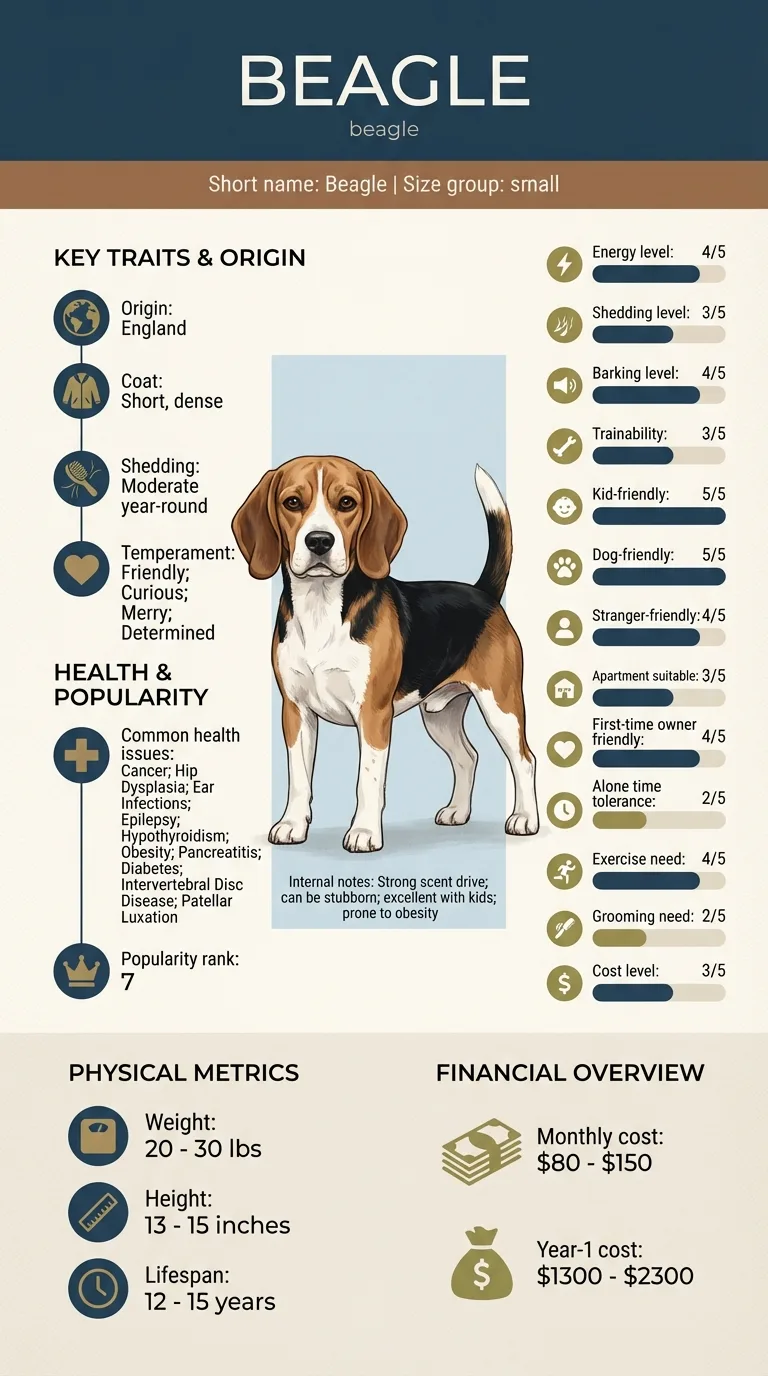
Owners of Beagles, especially those with older dogs, often struggle with diabetes management. Busy families, first-time dog owners, or those with limited veterinary experience may feel overwhelmed by the complexities of this condition.
This guide is not medical advice. If your dog shows pain, sudden behavior change, or worsening symptoms, consult a licensed veterinarian.
Some links may be affiliate links. We may earn a commission at no extra cost to you. We only suggest products we believe are helpful for dog owners.
We research and check what we publish, but we do not warrant that any figure, date, price, or statement is accurate, complete, or current, and we accept no liability for any loss, cost, injury, or other harm arising from the use of this site. Use it as one reference among several. You remain responsible for your own decisions and for your dog's care - confirm anything that matters with a licensed veterinarian or another qualified professional before you act on it. Full disclaimer.
Check this first
Recognizing when Beagle diabetes is an emergency is crucial for your dog's health. If you notice any of the following red-flag signs, call your vet immediately. Severe lethargy, vomiting, excessive thirst, and a sudden increase in urination can indicate that your Beagle is in danger. These symptoms could mean that their diabetes is out of control and requires urgent medical attention.
On the other hand, if your Beagle is showing mild symptoms, such as a slight increase in thirst or appetite without other alarming signs, you can monitor them at home. Make sure to keep a close eye on their behavior and energy levels. Establish a plan with your vet to manage their diabetes and adjust their diet or insulin dosage if necessary. Regular check-ins can help you feel more secure about managing your Beagle's health.
If any of these apply, call your vet or an emergency clinic now. The rest of this page is for the cases that are not an emergency.
Beagle diabetes is a serious condition that affects these friendly and curious dogs, especially as they age. Owners may notice increased thirst, frequent urination, and weight loss despite a good appetite. This endocrine disorder is often linked to obesity, which is a common issue in Beagles due to their love for food and less active lifestyle.
Diabetes is relatively common in Beagles, particularly among those who are overweight or older. Many Beagle owners may not realize their dog is at risk until symptoms become pronounced, highlighting the importance of regular veterinary check-ups.
Beagles are prone to obesity, which can lead to diabetes. Their love for food and tendency to overeat can increase their risk. Additionally, genetic factors in Beagles make them more susceptible to diabetes as they age.
An inactive lifestyle or poor diet can contribute to diabetes in Beagles. If they don’t get enough exercise or are fed high-calorie foods, their chances of developing health issues increase. Stress and lack of regular veterinary check-ups can also worsen their condition.
If you notice signs of excessive thirst, frequent urination, or unexplained weight loss, consult your vet immediately. These could be symptoms of diabetes that need professional attention.
Managing Beagle diabetes can be challenging, and some common mistakes can make it worse. Here are key behaviors to avoid:
Start here: Beagle Most Common Genetic Disorders: What to Screen For
See all Beagle health problems, which breeds are prone to diabetes, or the full Beagle breed guide for temperament, exercise needs and ownership costs.
Managing Beagle diabetes typically takes several weeks to establish a routine with diet and medication, and ongoing monitoring is essential.
Success means maintaining stable blood sugar levels, a healthy weight, and an active lifestyle for your Beagle, along with regular vet check-ups.
When Lily, a busy nurse from Atlanta, noticed Max, her Beagle, was drinking more water than usual, she suspected something was wrong. After a vet visit, Max was diagnosed with diabetes. Initially overwhelmed, Lily learned how to manage his diet, giving him special low-carb food and regular insulin injections. With patience and dedication, she established a routine that helped Max lose weight and feel more energetic. Six months later, he was back to his playful self, and they enjoyed daily walks together again.
Key takeaway: Managing Beagle diabetes requires commitment and education, but with the right approach, you can help your dog lead a happy, healthy life.
Beagle diabetes can be attributed to various factors, including genetics, obesity, and hormonal imbalances. A vet can help determine the specific cause and recommend the best treatment plan.
Common signs of Beagle diabetes include excessive thirst, frequent urination, weight loss despite increased appetite, and lethargy. If you notice these symptoms, consult your vet for diagnosis.
Managing Beagle diabetes involves a balanced diet, regular exercise, and possibly insulin injections. Work with your vet to create a tailored plan to keep your Beagle healthy.
Preventing Beagle diabetes is possible by ensuring a healthy diet and regular exercise. Monitor your Beagle's weight closely and consult your vet for nutritional advice.
Training can help establish a routine for feeding and exercise, which is essential for managing Beagle diabetes. Positive reinforcement can encourage your Beagle to engage in regular physical activity.
Beagle diabetes treatment costs can vary widely but may range from $100 to $300 a month for insulin and vet visits. Budgeting for these expenses is crucial for long-term management.
Beagles can experience anxiety during dietary changes or vet visits. Providing consistent routines, affection, and gradual introductions to new foods can help ease their stress.
Symptoms of Beagle diabetes can include increased thirst, frequent urination, weight loss despite increased appetite, and lethargy. If you notice these signs, it’s important to consult your vet for a proper diagnosis.
In some cases, Beagle diabetes can be managed through diet and exercise alone, especially in early stages. However, insulin therapy is often necessary for long-term management, so regular vet check-ups are crucial.
Older Beagles are at a higher risk for developing diabetes due to natural hormonal changes and potential obesity. Keeping your Beagle at a healthy weight and having routine vet visits can help catch any issues early.
A high-fiber, low-carb diet is often recommended for Beagles with diabetes. Consult your vet for a tailored meal plan that suits your Beagle's specific needs.
Monitor your Beagle's diet and weight, ensure regular vet check-ups, and maintain a consistent exercise routine.
Visit your vet every 3 to 6 months for check-ups and to adjust treatment as needed.
Yes, with proper management, Beagles can live healthy and fulfilling lives despite diabetes.
Yes, low-carbohydrate and high-fiber diets are often recommended. Consult your vet for specific dietary advice.
Watch for increased thirst, excessive urination, and sudden weight changes as signs of worsening conditions.
A one-page prep sheet for this condition: the signs, the questions to ask, what to get priced. Unlocks here.
You get: Vet visit prep sheet
No spam. One-click unsubscribe. See our privacy policy.
Preview page 1 before you decide.