Behavior
What are quick tips for Beagle degenerative myelopathy (DM)?
Keep your Beagle at a healthy weight to reduce stress on their spine. Use supportive harnesses to assist with mobility and consult your vet for tailored exercise plans.

Quick answer
What are quick tips for Beagle degenerative myelopathy (DM)?
Keep your Beagle at a healthy weight to reduce stress on their spine. Use supportive harnesses to assist with mobility and consult your vet for tailored exercise plans.
Beagle degenerative myelopathy (DM) is a serious condition affecting your dog's spinal cord. This progressive disease can lead to mobility issues, impacting your Beagle's quality of life.
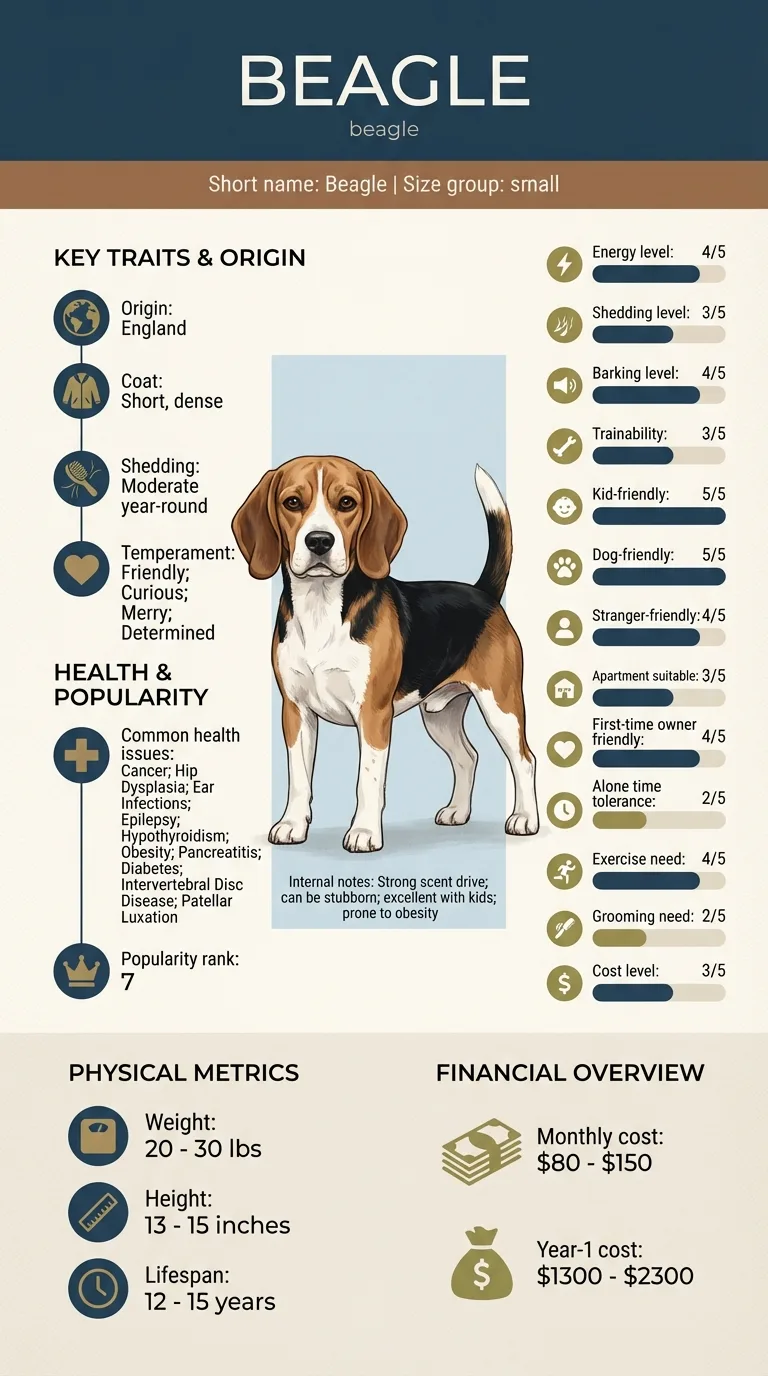
Owners of Beagles, especially those who are older or have a family history of DM, often find themselves worried about their dog's health. If you've noticed your Beagle having trouble walking or standing, this information is vital.
This guide is not medical advice. If your dog shows pain, sudden behavior change, or worsening symptoms, consult a licensed veterinarian.
Some links may be affiliate links. We may earn a commission at no extra cost to you. We only suggest products we believe are helpful for dog owners.
We research and check what we publish, but we do not warrant that any figure, date, price, or statement is accurate, complete, or current, and we accept no liability for any loss, cost, injury, or other harm arising from the use of this site. Use it as one reference among several. You remain responsible for your own decisions and for your dog's care - confirm anything that matters with a licensed veterinarian or another qualified professional before you act on it. Full disclaimer.
Check this first
Recognizing when Beagle degenerative myelopathy (DM) becomes an emergency is crucial for your dog's health. There are specific red-flag signs that signal immediate veterinary attention is necessary. If your Beagle experiences sudden paralysis, severe difficulty walking, or signs of extreme pain, call your vet right away. These symptoms may indicate a worsening condition that requires urgent care.
On the other hand, if your Beagle is showing mild symptoms such as slight wobbliness, occasional stumbling, or changes in coordination, it’s important but not an immediate emergency. You can monitor these signs at home. Develop a plan with your vet to track the progression of DM, including regular check-ups and assessments of your dog's mobility. Keeping a journal of any changes can be helpful.
Always err on the side of caution. If you're ever in doubt about your dog's condition, it’s best to reach out to your vet for guidance. Early intervention can make a significant difference in managing Beagle degenerative myelopathy (DM) effectively.
If any of these apply, call your vet or an emergency clinic now. The rest of this page is for the cases that are not an emergency.
Beagle degenerative myelopathy (DM) is a progressive spinal cord disease that primarily affects the hind legs. This condition leads to weakness and loss of coordination, making daily activities like walking or climbing stairs increasingly difficult. Owners may notice their Beagle stumbling, dragging their paws, or having trouble standing up after sitting or lying down.
Degenerative myelopathy is relatively common in Beagles, particularly as they age. While not every Beagle will develop DM, it's important for owners to be aware of this condition, especially if they have a family history of the disease.
Beagles are prone to degenerative myelopathy (DM) due to their genetic predisposition. This condition affects the spinal cord, leading to muscle weakness and coordination issues. While not exclusive to Beagles, their lineage can increase the likelihood of developing this disease.
Environmental factors can also play a role in the onset of DM. Lack of proper exercise can exacerbate symptoms, as weak muscles may lead to further deterioration. Additionally, weight gain can put extra strain on their joints, worsening their condition.
If you notice significant changes in your Beagle's mobility, weakness, or balance, consult your vet. They can provide a proper diagnosis and discuss potential treatments or management strategies for degenerative myelopathy.
Understanding the common mistakes that can worsen Beagle degenerative myelopathy (DM) is crucial. Here are some behaviors to avoid along with safer alternatives.
Start here: Beagle Most Common Genetic Disorders: What to Screen For
See all Beagle health problems, which breeds are prone to degenerative myelopathy dm, or the full Beagle breed guide for temperament, exercise needs and ownership costs.
Managing Beagle degenerative myelopathy (DM) often takes several months to notice significant changes. Regular care and adjustments in lifestyle can lead to improvements over time.
Success means your Beagle maintains mobility for as long as possible, enjoys quality time with you, and adapts to changes in their condition with minimal stress.
When Sarah, a busy nurse in Atlanta, noticed her Beagle, Max, stumbling during walks, she felt a wave of anxiety. After a vet visit confirmed it was degenerative myelopathy (DM), she researched and learned how to adapt Max's training and exercise. By incorporating short, gentle walks and mental stimulation games, Sarah kept Max engaged and happy. Over the months, she saw Max adjust well to his condition, maintaining his spirit even as his mobility declined.
Key takeaway: Adjusting your Beagle's routine and focusing on positive experiences can significantly improve their quality of life despite challenges like DM.
Beagle degenerative myelopathy (DM) is a progressive spinal cord disease that affects coordination and mobility. It usually starts with weakness in the hind legs, which can lead to more severe mobility issues over time.
Managing DM symptoms involves providing supportive care, such as physical therapy, a proper diet, and potentially using mobility aids. Regular vet check-ups are essential for monitoring your Beagle's condition.
Unfortunately, there is currently no cure for Beagle degenerative myelopathy (DM). However, with the right care and management, you can help improve your dog's quality of life.
While you can't stop DM from progressing, you can help slow it down. Focus on maintaining a healthy weight, providing regular low-impact exercise, and ensuring a safe living environment for your Beagle.
The prognosis varies, but DM typically leads to significant mobility loss over time. With proper care, many Beagles can maintain a good quality of life for several months to a few years after diagnosis.
Early signs of Beagle degenerative myelopathy (DM) often include difficulty in coordination and weakness in the hind legs. You might notice your Beagle stumbling or dragging their back feet. It's important to monitor these symptoms and consult a vet for a proper diagnosis.
Yes, older Beagles may show symptoms of degenerative myelopathy (DM) more rapidly. The progression can vary by individual, but older dogs often have less resilience to the disease. Regular vet check-ups are crucial to manage their health effectively.
To assist your Beagle, create a safe living environment with non-slip surfaces and ramps to help them navigate. Gentle exercises can help maintain muscle strength, but avoid overexertion. Always consult your vet for tailored advice.
Training a Beagle with degenerative myelopathy (DM) can focus on maintaining mental stimulation and basic commands. Use positive reinforcement and short training sessions to keep them engaged. Always be patient, as their physical condition may limit their ability to perform certain tasks.
You should consult your vet if your Beagle exhibits increased difficulty walking, noticeable weight loss, or changes in appetite. These signs can indicate that the condition is worsening or that other health issues may be present.
Keep your Beagle at a healthy weight to reduce stress on their spine. Use supportive harnesses to assist with mobility and consult your vet for tailored exercise plans.
Make your home safe by removing obstacles and adding non-slip mats. Create a comfortable resting area and consider using ramps for easier access to favorite spots.
If you notice any signs of weakness or changes in mobility, it's important to see your vet right away. Early intervention can help manage symptoms.
Training should focus on patience and gentle guidance. Reinforce positive behaviors and allow for breaks, as your Beagle may tire quickly.
A one-page prep sheet for this condition: the signs, the questions to ask, what to get priced. Unlocks here.
You get: Vet visit prep sheet
No spam. One-click unsubscribe. See our privacy policy.
Preview page 1 before you decide.