Behavior
What are some Basset Hound genetic predisposition to obesity quick tips?
Monitor their food intake and avoid giving table scraps. Incorporate regular exercise into their routine to keep them active and engaged.

Quick answer
What are some Basset Hound genetic predisposition to obesity quick tips?
Monitor their food intake and avoid giving table scraps. Incorporate regular exercise into their routine to keep them active and engaged.
Basset Hounds are adorable, but their genetic predisposition to obesity can be a serious issue. Understanding this can help keep your pup healthy and happy.
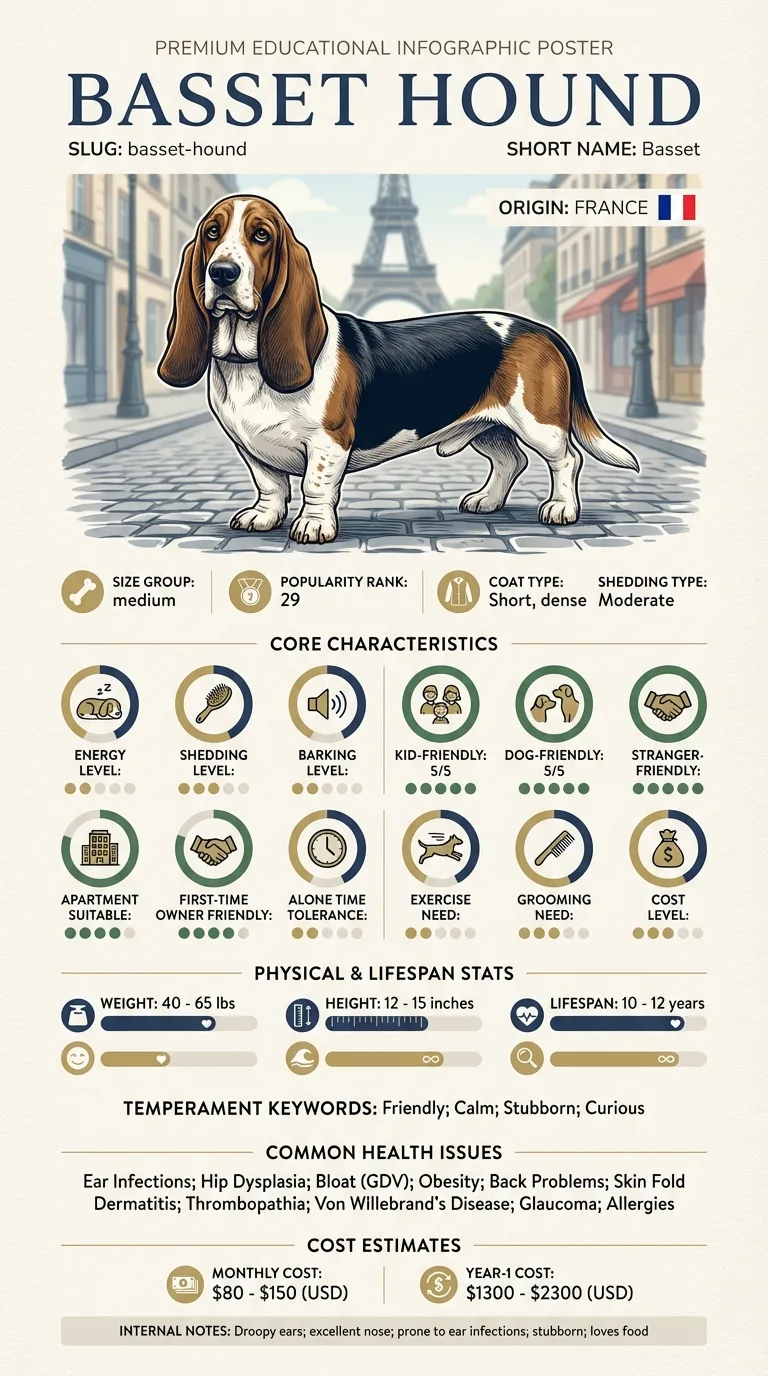
Many Basset Hound owners, especially those who are first-time pet parents, find it challenging to manage their dog's weight. Busy families or those living in apartments may struggle to provide enough exercise, making it even more important to understand this issue.
This guide is not medical advice. If your dog shows pain, sudden behavior change, or worsening symptoms, consult a licensed veterinarian.
Some links may be affiliate links. We may earn a commission at no extra cost to you. We only suggest products we believe are helpful for dog owners.
We research and check what we publish, but we do not warrant that any figure, date, price, or statement is accurate, complete, or current, and we accept no liability for any loss, cost, injury, or other harm arising from the use of this site. Use it as one reference among several. You remain responsible for your own decisions and for your dog's care - confirm anything that matters with a licensed veterinarian or another qualified professional before you act on it. Full disclaimer.
Check this first
Understanding when the Basset Hound genetic predisposition to obesity becomes an emergency is crucial for your pet's health. If your Basset Hound is rapidly gaining weight, shows signs of lethargy, or has difficulty breathing, these are red flags. Call your vet immediately to discuss these symptoms and take action.
Mild cases may not require immediate vet attention. If your Basset Hound is slightly overweight but still active and energetic, you can monitor their progress. Adjust their diet and exercise routine, and keep track of their weight regularly. Consider creating a weight management plan with your vet if needed.
Always be mindful of their eating habits and any changes in behavior. If your dog is eating excessively, despite following a proper feeding schedule, this could indicate other health issues. Keep a close eye on their weight and behavior, and consult your vet if you notice anything concerning.
If any of these apply, call your vet or an emergency clinic now. The rest of this page is for the cases that are not an emergency.
Basset Hounds are known for their lovable, laid-back nature, but their genetic predisposition to obesity can be a significant issue. This breed often struggles with weight management due to a mutation in the POMC gene, which can lead to an increased appetite. Owners may find their Basset Hounds constantly begging for food or showing little interest in exercise, making weight control a daily challenge.
Obesity is a common problem among Basset Hounds, affecting a significant portion of the breed. Many owners find that their dogs tend to gain weight easily if dietary habits are not closely monitored. Regular vet check-ups and adjustments to their diet can help manage this issue effectively.
Basset Hounds have a genetic predisposition to obesity due to a mutation in the POMC gene. This mutation can lead to an increased appetite and slower metabolism, making them more likely to gain weight. Their love for food, coupled with a relatively low energy level, can contribute to weight issues.
Environmental factors also play a significant role. Overfeeding, lack of exercise, and limited opportunities for play can all lead to weight gain. Additionally, Basset Hounds are known to be stubborn, which can make them resistant to training efforts aimed at controlling their diet and exercise.
If you notice significant weight gain or suspect health issues related to obesity, schedule a vet appointment. They can assess your dog's overall health, discuss weight management strategies, and rule out any underlying medical conditions.
Avoiding these common mistakes can help manage your Basset Hound's genetic predisposition to obesity more effectively.
Start here: Basset Hound Most Common Genetic Disorders: Screening
See all Basset Hound health problems, which breeds are prone to genetic predisposition to obesity, or the full Basset Hound breed guide for temperament, exercise needs and ownership costs.
Managing a Basset Hound's genetic predisposition to obesity usually takes 3 to 6 months of consistent effort to see significant changes.
Success means maintaining your dog's weight within a healthy range, improving their energy levels, and reducing food-related behavioral issues.
Sarah, a busy nurse in Seattle, noticed her Basset Hound, Max, was gaining weight despite regular meals. After researching, she discovered that Basset Hounds have a genetic predisposition to obesity due to a POMC gene mutation. Sarah started by consulting her vet for a tailored diet plan and began incorporating more exercise into their routine. She set aside time for daily walks and interactive play sessions. Gradually, Max began to lose weight, and his energy levels improved significantly. By the end of six months, he was healthier and more active, enjoying life to the fullest.
Key takeaway: With a dedicated plan and regular vet check-ups, managing a Basset Hound's weight can lead to a happier, healthier life.
Basset Hounds often have a genetic predisposition to obesity due to a mutation in the POMC gene, which can increase their appetite. This breed is also known for its love of food and tendency to gain weight easily. It's important to monitor their diet and exercise closely.
To manage your Basset Hound's weight, provide a balanced diet and avoid free-feeding. Regular exercise is crucial; aim for at least 30 minutes of activity each day. Consulting with a vet can help create a tailored plan for your dog.
Choose high-quality dog food that lists meat as the first ingredient and is appropriate for their age and size. Measure their food portions to avoid overfeeding and consider incorporating vegetables as low-calorie treats. Always consult your vet for specific recommendations.
Yes, training can help manage your Basset Hound's weight. Engage them in activities that stimulate both their mind and body, like obedience training or interactive games. Positive reinforcement can motivate them to stay active.
Signs of obesity in Basset Hounds include difficulty feeling their ribs, a rounded belly, and lack of energy. Regular weigh-ins and monitoring their body condition score can help you track their weight more effectively.
If your Basset Hound is overweight, start by adjusting their diet. Consult with your vet for a suitable weight management plan and consider incorporating more exercise into their routine. Small, consistent changes can make a big difference.
Yes, positive reinforcement training can encourage your Basset Hound to be more active. Use treats wisely and focus on activities they enjoy, like short walks or playtime. Consistency is key in developing healthier habits.
It's a good idea to start monitoring your Basset Hound's weight as they reach adulthood, around 1-2 years old. Regular vet check-ups can help track their weight and overall health. Early detection is crucial for preventing obesity-related health issues.
Look for changes in your Basset Hound's shape, such as a rounder belly or difficulty feeling their ribs. If they are less active or seem tired after short walks, these could be signs of weight gain. Regularly weighing them can help you stay informed.
A genetic predisposition can lead to increased appetite and weight gain in Basset Hounds. This can result in serious health issues like joint problems or diabetes. Regular vet visits and a balanced diet are essential to manage these risks.
Monitor their food intake and avoid giving table scraps. Incorporate regular exercise into their routine to keep them active and engaged.
Basset Hounds should get at least 30 minutes of exercise each day to maintain a healthy weight. Activities can include walks, playtime, or even swimming.
Yes, many brands offer breed-specific diets designed for Basset Hounds that focus on maintaining a healthy weight. Always check with your vet before switching foods.
A one-page prep sheet for this condition: the signs, the questions to ask, what to get priced. Unlocks here.
You get: Vet visit prep sheet
No spam. One-click unsubscribe. See our privacy policy.
See a sample page before you decide.
Early access list
The free prep sheet covers the same-day warning signs, a symptom log and the questions to ask. We are considering a fuller kit that adds a cost worksheet for the usual tests and treatments (US price ranges with their sources) and a plain-English guide to ways of covering the bill. It is not built yet; this list tells us whether it is worth building.
One email, no spam, unsubscribe anytime. Information only, not veterinary advice.