Behavior
How to stop American Staffordshire Terrier x-scid?
X-SCID is a genetic condition, so it can't be cured. Focus on managing symptoms through veterinary care and a safe environment.

Quick answer
How to stop American Staffordshire Terrier x-scid?
X-SCID is a genetic condition, so it can't be cured. Focus on managing symptoms through veterinary care and a safe environment.
American Staffordshire Terrier x-scid is a serious health issue that can affect your dog's immune system.
Typically, owners of American Staffordshire Terriers may face this issue, especially if they are unaware of the breed's potential health problems. New dog owners or those who adopt from shelters may find themselves struggling to identify and manage x-scid effectively.
This guide is not medical advice. If your dog shows pain, sudden behavior change, or worsening symptoms, consult a licensed veterinarian.
Some links may be affiliate links. We may earn a commission at no extra cost to you. We only suggest products we believe are helpful for dog owners.
We research and check what we publish, but we do not warrant that any figure, date, price, or statement is accurate, complete, or current, and we accept no liability for any loss, cost, injury, or other harm arising from the use of this site. Use it as one reference among several. You remain responsible for your own decisions and for your dog's care - confirm anything that matters with a licensed veterinarian or another qualified professional before you act on it. Full disclaimer.
Check this first
When dealing with American Staffordshire Terrier x-scid, knowing when to act fast is crucial. This condition is marked by severe combined immunodeficiency, which means your dog’s immune system is compromised. If you notice any red flags, it’s time to call your vet immediately.
Here are some critical signs that indicate an emergency: - Persistent fever over 103°F. - Severe lethargy or unresponsiveness. - Continuous vomiting or diarrhea that lasts more than 24 hours. - Swelling or pain in the abdomen. - Any signs of bleeding or bruising.
If your dog exhibits any of these symptoms, don’t wait. Contact your veterinarian as soon as possible.
On the other hand, there are milder symptoms that you can monitor. For example, if your American Staffordshire Terrier has occasional sneezing, mild lethargy, or a slight cough, these can often be observed at home. You can create a watch-and-wait plan by keeping an eye on your dog’s behavior and noting any changes.
When monitoring, consider keeping a journal of symptoms and your dog’s daily habits. This can help you track any worsening conditions. Always consult your vet if you have concerns about your dog’s health, even if symptoms seem minor at first. Remember, it's better to be safe than sorry.
If any of these apply, call your vet or an emergency clinic now. The rest of this page is for the cases that are not an emergency.
American Staffordshire Terriers with X-SCID (Severe Combined Immunodeficiency) face daily challenges due to their compromised immune systems. These dogs are more susceptible to infections and illnesses, which can lead to frequent vet visits and a constant need for monitoring. Owners may notice their pets experiencing lethargy, recurrent infections, or unusual sensitivities to common environments.
X-SCID is a rare condition in American Staffordshire Terriers, but it can occur. It’s crucial for potential owners to understand this risk and consult with breeders about the health history of the puppy's lineage.
The American Staffordshire Terrier may be more susceptible to X-SCID due to genetic factors. This breed can inherit certain health issues, including immunodeficiencies, which affect their ability to fight off infections.
Environmental factors like exposure to pathogens can worsen the condition. If your dog is in a stressful or unsanitary environment, it can impact their immune system, making them more vulnerable to illness.
It's essential to talk to a vet if you notice symptoms like frequent infections, lethargy, or unusual behavior. A vet can provide a proper diagnosis and recommend treatments that can improve your dog's health.
Avoiding these common mistakes can help your American Staffordshire Terrier x-scid thrive.
Start here: American Staffordshire Terrier Most Common Genetic Disorders
See all American Staffordshire Terrier health problems, which breeds are prone to x scid, or the full American Staffordshire Terrier breed guide for temperament, exercise needs and ownership costs.
With consistent care and follow-up with your vet, you can see improvements in your American Staffordshire Terrier's behavior within 4 to 6 weeks.
Success means your dog displays more confidence, reduced anxiety, and improved social interactions, allowing you to enjoy outings together.
Mark adopted Bella, an American Staffordshire Terrier with X-SCID, hoping for a loving companion. However, Bella's anxiety made outings and socialization difficult. After seeking advice from a trainer, Mark learned to implement structured routines and positive reinforcement techniques. Slowly, Bella became more comfortable in public spaces. Mark also joined a support group for owners of anxious breeds, which helped him remain patient and focused.
Key takeaway: The key takeaway is that with dedicated training and support, even a dog facing health challenges can learn to thrive in a loving environment.
Signs of x-scid in your American Staffordshire Terrier may include frequent infections, poor growth, and a general lack of energy. If your dog seems unusually lethargic or is getting sick often, it's important to consult a vet for an accurate diagnosis.
Managing x-scid involves regular veterinary check-ups and vaccinations as your vet recommends. Keeping your dog away from sick animals and maintaining a clean environment are crucial steps. Providing a stress-free home can also support their overall health.
Treatment for x-scid may include supportive care, like medications to prevent infections. In some cases, a veterinarian may suggest specialized diets or supplements to support your dog's health. Always follow your vet's guidance for the best outcome.
Training should focus on positive reinforcement techniques. Start with basic commands and gradually introduce more complex skills. Consistency and patience are key, especially since your dog may need to avoid stressful situations that could compromise their health.
Watch for symptoms like frequent infections, lethargy, or unusual behavior. If your dog seems to be getting sick more often than typical, it’s essential to consult your veterinarian. Early intervention can make a significant difference.
With proper care and attention, dogs with x-scid can live fulfilling lives. It’s vital to manage their environment and health needs closely. Regular check-ups and a supportive family can help them thrive despite their condition.
While x-scid is a serious condition, treatment options can vary depending on the dog's age and overall health. It's crucial to have a vet assess your older dog to discuss potential treatment plans and supportive care.
To support your American Staffordshire Terrier with x-scid, keep their environment clean and limit exposure to other dogs to prevent infections. Providing a stress-free home and regular vet visits are essential for managing their health.
X-scid is quite rare in American Staffordshire Terriers, but it can occur. Understanding the breed's genetics and having open discussions with breeders can help identify potential risks.
You should see a vet if your American Staffordshire Terrier shows signs of illness, such as persistent coughing, unusual lethargy, or difficulty breathing. Early intervention is key to managing issues like x-scid effectively.
X-SCID is a genetic condition, so it can't be cured. Focus on managing symptoms through veterinary care and a safe environment.
Ensure regular vet visits, maintain cleanliness, and provide a stress-free home to help manage x-scid.
Yes, training helps strengthen the bond with your dog and ensures they follow commands, which is especially important for their safety.
Be alert for signs of infections and consult your vet immediately if your dog shows unusual symptoms.
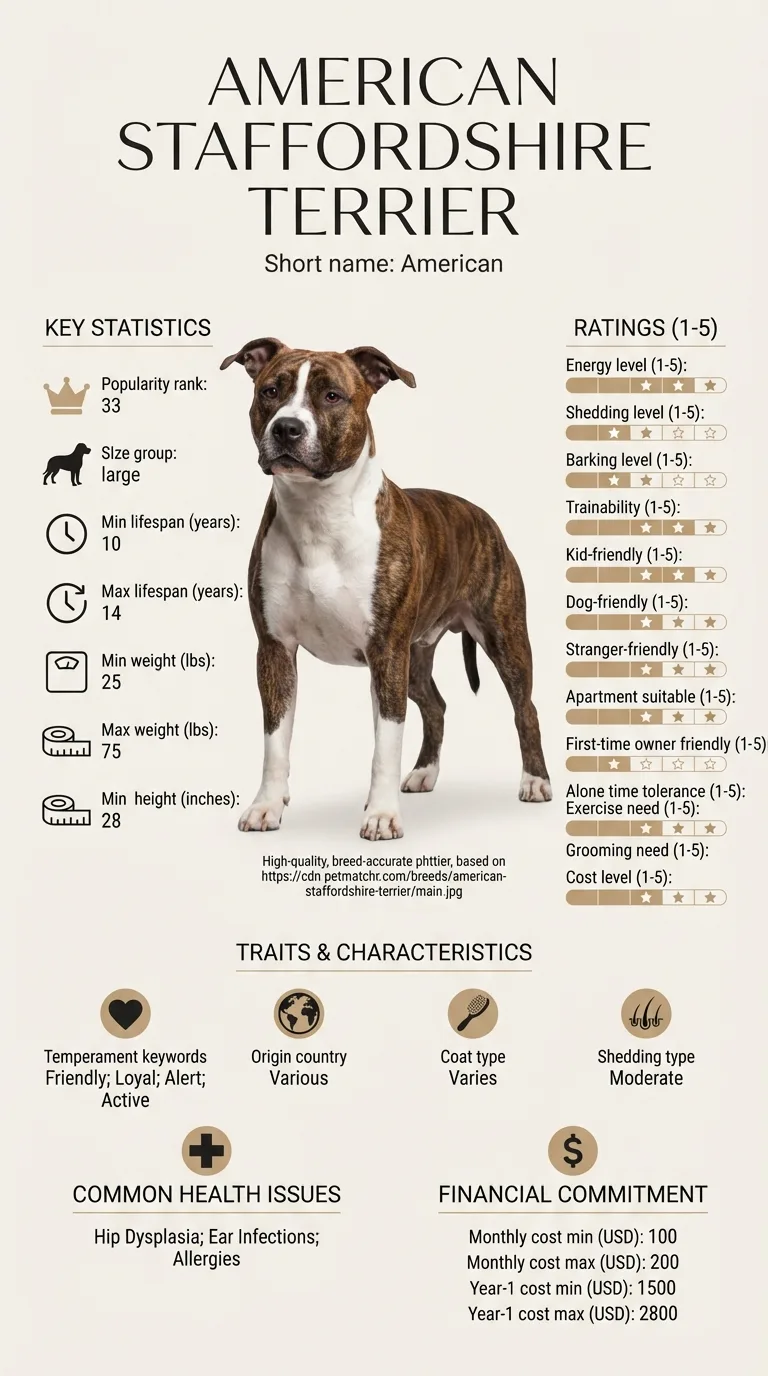
Prepare for higher veterinary costs due to regular check-ups and possible treatments, budgeting between $100 to $200 monthly.
A one-page prep sheet for this condition: the signs, the questions to ask, what to get priced. Unlocks here.
You get: Vet visit prep sheet
No spam. One-click unsubscribe. See our privacy policy.
Preview page 1 before you decide.