DogBreedCompass
← Back to breed profile

American Staffordshire Terrier Myotonia Congenita: What You Need to Know

Myotonia congenita in American Staffordshire Terriers can cause muscle stiffness, which is important to recognize for their well-being. (American Staffordshire Terrier myotonia congenita)

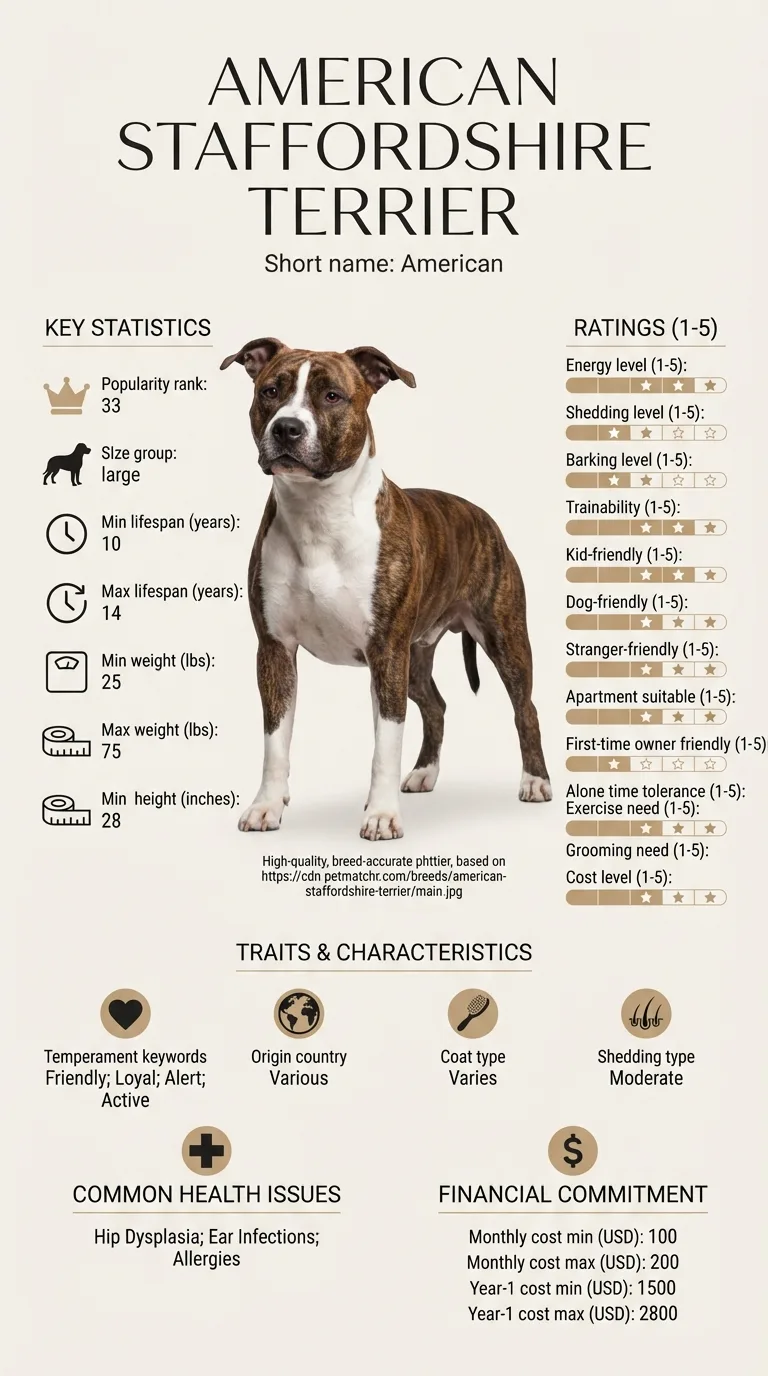
American Staffordshire Terrier Myotonia Congenita: What You Need to Know infographic

Owners of American Staffordshire Terriers experiencing this issue may struggle with understanding their dogs' behavior and how best to support them. This includes first-time pet owners who may not be familiar with such health concerns.

Important reminder

This guide is not medical advice. If your dog shows pain, sudden behavior change, or worsening symptoms, consult a licensed veterinarian.

Some links may be affiliate links. We may earn a commission at no extra cost to you. We only suggest products we believe are helpful for dog owners.

What this problem looks like

American Staffordshire Terrier myotonia congenita can lead to noticeable muscle stiffness. This condition affects their ability to relax their muscles after contractions, which can make daily activities like walking or playing challenging. Owners may notice their dog struggling to move or appearing stiff, especially after rest or during exercise.

Common triggers

  • Excitement during playtime
  • Cold weather or sudden temperature changes
  • Lack of regular exercise or activity

Myotonia congenita is relatively uncommon in American Staffordshire Terriers but can occur. If you notice unusual stiffness in your dog, it's essential to consult a vet for advice.

Why this happens

Breed factors

Myotonia congenita in American Staffordshire Terriers is often linked to genetics. This condition affects muscle function, leading to stiffness and difficulty relaxing muscles after use. It can be inherited, so if your dog has a family history of this issue, they may also be affected.

Environment factors

Environmental factors can also play a role. Stressful situations or lack of proper exercise may exacerbate symptoms. When dogs are not given enough mental and physical stimulation, it can lead to increased muscle tension and discomfort.

What you can try

At-home strategies

  • Establish a regular exercise routine to help your dog remain active without straining their muscles. Short, frequent walks can be beneficial.
  • Incorporate gentle stretching exercises into your dog's routine. This can help alleviate stiffness and improve muscle flexibility.
  • Create a calm environment for your dog. Reducing stressors, such as loud noises or chaotic situations, can help manage their condition.

When to consider a trainer

If your American Staffordshire Terrier shows persistent issues with muscle stiffness or if basic commands become difficult, consider consulting a professional dog trainer. They can help modify training techniques to better suit your dog's needs.

When to talk to your vet

It's important to talk to your vet if you notice severe stiffness, difficulty moving, or any other concerning symptoms. They can offer a proper diagnosis and discuss treatment options tailored for your dog's specific condition.

Realistic expectations

It typically takes 4 to 6 weeks to see noticeable improvements in managing myotonia congenita in your American Staffordshire Terrier with consistent training and care.

Success means your dog shows reduced muscle stiffness, is more comfortable moving around, and can engage in daily activities with less discomfort.

Mistakes that make this worse – American Staffordshire Terrier myotonia congenita

Avoiding these common mistakes can help improve your American Staffordshire Terrier's myotonia congenita. Here are some behaviors to steer clear of:

  • Ignoring signs of discomfort: If your dog shows muscle stiffness or struggles to move, don't dismiss these signs as normal. Instead, consult a vet for advice on managing their condition.
  • Overexerting your dog: Some owners might think more exercise will help, but overexertion can worsen stiffness. Stick to short, gentle walks and regular play sessions without pushing your dog too hard.
  • Failing to create a consistent routine: Inconsistent feeding and exercise schedules can lead to confusion and stress. Establish a daily routine to help your dog feel secure and supported.
  • Neglecting mental stimulation: A bored dog might develop anxiety or frustration. Engage your American Staffordshire Terrier with puzzle toys or training games that challenge their mind without physical strain.
  • Using harsh training methods: Punishing your dog for stiffness or difficulty moving can create fear and worsen anxiety. Focus on positive reinforcement techniques to encourage good behavior instead.
  • Disregarding their diet: Poor nutrition can impact your dog's overall health. Ensure your American Staffordshire Terrier receives a balanced diet to support muscle health and manage their condition effectively.

When Myotonia Congenita is an Emergency

Myotonia congenita in American Staffordshire Terriers can vary from mild to severe. It’s essential to know when to act quickly and when you can monitor your pet at home. If your dog shows any of the following red-flag signs, it’s time to call your vet immediately.

American Staffordshire Terrier Myotonia Congenita: What You Need to Know - When Myotonia Congenita is an Emergency
  • Severe muscle stiffness that affects mobility
  • Difficulty breathing or lethargy
  • Seizures or fainting episodes
  • Inability to walk properly or stand up

When You Can Monitor at Home

In less severe cases of myotonia congenita, you can keep an eye on your American Staffordshire Terrier and make adjustments as needed. Look for mild muscle stiffness that improves with rest, occasional muscle spasms, or minor changes in activity levels. Monitoring your dog in these situations can help you determine if further action is needed.

American Staffordshire Terrier Myotonia Congenita: What You Need to Know - When You Can Monitor at Home
  • Mild stiffness that resolves with rest
  • Occasional muscle spasms without other symptoms
  • Slight changes in energy levels or activity

Maria and Max: Overcoming Myotonia Congenita

Maria, a first-time dog owner in Los Angeles, adopted Max, an American Staffordshire Terrier, only to discover he had myotonia congenita. At first, she was overwhelmed by his muscle stiffness and worried about how it would affect their daily life. With guidance from her vet and a dedicated training program, Maria learned how to support Max through gentle exercises and consistent routines. Over time, she noticed that he could run and play without as much stiffness, which brought them both joy. Maria’s perseverance made all the difference in Max's quality of life.

Key takeaway: With patience, proper training, and vet support, managing myotonia congenita in your American Staffordshire Terrier is possible, leading to a happier, more active life.

Frequently asked questions

Why does my American Staffordshire Terrier have myotonia congenita?

Myotonia congenita in American Staffordshire Terriers is a genetic condition that causes muscle stiffness. This stiffness can make it difficult for your dog to relax their muscles, especially after exertion. It's important to consult with a vet for a proper diagnosis and management plan. This answer relates to American Staffordshire Terrier myotonia congenita.

How can I help my American Staffordshire Terrier with myotonia congenita?

To help your American Staffordshire Terrier, focus on gentle exercises to promote flexibility and reduce stiffness. Regular, low-impact activities like walking or swimming can be beneficial. Additionally, a vet may recommend specific medications or supplements to ease symptoms.

What are the symptoms of myotonia congenita in American Staffordshire Terriers?

Symptoms of myotonia congenita include muscle stiffness, especially after rest or exercise, difficulty getting up, and occasional muscle spasms. You may notice your dog taking longer to relax after physical activity or showing signs of discomfort when moving. If you observe these symptoms, consult your vet.

Can myotonia congenita in American Staffordshire Terriers be cured?

Currently, there is no cure for myotonia congenita. However, the condition can often be managed with appropriate care, including exercise, weight management, and veterinary guidance. Regular check-ups can help monitor your dog's condition and adjust treatment as necessary.

Is myotonia congenita hereditary in American Staffordshire Terriers?

Yes, myotonia congenita is generally inherited in American Staffordshire Terriers. If you’re considering breeding, it’s crucial to screen for this condition to avoid passing it on to future litters. Consulting with a vet or a breed specialist can provide valuable insights.

What are the symptoms of myotonia congenita in American Staffordshire Terriers?

Symptoms of myotonia congenita in American Staffordshire Terriers include muscle stiffness, difficulty relaxing muscles after contraction, and an abnormal gait. You may notice these signs more pronounced during exercise or after resting.

Can myotonia congenita in American Staffordshire Terriers worsen over time?

Yes, myotonia congenita can potentially worsen over time, especially if not managed properly. Regular veterinary check-ups are crucial to monitor your dog's condition and adjust their care as needed.

Is there a specific diet for American Staffordshire Terriers with myotonia congenita?

While there isn't a specific diet for myotonia congenita, a balanced diet rich in nutrients can support overall health. Discuss dietary options with your vet to ensure your dog gets the right nutrition for their condition.

What types of training are effective for American Staffordshire Terriers with myotonia congenita?

Positive reinforcement training is particularly effective for American Staffordshire Terriers with myotonia congenita. Focus on short, manageable training sessions to avoid overexertion and to keep your dog engaged.

When should I see a vet regarding my American Staffordshire Terrier's myotonia congenita?

If you notice increased muscle stiffness, changes in behavior, or difficulty with movement, it's important to consult your vet. Early intervention can help manage the condition effectively and improve your dog's quality of life.

Quick answers

View more answers
Behavior

What are quick tips for managing myotonia congenita in my American Staffordshire Terrier?

Regular, low-impact exercise and a balanced diet can help manage symptoms of myotonia congenita. Always consult your vet for tailored advice and possible medications.

Training

How can I train my American Staffordshire Terrier with myotonia congenita?

Use positive reinforcement and short training sessions to accommodate your dog's condition. Focus on basic commands and gentle activities to avoid overexertion.

Living

Are there special considerations for my American Staffordshire Terrier's living environment?

Provide a comfortable, accessible space for your American Staffordshire Terrier, minimizing stairs and obstacles. Ensure they have a warm and safe area to rest, especially after exercise.

Related DogBreedCompass guides

  • American Staffordshire Terrier behavior problemsLearn about the common behavior problems faced by American Staffordshire Terriers and how to address them.
  • American Staffordshire Terrier separation anxiety guideGet tips and techniques to help your American Staffordshire Terrier cope with separation anxiety.
  • American Staffordshire Terrier myotonia congenita trainingDiscover effective training methods specifically for managing myotonia congenita in American Staffordshire Terriers.
  • American Staffordshire Terrier cost breakdownExplore the average costs of owning an American Staffordshire Terrier, including potential health issues.
  • Understanding myotonia congenita in dogsUnderstand the impact of myotonia congenita on your dog's overall health and well-being.

Related guides