Behavior
What are some quick tips for American Staffordshire Terrier luxating patellas?
Maintain a healthy weight and avoid high-impact activities. Regular, low-impact exercise is key to keeping your dog strong and mobile.
American Staffordshire Terrier luxating patellas can be a painful condition that affects your dog's mobility.
Typically, owners of American Staffordshire Terriers may notice their dogs limping or showing signs of pain. This can be especially concerning for families who are active and want their dogs to enjoy playtime without limitations.
This guide is not medical advice. If your dog shows pain, sudden behavior change, or worsening symptoms, consult a licensed veterinarian.
Some links may be affiliate links. We may earn a commission at no extra cost to you. We only suggest products we believe are helpful for dog owners.
American Staffordshire Terrier luxating patellas, or knee cap dislocation, is a common issue that can cause your pup pain and mobility problems. This condition occurs when the knee cap slips out of its normal position, leading to limping or difficulty walking. If your American is often favoring one leg or seems reluctant to jump or run, this may be a sign of luxating patellas.
Luxating patellas are relatively common in American Staffordshire Terriers. Many owners report this issue, especially in younger dogs or those with a family history of joint problems.
American Staffordshire Terriers are larger dogs with strong muscles and bones, which can sometimes lead to luxating patellas (knee cap dislocation) due to their physical structure. This breed may also have genetic predispositions that make them more susceptible to this condition.
Environmental factors such as slippery floors, lack of exercise, or obesity can exacerbate luxating patellas. If your dog is overweight or doesn't get enough physical activity, it can put additional strain on their knees, leading to more frequent dislocations.
If your dog shows persistent signs of pain or discomfort, or if they struggle with specific movements, consider consulting a professional dog trainer. They can help create a tailored exercise plan that accommodates your dog's needs.
If your American Staffordshire Terrier frequently experiences luxating patellas, it's essential to speak with a vet. They can assess the severity of the condition and recommend treatment options, including potential surgery or medication.
Most owners can expect to see improvements within 4 to 6 weeks of consistent training and management.
Successful management of American Staffordshire Terrier luxating patellas means your dog can walk, run, and play with reduced discomfort. You'll notice fewer episodes of dislocation and your pup will be more active and happy.
Understanding what not to do is key to managing American Staffordshire Terrier luxating patellas. Here are some common mistakes that can delay improvement and worsen the issue.
When dealing with American Staffordshire Terrier luxating patellas, it's essential to know when to act quickly. Look for critical signs that indicate you should call your vet immediately. If your dog is limping severely, unable to bear weight on a leg, or showing signs of intense pain, these are red flags. Additionally, if you notice swelling around the knee or if the patella is visibly out of place, seek veterinary care without delay.
On the other hand, if your American Staffordshire Terrier occasionally seems to have a slight limp but is otherwise playful and active, you may not need an immediate vet visit. Monitor your dog's behavior closely and keep track of any changes. If the limping occurs infrequently and resolves itself after resting, it might be manageable at home. You can start a gentle exercise plan and gradually work on strengthening your dog's legs through controlled activities.
In summary, urgent situations require immediate attention, while mild cases can often be monitored. Always err on the side of caution and consult your vet if you’re unsure. Keeping a close eye on your American Staffordshire Terrier's movements can help you determine the right course of action.
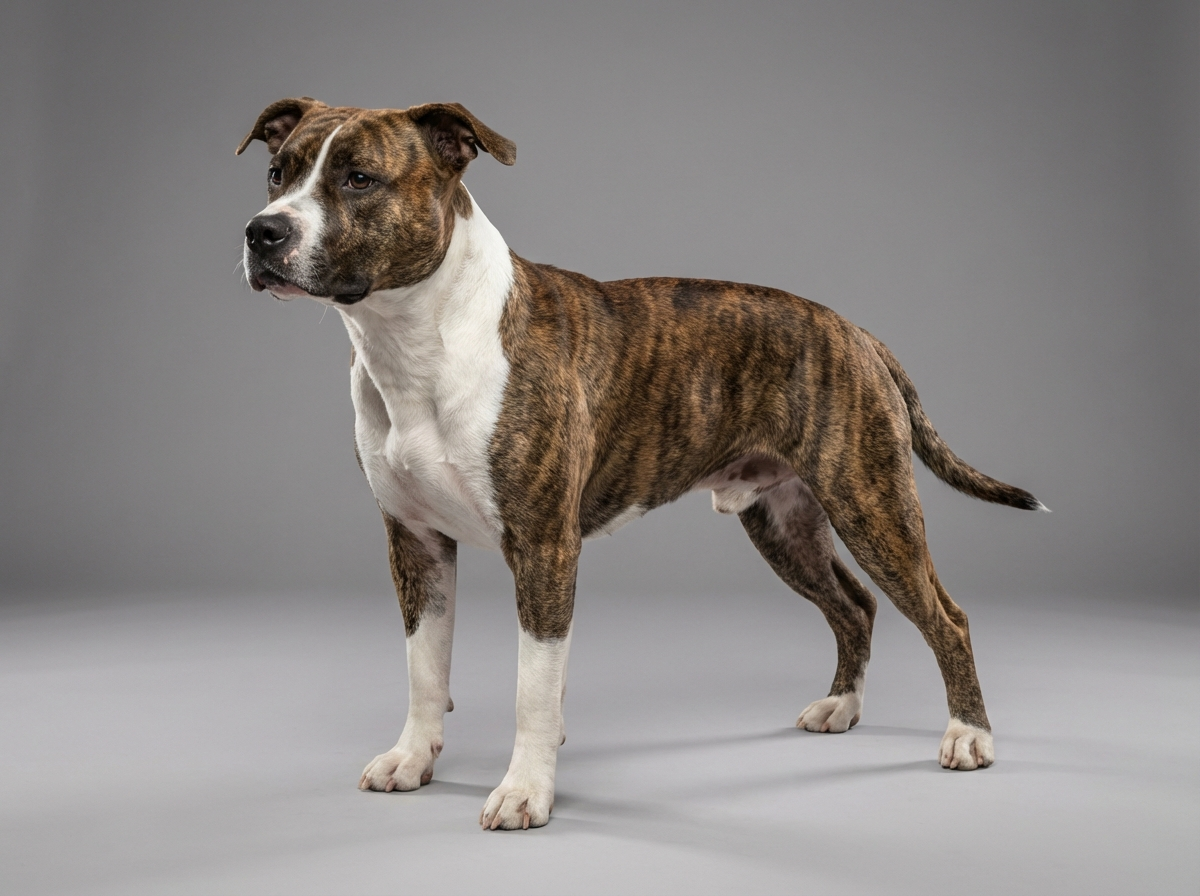
Jessica, a busy nurse in Chicago, adopted Max, her American Staffordshire Terrier, only to discover he had luxating patellas. At first, Max struggled to keep up during walks and often winced in pain. After consulting her vet and starting a structured training program focused on strengthening Max's legs, Jessica committed to daily exercises and weight management. She also learned to avoid stairs and slippery floors to keep Max safe. Within a few months, Max improved significantly, enjoying longer walks and even playing fetch without discomfort.
Key takeaway: With the right training and support, managing luxating patellas in American Staffordshire Terriers is possible, allowing them to live happy, active lives.
Luxating patellas can be caused by genetic factors, injury, or muscle weakness. In American Staffordshire Terriers, this condition often stems from their anatomy and can affect their mobility. If you notice symptoms, consult your vet for a proper diagnosis. This answer relates to American Staffordshire Terrier luxating patellas.
To help your dog, maintain a healthy weight to reduce stress on the knees. Regular, low-impact exercise can strengthen the muscles around the joint. Consult your vet for a tailored exercise plan and consider physical therapy.
Common signs include limping, difficulty in getting up, or reluctance to jump. You may also notice your dog occasionally holding up their leg after running or playing. Observing these behaviors can help you catch the issue early.
Not always, but severe cases may require surgical intervention to realign the kneecap. Your vet will assess the degree of dislocation and recommend the best course of action. Regular check-ups can help monitor your dog's condition.
Yes, training can help by reinforcing proper movement and avoiding activities that may worsen the condition. Focus on obedience training and gentle exercises that encourage safe play. A professional trainer can provide specialized guidance.
Signs of luxating patellas include limping, difficulty walking, or sudden leg lifting. You may also notice your dog favoring one leg or having trouble getting up after resting.
While not all cases can be prevented, maintaining a healthy weight and providing proper exercise can help reduce the risk. Regular vet check-ups are also important to catch any issues early.
As American Staffordshire Terriers age, they may become more prone to luxating patellas due to wear and tear on their joints. Older dogs may also have other health issues that can exacerbate this condition.
If your dog experiences frequent dislocations, shows persistent pain, or has difficulty walking, surgery may be necessary. Consult your vet for a thorough evaluation to determine the best course of action.
Yes, training can help improve your dog's strength and mobility. Focus on low-impact exercises and consult a trainer experienced with dogs who have joint issues for tailored activities.
Maintain a healthy weight and avoid high-impact activities. Regular, low-impact exercise is key to keeping your dog strong and mobile.
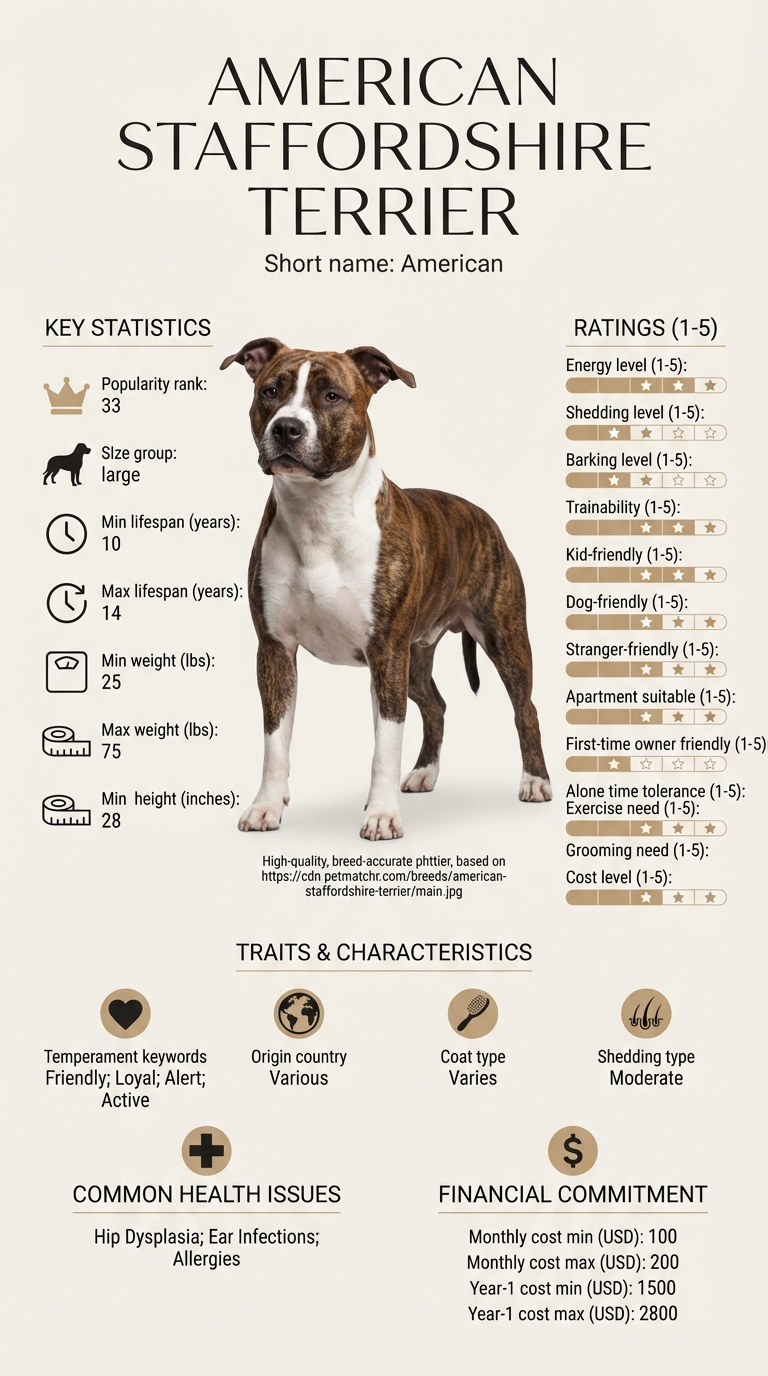
Expect veterinary costs to range from $100 to $200 monthly, depending on treatment needs. Setting aside an emergency fund for potential surgery is also a good idea.
If your dog is limping or reluctant to move, contact your vet immediately. Early intervention can prevent further injury and address pain effectively.