Behavior
How can I reduce my American Staffordshire Terrier's barking?
Reduce barking by increasing exercise, using training commands, and rewarding quiet behavior.

Quick answer
How can I reduce my American Staffordshire Terrier's barking?
Reduce barking by increasing exercise, using training commands, and rewarding quiet behavior.
American Staffordshire Terrier excessive barking can be a frustrating behavior for owners. It's important to address this issue to maintain harmony at home.
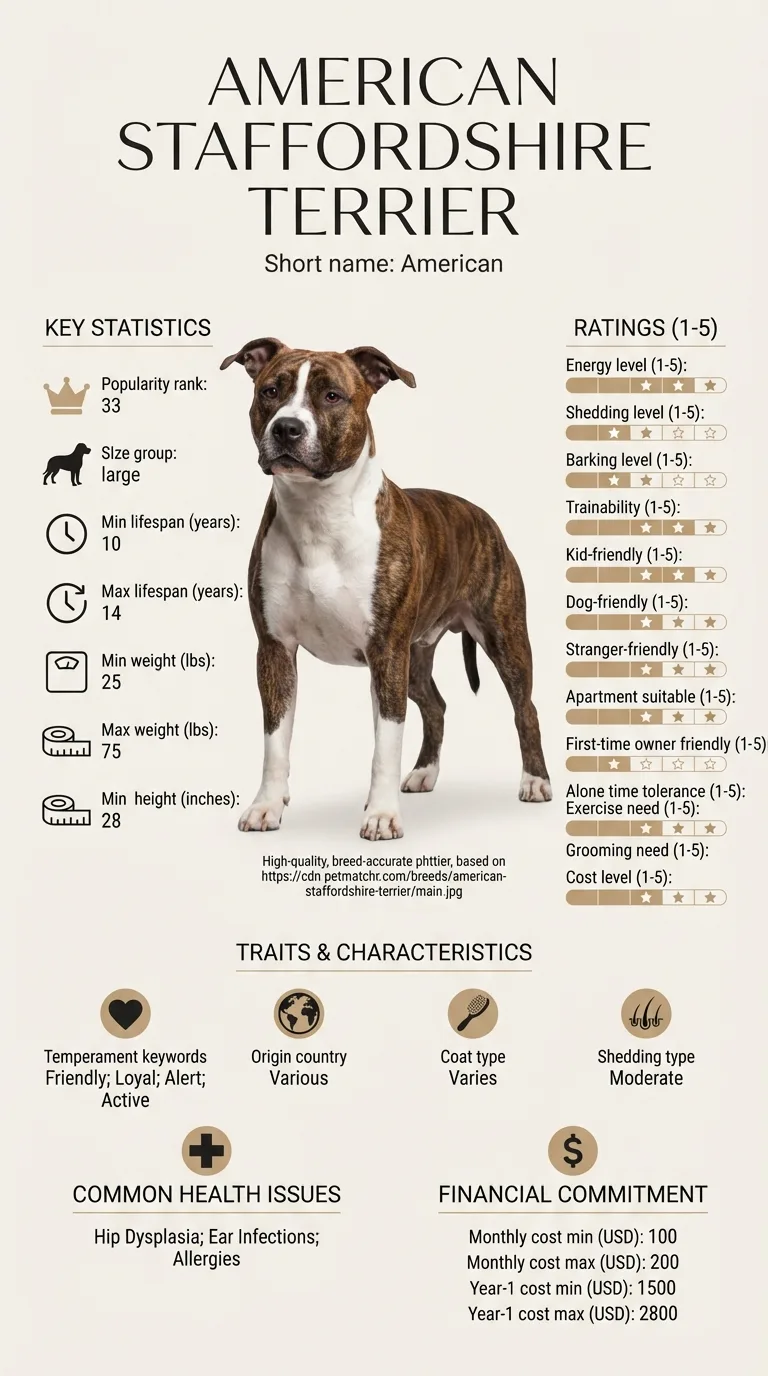
New or busy dog owners, especially those living in apartments or close-knit communities, often face challenges with excessive barking. If your American Staffordshire Terrier barks at every noise or passerby, you're not alone.
This guide is not medical advice. If your dog shows pain, sudden behavior change, or worsening symptoms, consult a licensed veterinarian.
Some links may be affiliate links. We may earn a commission at no extra cost to you. We only suggest products we believe are helpful for dog owners.
We research and check what we publish, but we do not warrant that any figure, date, price, or statement is accurate, complete, or current, and we accept no liability for any loss, cost, injury, or other harm arising from the use of this site. Use it as one reference among several. You remain responsible for your own decisions and for your dog's care - confirm anything that matters with a licensed veterinarian or another qualified professional before you act on it. Full disclaimer.
American Staffordshire Terrier excessive barking can be a daily challenge for many owners. This behavior often manifests as barking at passing cars, people, or even noises in the house. While this breed has a moderate barking level, some individuals may bark excessively, leading to frustration for both the dog and the owner.
Excessive barking is a relatively common issue among American Staffordshire Terriers, especially if they are not adequately stimulated or socialized. Many owners report this behavior, particularly in younger dogs or those not exposed to various environments.
American Staffordshire Terriers are naturally alert and protective. Their barking can be a way to express excitement or alert their owners to potential threats. Some individuals may bark more due to their high energy levels or if they feel anxious.
Excessive barking can also stem from environmental factors. If they are often left alone, bored, or not exercised enough, they may bark out of frustration. Loud noises or the presence of other animals can trigger barking as well.
If your efforts don't yield results, consider consulting a professional trainer. They can offer personalized guidance and help address any underlying behavior issues.
If the barking is sudden and persistent, it may indicate a health issue. Speak with your vet to rule out any medical concerns, especially if accompanied by other changes in behavior.
Start here: American Staffordshire Terrier Most Common Genetic Disorders
See all American Staffordshire Terrier health problems, which breeds are prone to excessive barking, or the full American Staffordshire Terrier breed guide for temperament, exercise needs and ownership costs.
Expect to see gradual improvement within 4 to 8 weeks with consistent training and management strategies.
Success means your American Staffordshire Terrier barks less often and responds to commands to be quiet, allowing for a more peaceful home.
Avoiding these common mistakes can help reduce your American Staffordshire Terrier's excessive barking.
Red flags that mean "call your vet now" include: - Continuous barking for an extended period without breaks. - Signs of distress such as pacing, panting, or whining. - Barking accompanied by unusual behavior, like aggression or hiding. - Physical symptoms like vomiting, lethargy, or difficulty breathing.
In these cases, your dog may be experiencing a medical issue or severe anxiety that requires immediate attention.
On the other hand, situations that can be watched and addressed over time include: - Occasional barking triggered by specific sounds or sights outside. - Barking that happens during play or excitement but doesn't escalate. - Temporary barking due to a new environment or routine changes.
In these instances, you can implement a training plan or behavior modification techniques. Monitoring your dog’s barking can help identify triggers and develop a routine to reduce excessive noise. If the barking doesn’t improve with consistent training, consider consulting a professional for further guidance. Remember, your American Staffordshire Terrier’s health and happiness are paramount, so trust your instincts when something seems off.

When Jenna, a busy nurse in Houston, adopted Max, her American Staffordshire Terrier, she quickly noticed his excessive barking. Whether it was the mailman or a passing squirrel, Max's barks filled the house, driving her to distraction. After researching how to stop American Staffordshire Terrier excessive barking, Jenna decided to set a daily routine. She used positive reinforcement techniques, rewarding Max for quiet behavior and gradually exposing him to the triggers that made him bark. Over several weeks, with patience and consistency, Max learned to stay calm during deliveries and visitors.
Key takeaway: With dedication and the right training approach, even the most vocal American Staffordshire Terriers can learn to bark less, creating a more harmonious home.
American Staffordshire Terriers may bark excessively for several reasons, including boredom, anxiety, or a desire for attention. It's essential to observe your dog’s triggers and address their needs to reduce barking. Training and socialization can also play a crucial role in managing this behavior.
To stop excessive barking, start by identifying the cause. Provide more exercise and mental stimulation, implement a consistent training routine, and use positive reinforcement techniques. If the barking continues, consider consulting a professional dog trainer for tailored strategies.
Positive reinforcement methods, such as rewarding your dog for quiet behavior, can be very effective. Commands like 'quiet' or 'enough' can help establish boundaries. Consistency is key, so practice regularly and ensure all family members use the same commands.
Yes, anxiety is a common cause of excessive barking in American Staffordshire Terriers. If your dog shows signs of separation anxiety or fear, consider creating a safe space for them and using calming techniques. Professional help from a vet or trainer may also be beneficial.
It's normal for American Staffordshire Terriers to bark at strangers as a protective instinct. However, excessive barking can be managed through training and socialization. Gradual exposure to new people and environments can help your dog feel more comfortable.
To manage excessive barking, ensure your dog gets enough exercise and mental stimulation. Use commands like 'quiet' consistently and reward calm behavior. Additionally, consider using puzzle toys to keep them occupied when you're not home.
American Staffordshire Terriers may bark excessively due to boredom, anxiety, or as a response to stimuli. They are naturally alert and may bark at noises or movements outside. Additionally, they might bark to seek attention or express excitement.
If your American Staffordshire Terrier's excessive barking becomes disruptive or if basic training methods don't work, it may be time to seek professional help. Trainers can provide tailored strategies to address specific barking triggers. Additionally, if your dog shows signs of anxiety, a professional can help with those issues.
Yes, health problems can lead to changes in behavior, including excessive barking. Conditions such as pain, hearing loss, or other medical issues may cause your dog to bark more than usual. Always consult with a vet if you notice sudden changes in your dog's barking behavior.
Signs of anxiety in your American Staffordshire Terrier may include pacing, destructiveness, or excessive barking when left alone. If your dog barks excessively in certain situations, particularly when you are away, it could indicate separation anxiety. Observation and possibly consultation with a professional are key to understanding your dog's needs.
Older American Staffordshire Terriers may experience increased barking due to age-related issues such as cognitive decline or health problems. They might become more vocal as they experience anxiety or confusion. Regular vet check-ups can help address these changes and improve their comfort.
Reduce barking by increasing exercise, using training commands, and rewarding quiet behavior.
Train your dog to respond to 'quiet' and reward them when they are calm around visitors.
Consider using calming collars or anxiety wraps to help soothe your American Staffordshire Terrier.
American Staffordshire Terriers typically need about 60 minutes of exercise daily to stay healthy and happy.
Signs include excessive barking, destructive behavior, and pacing when left alone.
Behaviour changes often start with pain. The prep sheet for this page covers what to rule out, and what to ask.
You get: Vet visit prep sheet
No spam. One-click unsubscribe. See our privacy policy.
Preview page 1 before you decide.