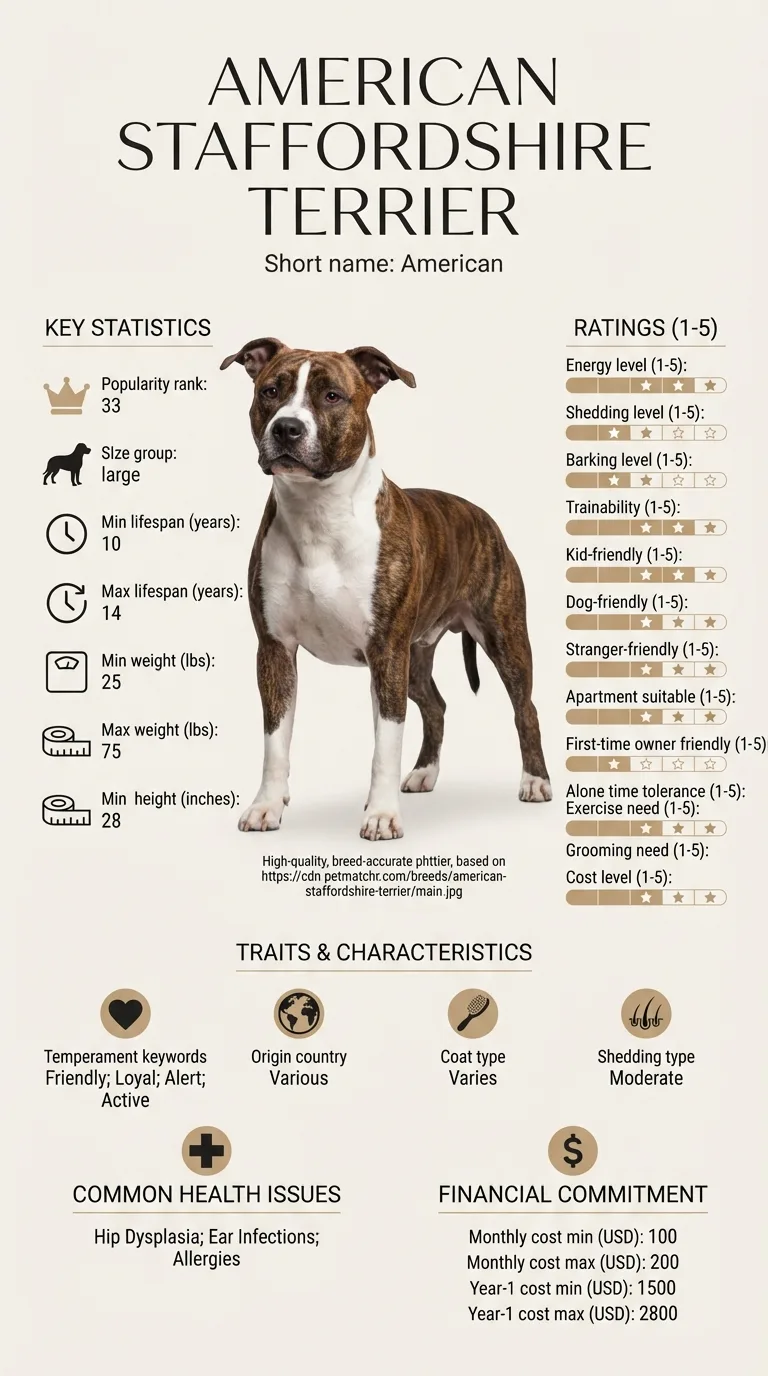
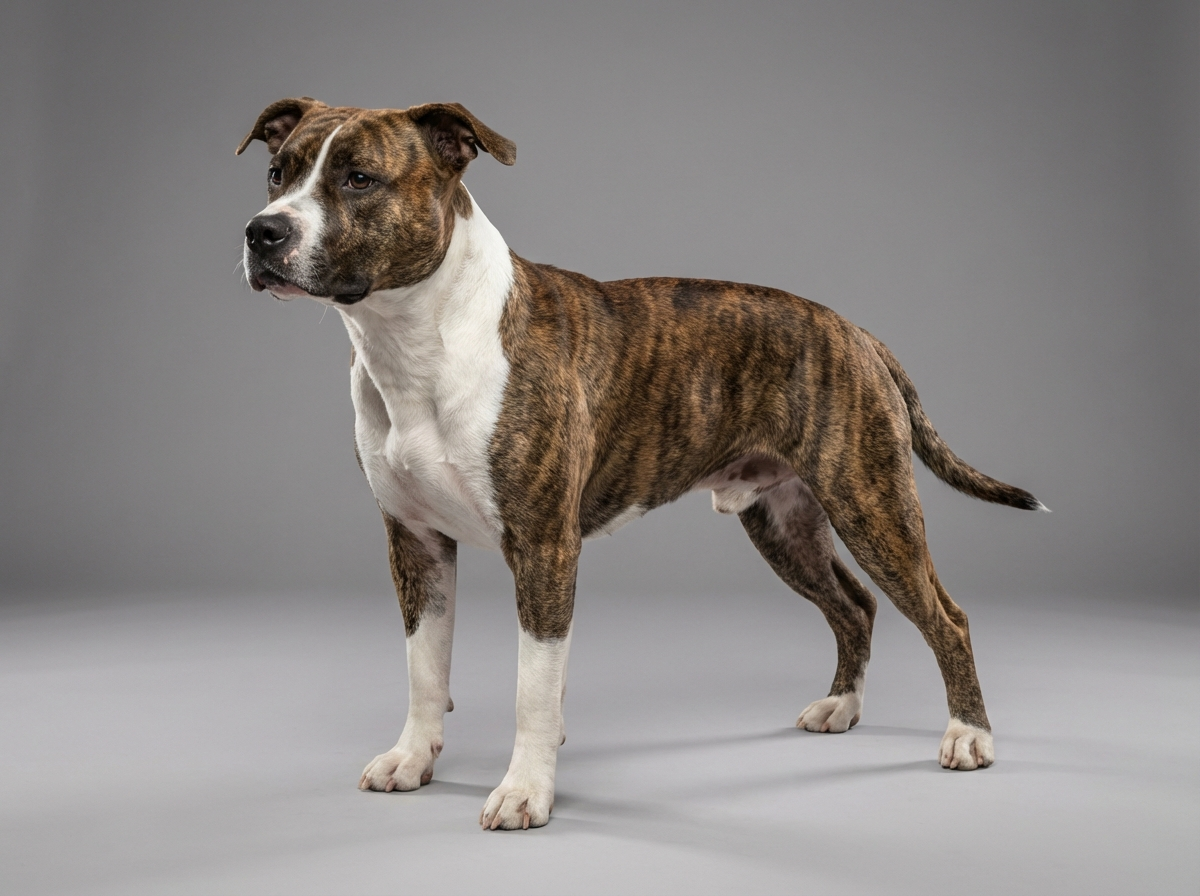
What are quick tips for managing American Staffordshire Terrier epilepsy?
Regular vet visits, maintaining a consistent medication schedule, and keeping a seizure diary can help. It’s also important to create a stress-free environment for your dog.
American Staffordshire Terrier epilepsy is a serious condition that leads to seizures. Understanding it is crucial for your dog's health.

Typical owners include families with children, active individuals, or first-time dog owners who may not know how to handle their dog's sudden seizures. It's essential for these owners to seek guidance and support.
This guide is not medical advice. If your dog shows pain, sudden behavior change, or worsening symptoms, consult a licensed veterinarian.
Some links may be affiliate links. We may earn a commission at no extra cost to you. We only suggest products we believe are helpful for dog owners.
American Staffordshire Terrier epilepsy can manifest as sudden seizures that may leave your dog disoriented and confused. These episodes can occur without warning and vary in intensity, lasting from a few seconds to several minutes. The uncertainty of when a seizure might strike can cause anxiety for both the dog and the owner.
Epilepsy is relatively common in American Staffordshire Terriers, with estimates suggesting that about 1-2% of the breed may experience seizures at some point in their lives. While not every dog will face this issue, being aware and prepared is essential for owners.
American Staffordshire Terriers can be genetically predisposed to epilepsy. This breed, while generally healthy, may inherit conditions that lead to seizure disorders. Understanding their genetic background can help you anticipate potential health issues.
Environmental factors can also trigger seizures in American Staffordshire Terriers. Stressful situations, exposure to toxins, or sudden changes in routine can increase the likelihood of seizures. It's important to create a stable and safe environment to minimize these triggers.
If your American Staffordshire Terrier shows signs of anxiety or stress that may lead to seizures, consider consulting a dog trainer. A trainer can help you develop strategies to manage anxiety and create a more relaxed environment.
If your dog experiences seizures, or if you notice unusual behavior, it's crucial to consult your vet. They can help determine if your American Staffordshire Terrier needs medication or further diagnostic tests to manage epilepsy effectively.
Managing American Staffordshire Terrier epilepsy usually takes several months. You'll start seeing improvements in seizure frequency and intensity within 3 to 6 months of following a consistent treatment plan.
Success means your dog has fewer seizures, and when they do occur, they are less severe. Additionally, your dog should respond well to treatment, allowing them to enjoy a better quality of life.
Avoiding these common mistakes can help your American Staffordshire Terrier manage epilepsy better. Here are some behaviors to reconsider.
Recognizing when your American Staffordshire Terrier's epilepsy is an emergency can save their life. If your dog experiences a seizure lasting more than five minutes, this is a critical situation. Call your vet immediately, as prolonged seizures can lead to serious complications. Additionally, if your dog has multiple seizures in a short time, this is also a red flag indicating you need to seek veterinary assistance right away.
Other signs that require urgent attention include difficulty breathing, severe disorientation, or an inability to stand or walk following a seizure. These symptoms can indicate a more serious underlying issue that needs immediate care. If your dog becomes excessively agitated or seems to be in pain, don’t hesitate to contact your veterinarian.
On the other hand, if your American Staffordshire Terrier has a seizure that lasts less than five minutes and they return to normal behavior shortly after, you may not need to rush to the vet. Monitor your dog closely and keep a record of the episode, including its duration and any unusual behaviors. This information can be valuable for your vet during follow-up consultations. If seizures become frequent or worsen, it’s crucial to have a plan in place with your veterinarian to address the condition effectively.

Lisa adopted Max, her American Staffordshire Terrier, when he was just a year old. After a few months, she noticed he was having seizures, which left both of them feeling scared and helpless. Lisa consulted her vet, who recommended medication and a strict routine. She also learned how to recognize early signs of a seizure, which helped her to prepare and keep Max safe. Over time, with patience and dedication, Max's seizures became less frequent, and he was able to lead a more active life. The journey wasn't easy, but Lisa was grateful for every small victory.
Key takeaway: With proper care and a good support system, managing American Staffordshire Terrier epilepsy is possible. Consistency in treatment and a proactive approach can significantly improve your dog's quality of life.

Epilepsy in American Staffordshire Terriers can be caused by genetics, brain injuries, or other underlying health issues. It's essential to consult a veterinarian to determine the specific cause and appropriate treatment options. Early diagnosis can help manage the condition effectively.
Stopping epilepsy entirely may not be possible, but you can manage it effectively. Work with your vet to establish a treatment plan, which may include medications and lifestyle adjustments. Consistency and regular check-ups are key in managing seizures.
Training techniques for American Staffordshire Terriers with epilepsy focus on creating a calm environment. Positive reinforcement training can reduce stress and anxiety, which may trigger seizures. Additionally, teaching commands can help redirect your dog's attention during episodes.
During a seizure, stay calm and ensure your American Staffordshire Terrier is in a safe space. Avoid putting anything in their mouth and time the seizure. Contact your vet if it lasts more than a few minutes or if multiple seizures occur in a short period.
Yes, diet can influence seizure frequency in some dogs. Consult your veterinarian about a balanced diet that may include specific nutrients or supplements. Keeping a consistent feeding schedule can also help manage overall health.
If your American Staffordshire Terrier has a seizure, stay calm and clear the area of any potential hazards. Time the seizure and avoid putting anything in their mouth. After the seizure, comfort your dog and monitor their behavior closely.
Yes, many dogs with epilepsy can benefit from anti-seizure medications prescribed by a veterinarian. It's important to have regular check-ups to monitor the medication's effectiveness and adjust dosages as needed.
Triggers can vary, but stress, flashing lights, and sudden loud noises may provoke seizures. Keeping a log of your dog's seizures can help identify potential triggers and make adjustments to their environment.
Older American Staffordshire Terriers may need special care, including regular vet visits and a consistent routine. Ensure they are comfortable and try to minimize stressors in their environment to help manage their epilepsy.
Epilepsy in American Staffordshire Terriers can be caused by genetics, brain injury, or other health issues. It's essential to consult with a veterinarian to determine the underlying cause and discuss possible treatment options.
Regular vet visits, maintaining a consistent medication schedule, and keeping a seizure diary can help. It’s also important to create a stress-free environment for your dog.
Treatment costs can range from $100 to $200 per month, depending on medication and vet visits. Be prepared for additional costs for emergencies or specialized care.
Yes, look for training programs that focus on positive reinforcement and stress reduction. These can help your dog feel more secure and potentially reduce seizure triggers.