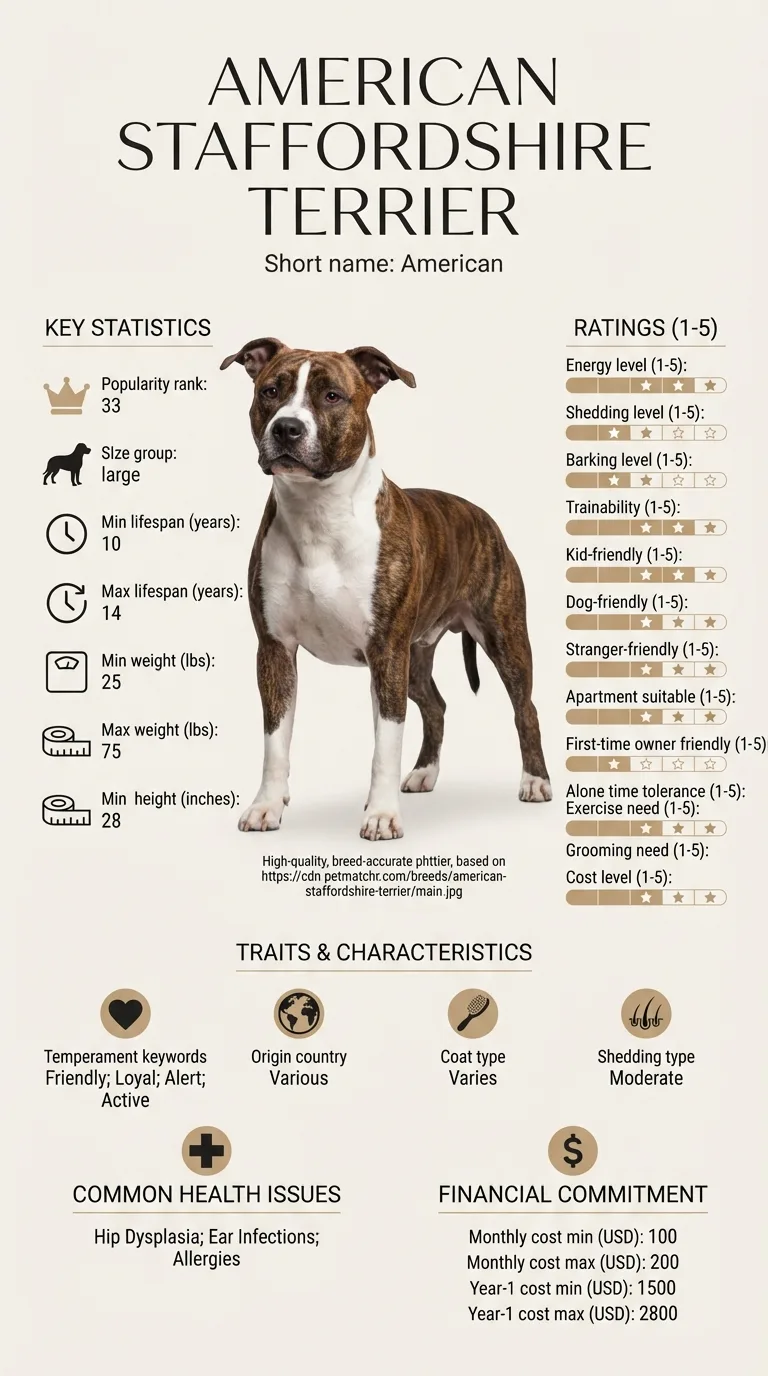
What are some American Staffordshire Terrier diabetes quick tips?
Regular vet check-ups and consistent feeding schedules are essential for managing diabetes. Monitor their weight and encourage daily exercise to keep their blood sugar in check.
American Staffordshire Terrier diabetes is a serious condition that affects their health and quality of life. Recognizing the signs early can make a big difference.

Typical owners who face this issue often include first-time dog parents or families with busy lifestyles. They might struggle to notice symptoms or may not know how to adjust their dog's diet and exercise routines.
This guide is not medical advice. If your dog shows pain, sudden behavior change, or worsening symptoms, consult a licensed veterinarian.
Some links may be affiliate links. We may earn a commission at no extra cost to you. We only suggest products we believe are helpful for dog owners.
American Staffordshire Terrier diabetes can be a challenging condition. Owners might notice their dog drinking more water than usual, frequent urination, and weight loss despite a good appetite. These symptoms can be distressing and often lead to a need for regular vet visits and careful management.
Diabetes is relatively common in American Staffordshire Terriers, particularly as they age. Reports suggest that about 1 in 300 dogs may develop diabetes, with a noticeable increase in cases in older and overweight American Staffordshire Terriers.
American Staffordshire Terriers can be predisposed to diabetes due to their genetics. Certain breeds, including the American Staffordshire Terrier, may have a higher risk due to factors like obesity and metabolism issues. This breed's strong build can mask weight gain, making it harder to notice when they become overweight.
Environmental factors also play a role in diabetes development. Poor diet, lack of exercise, and stress can contribute to obesity and insulin resistance. Additionally, age can be a significant factor, as diabetes is more common in older dogs.
If you're struggling to implement a regular exercise routine or if your dog is resistant to training, consider hiring a professional dog trainer. They can help create a customized plan to improve your dog’s activity level and behavior.
If you notice symptoms like excessive thirst, frequent urination, or unexplained weight loss, consult your veterinarian immediately. Early detection is crucial for managing American Staffordshire Terrier diabetes effectively.
Managing American Staffordshire Terrier diabetes typically requires a commitment of 6 months to a year for noticeable improvement.
Success means consistently balanced blood sugar levels, a healthy weight, and an active lifestyle for your dog.
Avoid these common mistakes to help your American Staffordshire Terrier manage diabetes effectively.
Recognizing when American Staffordshire Terrier diabetes is an emergency is crucial for your dog's health. Look for red-flag signs that indicate you should call your vet immediately. These include sudden weight loss, excessive thirst leading to constant urination, lethargy, or unusual behavior such as confusion or weakness. If your dog shows any of these symptoms, don’t wait—get veterinary help right away.
In contrast, there are mild cases of diabetes where monitoring and a management plan may suffice. Symptoms like increased appetite, slight weight gain, or mild lethargy can often be watched closely. If your American Staffordshire Terrier is displaying these signs, schedule a vet appointment but try to keep a detailed log of their behavior and symptoms for discussion.
It's important to remember that managing diabetes is a long-term commitment. If your dog is diagnosed, follow your vet's advice on diet, exercise, and medication. Regular check-ups will help keep your dog stable and healthy. Keep in mind that every dog is different, so what may be an emergency for one might not be for another. Always trust your instincts as a pet owner—if something feels off, don't hesitate to reach out for professional help.

Sam, a dedicated owner of a 7-year-old American Staffordshire Terrier named Max, noticed that Max was drinking more water than usual and seemed lethargic. After a vet visit confirmed diabetes, Sam felt overwhelmed but determined to help his furry friend. With the vet's guidance, Sam learned to adjust Max's diet, monitor his blood sugar, and establish a routine exercise schedule. Over several months, Max lost weight and regained his energy, allowing him to play fetch again. Sam realized the importance of consistency and support throughout this journey.
Key takeaway: Managing diabetes in an American Staffordshire Terrier requires commitment, but with proper care and adjustments, your dog can lead a happy, active life.

Diabetes in American Staffordshire Terriers can be caused by factors like genetics, obesity, and age. Hormonal imbalances and pancreatitis are also common culprits. Regular vet check-ups can help identify issues early.
Managing diabetes involves a stable diet, consistent feeding times, and regular exercise. Work with your vet to create a tailored meal plan and monitor blood sugar levels regularly for the best results.
Common signs include increased thirst, frequent urination, and weight loss despite a good appetite. You may also notice lethargy and changes in behavior. If you see these signs, contact your vet promptly.
To prevent worsening, maintain a healthy weight through diet and regular exercise. Monitor their blood sugar levels and follow your vet's recommendations closely. Consistency is key for managing diabetes.
Currently, diabetes cannot be reversed but can be managed effectively. With proper care, many dogs lead happy, full lives despite their condition. Regular vet visits are crucial for ongoing management.
A high-fiber, low-fat diet is usually best for diabetic dogs. Foods that help regulate blood sugar levels, such as those with complex carbohydrates, are recommended. Always consult your vet for specific dietary advice.
Common symptoms of diabetes include increased thirst, frequent urination, and unexplained weight loss. You might also notice your American Staffordshire Terrier seeming more lethargic than usual. If you observe these signs, it's essential to consult your vet.
While diabetes is more common in older dogs, younger American Staffordshire Terriers can develop the condition due to genetic factors or obesity. If you suspect your younger dog may have diabetes, it's best to seek veterinary advice early.
Managing diabetes at home involves a consistent routine for feeding, regular exercise, and monitoring blood glucose levels as advised by your vet. Additionally, maintaining a healthy weight through diet can significantly help manage the condition.
Diabetes in American Staffordshire Terriers can be caused by several factors, including genetics, obesity, and certain medical conditions. It’s important to discuss your dog’s health history with your vet to identify any potential risks.
Yes, treatment for diabetes can vary in senior American Staffordshire Terriers due to their overall health and other potential age-related conditions. Older dogs may require a tailored diet and a more careful monitoring regimen, so regular vet visits are crucial.
Regular vet check-ups and consistent feeding schedules are essential for managing diabetes. Monitor their weight and encourage daily exercise to keep their blood sugar in check.
Aim for at least 30 minutes of moderate exercise daily. This helps maintain a healthy weight and stabilizes blood sugar levels.
Many diabetic dogs require insulin injections to manage their condition. Consult your vet to determine if this is necessary for your pet.

![Ultimate Guides: "Complete Guide to Choosing a Dog for [X] | Ultimate Guides: Complete Guide to Choosing a Dog for You thumbnail](/images/breeds/golden-retriever/golden%20retriever1.jpg)