Health
What are quick tips for managing American Staffordshire Terrier chondrodystrophy (cddy)?
Focus on maintaining a healthy weight and providing low-impact exercises. Regular vet check-ups are crucial for adjusting care plans.

Quick answer
What are quick tips for managing American Staffordshire Terrier chondrodystrophy (cddy)?
Focus on maintaining a healthy weight and providing low-impact exercises. Regular vet check-ups are crucial for adjusting care plans.
American Staffordshire Terrier chondrodystrophy (cddy) is a serious developmental disorder affecting your dog's bones. This condition can cause pain and mobility issues, making it crucial for owners to recognize its signs early.
Many dog owners, especially first-time ones, may struggle with recognizing and understanding chondrodystrophy in their American Staffordshire Terriers. Those who live active lifestyles with their pets might find it particularly challenging when their dogs can't keep up due to this disorder.
This guide is not medical advice. If your dog shows pain, sudden behavior change, or worsening symptoms, consult a licensed veterinarian.
Some links may be affiliate links. We may earn a commission at no extra cost to you. We only suggest products we believe are helpful for dog owners.
We research and check what we publish, but we do not warrant that any figure, date, price, or statement is accurate, complete, or current, and we accept no liability for any loss, cost, injury, or other harm arising from the use of this site. Use it as one reference among several. You remain responsible for your own decisions and for your dog's care - confirm anything that matters with a licensed veterinarian or another qualified professional before you act on it. Full disclaimer.
Check this first
Understanding when American Staffordshire Terrier chondrodystrophy (CDDY) becomes an emergency can save your dog's life. Certain signs indicate that you should call your vet immediately, while other symptoms may allow you to monitor your dog at home with a plan. Knowing the difference is crucial for your pet's health and well-being.
If any of these apply, call your vet or an emergency clinic now. The rest of this page is for the cases that are not an emergency.
American Staffordshire Terrier chondrodystrophy (cddy) is a developmental disorder affecting bone growth. This condition can lead to shortened limbs and abnormal bone structure, which may affect mobility and overall health. Many owners notice signs of discomfort, such as difficulty in movement or unusual postures, which can be distressing.
Chondrodystrophy is relatively common in American Staffordshire Terriers, particularly in those with poor breeding practices. It's important to monitor your dog for signs of this condition, especially if they exhibit any unusual physical traits or behaviors.
American Staffordshire Terriers can inherit chondrodystrophy (cddy) due to genetic factors. Some lines of this breed are more prone to developmental disorders affecting bone structure. This condition can cause abnormal growth patterns, leading to various mobility issues.
Environmental factors can also play a role in the severity of cddy. Poor nutrition during critical growth periods can exacerbate skeletal problems. Additionally, lack of proper exercise can lead to weakness in the muscles supporting the bones, making symptoms more pronounced.
If you notice signs of pain, limping, or difficulty in movement, consult your vet immediately. They can evaluate the severity of cddy and recommend treatment options, which may include pain management or physical therapy.
Avoiding common mistakes can help improve your American Staffordshire Terrier's chondrodystrophy (cddy). Here are some behaviors to watch out for.
Start here: American Staffordshire Terrier Most Common Genetic Disorders
See all American Staffordshire Terrier health problems, which breeds are prone to chondrodystrophy cddy, or the full American Staffordshire Terrier breed guide for temperament, exercise needs and ownership costs.
It typically takes a few weeks to several months to see improvements with a consistent care under your vet's plan approach for American Staffordshire Terrier chondrodystrophy (cddy).
Success looks like reduced discomfort during movement, improved mobility, and a happier, more active dog. Owners should also notice a positive change in their dog's behavior and overall quality of life.
If your American Staffordshire Terrier shows any of these signs, seek veterinary care immediately: - Severe pain or discomfort - Difficulty walking or standing - Swelling in the limbs or joints - Noticeable changes in appetite or drinking habits - Rapid weight loss - Difficulty breathing or persistent cough These symptoms often indicate a serious complication related to CDDY that requires prompt treatment.

In less severe cases of American Staffordshire Terrier chondrodystrophy (CDDY), you can monitor your dog at home. Here are some signs that may not require immediate veterinary attention: - Mild limping or stiffness - Occasional lethargy - Reduced interest in play or exercise - Mild weight fluctuations - Minor changes in behavior or temperament Have a plan in place to observe these symptoms closely and consult your vet if they worsen.

Emily, a first-time dog owner, adopted Max, her American Staffordshire Terrier, who was diagnosed with chondrodystrophy (cddy). At first, Max struggled with mobility, often hesitating to play or take walks. Emily felt overwhelmed and unsure about how to help him. After consulting a vet and starting a tailored exercise and training program, she learned to manage Max's condition effectively. With patience, she incorporated low-impact activities and reinforced positive behavior through training. Gradually, Max became more active and confident, enjoying life like never before.
Key takeaway: With the right support and training, even dogs with chondrodystrophy (cddy) can lead joyful, fulfilling lives. A proactive approach can make a significant difference.
Signs of American Staffordshire Terrier chondrodystrophy (cddy) include difficulty walking, a reluctance to exercise, and noticeable changes in bone structure. If you notice your dog struggling with mobility or experiencing pain, it's important to consult a veterinarian.
Managing cddy often involves a combination of weight management, physical therapy, and possibly medication to reduce pain. Regular check-ups with your vet will help monitor your dog's condition and adjust treatment as needed.
Signs of cddy include limping, difficulty in walking, and noticeable changes in leg shape. You may also see signs of discomfort when your dog is active. If you notice these symptoms, it's essential to visit a veterinarian.
Training should focus on gentle exercises that promote mobility without stressing the joints. Positive reinforcement techniques work best, ensuring your dog feels comfortable and engaged during training sessions.
Currently, there is no cure for chondrodystrophy (cddy), but its effects can be managed effectively. With proper care, many dogs can lead happy, active lives despite the condition.
While there is no cure for American Staffordshire Terrier chondrodystrophy (cddy), management options are available. Treatment may involve medication for pain relief, weight management, and physical therapy to enhance mobility.
Yes, American Staffordshire Terrier chondrodystrophy (cddy) can be hereditary. It's essential to be aware of your dog's lineage and consult with a breeder who conducts health screenings to minimize the risk of passing on genetic disorders.
For older dogs with American Staffordshire Terrier chondrodystrophy (cddy), consider providing a comfortable bed, maintaining a healthy diet, and incorporating gentle exercise routines. Regular vet check-ups can help manage their condition effectively.
If you suspect your American Staffordshire Terrier is experiencing pain due to chondrodystrophy (cddy), it's crucial to seek veterinary advice immediately. Pain management and appropriate treatment options can greatly improve your dog's quality of life.
Focus on maintaining a healthy weight and providing low-impact exercises. Regular vet check-ups are crucial for adjusting care plans.
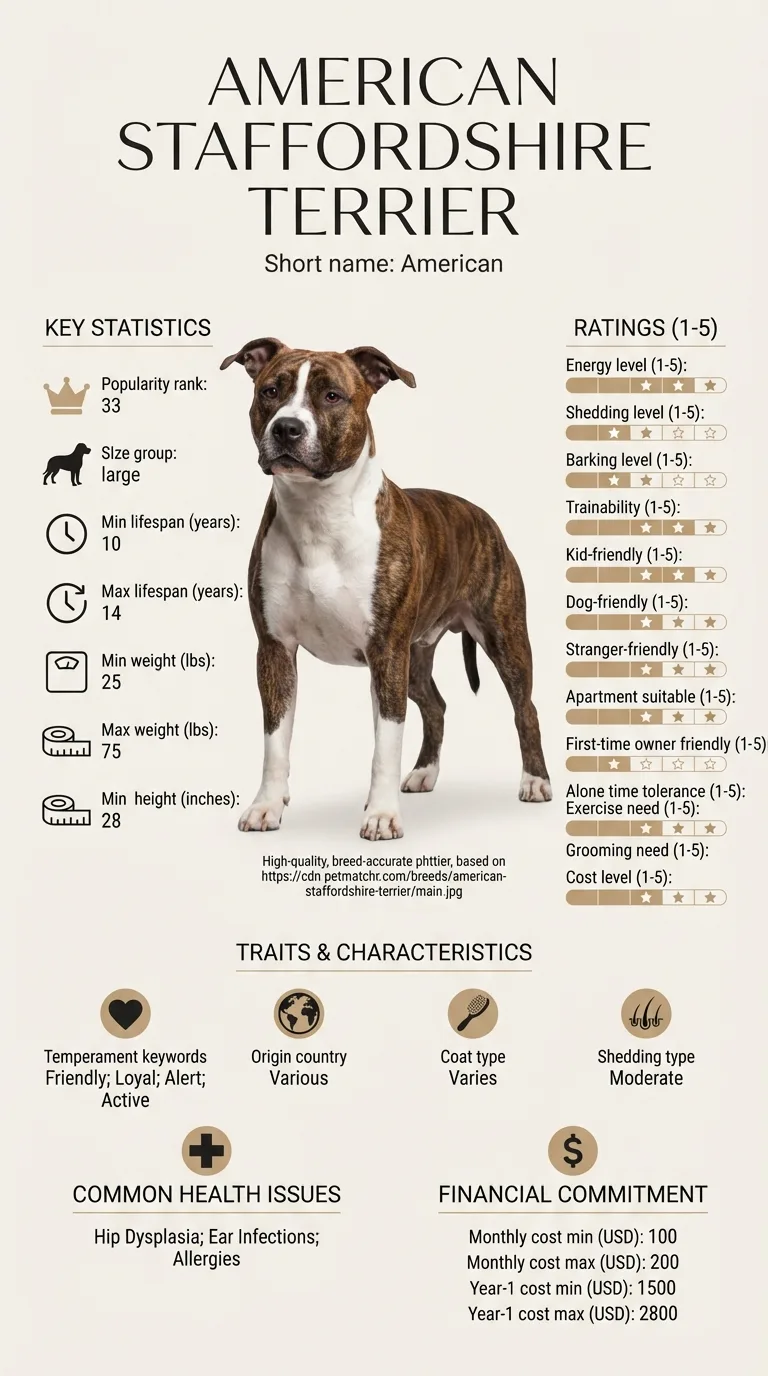
Annual costs can vary but expect to spend between $1,500 and $2,800 for care, including vet visits and therapies.
A balanced diet low in calories can help prevent obesity, which is vital for dogs with cddy. Consult your vet for tailored dietary recommendations.
Gentle, positive reinforcement training that avoids high-impact activities is ideal. Focus on short sessions that keep your dog engaged.
Yes, physical therapy can significantly improve mobility and comfort for dogs with cddy. Consult your vet for recommended therapists.
A one-page prep sheet for this condition: the signs, the questions to ask, what to get priced. Unlocks here.
You get: Vet visit prep sheet
No spam. One-click unsubscribe. See our privacy policy.
Preview page 1 before you decide.