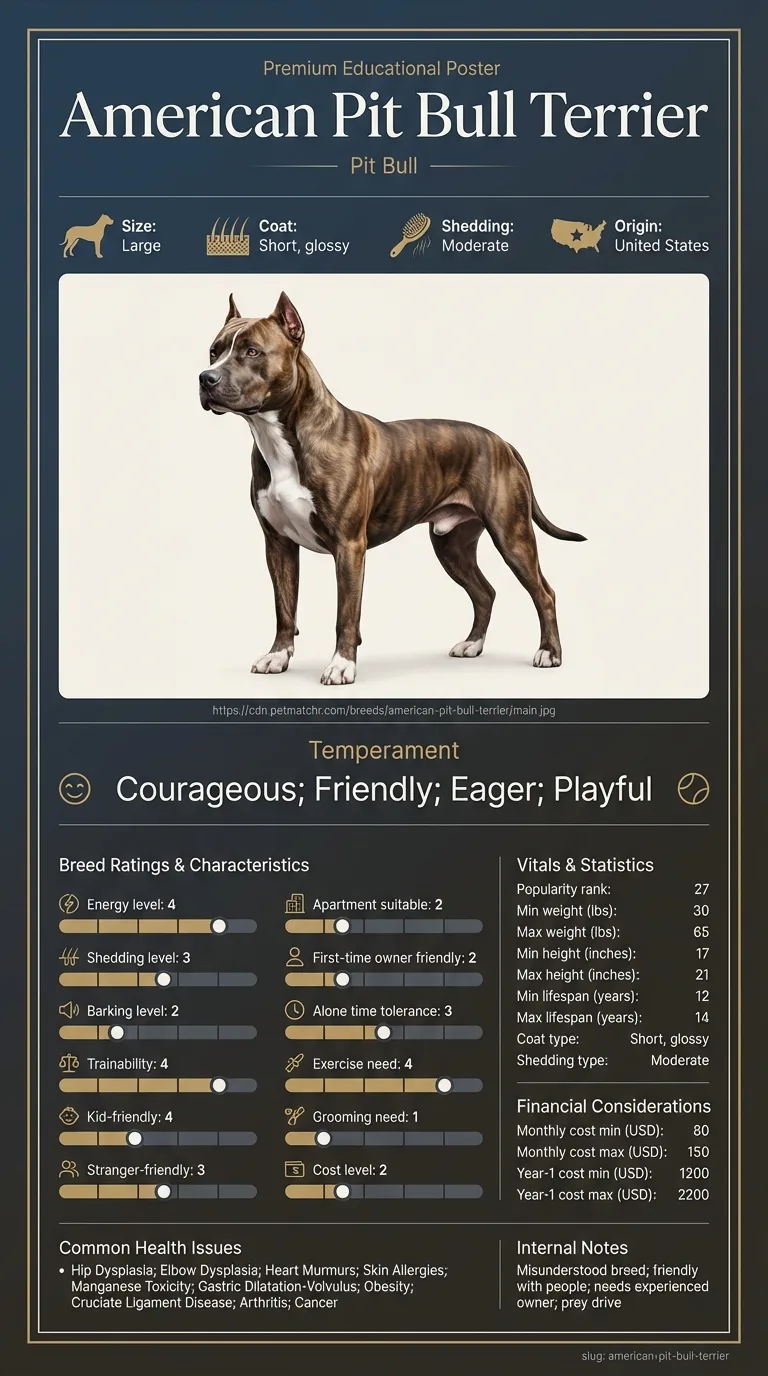
What are quick tips for American Pit Bull Terrier excessive barking?
Keep your Pit Bull mentally stimulated with toys and training. Regular exercise is crucial to reduce boredom barking. Consider using calming techniques or training aids if barking continues.
Excessive barking can be a frustrating issue for American Pit Bull Terrier owners. It often disrupts your home and can lead to tension with neighbors.
This issue commonly affects first-time Pit Bull owners or those living in close-knit communities. Busy professionals or families with young children may also find excessive barking particularly challenging.
Important reminder
This guide is not medical advice. If your dog shows pain, sudden behavior change, or worsening symptoms, consult a licensed veterinarian.
Some links may be affiliate links. We may earn a commission at no extra cost to you. We only suggest products we believe are helpful for dog owners.
We research and check what we publish, but we do not warrant that any figure, date, price, or statement is accurate, complete, or current, and we accept no liability for any loss, cost, injury, or other harm arising from the use of this site. Use it as one reference among several. You remain responsible for your own decisions and for your dog's care - confirm anything that matters with a licensed veterinarian or another qualified professional before you act on it. Full disclaimer.
What this problem looks like
American Pit Bull Terrier excessive barking can be a daily challenge for owners. This behavior often manifests as barking at other dogs, people, or noises, which can become quite disruptive in a home environment. Understanding the root causes of this barking is essential for effective training and management.
Common triggers
Anxiety or stress due to separation from owners
Boredom from lack of physical or mental stimulation
Protective instincts when strangers approach
Excessive barking is moderately common in American Pit Bull Terriers. While not as vocal as some breeds, they can bark significantly when feeling anxious or bored. Owners should be aware of these tendencies and be prepared to address them through training and socialization.
Why this happens
Breed factors
The American Pit Bull Terrier, known for its courageous and playful nature, can bark excessively due to its strong prey drive or protective instincts. If they perceive a threat or are excited, they may respond with barking. Additionally, some individual dogs may have a naturally higher tendency to vocalize.
Environment factors
Excessive barking can also stem from environmental factors. For instance, a lack of socialization, boredom, or not enough exercise can lead to frustration and increased barking. If a Pit Bull is left alone for long periods, it may bark out of anxiety or loneliness.
What you can try
At-home strategies
Increase exercise: Ensure your Pit Bull gets at least 60 minutes of physical activity each day. This can include walks, playtime, or interactive toys that stimulate their mind.
Create a calm environment: Use calming music or white noise to mask outside sounds that may trigger barking. Consider using curtains to block visual stimuli.
Train a 'quiet' command: When your dog barks, say 'quiet' in a firm but calm voice. When they stop barking, reward them with a treat. Repeat this consistently to reinforce the behavior.
Socialize your dog: Expose your Pit Bull to different environments, people, and other dogs. This can help reduce anxiety and overreactions to new stimuli.
When to consider a trainer
If your American Pit Bull Terrier's excessive barking continues despite your efforts, it may be time to consult a professional trainer. A trainer can provide personalized strategies and address any underlying behavioral issues.
When to talk to your vet
If you notice sudden changes in your Pit Bull's barking habits or if the barking is accompanied by signs of distress, such as pacing or destructive behavior, consult your vet. There could be underlying health concerns or anxiety that need professional attention.
More American PIT Bull Terrier health & behavior issues
With consistent training and patience, you can expect to see improvements in your American Pit Bull Terrier's excessive barking within 4 to 6 weeks.
Success means your Pit Bull barks less frequently and appropriately, responding well to commands and cues during training sessions.
Mistakes that make Excessive Barking worse
Addressing American Pit Bull Terrier excessive barking can be challenging, and certain common mistakes might hinder your progress. Here are some behaviors to avoid, along with safer alternatives.
Ignoring the barking: If you let your dog bark without addressing it, they may think it's acceptable. Instead, intervene calmly and redirect their attention with a command or toy.
Rewarding barking: Sometimes, owners inadvertently reward their dogs for barking by giving attention or treats. Instead, only reward quiet behavior to reinforce silence.
Using punishment: Scolding or using shock collars can increase anxiety and worsen barking behavior. Focus on positive reinforcement and training instead.
Not providing enough exercise: An under-exercised Pit Bull may bark out of boredom. Increase their daily physical activity to help reduce excess energy and barking.
Failing to socialize: Lack of exposure to different environments and people can lead to excessive barking. Gradually introduce your dog to new situations to build their confidence.
Inconsistent training: Mixed signals can confuse your dog. Be consistent with commands and responses to barking to ensure clear communication.
Leaving them alone for too long: Separation anxiety can trigger barking. Gradually acclimate your dog to being alone, and consider crate training or interactive toys.
When American Pit Bull Terrier Excessive Barking is an Emergency
If your dog is barking excessively due to pain, distress, or a sudden change in behavior, it’s time to call your vet. Signs of distress include pacing, whining, or hiding. If your Pit Bull starts barking uncontrollably and shows signs of aggression or fear, this could indicate a serious issue that requires immediate attention.
On the other hand, if your dog barks at passersby or during play without signs of distress, it might be manageable. Monitor this behavior for triggers or patterns, and implement training strategies to address it. If your dog barks when left alone, consider separation anxiety as a possible cause, which can usually be managed with specific training techniques and gradual desensitization.
In summary, call your vet if your American Pit Bull Terrier shows signs of pain, distress, or aggression accompanied by excessive barking. Otherwise, keep an eye on the situation, implement training, and provide mental stimulation to reduce barking. By understanding the difference, you can ensure your furry friend stays healthy and happy.
Understanding American Pit Bull Terrier Excessive Barking - When American Pit Bull Terrier Excessive Barking is an Emergency
Tina and Max: Tackling Barking Head-On
Tina, a busy nurse in Atlanta, found her American Pit Bull Terrier, Max, barking excessively whenever someone walked by their apartment. It was exhausting for her and disruptive to neighbors. After researching how to stop American Pit Bull Terrier excessive barking, Tina started a training regimen that involved consistent commands, rewarding calm behavior, and giving Max enough exercise. Over the weeks, she noticed that Max was barking less, especially when he was praised for staying quiet. Training took dedication, but it brought peace to both Tina and her neighborhood.
Key takeaway: With patience and proper training, you can significantly reduce your American Pit Bull Terrier's excessive barking.
Frequently asked questions
Why does my American Pit Bull Terrier have excessive barking?
American Pit Bull Terriers may bark excessively due to boredom, anxiety, or a need for attention. They are social dogs that thrive on interaction and can become vocal if left alone for long periods. Identifying the trigger is key to resolving the barking issue. This answer relates to American Pit Bull Terrier excessive barking.
How can I stop my American Pit Bull Terrier from excessive barking?
To stop excessive barking, provide plenty of physical and mental stimulation. Engage your Pit Bull in regular exercise and interactive play. Additionally, you can use training techniques that reward quiet behavior and redirect their focus when they start barking.
Can training help with my American Pit Bull Terrier's excessive barking?
Yes, training can significantly reduce excessive barking. Consistent commands and rewards for calm behavior can teach your Pit Bull to bark less. Consider working with a professional trainer if the barking persists.
Are there specific techniques for training an American Pit Bull Terrier to stop barking?
You can use the 'quiet' command to train your American Pit Bull Terrier. When they bark, say 'quiet' and wait for them to stop. Once they do, reward them with a treat or praise. Repeat this until they associate the command with being quiet.
What if my American Pit Bull Terrier's excessive barking is due to separation anxiety?
If the barking stems from separation anxiety, try leaving your Pit Bull alone for short periods and gradually increasing the time. Providing puzzle toys or treats can also distract them while you are away. Consult your vet for additional strategies tailored to anxiety.
How does my American Pit Bull Terrier's energy level affect their barking?
A high energy level can lead to excessive barking in your American Pit Bull Terrier. Ensuring they get ample exercise can help channel their energy positively and reduce barking. Aim for at least an hour of physical activity each day.
Is excessive barking common in American Pit Bull Terriers?
While some barking is normal, excessive barking can indicate boredom or stress. Understanding your Pit Bull's needs and providing adequate stimulation can help manage this behavior effectively.
What should I do if my American Pit Bull Terrier barks excessively at strangers?
If your American Pit Bull Terrier barks excessively at strangers, it's important to socialize them gradually. Introduce your dog to new people in a controlled manner and reward calm behavior. If the barking continues, consult a professional trainer.
Is excessive barking a sign of anxiety in American Pit Bull Terriers?
Yes, excessive barking can indicate anxiety. If your Pit Bull barks excessively, especially when left alone, they might be experiencing separation anxiety. Consider implementing a training plan or seeking advice from a vet or dog behaviorist.
How can I tell if my American Pit Bull Terrier's barking is a behavior problem?
Monitor your dog's barking triggers. If they bark at certain noises or situations and cannot be distracted, this may indicate a behavior problem. A consistent barking pattern can also be a sign that professional help is needed.
What age do American Pit Bull Terriers start barking excessively?
Excessive barking can start at any age, but it's more common in younger dogs who are still developing their social skills. Early training and socialization can help mitigate excessive barking as they grow.
When should I consult a vet about my American Pit Bull Terrier's barking?
If your dog's barking is persistent and accompanied by other behavioral changes, such as lethargy or loss of appetite, it's time to consult a vet. They can rule out any underlying health issues that may be causing the excessive barking.
What are quick tips for American Pit Bull Terrier excessive barking?
Keep your Pit Bull mentally stimulated with toys and training. Regular exercise is crucial to reduce boredom barking. Consider using calming techniques or training aids if barking continues.
Living
How much exercise does my American Pit Bull Terrier need?
American Pit Bull Terriers usually need about an hour of exercise daily. Activities like walks, fetch, or agility training can help reduce excessive barking.
Training
Should I hire a trainer for barking issues?
If you're struggling with excessive barking, hiring a professional trainer can provide tailored solutions. They can teach you effective training techniques specific to your dog's needs.
Behavior
Can I use a bark collar for my American Pit Bull Terrier?
Bark collars can be effective, but they should be used with caution. It's best to explore training methods first, as collars may not address the underlying causes of barking.
Health
Is excessive barking a health concern?
Excessive barking itself isn't a health concern, but it may indicate anxiety or stress. Consult a vet if you notice other signs of distress or behavior changes.