Behavior
What are quick tips for American Pit Bull Terrier epilepsy?
Keep a seizure diary, consult your vet regularly, and create a safe environment for your dog. Monitor their behavior for any changes.

Quick answer
What are quick tips for American Pit Bull Terrier epilepsy?
Keep a seizure diary, consult your vet regularly, and create a safe environment for your dog. Monitor their behavior for any changes.
American Pit Bull Terrier epilepsy can be a daunting issue for many owners. It involves seizures that can affect your dog's quality of life.
This issue commonly affects owners of American Pit Bull Terriers who may be new to dog care or unsure about how to recognize and respond to seizures. Families with busy lifestyles or those living in apartments may feel particularly overwhelmed by this challenge.
This guide is not medical advice. If your dog shows pain, sudden behavior change, or worsening symptoms, consult a licensed veterinarian.
Some links may be affiliate links. We may earn a commission at no extra cost to you. We only suggest products we believe are helpful for dog owners.
We research and check what we publish, but we do not warrant that any figure, date, price, or statement is accurate, complete, or current, and we accept no liability for any loss, cost, injury, or other harm arising from the use of this site. Use it as one reference among several. You remain responsible for your own decisions and for your dog's care - confirm anything that matters with a licensed veterinarian or another qualified professional before you act on it. Full disclaimer.
Check this first
Recognizing when your American Pit Bull Terrier's epilepsy requires immediate veterinary attention is crucial. If your dog experiences multiple seizures in a short period or has a seizure lasting longer than five minutes, you should call your vet right away. These situations can lead to serious health risks and require prompt medical intervention.
Other red flags include signs of distress before or after a seizure, such as excessive drooling, confusion, or difficulty standing. If your dog appears lethargic or unresponsive following a seizure, it’s vital to seek help. Additionally, if this is their first seizure, don't wait; get your pup checked out to rule out other health issues.
On the other hand, some mild cases of epilepsy can be monitored at home. If your American Pit Bull Terrier has infrequent seizures that last under a minute and doesn’t show distress, you might manage this with a plan outlined by your veterinarian. Keeping a seizure diary can help track frequency and duration. Regular vet check-ups and medication adjustments might be all that's needed for less severe cases. Always consult with your vet about the best course of action for your dog's specific situation.
If any of these apply, call your vet or an emergency clinic now. The rest of this page is for the cases that are not an emergency.
American Pit Bull Terrier epilepsy manifests through sudden seizures, which can be alarming for both the dog and the owner. These episodes may involve convulsions, loss of consciousness, or unusual behaviors. Owners often notice changes in their dog's demeanor before a seizure, such as restlessness or excessive drooling.
Epilepsy is not uncommon in American Pit Bull Terriers, with estimates suggesting that around 1-2% of the breed may be affected. It's important to understand that while seizures can be distressing, many dogs with epilepsy can live happy and fulfilling lives with proper management.
American Pit Bull Terriers may inherit genetic factors that predispose them to epilepsy. Some lines of this breed can have higher instances of seizures due to their genetic makeup, which can sometimes be traced back to their ancestors.
Environmental factors such as exposure to toxins, head injuries, or infections can trigger seizures in American Pit Bull Terriers. Stressful situations or changes in routine can also contribute to the frequency of seizures.
If your dog experiences a seizure lasting more than five minutes or has multiple seizures in a short period, contact your veterinarian immediately. Additionally, discuss any changes in behavior or health with your vet to explore potential medical treatments.
Avoiding common mistakes can greatly improve your American Pit Bull Terrier's epilepsy management. Here are some errors to steer clear of.
Start here: American Pit Bull Terrier Most Common Genetic Disorders
See all American PIT Bull Terrier health problems, which breeds are prone to epilepsy, or the full American PIT Bull Terrier breed guide for temperament, exercise needs and ownership costs.
Managing American Pit Bull Terrier epilepsy typically takes 6 to 12 months to find the right treatment. Regular vet visits and medication adjustments will be necessary during this time.
Success means having fewer seizures, improved overall health, and a better quality of life for your dog. This can involve finding the right medication and making lifestyle adjustments.
Jenna, a busy nurse in San Diego, adopted Max, her American Pit Bull Terrier, hoping for an energetic companion. After a few months, she noticed Max having seizures, which left her worried and overwhelmed. With guidance from her vet, Jenna learned how to manage Max's condition through medication and lifestyle changes, like reducing stress and keeping a seizure diary. Over time, Max's seizures decreased, allowing them to enjoy longer walks and playdates at the park.
Key takeaway: With the right support and patience, managing American Pit Bull Terrier epilepsy can lead to a happier, healthier life for your dog.
Epilepsy in American Pit Bull Terriers can be caused by genetics, head trauma, or underlying health issues. It's crucial to consult with your vet for proper diagnosis and treatment options.
Managing epilepsy involves regular vet visits, medication, and maintaining a seizure diary. This diary helps track seizure frequency and triggers, which can be useful for your vet.
During a seizure, keep your dog safe and away from dangerous objects. Do not put your hands near their mouth, as they may accidentally bite you. Stay calm and time the seizure to inform your veterinarian afterward.
While training cannot cure American Pit Bull Terrier epilepsy, it can help improve your dog's overall behavior and reduce anxiety, which may lessen the frequency of seizures. Positive reinforcement training can also create a stronger bond between you and your dog, making management easier.
Common medications include phenobarbital and potassium bromide. Your vet will determine the best option based on your dog's specific needs and health condition.
Moderate exercise is generally safe, but avoid situations that may trigger seizures. Always monitor your dog and consult your vet for personalized advice on exercise routines.
Create a safe and quiet space for your dog during a seizure. Providing a comforting blanket or favorite toy can help them feel secure after the episode.
Common triggers for American Pit Bull Terrier epilepsy can include stress, changes in routine, and certain environmental factors. Some dogs may also have seizures triggered by specific sounds or flashing lights. Monitoring your dog's environment can help identify potential triggers.
Managing your American Pit Bull Terrier's epilepsy at home includes creating a safe space free of hazards where they can recover after a seizure. Keeping a seizure diary can also help track episodes and identify patterns. Always consult with your vet for tailored strategies and treatments.
Epilepsy can have a genetic component in American Pit Bull Terriers, but it can also develop due to other factors. If you're considering breeding, consult with a vet to understand the potential risks. Responsible breeding practices can help reduce the prevalence of hereditary epilepsy.
You should take your American Pit Bull Terrier to the vet if they have multiple seizures in a short time, if a seizure lasts longer than five minutes, or if they experience unusual behavior afterward. Quick veterinary attention can help manage their condition effectively.
Keep a seizure diary, consult your vet regularly, and create a safe environment for your dog. Monitor their behavior for any changes.
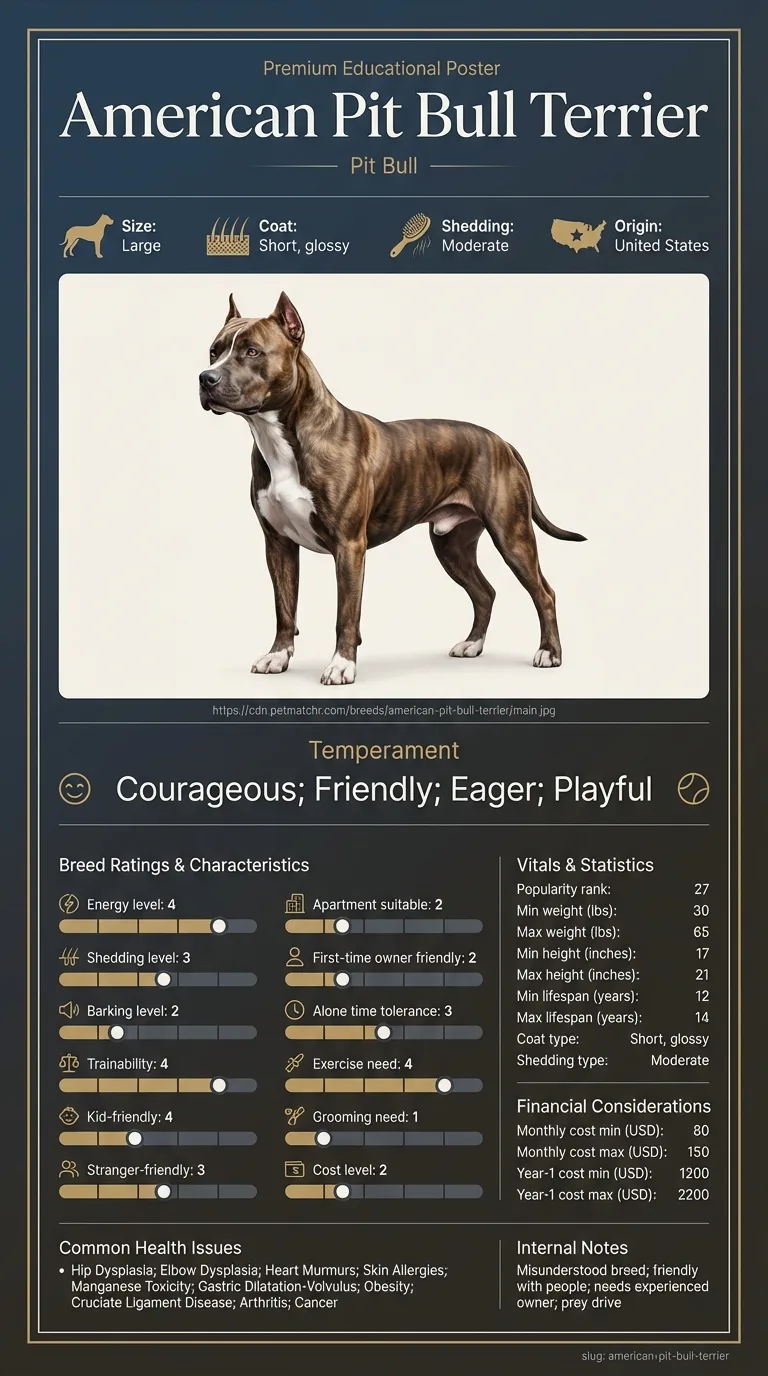
Treatment costs can vary, but expect to spend around $80 to $150 monthly on medications and vet visits.
Stay calm, keep your dog safe, and time the seizure. Contact your vet for advice and follow-up care.
Yes, training can help manage your dog's behavior and reduce anxiety. Use positive reinforcement techniques for the best results.
Yes, maintaining a consistent routine and minimizing stress can help manage seizures. Discuss any specific changes with your vet.
A one-page prep sheet for this condition: the signs, the questions to ask, what to get priced. Unlocks here.
You get: Vet visit prep sheet
No spam. One-click unsubscribe. See our privacy policy.
See a sample page before you decide.
Early access list
The free prep sheet covers the same-day warning signs, a symptom log and the questions to ask. We are considering a fuller kit that adds a cost worksheet for the usual tests and treatments (US price ranges with their sources) and a plain-English guide to ways of covering the bill. It is not built yet; this list tells us whether it is worth building.
One email, no spam, unsubscribe anytime. Information only, not veterinary advice.