Health
What are quick tips for Alaskan Malamute cardiac disease?
Regular vet check-ups, a balanced diet, and consistent exercise are key to managing cardiac disease in Alaskan Malamutes.

Quick answer
What are quick tips for Alaskan Malamute cardiac disease?
Regular vet check-ups, a balanced diet, and consistent exercise are key to managing cardiac disease in Alaskan Malamutes.
Alaskan Malamute cardiac disease is a serious health concern that can affect your dog's quality of life. Recognizing symptoms early can make a big difference.
Owners of Alaskan Malamutes often face this issue, especially those with senior dogs or those who have a family history of heart problems. It can be a worrying situation for anyone who wants their furry friend to lead a long, healthy life.
This guide is not medical advice. If your dog shows pain, sudden behavior change, or worsening symptoms, consult a licensed veterinarian.
Some links may be affiliate links. We may earn a commission at no extra cost to you. We only suggest products we believe are helpful for dog owners.
We research and check what we publish, but we do not warrant that any figure, date, price, or statement is accurate, complete, or current, and we accept no liability for any loss, cost, injury, or other harm arising from the use of this site. Use it as one reference among several. You remain responsible for your own decisions and for your dog's care - confirm anything that matters with a licensed veterinarian or another qualified professional before you act on it. Full disclaimer.
Check this first
Recognizing when Alaskan Malamute cardiac disease becomes an emergency is crucial for your pet's health. If your dog shows any of these red-flag signs, you should call your vet immediately:
- Severe lethargy or a sudden lack of energy. - Difficulty breathing or persistent coughing. - Fainting or collapsing episodes. - Swollen abdomen or unexplained weight gain. - Gums that appear pale or blue instead of pink.
These symptoms indicate that your Malamute may be experiencing a serious cardiac issue that requires urgent care. Don't hesitate to seek help if you notice any of these signs; timely intervention can be life-saving.
On the other hand, if your Alaskan Malamute shows mild signs of cardiac disease, you may monitor their condition with a careful plan. Look for signs such as:
- Occasional coughing or wheezing that isn't severe. - Mild fatigue after exercise but not extreme lethargy. - Slight changes in appetite or drinking habits.
In these cases, you can manage their health by keeping track of symptoms and scheduling regular vet check-ups. Make sure to keep an eye on changes and consult your vet if things worsen. It's better to be cautious, but not every symptom requires an emergency visit. By staying vigilant and proactive, you can help your Malamute lead a healthier life.
If any of these apply, call your vet or an emergency clinic now. The rest of this page is for the cases that are not an emergency.
Alaskan Malamute cardiac disease can be a serious issue for this breed. It often manifests as lethargy, coughing, or difficulty breathing. Daily life can be affected, as affected dogs may struggle with exercise and playtime, which are crucial for their overall health.
Cardiac disease is a notable concern among Alaskan Malamutes, particularly as they age. While not all Malamutes will experience this, it's essential for owners to be aware of the risks and monitor their dog's health regularly.
Alaskan Malamutes are prone to certain genetic conditions, including cardiac disease. Their large size can also contribute to heart problems, making them more susceptible as they age. Additionally, their active lifestyle means their hearts work harder, which can lead to issues if not properly managed.
Environmental factors such as obesity and lack of exercise can exacerbate heart problems in Alaskan Malamutes. Stressful situations or changes in routine can also impact their heart health. Proper care and a stable environment are crucial in preventing cardiac disease.
If you notice symptoms like coughing, lethargy, or difficulty breathing, it's time to consult your vet. Regular check-ups for heart health are also important, especially as your Malamute ages.
Avoiding common pitfalls can help manage Alaskan Malamute cardiac disease more effectively. Here are some mistakes to watch out for.
Start here: Alaskan Malamute Most Common Genetic Disorders: Screening
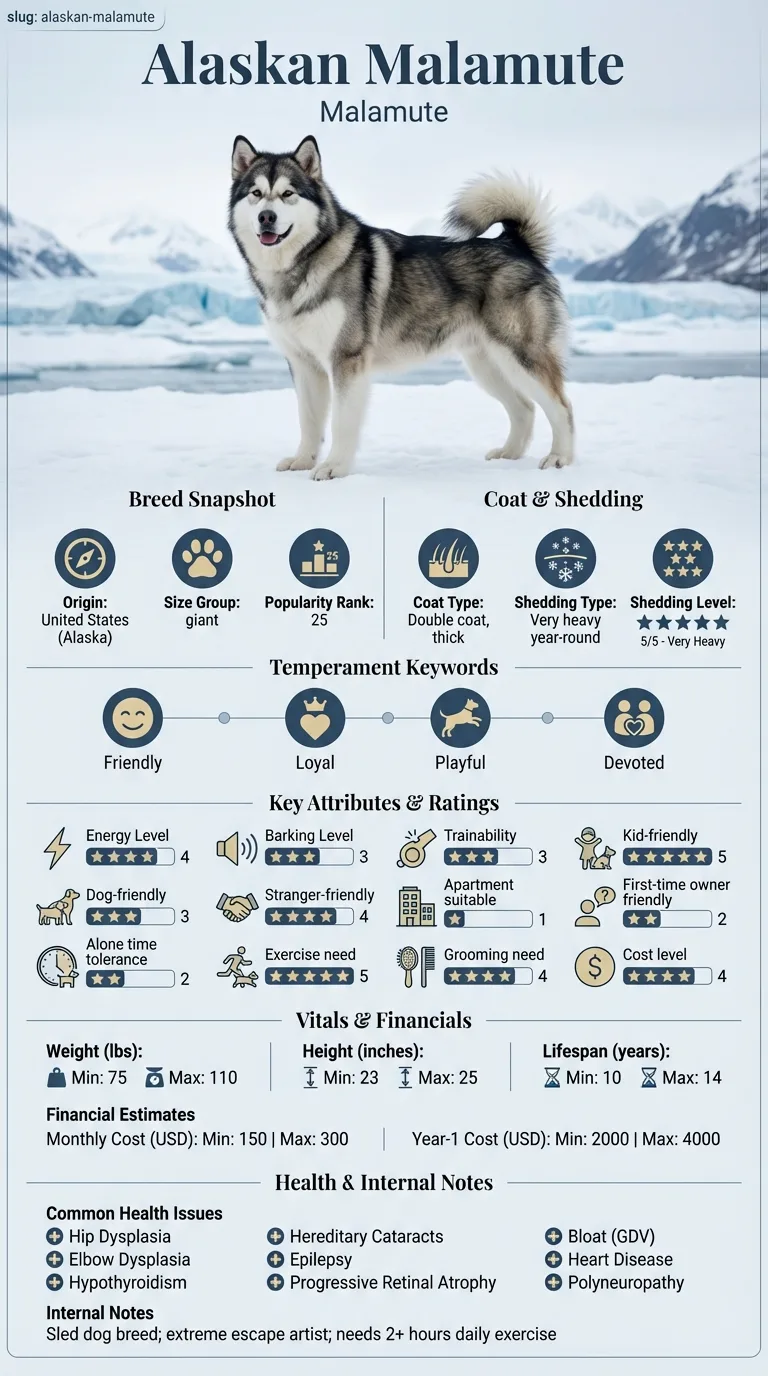
See all Alaskan Malamute health problems, which breeds are prone to cardiac disease, or the full Alaskan Malamute breed guide for temperament, exercise needs and ownership costs.
Managing Alaskan Malamute cardiac disease typically takes several months of consistent care and monitoring. Initial improvements may be seen within 4 to 6 weeks after starting a treatment plan.
Success means your Malamute maintains a stable weight, shows increased energy levels, and has fewer symptoms like coughing or difficulty breathing. Regular vet check-ups will confirm improvements in heart health.
Maria, a dedicated dog owner from Seattle, noticed her Alaskan Malamute, Max, was more sluggish than usual. After a vet visit, she learned Max had early signs of cardiac disease. Determined to help him, Maria researched dietary changes and increased his exercise gradually. With a tailored plan from their vet, Max started showing signs of improvement. Maria learned to monitor his behavior closely and adapted their routine to include low-impact activities like swimming. After a few months, Max was more energetic and playful, which brought Maria immense relief.
Key takeaway: With the right care and attention, managing Alaskan Malamute cardiac disease is possible. Early detection and a tailored treatment plan can significantly improve your dog's quality of life.
Alaskan Malamutes can be predisposed to cardiac disease due to genetic factors, lifestyle, and age. Regular vet check-ups are essential to monitor their heart health, especially as they age. Poor diet, obesity, and lack of exercise can also contribute to heart issues. This answer relates to Alaskan Malamute cardiac disease.
To help prevent cardiac disease, maintain a healthy diet and weight for your Alaskan Malamute. Regular exercise is crucial; aim for at least 2 hours of physical activity each day. Regular veterinary check-ups can catch early signs of heart problems.
Common signs include coughing, difficulty breathing, fatigue, and a decreased tolerance for exercise. If you notice any of these symptoms, consult your vet as soon as possible. Early detection can significantly improve outcomes.
While training won't cure cardiac disease, it can help manage your dog's overall health. Engaging in light, controlled exercise can strengthen your Malamute's heart. Always consult your vet before starting any training regimen.
Consult your vet for a diet tailored to heart health. Generally, a low-sodium diet with high-quality proteins and plenty of omega-3 fatty acids can benefit your Malamute. Avoid table scraps and processed foods that may be harmful.
Early signs of cardiac disease in an Alaskan Malamute may include coughing, difficulty breathing, and lethargy. If you notice your dog tiring quickly during walks or showing decreased appetite, it’s important to consult your vet.
Yes, a balanced diet can play a crucial role in managing cardiac disease in Alaskan Malamutes. Look for dog food that is low in sodium and high in omega-3 fatty acids, and always consult your vet for specific dietary recommendations.
Older Alaskan Malamutes are at a higher risk for developing cardiac disease, especially after the age of 7. Regular vet check-ups become increasingly important as your dog ages to catch any potential issues early.
Yes, genetic factors can contribute to the risk of cardiac disease in Alaskan Malamutes. Responsible breeding practices can help reduce this risk, so it’s vital to choose breeders who screen for common health issues.
If you notice any signs of distress, such as excessive coughing or difficulty exercising, take your Alaskan Malamute to the vet immediately. Regular check-ups are also key, especially for older dogs or those with a family history of heart issues.
Regular vet check-ups, a balanced diet, and consistent exercise are key to managing cardiac disease in Alaskan Malamutes.
Your Alaskan Malamute should visit the vet at least once a year for a health check, and more frequently if they show symptoms of cardiac disease.
Yes, but focus on light training and consult your vet to tailor an exercise plan suitable for their condition.
Avoid high-sodium foods and processed treats, as they can worsen heart health in Alaskan Malamutes.
Control portion sizes, provide healthy snacks, and engage in regular exercise to help your Alaskan Malamute maintain a healthy weight.
A one-page prep sheet for this condition: the signs, the questions to ask, what to get priced. Unlocks here.
You get: Vet visit prep sheet
No spam. One-click unsubscribe. See our privacy policy.
Preview page 1 before you decide.