Living
What is the energy level of German Shepherd vs Mastiff (English Mastiff)?
German Shepherds have a high energy level, while Mastiffs are more laid-back.

Quick answer
What is the energy level of German Shepherd vs Mastiff (English Mastiff)?
German Shepherds have a high energy level, while Mastiffs are more laid-back.
Choosing between a German Shepherd and a Mastiff (English Mastiff) can be tough. These two breeds offer distinct traits that suit different lifestyles and needs. Let's break down their differences to help you make the best choice. (German Shepherd vs Mastiff (English Mastiff))
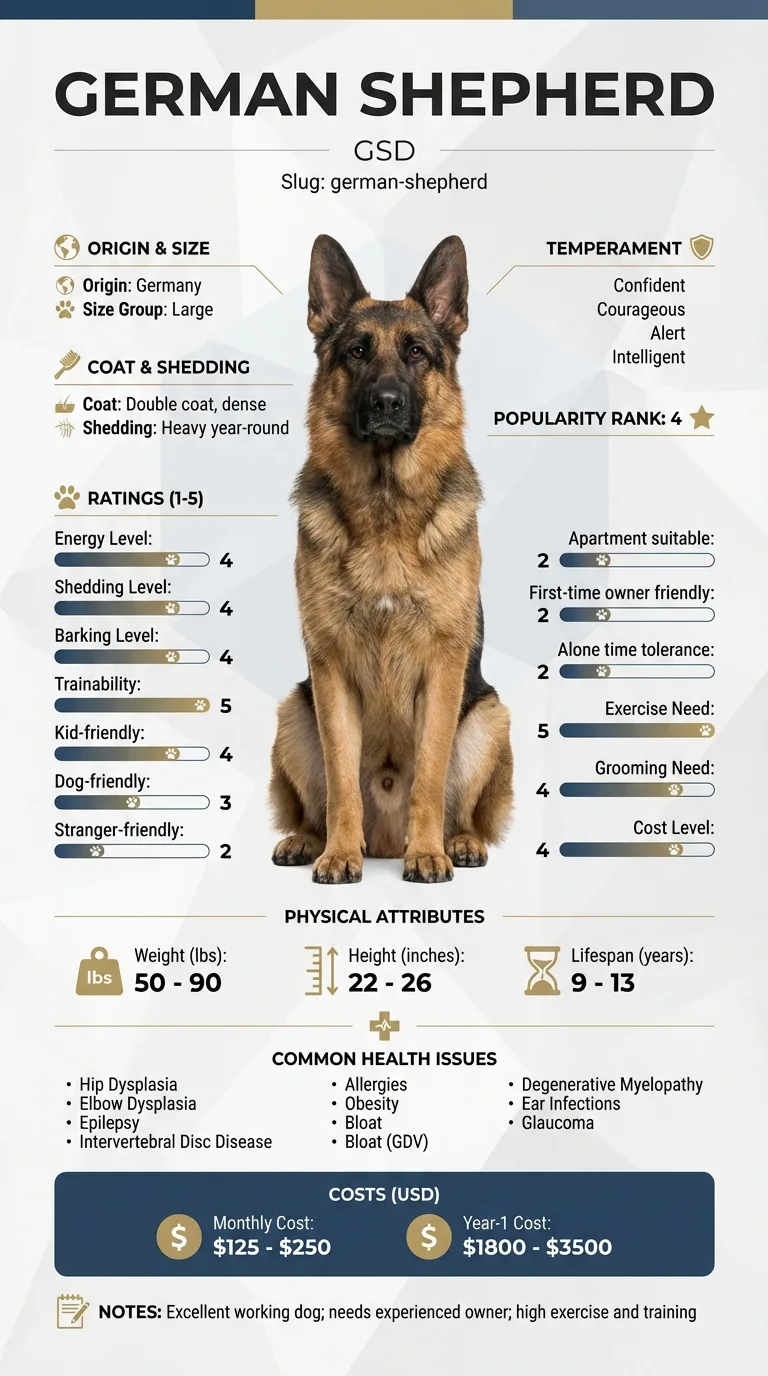
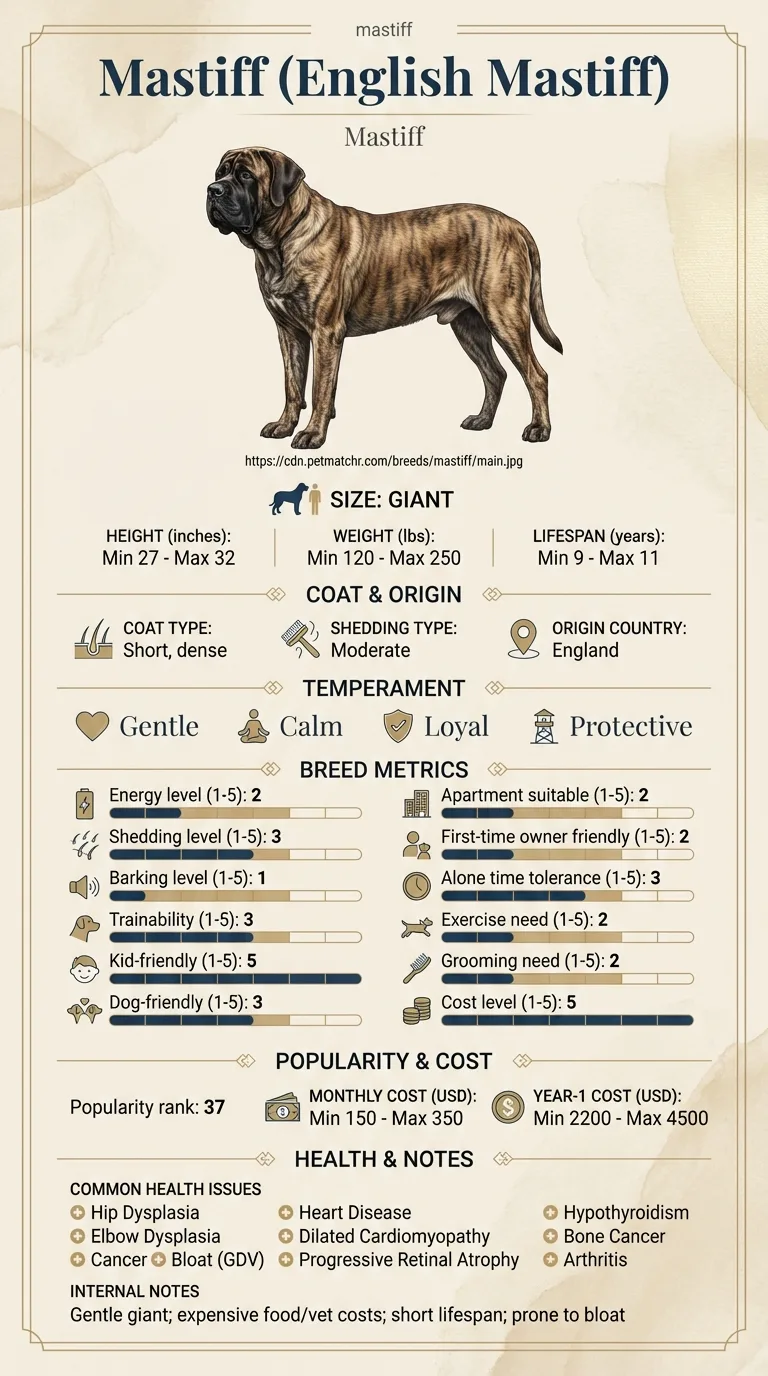
This comparison is for anyone considering adding a dog to their family, especially those unsure about whether to choose a German Shepherd or a Mastiff. You might be a busy family with children, looking for a protective and loyal companion, or an individual living in an apartment, weighing the space and energy needs of each breed. Understanding the differences in temperament, exercise requirements, and overall costs can guide you toward the best decision for your unique situation.
If you want an active, trainable dog, go for the German Shepherd; if you're looking for a gentle giant with a calm demeanor, choose the Mastiff.
Pick a German Shepherd if you have an active lifestyle, enjoy training, and want a dog that can also serve as a protector.
Opt for a Mastiff if you prefer a more laid-back companion that is good with kids and don't mind the higher food and vet costs.
| Feature | german shepherd | mastiff | Winner |
|---|---|---|---|
| Size class | large | giant | Equal |
| Weight | 50–90 lbs | 120–250 lbs | Equal |
| Height | 22–26 in | 27–32 in | Equal |
| Lifespan | 9–13 years | 9–11 years | german shepherd |
| Exercise need | Very high (5/5) | Low (2/5) | mastiff |
| Grooming need | High (4/5) | Low (2/5) | mastiff |
| Shedding | High (4/5) | Moderate (3/5) | mastiff |
| Energy level | High (4/5) | Low (2/5) | Equal |
| Barking | High (4/5) | Very low (1/5) | mastiff |
| Apartment suitability | Low (2/5) | Low (2/5) | Equal |
| Good for first-time owners | Low (2/5) | Low (2/5) | Equal |
| Tolerates being alone | Low (2/5) | Moderate (3/5) | mastiff |
| Trainability | Very high (5/5) | Moderate (3/5) | german shepherd |
| Good with kids | High (4/5) | Very high (5/5) | mastiff |
| Good with other dogs | Moderate (3/5) | Moderate (3/5) | Equal |
| Friendly to strangers | Low (2/5) | Moderate (3/5) | mastiff |
| Cost level | High (4/5) | Very high (5/5) | german shepherd |
| Coat | Double coat, dense | Short, dense | Equal |
| Origin | Germany | England | Equal |
| Typical monthly cost | $125–$250 | $150–$350 | Equal |
| Typical first-year cost | $1,800–$3,500 | $2,200–$4,500 | Equal |
The German Shepherd has a high energy level that requires significant exercise and mental stimulation. This means more time spent outdoors and potentially higher costs for training and activities. On the other hand, the Mastiff has a low energy level, making it less demanding in terms of exercise but leading to higher food and vet bills due to their size and health needs.
German Shepherds are known for their high trainability, making them excellent working and service dogs. However, their need for consistent training can be daunting for first-time owners. Conversely, the Mastiff is gentle and very kid-friendly, making them great family pets, but they may not respond as well to commands, which can be a challenge for some owners.
While both breeds can shed, the German Shepherd's shedding is heavy year-round, requiring regular grooming and cleanup. This can be a downside for those sensitive to pet hair. In contrast, the Mastiff sheds moderately and is known for its low barking tendency, making them ideal for quieter households.
This trade-off can be significant for families considering noise levels in their living environment.
When it comes to families with kids, the Mastiff (English Mastiff) takes the prize. Their gentle and calm nature makes them excellent companions for children. While German Shepherds are also kid-friendly, they can be a bit too energetic for younger kids, potentially leading to accidents during playtime.
Neither breed is particularly suited for apartment living, but the Mastiff (English Mastiff) edges out the German Shepherd. Mastiffs are less energetic, needing less space to roam. German Shepherds, on the other hand, require more exercise and can become restless in confined spaces.
The cost of ownership can be a significant factor in choosing between these two breeds. While both breeds have their financial demands, the Mastiff (English Mastiff) is generally more expensive to maintain due to their size and health issues. Therefore, if budget is a priority, the German Shepherd might be the better choice.
For first-time dog owners, the German Shepherd is a better fit. Their high trainability and intelligence make them easier to manage with proper guidance. Mastiffs, while gentle, can be stubborn and may require a more experienced owner to train effectively.


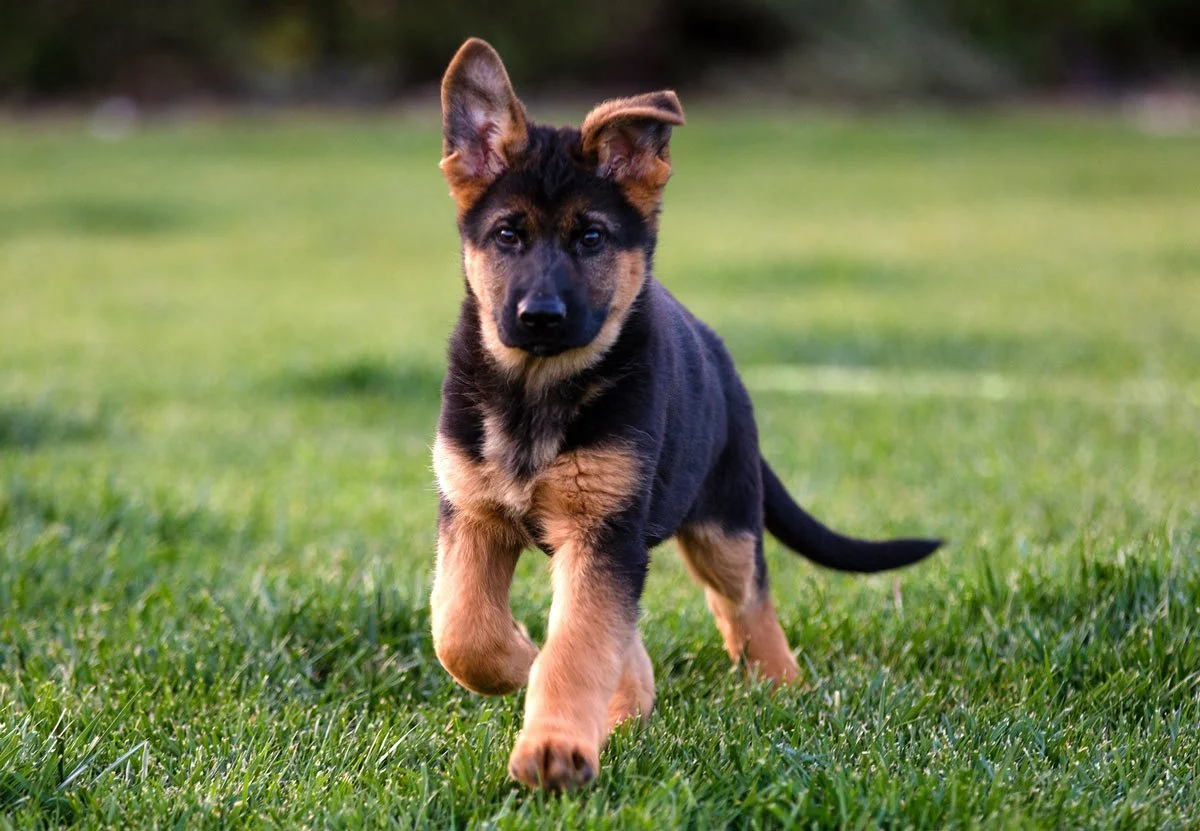


Choosing between a German Shepherd and a Mastiff depends on your lifestyle. German Shepherds are energetic and protective, making them great for active families. Mastiffs are gentle giants, ideal for relaxed households, but they require more space due to their size.
German Shepherds typically have a lower initial cost compared to Mastiffs. However, the long-term costs can vary. Mastiffs generally have higher food and vet expenses due to their size, which can make them more expensive to own overall.
German Shepherds have high exercise needs, requiring daily activity to stay happy and healthy. In contrast, Mastiffs are more laid-back and have lower exercise requirements, making them suitable for owners who prefer a calmer lifestyle.
German Shepherds have a double coat that requires regular grooming to manage shedding. Mastiffs have a short, dense coat that is easier to maintain, needing less frequent grooming and handling for shedding.
Both breeds can be good for families, but they differ in temperament. German Shepherds are protective and active, while Mastiffs are gentle and calm. Mastiffs may be better suited for families seeking a more relaxed pet.
Both breeds are not ideal for apartment living due to their size and exercise needs. German Shepherds require more space to run, while Mastiffs need room to move comfortably. If you live in an apartment, consider your ability to meet their exercise requirements.
Both breeds face health issues like hip and elbow dysplasia. However, Mastiffs are particularly prone to bloat and heart disease, while German Shepherds may encounter a broader range of conditions, including degenerative myelopathy.
German Shepherds have a high energy level, needing plenty of exercise and mental stimulation. Mastiffs, on the other hand, have a lower energy level and are more relaxed, making them suitable for owners who prefer a calm pet.
German Shepherds have a high energy level, while Mastiffs are more laid-back.
German Shepherds shed heavily year-round, whereas Mastiffs have moderate shedding.
German Shepherds can be challenging for first-time owners due to their need for training and exercise.
German Shepherds typically live 9-13 years, while Mastiffs have a shorter lifespan of 9-11 years.
Secure checkout on Stripe. We never see your card.
7-day money-back guarantee. Instant access.

This guide is not medical advice. If your dog shows pain, sudden behavior change, or worsening symptoms, consult a licensed veterinarian.
Some links may be affiliate links. We may earn a commission at no extra cost to you. We only suggest products we believe are helpful for dog owners.
We research and check what we publish, but we do not warrant that any figure, date, price, or statement is accurate, complete, or current, and we accept no liability for any loss, cost, injury, or other harm arising from the use of this site. Use it as one reference among several. You remain responsible for your own decisions and for your dog's care - confirm anything that matters with a licensed veterinarian or another qualified professional before you act on it. Full disclaimer.
Match your lifestyle to the right dog.
Take quizNot sure which breed is right for you? Take our 2-minute quiz to find out.
Take the quiz