Behavior
What are some quick tips for Siberian Husky insurance claims?
Regular vet visits and a balanced diet can help prevent health issues. Training your Husky to manage their energy can also reduce accidents and injuries.

Quick answer
What are some quick tips for Siberian Husky insurance claims?
Regular vet visits and a balanced diet can help prevent health issues. Training your Husky to manage their energy can also reduce accidents and injuries.
Siberian Husky insurance claims can be a frustrating issue for many owners. Understanding why these claims happen is crucial for responsible pet ownership.
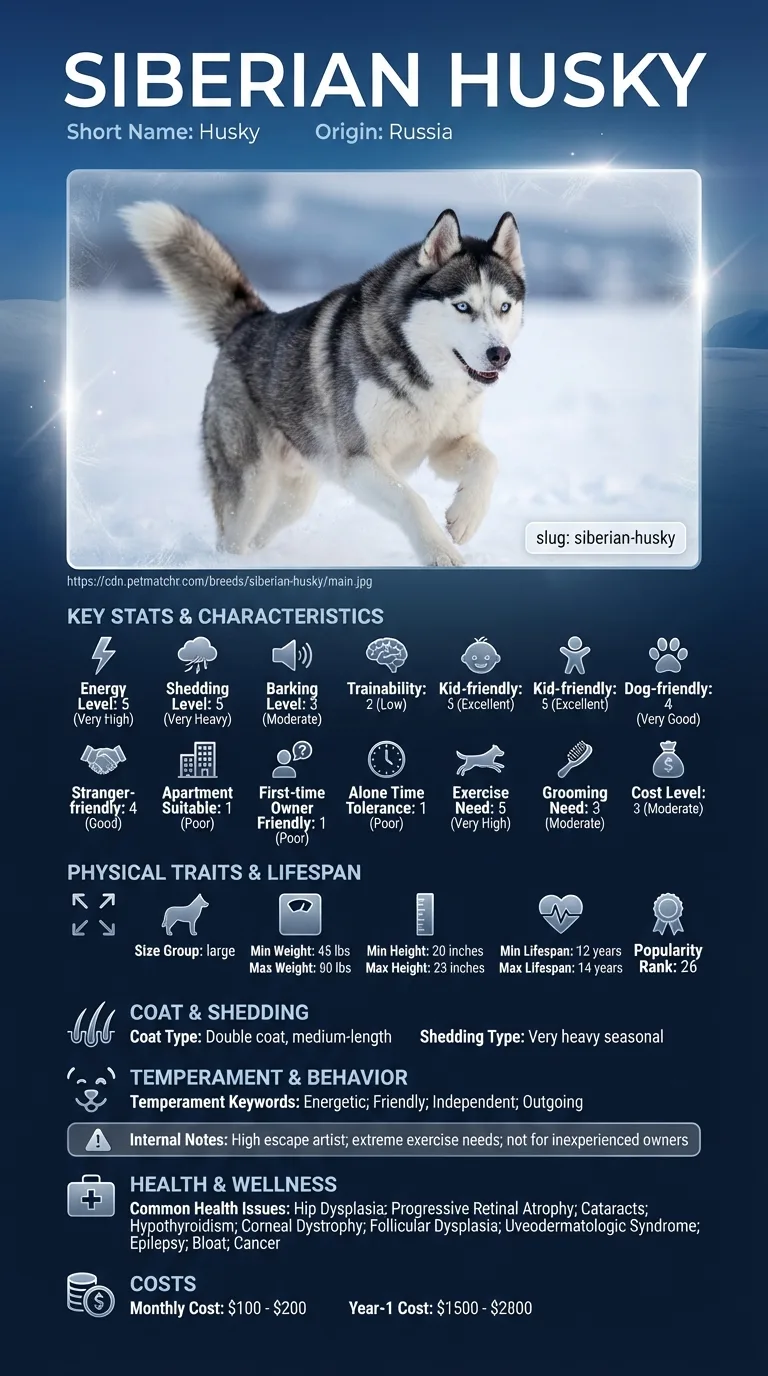
Typically, owners of Siberian Huskies who are inexperienced or unaware of the breed's needs may face challenges with frequent insurance claims. Families or individuals living in apartments or busy households might find themselves overwhelmed by the health risks and behavioral concerns associated with this breed.
This guide is not medical advice. If your dog shows pain, sudden behavior change, or worsening symptoms, consult a licensed veterinarian.
Some links may be affiliate links. We may earn a commission at no extra cost to you. We only suggest products we believe are helpful for dog owners.
We research and check what we publish, but we do not warrant that any figure, date, price, or statement is accurate, complete, or current, and we accept no liability for any loss, cost, injury, or other harm arising from the use of this site. Use it as one reference among several. You remain responsible for your own decisions and for your dog's care - confirm anything that matters with a licensed veterinarian or another qualified professional before you act on it. Full disclaimer.
Check this first
Understanding when Siberian Husky insurance claims indicate a serious issue is crucial for pet owners. There are clear signs that mean you should contact your veterinarian immediately. These signs include severe behavioral changes, excessive accidents inside the home, or any signs of distress that seem unusual for your dog. If your Siberian Husky suddenly becomes lethargic, stops eating, or displays aggression, these are red flags that should not be ignored.
On the other hand, some cases might not require immediate action. For instance, if your Husky has mild anxiety during thunderstorms or fireworks, you can monitor their behavior and implement calming techniques at home. Similarly, if your dog shows minor signs of separation anxiety but is still eating and playing normally, you may choose to observe their behavior for a while and introduce gradual desensitization strategies. Keep track of their reactions and consider consulting with a trainer or behaviorist if the issues persist.
Always trust your instincts as a pet owner. If something feels off about your Siberian Husky, it's better to err on the side of caution. Your vet can help determine whether your dog's behavior is a reason for concern or part of a manageable pattern.
If any of these apply, call your vet or an emergency clinic now. The rest of this page is for the cases that are not an emergency.
Siberian Husky insurance claims can be a common concern for owners. These dogs are known for their energetic and independent nature, which can sometimes lead to accidents or health issues that result in claims. Day-to-day, you might notice your Husky being more prone to injuries due to their adventurous spirit or potential health problems that require veterinary attention.
For Siberian Huskies, insurance claims can be relatively common compared to other breeds. Their high energy and specific health issues mean that owners often find themselves filing claims more frequently, especially for accidents or conditions related to their active lifestyle. It's essential to be prepared for these potential costs.
Siberian Huskies are known for their high energy and independent nature. This breed is prone to specific health issues like hip dysplasia and cataracts, which can lead to more frequent insurance claims. Additionally, their playful and sometimes destructive behavior can cause accidents, contributing to higher claim rates.
The environment can also play a significant role in insurance claims. Huskies require a lot of exercise and mental stimulation, and a lack of outlets for their energy can lead to behavioral problems. If they are left alone for long periods or not provided with adequate training, they may develop anxiety or destructive habits that result in claims.
If you notice any sudden changes in your Husky's health or behavior, consult your veterinarian. They can help rule out any underlying medical conditions that may be contributing to increased insurance claims.
Avoid these common mistakes that can worsen Siberian Husky insurance claims.
Start here: Siberian Husky Most Common Genetic Disorders: Screening
See all Siberian Husky health problems, which breeds are prone to insurance claims, or the full Siberian Husky breed guide for temperament, exercise needs and ownership costs.
You can expect to see improvements in your Siberian Husky's behavior and a decrease in insurance claims within 3 to 6 months of consistent care under your vet's plan.
Successful results mean fewer unexpected vet visits and claims, along with a more relaxed and manageable pet. You'll notice your Husky responding better to commands and exhibiting less anxiety.
Sarah, a busy nurse in Seattle, faced constant challenges with her Siberian Husky, Max. He was energetic and often anxious, leading to accidents that resulted in multiple insurance claims. After researching training methods, Sarah enrolled Max in a specialized behavior class focused on anxiety reduction. With consistent training and daily exercise, Sarah saw Max transform over several months. He became calmer and more predictable, which significantly reduced his anxiety and ultimately the number of insurance claims.
Key takeaway: With the right training and commitment, it's possible to manage a Siberian Husky's anxiety and behavior issues, reducing both stress for the owner and unexpected costs.
Siberian Huskies are prone to certain health issues that can lead to insurance claims. Common problems include hip dysplasia and cataracts, which may require expensive treatments. Regular vet check-ups can help manage these health risks early.
To reduce insurance claims, focus on preventive care. This includes regular vet visits, proper nutrition, and exercise to keep your Husky healthy. Training your Husky can also help prevent accidents that might lead to claims.
Siberian Huskies often face health concerns like hip dysplasia, progressive retinal atrophy, and hypothyroidism. Being aware of these issues can help you monitor your dog's health and address problems early.
The monthly cost for insuring a Siberian Husky typically ranges from $100 to $200. This amount can vary based on coverage options and your location, so it's wise to shop around for the best policy.
If your Husky is often getting hurt, it may be due to their high energy levels and need for exercise. Ensure they receive ample physical activity and mental stimulation to help reduce risky behaviors.
Yes, training can significantly help reduce insurance claims. Teaching your Husky commands and proper behaviors can prevent accidents and injuries, which often lead to claims.
If your older Siberian Husky is experiencing frequent insurance claims, it's important to consult your vet. They can help identify any underlying health issues contributing to the claims. Additionally, consider adjusting their lifestyle with more suitable exercise and nutrition.
Siberian Huskies can develop behavioral issues that lead to insurance claims, often due to anxiety or lack of training. If your Husky is showing signs of stress or destructive behavior, it may be time to seek professional training or behavior modification strategies.
Yes, Siberian Huskies are prone to several health issues like hip dysplasia and eye conditions. These conditions can lead to increased insurance claims, so it's wise to be proactive about regular vet check-ups and early intervention.
To reduce insurance claims for your Siberian Husky, focus on preventive care like regular vet visits and maintaining a healthy diet. Training and addressing any behavioral problems are also crucial to minimize incidents that might lead to claims.
Common accidents that lead to Siberian Husky insurance claims include injuries from escapes, fights with other dogs, or accidents during play. Ensuring your Husky has a secure environment can help reduce these risks.
Regular vet visits and a balanced diet can help prevent health issues. Training your Husky to manage their energy can also reduce accidents and injuries.
Consider getting a pet wellness plan that covers routine care. Additionally, maintaining your Husky's health through diet and exercise can prevent costly health issues.
Yes, they are known for claims related to hip dysplasia and eye conditions. Being proactive about their health can help mitigate these risks.
Insuring a Siberian Husky can cost between $100 and $200 monthly. This can add up, so evaluate your options carefully.
A one-page prep sheet for this condition: the signs, the questions to ask, what to get priced. Unlocks here.
You get: Vet visit prep sheet
No spam. One-click unsubscribe. See our privacy policy.
Preview page 1 before you decide.