Behavior
What are quick tips for dealing with Siberian Husky excessive barking?
Provide daily exercise to tire them out, use positive reinforcement for quiet behavior, and consider engaging toys to keep them busy.

Quick answer
What are quick tips for dealing with Siberian Husky excessive barking?
Provide daily exercise to tire them out, use positive reinforcement for quiet behavior, and consider engaging toys to keep them busy.
Siberian Husky excessive barking can be a challenging issue for many owners. This behavior can lead to frustration and stress within the household.
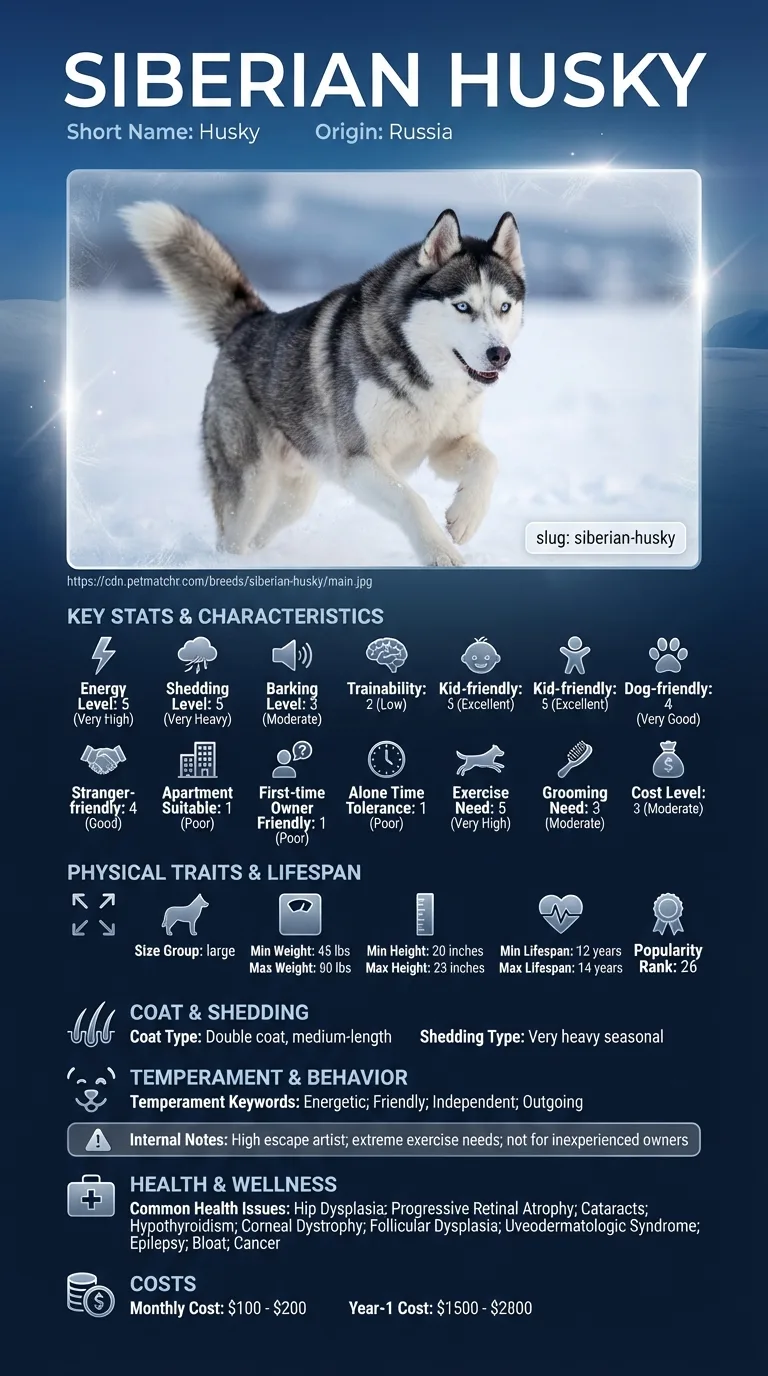
Typically, first-time Husky owners or those living in close-knit communities may struggle with this problem. Busy families or individuals who work from home may find it particularly challenging to manage a barking Husky.
This guide is not medical advice. If your dog shows pain, sudden behavior change, or worsening symptoms, consult a licensed veterinarian.
Some links may be affiliate links. We may earn a commission at no extra cost to you. We only suggest products we believe are helpful for dog owners.
We research and check what we publish, but we do not warrant that any figure, date, price, or statement is accurate, complete, or current, and we accept no liability for any loss, cost, injury, or other harm arising from the use of this site. Use it as one reference among several. You remain responsible for your own decisions and for your dog's care - confirm anything that matters with a licensed veterinarian or another qualified professional before you act on it. Full disclaimer.
Siberian Husky excessive barking can be a real challenge for owners. This breed is known for its vocal nature, which can lead to barking at noises, people, or even other animals. Daily life with a Husky may involve frequent interruptions, especially if they feel bored or anxious.
Excessive barking is quite common among Siberian Huskies due to their energetic and social nature. Many owners report that their Huskies bark more than they expected, especially when they are left alone or not mentally stimulated.
Siberian Huskies are known for their vocal nature. They often bark to communicate their needs or express excitement. Their high energy levels can also lead to excessive barking when they are bored or under-exercised.
Environmental factors play a significant role in a Husky's barking. If they feel anxious or isolated, especially in small living spaces, they may bark more. Additionally, if they hear other noises or see people and animals outside, their instinct to alert can trigger barking.
If your Husky's excessive barking persists despite your efforts, consider seeking a professional trainer. They can provide tailored strategies and training techniques to address the problem effectively.
If you notice sudden changes in your Husky's barking, such as increased anxiety or distress, consult your vet. They can help rule out any underlying health issues that might be contributing to the behavior.
Start here: Siberian Husky Most Common Genetic Disorders: Screening
See all Siberian Husky health problems, which breeds are prone to excessive barking, or the full Siberian Husky breed guide for temperament, exercise needs and ownership costs.
With consistent training and patience, you can see improvement in 4 to 8 weeks.
Success means your Siberian Husky barks less frequently and responds to cues to quiet down, making your home quieter and more peaceful.
Avoiding common mistakes can help you manage your Siberian Husky's excessive barking. Here are some behaviors to watch out for.
While barking is a normal behavior for a Siberian Husky, excessive barking can sometimes signal a more serious issue. It's essential to know when to take action and when to monitor the situation. If your Husky is barking excessively and shows signs of distress or aggression, it may be time to call your vet or a professional trainer.
Red flags include barking accompanied by physical symptoms like pacing, drooling, or destructive behavior. If your dog is barking at nothing and seems highly agitated, it could indicate anxiety or a medical issue. Additionally, if your Husky has suddenly started barking excessively after a period of calm, this change may warrant immediate attention.
On the other hand, if your Husky is barking in response to passing cars or people, and is generally calm otherwise, you can monitor the behavior. Establish a training plan that focuses on reducing excessive barking through positive reinforcement. Create a consistent routine and provide ample exercise to help manage their energy levels, as this breed thrives on physical activity.

Emily, a busy nurse living in a small apartment, adopted Max, her energetic Siberian Husky. At first, his excessive barking at everything from passing cars to other dogs was overwhelming, especially after a long day at work. After researching how to stop Siberian Husky excessive barking, Emily committed to daily training sessions using positive reinforcement techniques. She also ensured Max had plenty of exercise to burn off his energy. Within a few weeks, he started responding better to commands, and his barking reduced significantly.
Key takeaway: With dedication and the right approach, it's possible to manage a Siberian Husky's excessive barking, leading to a happier home for both you and your dog.
Siberian Huskies may bark excessively due to boredom, anxiety, or the need for attention. Since they are energetic and social dogs, they require plenty of exercise and mental stimulation. If their needs aren't met, they might turn to barking as a way to express their frustration.
To stop Siberian Husky excessive barking, ensure they get enough physical and mental exercise daily. Training them to respond to commands like 'quiet' can also help. Consistency and positive reinforcement are key; reward them when they stop barking.
Yes, training techniques such as desensitization, where you expose your Husky to the barking triggers gradually, can be effective. Additionally, teaching them the 'leave it' command can redirect their focus away from distractions. Engaging them with toys or puzzles can also keep them occupied.
Yes, excessive barking can indicate separation anxiety, especially if your Husky barks when left alone. Observing their behavior when you depart can provide clues. If they show signs of distress, consider consulting a vet or a trainer for solutions tailored to anxiety.
While Siberian Huskies are known for being vocal, excessive barking is not normal. It's important to distinguish between normal vocalizations and excessive barking, which can be addressed with training and proper care. If barking persists, it's worth exploring underlying causes.
Siberian Huskies may bark excessively due to boredom, loneliness, or frustration. They are highly social and energetic dogs, so lack of mental and physical stimulation can lead to barking as a way to express their pent-up energy.
Yes, excessive barking can indicate that your Siberian Husky is experiencing separation anxiety. If your dog barks persistently when left alone, it may be a sign they are unhappy or stressed, and training or behavioral help may be needed.
Training to reduce excessive barking can involve consistency and positive reinforcement. Techniques include teaching the 'quiet' command, rewarding silence, and providing more exercise and mental challenges to keep them engaged.
If your Siberian Husky's excessive barking seems sudden or is accompanied by other behavioral changes, it's a good idea to consult a vet. They can rule out medical issues that might be causing anxiety or discomfort.
Yes, older Siberian Huskies can develop excessive barking due to changes in their health or environment. As they age, they may experience anxiety, hearing loss, or cognitive decline, which can lead to increased barking.
Provide daily exercise to tire them out, use positive reinforcement for quiet behavior, and consider engaging toys to keep them busy.
Siberian Huskies typically require at least 1-2 hours of vigorous exercise each day to stay happy and healthy.
Train your Husky to respond to commands like 'sit' or 'stay' when they see strangers, helping to reduce their need to bark.
Yes, training techniques like command training and distractions can help reduce excessive barking over time.
While behavior training is essential, ensuring your Husky's physical and mental needs are met is equally important for long-term success.
Behaviour changes often start with pain. The prep sheet for this page covers what to rule out, and what to ask.
You get: Vet visit prep sheet
No spam. One-click unsubscribe. See our privacy policy.
See a sample page before you decide.