DogBreedCompass
← Back to breed profile

Siberian Husky Cruciate Ligament Injuries: What You Need to Know

Siberian Husky cruciate ligament injuries are common yet serious issues that can impact your dog's mobility and happiness.

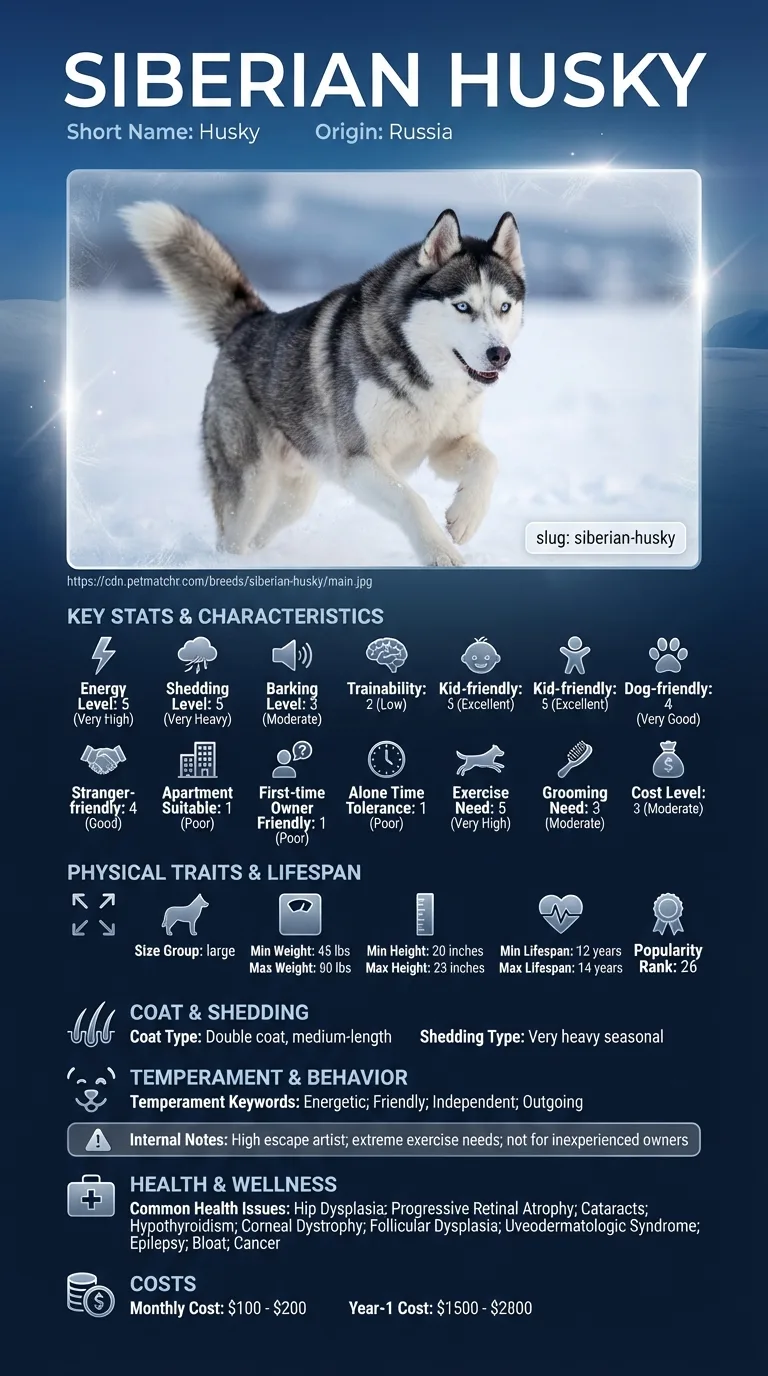
Siberian Husky Cruciate Ligament Injuries: What You Need to Know infographic

This problem typically affects active Husky owners who may not realize their dog’s high energy levels can lead to such injuries. First-time dog owners or those unfamiliar with breed-specific health risks are particularly vulnerable.

Important reminder

This guide is not medical advice. If your dog shows pain, sudden behavior change, or worsening symptoms, consult a licensed veterinarian.

Some links may be affiliate links. We may earn a commission at no extra cost to you. We only suggest products we believe are helpful for dog owners.

What this problem looks like

Siberian Husky cruciate ligament injuries can significantly affect your dog's mobility and quality of life. These injuries often manifest as limping, difficulty standing, or reluctance to play. Unfortunately, they are common among Huskies due to their active lifestyle and high energy levels.

Common triggers

  • High-impact activities like jumping or running
  • Obesity, which puts extra strain on joints
  • Age-related wear and tear, especially in older dogs

Cruciate ligament injuries are relatively common in Siberian Huskies, especially those engaged in vigorous activities. Many owners report these injuries, making it crucial to be aware of preventative measures.

Why this happens

Breed factors

Siberian Huskies are large, energetic dogs with a high propensity for activity. Their strong, athletic bodies can put stress on their knees, increasing the risk of cruciate ligament injuries. Additionally, their independent nature can sometimes lead to rough play that may contribute to ligament strain.

Environment factors

Environmental factors like slippery floors, uneven terrain, and sudden stops during play can also lead to these injuries. Huskies may be more prone to accidents in a home without proper dog-proofing or safe spaces for exercise. Lack of warm-up exercises before intense activity can further increase their injury risk.

What you can try

At-home strategies

  • Create a safe play area: Use rugs or mats to provide traction on slippery floors to help prevent falls.
  • Establish a warm-up routine: Before vigorous play, have your Husky engage in light activity to warm up their muscles and joints.
  • Control playtime: Supervise play sessions, especially with other dogs, to prevent roughhousing that could lead to injuries.

When to consider a trainer

If your Husky frequently seems to injure themselves or shows signs of discomfort, consider consulting a professional trainer. They can help you modify play behaviors and design a suitable exercise routine that minimizes injury risk.

When to talk to your vet

If your Husky shows persistent limping, reluctance to put weight on a leg, or signs of pain, it's time to consult a vet. Early intervention can help manage injuries and prevent further damage.

Realistic expectations

Expect to see improvements over 4 to 6 weeks with consistent training and care.

Success means your Husky can walk, run, and play without pain, allowing for a happy and active lifestyle.

Mistakes that make this worse

Avoid these common mistakes that can worsen Siberian Husky cruciate ligament injuries. They can delay healing and increase the risk of further injury.

  • Ignoring Rest: Many owners underestimate the importance of rest. Without proper downtime, a Husky's injury can worsen. Instead, ensure your dog has a quiet, comfortable space to recover.
  • Overlooking Weight Management: Extra weight puts more strain on the knees. Owners should monitor their Husky's diet and provide a balanced, nutritious meal plan to maintain a healthy weight.
  • Skipping Physical Therapy: Some believe that once a vet clears their dog, they're good to go. In reality, physical therapy can help strengthen muscles around the knee. Consider enrolling your Husky in a rehabilitation program.
  • Neglecting Controlled Exercise: Owners often allow their Huskies too much freedom to run and play. Uncontrolled exercise can exacerbate injuries. Always follow a structured exercise plan recommended by your vet.
  • Ignoring Signs of Pain: Husky owners sometimes dismiss limping or reluctance to move as normal behavior. Pay close attention to your dog’s movements and consult a vet if you notice any signs of pain.
  • Failing to Use Supportive Gear: Some people think supportive braces are unnecessary. However, they can provide stability during recovery. Talk to your vet about the best options for your Husky.
  • Relying on Inconsistent Training: Owners may not consistently reinforce training commands. Lack of training can lead to unwanted movements that stress the knee. Consistent training is key to a safer recovery.

When Siberian Husky Cruciate Ligament Injuries Are an Emergency

Understanding when a cruciate ligament injury is an emergency can save your Siberian Husky from further harm. If your dog shows signs of severe pain, swelling, or is unable to bear weight on their leg, these are red flags. Other emergency signs include sudden changes in behavior, such as excessive whining or aggression, and visible deformities in the leg. If you notice any of these symptoms, it's crucial to call your vet immediately.

On the other hand, some cases can be monitored at home. If your Husky is limping lightly but still able to walk and play, you can create a care plan. This might include rest, reduced activity, and ice packs to manage swelling. Minor injuries can often improve with proper management, so keep an eye on your dog's condition. If the limp persists or worsens over a few days, consult your vet for a professional evaluation.

Siberian Husky Cruciate Ligament Injuries: What You Need to Know - When Siberian Husky Cruciate Ligament Injuries Are an Emergency

A Journey to Recovery: Max the Husky

When Sarah, a busy nurse from Denver, noticed her Siberian Husky, Max, limping after playtime, she was worried. After a vet visit, it turned out Max had a cruciate ligament injury. With a combination of rest, physiotherapy, and proper training techniques to strengthen his legs, Sarah committed to a recovery plan. Over several weeks, she gradually reintroduced exercise while monitoring Max's comfort levels. By the end of two months, Max was back to his energetic self, happily sprinting around the park.

Key takeaway: Early intervention and a dedicated recovery plan can help your Husky bounce back from cruciate ligament injuries.

Frequently asked questions

Why does my Siberian Husky have cruciate ligament injuries?

Siberian Huskies are prone to cruciate ligament injuries due to their active nature and high energy levels. These injuries often occur from sudden movements, jumps, or lack of proper conditioning. Keeping your Husky fit and strengthening their muscles can help reduce the risk. This answer relates to Siberian Husky cruciate ligament injuries.

How can I prevent cruciate ligament injuries in my Siberian Husky?

To prevent cruciate ligament injuries in your Siberian Husky, ensure they have a balanced exercise routine that includes both low-impact and high-impact activities. Gradually increase the intensity of their workouts and focus on strength training. Regular vet check-ups are also essential for early detection of any issues.

What are the signs of cruciate ligament injuries in Siberian Huskies?

Signs of cruciate ligament injuries include limping, difficulty walking or running, swelling in the knee area, and reluctance to engage in play. If your Husky shows any of these signs, consult your veterinarian for an evaluation.

What should I do if my Siberian Husky injures their cruciate ligament?

If your Siberian Husky injures their cruciate ligament, immediately limit their activity to prevent further damage. Ice the affected area to reduce swelling and consult your veterinarian for a proper diagnosis and treatment plan, which may include rest, physical therapy, or surgery.

Can training help with cruciate ligament injuries in Siberian Huskies?

Yes, specialized training can help strengthen your Husky's muscles and improve their joint stability, potentially reducing the risk of cruciate ligament injuries. Focus on low-impact exercises and consider working with a professional trainer who understands the needs of active breeds.

What are the signs of cruciate ligament injuries in Siberian Huskies?

Common signs include limping, difficulty in jumping or running, and swelling around the knee joint. If your Husky seems to be in pain or refuses to put weight on a leg, it’s essential to consult a vet.

Are certain ages more prone to cruciate ligament injuries in Siberian Huskies?

Yes, younger and older Huskies can be more susceptible. Puppies may injure themselves during play, while older dogs can develop issues due to degenerative changes in the ligament.

How can I prevent cruciate ligament injuries in my Siberian Husky?

To prevent injuries, ensure your Husky maintains a healthy weight and avoid high-impact activities on hard surfaces. Regular exercise and strength training can also help support their joints.

What treatment options are available for cruciate ligament injuries in Siberian Huskies?

Treatment options usually include rest, anti-inflammatory medications, or surgery, depending on the severity. Always consult your vet for the best course of action tailored to your dog's needs.

Why does my Siberian Husky keep having cruciate ligament injuries?

Repeated injuries may indicate underlying issues such as joint instability or improper training techniques. It's important to review their exercise regimen and consult a vet for a thorough evaluation.

Quick answers

View more answers
Behavior

What are quick tips for managing Siberian Husky cruciate ligament injuries?

To manage cruciate ligament injuries in Siberian Huskies, maintain a healthy weight, provide moderate exercise, and ensure they have a safe play environment. Regular vet visits for check-ups are also crucial.

Health

Are cruciate ligament injuries common in Siberian Huskies?

Yes, cruciate ligament injuries are relatively common in Siberian Huskies due to their active lifestyle and potential for high-impact activities.

Training

What type of training can help prevent injuries?

Incorporate strength training and low-impact exercises to build muscle and improve joint stability. Gradually increase exercise intensity to avoid injury.

Related DogBreedCompass guides

Related guides