Health
What are quick tips for managing Siberian Husky autoimmune diseases?
Regular vet visits, a healthy diet, and stress management are key. Monitor for symptoms and adjust care as needed.

Quick answer
What are quick tips for managing Siberian Husky autoimmune diseases?
Regular vet visits, a healthy diet, and stress management are key. Monitor for symptoms and adjust care as needed.
Siberian Husky autoimmune diseases can lead to serious health issues, impacting your dog's quality of life.
Owners of Siberian Huskies, especially first-time dog parents, may find themselves overwhelmed by these diseases. If you notice unusual skin issues or changes in behavior, you might be among those facing this challenge.
This guide is not medical advice. If your dog shows pain, sudden behavior change, or worsening symptoms, consult a licensed veterinarian.
Some links may be affiliate links. We may earn a commission at no extra cost to you. We only suggest products we believe are helpful for dog owners.
We research and check what we publish, but we do not warrant that any figure, date, price, or statement is accurate, complete, or current, and we accept no liability for any loss, cost, injury, or other harm arising from the use of this site. Use it as one reference among several. You remain responsible for your own decisions and for your dog's care - confirm anything that matters with a licensed veterinarian or another qualified professional before you act on it. Full disclaimer.
Check this first
Understanding when Siberian Husky autoimmune diseases become an emergency is crucial. If your Husky shows any severe symptoms, it's time to call your vet immediately. Look for signs like sudden weight loss, extreme lethargy, or difficulty breathing. These can signal a serious underlying issue that needs quick attention.
On the other hand, if your Husky has mild symptoms like occasional skin irritation or minor hair loss, you can monitor the situation at home. Keep track of any changes and maintain a regular check-up schedule with your vet. If the condition does not improve within a week or two, don't hesitate to seek professional advice.
Remember, being proactive about your Husky's health can prevent serious complications. When in doubt, it's always better to err on the side of caution and consult your veterinarian.
If any of these apply, call your vet or an emergency clinic now. The rest of this page is for the cases that are not an emergency.
Siberian Husky autoimmune diseases can significantly impact your dog's health and quality of life. These conditions often manifest as skin problems, leading to sores and hair loss. Daily life may involve managing persistent itching, discomfort, and visible skin issues that can affect your Husky's mood and energy levels.
Autoimmune diseases in Siberian Huskies are not extremely common, but they can occur. Awareness is key, as early detection and management can help improve your dog's quality of life.
Siberian Huskies are prone to various autoimmune diseases due to their genetic makeup. These conditions can lead to skin issues, hair loss, and other health problems. Certain breeds, including Huskies, may have a higher risk of developing these diseases, making it crucial for owners to be aware of their specific health needs.
Environmental factors can also trigger autoimmune diseases in Huskies. Stressful living conditions, poor diet, and exposure to allergens can contribute to the onset of these health issues. Additionally, a lack of proper care or veterinary attention can exacerbate underlying genetic predispositions.
Consult your vet if you notice persistent skin problems, such as sores or hair loss, or if your Husky shows signs of lethargy or changes in appetite. Early veterinary intervention is key to managing autoimmune diseases effectively.
Avoiding these common mistakes can help improve your Siberian Husky's health and behavior regarding autoimmune diseases.
Start here: Siberian Husky Most Common Genetic Disorders: Screening
See all Siberian Husky health problems, which breeds are prone to autoimmune diseases, or the full Siberian Husky breed guide for temperament, exercise needs and ownership costs.
Managing Siberian Husky autoimmune diseases can take time. Expect to see gradual improvements over several weeks to months with consistent care and treatment.
Success means your Husky experiences fewer flare-ups, improved skin condition, and a happier, more active lifestyle. Regular vet check-ups and a proper care routine will also contribute to long-term health.
When Maggie, a busy nurse in Seattle, adopted her Siberian Husky, she noticed persistent skin issues. After several vet visits, they diagnosed her Husky with an autoimmune disease affecting her skin. Maggie felt overwhelmed but committed to finding a solution. She learned about proper nutrition and implemented a strict grooming routine while working closely with her vet. Over months, Maggie saw her Husky's coat improve significantly, and the sores started to heal. Now, her Husky enjoys running in the park again, with much less discomfort.
Key takeaway: With dedication and the right support, managing Siberian Husky autoimmune diseases is possible, leading to a healthier and happier dog.
Siberian Huskies can develop autoimmune diseases due to genetic predispositions, environmental factors, or infections. These conditions, like lupus or thyroid issues, can lead to skin problems, sores, and hair loss. Regular vet check-ups can help identify and manage these issues early.
Preventing autoimmune diseases in Siberian Huskies is challenging but possible through proper care. Focus on a balanced diet, regular exercise, and minimizing stress. Additionally, consult your vet for vaccinations and routine health screenings.
Look for symptoms like skin lesions, excessive shedding, lethargy, or changes in appetite. If you notice persistent sores or unusual behaviors, consult your veterinarian. Early diagnosis can lead to better management of the conditions.
Treatment often involves medications to suppress the immune system and manage symptoms. Your vet may recommend steroids or immunosuppressants depending on the disease severity. Regular monitoring and adjustments in treatment are essential.
While autoimmune diseases can impact a Husky's quality of life, many dogs live full lives with proper management. Early detection and appropriate treatment can make a significant difference. Always keep communication open with your vet for the best outcomes.
Common signs include skin lesions, hair loss, and unusual fatigue. You might also notice changes in appetite or behavior. If you see these symptoms, consult your vet for a proper diagnosis.
Yes, older Siberian Huskies can develop autoimmune diseases as their immune system weakens. Regular vet check-ups become more crucial as they age to monitor for potential health issues.
Managing autoimmune diseases often involves medication and dietary changes. Your vet can recommend a treatment plan tailored to your dog's specific needs, including possible supplements or special diets.
Yes, some autoimmune diseases, like hypothyroidism and follicular dysplasia, are more common in Siberian Huskies. Being aware of these issues can help you seek timely veterinary care.
Training can help reduce stress, which may benefit your Siberian Husky's overall health. A calm environment and positive reinforcement can support their well-being while managing autoimmune diseases.
Regular vet visits, a healthy diet, and stress management are key. Monitor for symptoms and adjust care as needed.
Yes, Siberian Huskies can be genetically predisposed to autoimmune diseases. Awareness and proactive care can help mitigate risks.
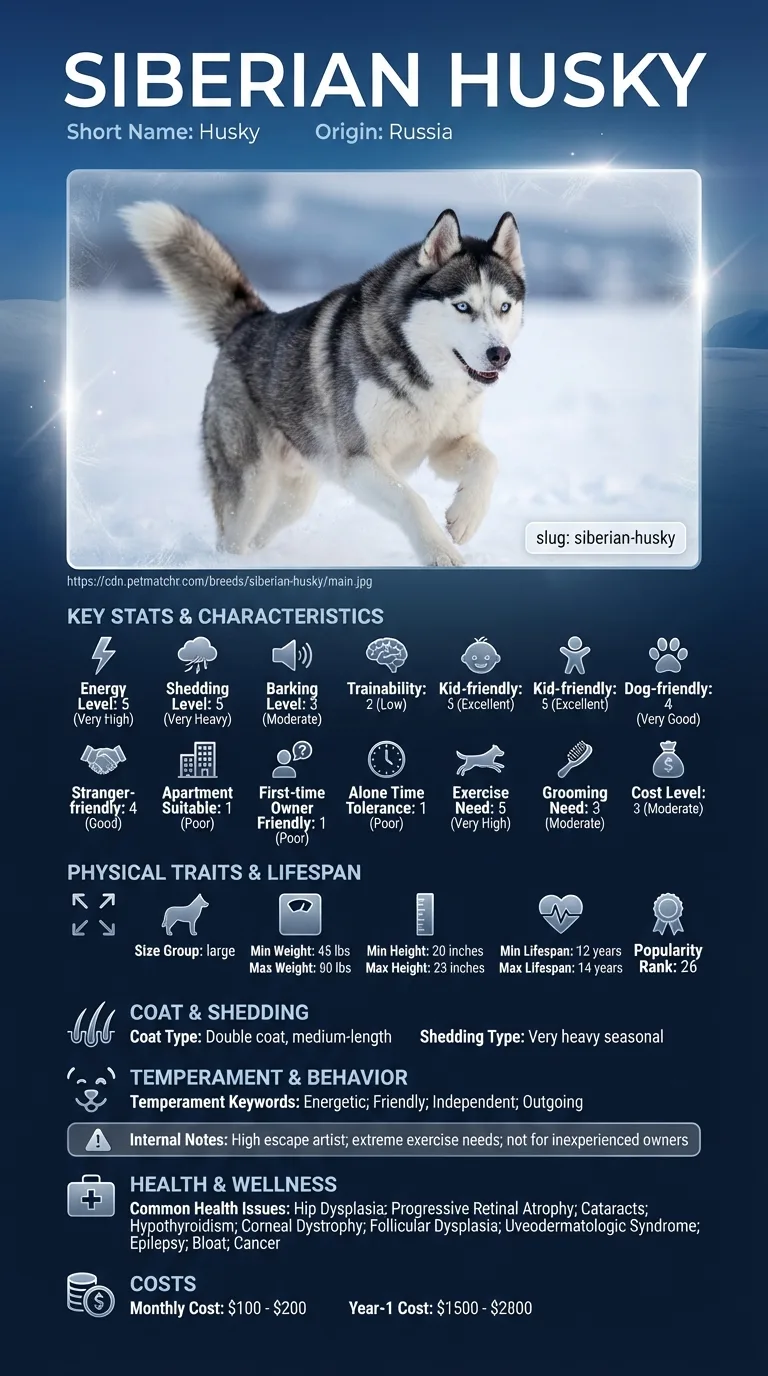
Treatment costs can vary widely, but expect to spend between $100 to $200 monthly, depending on the condition's severity.
A balanced diet rich in omega-3 fatty acids can support skin health. Consult your vet for specific recommendations.
A one-page prep sheet for this condition: the signs, the questions to ask, what to get priced. Unlocks here.
You get: Vet visit prep sheet
No spam. One-click unsubscribe. See our privacy policy.
Preview page 1 before you decide.