Health
What are Schnauzer (Standard) heart problems quick tips?
Monitor your Schnauzer's weight and exercise regularly. Regular veterinary check-ups are crucial for early detection of heart issues.

Quick answer
What are Schnauzer (Standard) heart problems quick tips?
Monitor your Schnauzer's weight and exercise regularly. Regular veterinary check-ups are crucial for early detection of heart issues.
Schnauzer (Standard) heart problems are serious health concerns that can affect your furry friend’s quality of life.
Dog owners, especially those new to the breed or first-time pet parents, often struggle with understanding and managing these heart issues. It can be overwhelming to navigate the health needs of a Schnauzer (Standard).
This guide is not medical advice. If your dog shows pain, sudden behavior change, or worsening symptoms, consult a licensed veterinarian.
Some links may be affiliate links. We may earn a commission at no extra cost to you. We only suggest products we believe are helpful for dog owners.
We research and check what we publish, but we do not warrant that any figure, date, price, or statement is accurate, complete, or current, and we accept no liability for any loss, cost, injury, or other harm arising from the use of this site. Use it as one reference among several. You remain responsible for your own decisions and for your dog's care - confirm anything that matters with a licensed veterinarian or another qualified professional before you act on it. Full disclaimer.
Check this first
Recognizing when your Schnauzer (Standard) has heart problems is crucial. Some signs indicate a serious issue that requires immediate veterinary attention. Other symptoms may be mild and can be monitored at home.
Call Your Vet Now If You Notice: - Severe coughing or wheezing that doesn't stop. - Difficulty breathing, such as rapid or labored breathing. - Sudden lethargy or weakness, particularly after normal activities. - Fainting or collapsing episodes, even briefly. - Swollen abdomen or persistent vomiting.
These symptoms can signal conditions like cardiomyopathy or severe heart valve issues, which can be life-threatening without prompt treatment.
Watch and Wait If You See: - Occasional mild coughing, especially during exercise. - Slight fatigue after playtime but returning to normal soon after. - Mild changes in appetite or water intake.
While these signs can indicate heart problems, they may not require immediate action. Instead, keep a close eye on your Schnauzer (Standard) and consult your vet for a check-up if symptoms persist or worsen. Monitoring your dog’s behavior and health can help you catch more serious issues early.
If any of these apply, call your vet or an emergency clinic now. The rest of this page is for the cases that are not an emergency.
Schnauzer (Standard) heart problems include conditions like subvalvular aortic stenosis and cardiomyopathy. These issues can lead to symptoms such as coughing, fatigue, and difficulty breathing. Owners may notice their dog struggling during exercise or showing signs of lethargy, which can be alarming.
Heart problems are relatively common in Schnauzers, particularly in older dogs. It's essential for owners to be aware of these risks and to monitor their dog's health closely.
Schnauzers (Standard) can be predisposed to heart problems due to genetics. Conditions like subvalvular aortic stenosis and cardiomyopathy are often seen in this breed. Their medium size and unique anatomy can also contribute to these issues.
Environmental factors such as poor diet and lack of exercise can exacerbate heart problems. Stressful living conditions or inadequate healthcare can also lead to a decline in heart health. Additionally, exposure to extreme temperatures may affect their cardiovascular system.
If you notice symptoms like coughing, lethargy, or difficulty breathing, consult your vet immediately. Regular check-ups are crucial for early detection of heart problems. Discuss any changes in behavior or diet that could affect your Schnauzer's heart health.
Avoiding these common mistakes can help improve your Schnauzer's heart health.
Start here: Standard Schnauzer Most Common Genetic Disorders: Screening
See all Schnauzer Standard health problems, which breeds are prone to heart problems, or the full Schnauzer Standard breed guide for temperament, exercise needs and ownership costs.
You can expect to see improvements in your Schnauzer's heart health within a few months of consistent care and follow-up with your vet. Regular vet check-ups and following a care plan are essential.
Success looks like a Schnauzer that is more energetic, has improved stamina, and shows fewer signs of distress during exercise. You'll notice better overall health and a happier dog.
When Lisa adopted Max, her Standard Schnauzer, she quickly noticed he had trouble keeping up during walks. After a vet visit, she learned Max had subvalvular aortic stenosis. Determined to help him, Lisa followed a strict care plan with regular vet check-ups, a specialized diet, and gentle exercise routines. Over the months, with patience and commitment, Max's energy levels improved significantly. Lisa felt relieved as she watched him play and run, enjoying life to the fullest.
Key takeaway: Regular vet visits and a tailored care plan can make a big difference in managing Schnauzer (Standard) heart problems effectively.
Common signs of heart problems in a Schnauzer (Standard) include coughing, difficulty breathing, fatigue during exercise, and a swollen abdomen. If you notice any of these symptoms, it's important to consult your vet as soon as possible.
To help prevent heart problems in your Schnauzer (Standard), ensure they maintain a healthy weight and get regular exercise. A balanced diet rich in nutrients is also essential. Consult your vet for a tailored health plan.
While training can't directly fix heart problems, positive reinforcement can help your Schnauzer stay active without overexerting them. Incorporate short, gentle exercises into their routine. Always prioritize their health and consult a vet for guidance.
Treating heart problems can vary widely in cost, depending on the condition and treatment required. Routine check-ups might cost between $100 to $200 monthly, while surgeries can run into thousands. Always ask your vet for a cost estimate based on your dog's needs.
Yes, diet plays a crucial role in heart health. A balanced diet with low sodium and high-quality proteins can help maintain your Schnauzer's heart function. Discuss dietary options with your vet to ensure the best choices for your dog's health.
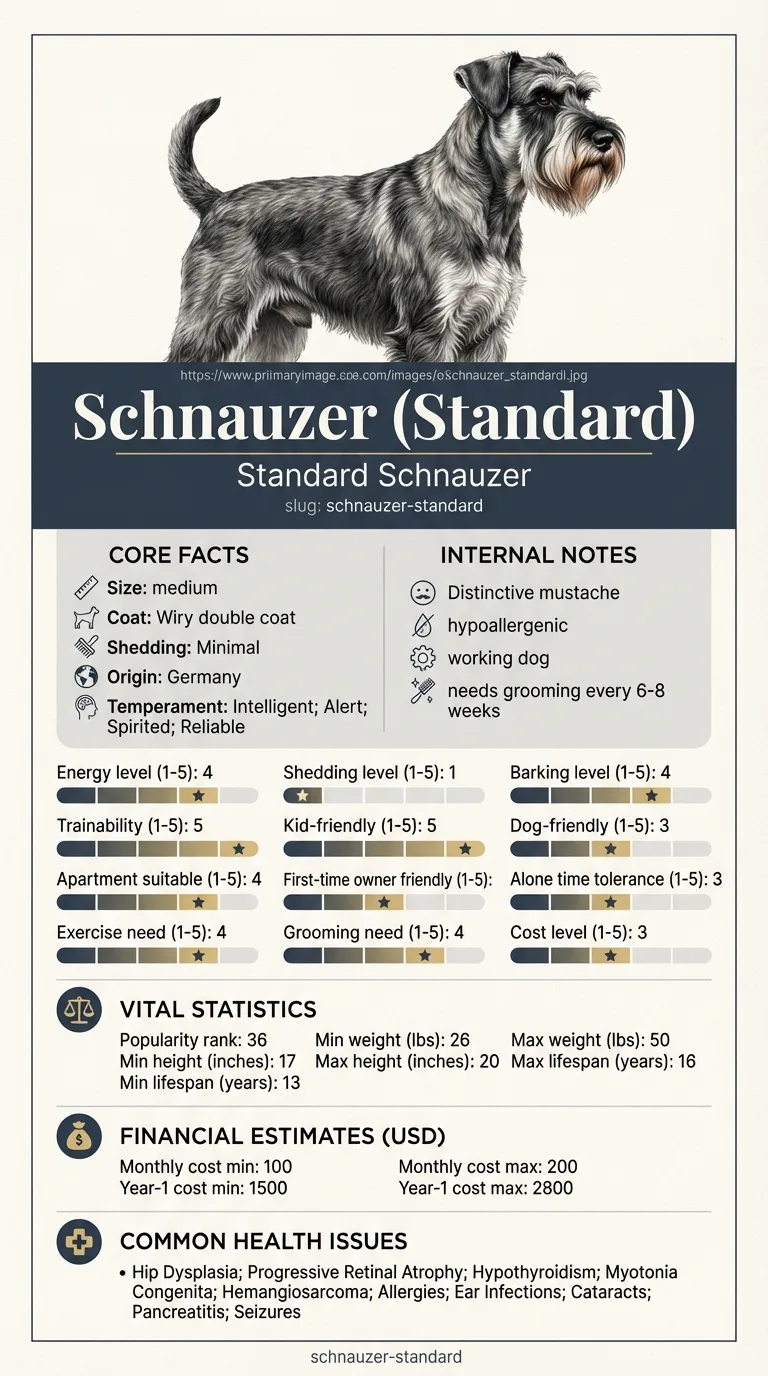
The lifespan of a Schnauzer (Standard) with heart problems can vary greatly. With proper care and management, they can live up to 13 to 16 years. Regular vet visits and a healthy lifestyle are key to prolonging their life.
While not all heart problems can be prevented, maintaining a healthy diet, regular exercise, and routine vet check-ups can help reduce risks. Early detection through regular screenings can also be beneficial.
Yes, older Schnauzers (Standard) are generally at a higher risk for heart problems. As they age, regular veterinary check-ups become even more crucial to monitor their heart health.
A heart-healthy diet for Schnauzers (Standard) should be low in sodium and rich in omega-3 fatty acids. Always consult your vet for personalized dietary recommendations tailored to your dog's needs.
If your Schnauzer (Standard) shows signs like persistent coughing, lethargy, or difficulty breathing, you should see a vet immediately. Early intervention can lead to better outcomes for heart problems.
Monitor your Schnauzer's weight and exercise regularly. Regular veterinary check-ups are crucial for early detection of heart issues.
Schedule vet visits at least once a year, or more frequently if your dog shows signs of heart problems.
A diet low in sodium and high in omega-3 fatty acids can support heart health. Consult your vet for specific recommendations.
Gentle walks and short play sessions are ideal. Avoid strenuous activities, especially if your dog has been diagnosed with a heart condition.
Yes, stress can exacerbate heart problems. Keeping a calm and stable environment is important for your Schnauzer's overall health.
A one-page prep sheet for this condition: the signs, the questions to ask, what to get priced. Unlocks here.
You get: Vet visit prep sheet
No spam. One-click unsubscribe. See our privacy policy.
Preview page 1 before you decide.