Behavior
What are Rottweiler Mix progressive retinal atrophy (pra-rcd3) quick tips?
Keep your home environment consistent and free of obstacles. Use voice commands to guide your dog and consult your vet for regular check-ups.
Progressive Retinal Atrophy (PRA-RCD3) can cause vision loss in your Rottweiler Mix, affecting their quality of life. (Rottweiler Mix progressive retinal atrophy (pra-rcd3))
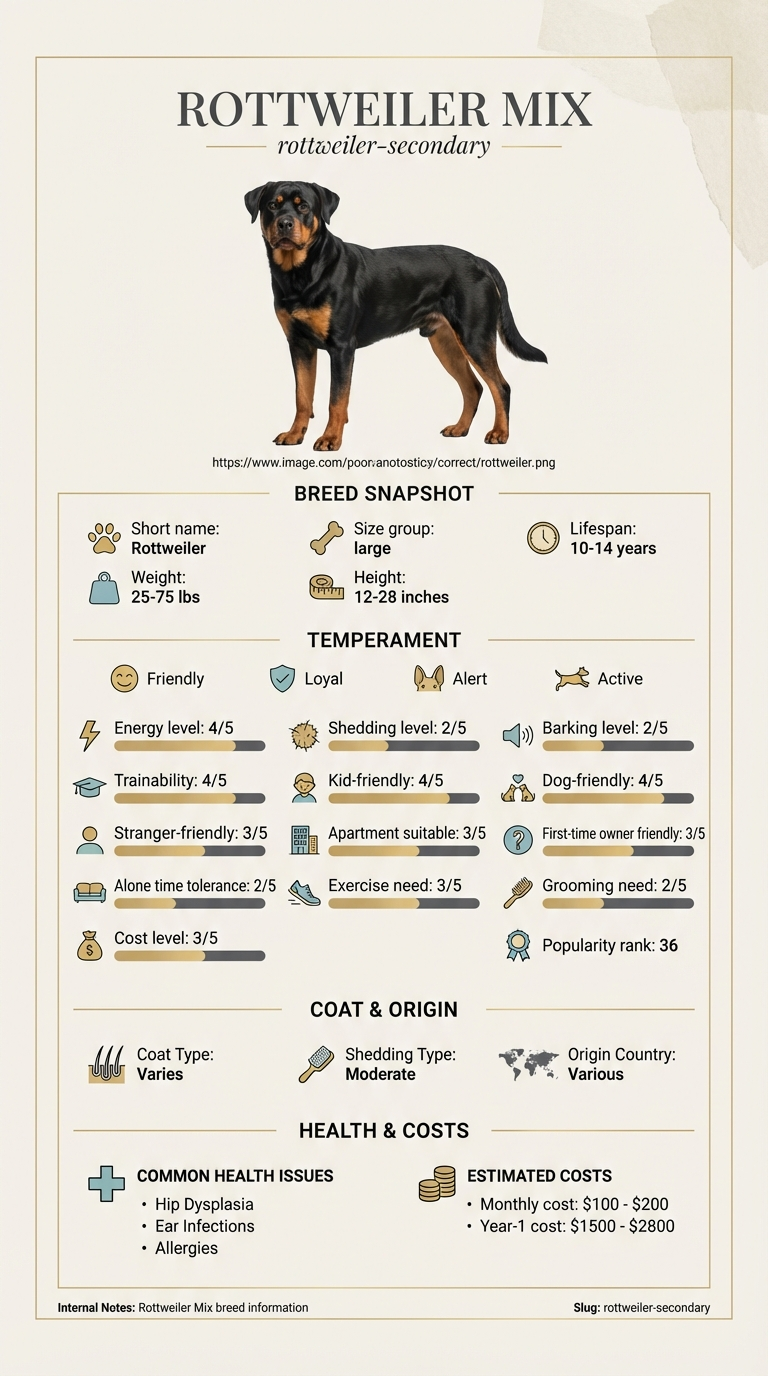
Owners of Rottweiler Mixes, especially those noticing changes in their dog's vision, often face challenges with this condition. It can be particularly distressing for first-time dog owners who may feel overwhelmed by their pet's needs.
This guide is not medical advice. If your dog shows pain, sudden behavior change, or worsening symptoms, consult a licensed veterinarian.
Some links may be affiliate links. We may earn a commission at no extra cost to you. We only suggest products we believe are helpful for dog owners.
Rottweiler Mix progressive retinal atrophy (pra-rcd3) is a genetic condition that leads to gradual vision loss. This condition can start subtly, with your dog appearing slightly less responsive to commands or showing difficulty in low light. Over time, you might notice your Rottweiler Mix bumping into objects or hesitating when navigating familiar spaces.
Progressive retinal atrophy (pra-rcd3) is relatively common in Rottweiler Mixes, especially those with a genetic background that includes Rottweilers. While not every dog will develop this issue, a significant number of Rottweiler Mixes may be affected, making awareness and early detection crucial.
Rottweiler Mixes can inherit Progressive Retinal Atrophy (PRA-rcd3) due to genetic factors. This condition often runs in breeds with similar lineage, leading to deteriorating vision over time. If your Rottweiler Mix has a family history of eye issues, they may be more prone to this condition.
Environmental factors can also contribute to the progression of PRA-rcd3. Poor lighting conditions or lack of mental stimulation can exacerbate the challenges faced by dogs with vision loss. Additionally, a stressful environment can impact a dog's overall well-being.
If your Rottweiler Mix is struggling to adapt to vision loss or showing signs of anxiety, consider working with a professional trainer. They can provide tailored strategies and support to help your dog adjust.
If you notice changes in your dog's vision or behavior, consult your vet. They can evaluate the severity of the condition and discuss options for managing PRA-rcd3 effectively.
Managing Rottweiler Mix progressive retinal atrophy (PRA-rcd3) is an ongoing process. Expect to see gradual changes over several months. With consistent care and training, you can help your dog adapt to vision loss.
Success looks like your Rottweiler Mix being comfortable and confident in their environment despite the vision challenges. They should respond well to training cues and navigate familiar spaces with minimal anxiety.
Avoiding certain behaviors can help your Rottweiler Mix with progressive retinal atrophy (PRA-rcd3) adapt better. Here are some common mistakes to steer clear of.
Progressive Retinal Atrophy (PRA-rcd3) in your Rottweiler Mix can be concerning. It's important to understand when to act quickly and when to monitor the situation. If you notice your dog experiencing sudden vision loss, severe eye redness, or excessive pawing at their eyes, these are red flags. Call your vet immediately in these cases.
On the other hand, if your Rottweiler Mix is showing mild signs like occasional bumping into furniture or squinting in bright light, these may be symptoms to watch. Keep a close eye on their behavior and consider scheduling an appointment with your vet, but there’s no immediate rush. Keeping a log of any changes can help your vet in diagnosing the condition.
Overall, trust your instincts. If something feels off, it’s always better to be safe and check in with a professional.
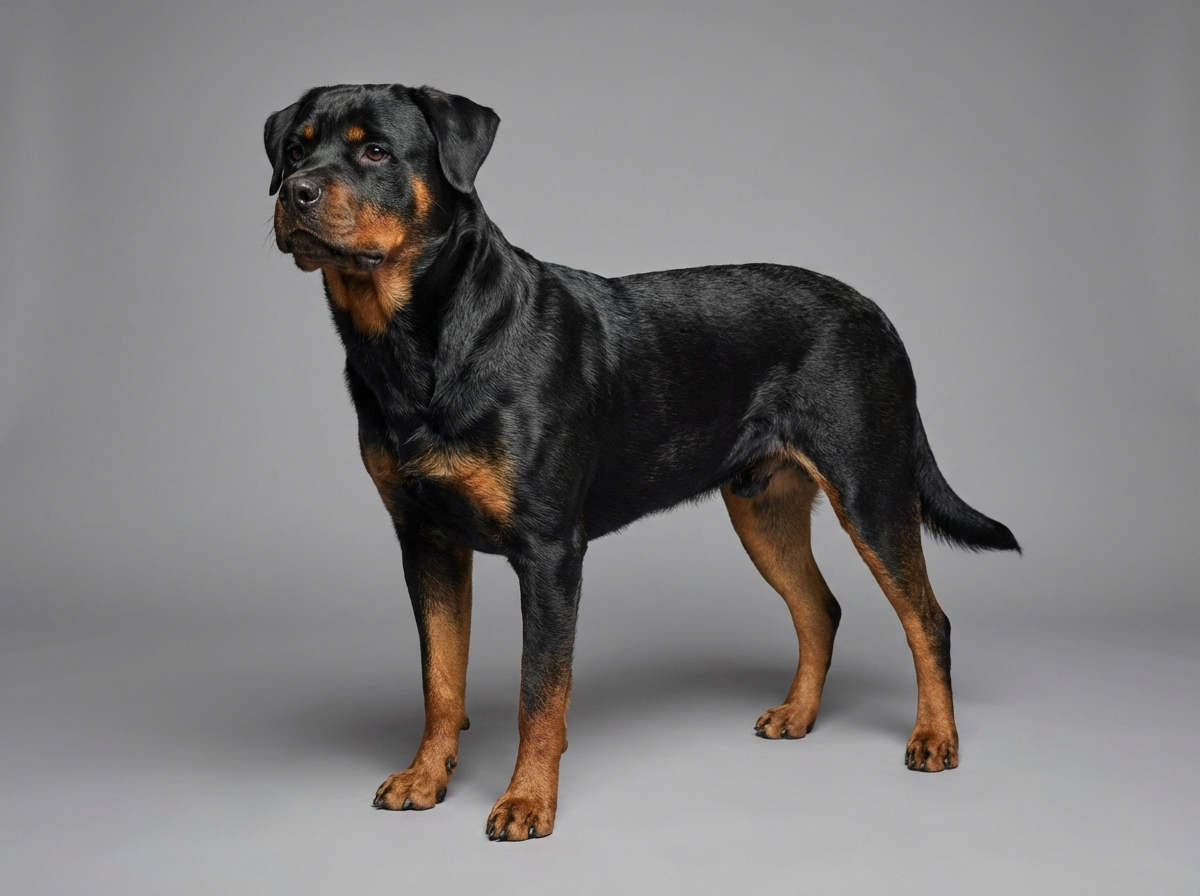
After adopting Bella, a Rottweiler Mix, Lisa noticed that Bella was bumping into furniture and seemed hesitant to explore her home. A vet diagnosed Bella with progressive retinal atrophy (PRA-rcd3). Lisa felt overwhelmed but committed to supporting Bella. She started using sound cues and scent trails to help Bella navigate. Over time, Bella became more confident, learning commands that guided her around the house. Lisa even set up a safe outdoor space where Bella could play freely. This journey brought them closer, and Bella's spirit shone brightly despite her challenges.
Key takeaway: With patience and the right training techniques, you can help your Rottweiler Mix adapt to progressive retinal atrophy (PRA-rcd3) and thrive in their environment.
Rottweiler Mix progressive retinal atrophy (pra-rcd3) is a genetic condition that leads to vision loss over time. It affects the retina, causing it to deteriorate and can result in total blindness. Early detection is key to managing the condition.
Progressive retinal atrophy (pra-rcd3) is often inherited genetically. If your Rottweiler Mix has this condition, it likely comes from a lineage with the genetic predisposition for this disease. Regular vet check-ups can help catch it early.
Providing a stable environment is crucial for a Rottweiler Mix with pra-rcd3. Keep furniture in the same place to help them navigate. You should also consider using harnesses or leashes when walking them for added safety.
Training can focus on verbal commands and tactile cues to guide your Rottweiler Mix. Positive reinforcement works well; always reward them for following commands. Consistency is key, so practice in familiar environments.
Currently, there is no cure for progressive retinal atrophy (pra-rcd3). However, regular vet visits and supportive care can help manage the condition and improve your pet's quality of life.
Signs may include bumping into objects, reluctance to go outside, or hesitation in unfamiliar areas. If you notice these behaviors, consult your veterinarian for an evaluation.
While there's no specific diet for pra-rcd3, providing a balanced diet can support overall health. Consult your veterinarian for tailored dietary advice.
Early signs of PRA-rcd3 in Rottweiler Mixes include difficulty seeing in low light, hesitation when navigating stairs, and bumping into objects. If you notice these behaviors, it's a good idea to consult a vet for a thorough eye examination.
In older Rottweiler Mixes, PRA-rcd3 can lead to more pronounced vision loss and adjustment issues. They may become more anxious or hesitant in unfamiliar environments, so providing a stable routine and environment can help them feel more secure.
Yes, training a Rottweiler Mix with PRA-rcd3 is possible, but adjustments may be necessary. Use positive reinforcement and consistent commands, and consider using tactile cues or voice commands to help guide them.
Currently, there is no cure for PRA-rcd3, but managing your dog's environment can help. Keeping furniture in the same place and providing safe, familiar paths can reduce anxiety and help your dog navigate better.
If you notice any signs of vision loss, such as difficulty navigating or changes in behavior, it's important to see a vet. Early diagnosis can help in managing the condition and improving your dog's quality of life.
Keep your home environment consistent and free of obstacles. Use voice commands to guide your dog and consult your vet for regular check-ups.
Use tactile cues and maintain a stable environment. Consider using a harness for walks to ensure their safety.
Yes, training with verbal commands and positive reinforcement can help your dog adapt to vision loss.
Schedule a visit with your veterinarian as soon as possible for an evaluation.
Costs can vary, but regular vet visits and supportive care may range from $100 to $200 a month.