DogBreedCompass
← Back to breed profile

Understanding Rottweiler Gastric Dilatation-Volvulus (GDV/Bloat)

Rottweiler gastric dilatation-volvulus (GDV/bloat) is a serious and potentially life-threatening condition that affects many Rotties.

Typically, Rottweiler owners who are unaware of the signs and risks of GDV struggle the most. This includes first-time owners and those with busy lifestyles who may overlook subtle changes in their dog's behavior.

Important reminder

This guide is not medical advice. If your dog shows pain, sudden behavior change, or worsening symptoms, consult a licensed veterinarian.

Some links may be affiliate links. We may earn a commission at no extra cost to you. We only suggest products we believe are helpful for dog owners.

What this problem looks like

Rottweiler gastric dilatation-volvulus (GDV/bloat) is a serious condition where the stomach fills with gas and twists. This can cause severe pain and can be life-threatening. Owners may notice their dog displaying signs of distress, including restlessness, drooling, and an enlarged abdomen.

Common triggers

  • Eating large meals quickly
  • High-stress situations
  • Excessive exercise after eating
  • Dietary changes

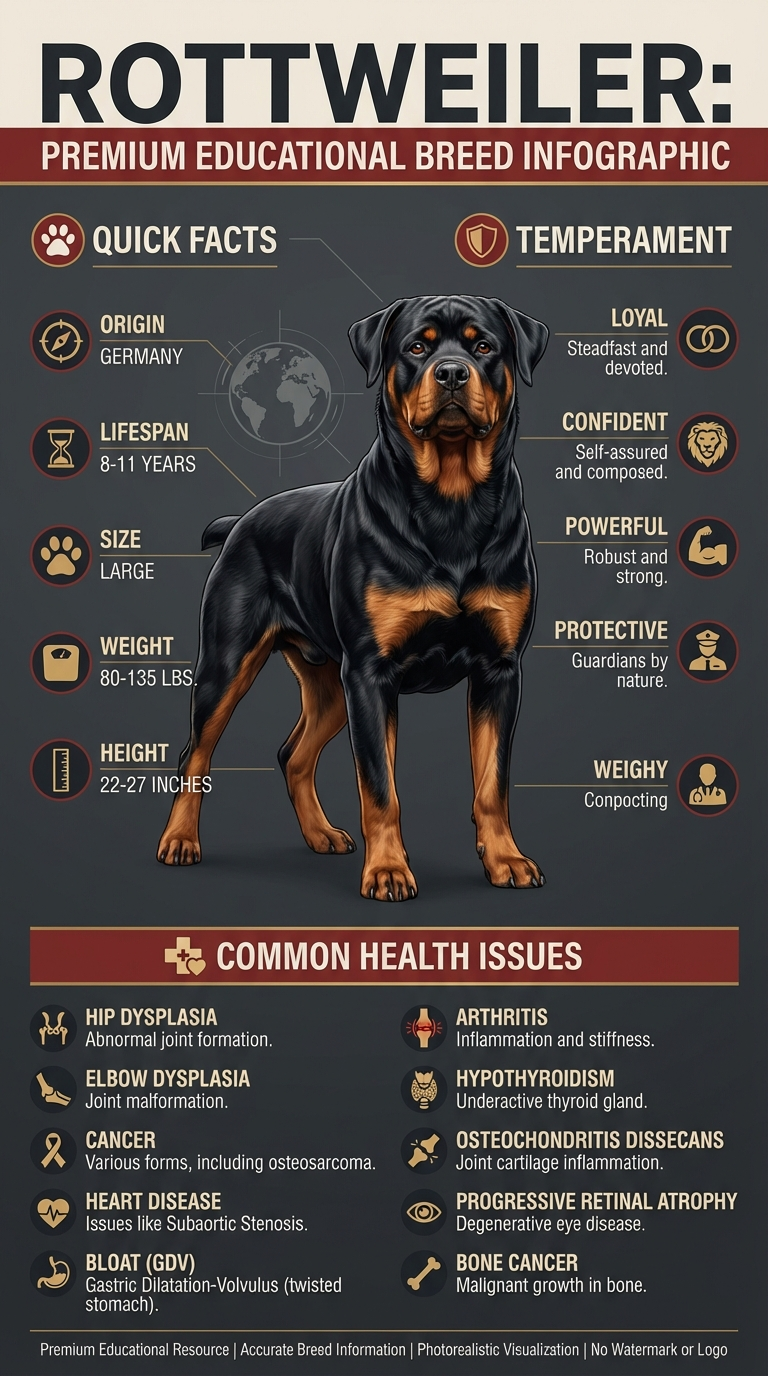
GDV is particularly common in large breeds like Rottweilers. Studies suggest that around 10-30% of Rottweilers may experience this condition at some point in their lives, making it crucial for owners to be aware of the signs and preventive measures.

Why this happens

Breed factors

Rottweilers are a large breed with deep chests, making them more prone to gastric dilatation-volvulus (GDV) or bloat. This condition can occur when the stomach fills with gas and twists, leading to a life-threatening situation. Their strong and protective nature may also cause them to eat quickly, increasing the risk of bloat.

Environment factors

Stress and anxiety can trigger GDV in Rottweilers. Situations like loud noises, changes in routine, or travel can make them anxious. Additionally, feeding them large meals or exercising right after eating can contribute to the problem.

What you can try

At-home strategies

  • Feed smaller, more frequent meals instead of one large meal to reduce stomach pressure.
  • Use a slow feeder bowl to encourage your Rottweiler to eat more slowly.
  • Avoid vigorous exercise for at least an hour after meals to prevent stomach twisting.
  • Create a calm feeding environment to minimize stress during mealtimes.

When to consider a trainer

If your Rottweiler shows signs of anxiety or stress during feeding, consider consulting a trainer. They can help identify triggers and teach relaxation techniques. This can be crucial in preventing bloat-related issues.

When to talk to your vet

If your Rottweiler exhibits symptoms of GDV, such as a swollen abdomen, restlessness, or attempts to vomit without success, contact your vet immediately. Regular check-ups can also help monitor their overall health and bloat risk.

Realistic expectations

Addressing Rottweiler gastric dilatation-volvulus (GDV/bloat) requires immediate action and ongoing management. Initial stabilization can take hours to days in a veterinary setting, while long-term prevention strategies may take several months to establish.

Success means recognizing the signs of bloat early, understanding treatment options, and implementing preventive measures. Owners should feel confident in managing their dog's health and reducing the risk of future episodes.

Jessie and Max's Battle with GDV

Jessie, a dedicated Rottweiler owner, noticed her dog Max acting unusually restless one evening. After a quick online search, she learned about the signs of gastric dilatation-volvulus (GDV) and rushed Max to the emergency vet. Thankfully, he received prompt treatment and recovered well. With guidance from her vet, Jessie learned about proper feeding practices and began monitoring Max's behaviors. Over time, Jessie's diligence helped prevent another bloat episode, giving her peace of mind.

Key takeaway: Recognizing the signs of Rottweiler gastric dilatation-volvulus (GDV/bloat) early and taking immediate action can save your dog's life. Being proactive with feeding and care is essential for prevention.

Frequently asked questions

Why does my Rottweiler have gastric dilatation-volvulus (gdv/bloat)?

Rottweilers are prone to gastric dilatation-volvulus (GDV) due to their deep chests. This condition can develop from overeating, rapid eating, or drinking excessive water after meals. Stress and genetics also play a role in the likelihood of developing GDV.

How can I tell if my Rottweiler has gdv/bloat?

Signs of GDV include a swollen abdomen, restlessness, excessive drooling, and attempts to vomit without producing anything. If you notice these symptoms, it’s crucial to seek immediate veterinary care, as this is a life-threatening condition.

What can I do to prevent Rottweiler gastric dilatation-volvulus (gdv/bloat)?

To help prevent GDV, feed your Rottweiler smaller, more frequent meals instead of one large meal. Use slow-feed bowls to encourage slower eating, and avoid vigorous exercise right after meals. Keeping your dog calm during feeding times can also reduce the risk.

Is there a specific diet that can help prevent gdv/bloat in Rottweilers?

Choosing a high-quality, grain-free dog food can help reduce the risk of GDV. Additionally, some owners find that adding probiotics to their dog's diet promotes better digestion, which might lower the chances of bloat.

What should I do if my Rottweiler shows signs of gdv/bloat?

If your Rottweiler shows signs of GDV, take them to a veterinarian immediately. Time is critical, as this condition can lead to shock and death within hours without treatment. Do not try to treat it at home.

How is gastric dilatation-volvulus (gdv/bloat) treated in Rottweilers?

Treatment for GDV usually involves emergency surgery to decompress the stomach and reposition it. In some cases, a preventative procedure called a gastropexy may be done to reduce the chances of recurrence.

What are the early signs of Rottweiler gastric dilatation-volvulus (GDV/bloat)?

Early signs of GDV in Rottweilers may include restlessness, pacing, and a distended abdomen. You might also notice your dog trying to vomit without success or showing signs of discomfort. Recognizing these symptoms quickly is crucial for effective treatment.

Can older Rottweilers develop gastric dilatation-volvulus (GDV/bloat)?

Yes, older Rottweilers can develop GDV, especially if they have a history of digestive issues or have been through major surgeries. As dogs age, their risk factors may increase, so it's important to monitor their health closely and consult your vet regularly.

How can I prevent Rottweiler gastric dilatation-volvulus (GDV/bloat)?

To help prevent GDV in your Rottweiler, feed smaller, more frequent meals instead of one large meal. Avoid vigorous exercise right after meals and consider using a slow feeder to reduce the speed of eating. These practices can lower the risk of bloat.

When should I take my Rottweiler to the vet for gastric dilatation-volvulus (GDV/bloat)?

If you notice signs of distress, such as a swollen abdomen, excessive drooling, or signs of pain, take your Rottweiler to the vet immediately. GDV is a medical emergency that requires prompt treatment to prevent serious complications.

Are certain Rottweilers more prone to gastric dilatation-volvulus (GDV/bloat)?

Yes, Rottweilers with a family history of GDV or those that have had previous episodes are at a higher risk. Additionally, factors like age, diet, and rapid eating can contribute to a higher likelihood of developing this condition.
Quick answers

View more answers
Behavior

What are quick tips for Rottweiler gastric dilatation-volvulus (gdv/bloat)?

Feed smaller meals multiple times a day, avoid exercise immediately after eating, and monitor for signs of bloating. If your dog appears distressed or shows a swollen belly, seek veterinary help right away.

Living

How often should I feed my Rottweiler to prevent gdv/bloat?

Feeding your Rottweiler two to three smaller meals daily can help prevent GDV. This practice reduces the chance of their stomach filling too quickly.

Health

What are common signs of gdv/bloat?

Look for a swollen abdomen, excessive drooling, and signs of distress or discomfort. If your Rottweiler tries to vomit but can’t, it’s a serious warning sign.

Related DogBreedCompass guides

  • Rottweiler gastric dilatation-volvulus (gdv/bloat) quick tipsUnderstanding and preventing GDV can be crucial for Rottweiler owners.
  • Rottweiler behavior problemsLearn about behavioral issues that might lead to stress-related health problems.
  • Rottweiler gastric dilatation-volvulus (gdv/bloat) trainingTraining your Rottweiler can help manage anxiety and prevent GDV.
  • Rottweiler separation anxiety guideSeparation anxiety is common in Rottweilers and can affect their health.
  • Rottweiler cost breakdownGet insights on Rottweiler ownership costs, particularly related to health issues.

Related guides

Take Behavior Assessment

Understand why your dog acts this way.

Take a quick dog behavior quiz to spot red flags in training, anxiety and everyday habits before they snowball into bigger problems.

Take quiz


