Poodle (Standard) x-scid: Understanding Severe Combined Immunodeficiency
Quick answer
What are some quick tips for Poodles with x-scid?
Keep your Poodle's environment clean and avoid crowded areas. Regular vet visits are essential for monitoring their health. Always be cautious about their exposure to other dogs and potential infections.
Poodle (Standard) x-scid is a serious condition that affects your dog's immune system. This rare genetic disorder can make your dog vulnerable to infections and illnesses.
Owners of Poodles, especially those who are first-time pet parents or those living in areas with limited veterinary access, often struggle with understanding this complex condition. It can be overwhelming to navigate the symptoms and treatment options.
Important reminder
This guide is not medical advice. If your dog shows pain, sudden behavior change, or worsening symptoms, consult a licensed veterinarian.
Some links may be affiliate links. We may earn a commission at no extra cost to you. We only suggest products we believe are helpful for dog owners.
We research and check what we publish, but we do not warrant that any figure, date, price, or statement is accurate, complete, or current, and we accept no liability for any loss, cost, injury, or other harm arising from the use of this site. Use it as one reference among several. You remain responsible for your own decisions and for your dog's care - confirm anything that matters with a licensed veterinarian or another qualified professional before you act on it. Full disclaimer.
Check this first
When is X-SCID an Emergency?
Understanding when X-SCID in your Poodle (Standard) is an emergency can be key to ensuring their health. There are specific signs that indicate you should call your vet immediately. If your dog shows severe lethargy, persistent vomiting, or any unusual bleeding, these are red flags. Additionally, if you notice difficulty breathing or swelling in the face or limbs, you must seek help right away.
If any of these apply, call your vet or an emergency clinic now. The rest of this page is for the cases that are not an emergency.
What this problem looks like
Poodle (Standard) x-scid is a rare but serious condition that affects the immune system. This genetic disorder leads to severe combined immunodeficiency, meaning affected dogs struggle to fend off infections. Day-to-day, a Poodle with x-scid may seem lethargic or experience frequent illnesses, requiring close monitoring and veterinary support.
Common triggers
Genetic predisposition due to breeding
Exposure to infections or pathogens
Environmental stressors like extreme temperatures
X-scid is quite rare, especially in Poodles, but when it does occur, it can significantly impact the dog's health and quality of life. Due to the genetic nature of this disorder, potential owners should be aware of the importance of responsible breeding practices.
Why this happens
Breed factors
Poodles, including the Standard Poodle, are known for their high intelligence and unique genetics. The x-scid condition, or severe combined immunodeficiency, is a rare genetic disorder that affects their immune system. This condition is inherited, meaning it can be passed down from parents to puppies.
Environment factors
While genetics play a significant role, environmental factors like poor nutrition or exposure to pathogens can exacerbate health issues. Stressful situations or inadequate care may also impact a Poodle's overall health, potentially making any existing conditions worse.
What you can do at home (once it is not an emergency)
When to talk to your vet
Always consult your vet if you suspect your Poodle has x-scid or if they display any unusual symptoms. Regular check-ups are crucial, especially for genetic conditions, to ensure they receive appropriate care.
At home, alongside your vet's plan
Ensure your Poodle has a balanced, high-quality diet to support their immune system. Include plenty of vitamins and minerals, and consult your vet for dietary recommendations.
Keep your home and yard clean to minimize exposure to pathogens. Regularly sanitize their living area and avoid crowded places where infections might spread.
Monitor your Poodle closely for any signs of illness and provide them with a calm, stress-free environment. Create a routine that includes regular exercise and mental stimulation.
Mistakes that make Poodle (Standard) x-scid worse
Avoiding certain behaviors can help improve your Poodle (Standard) x-scid situation. Here are common mistakes to steer clear of, along with better alternatives.
Ignoring Symptoms: Some owners wait too long to seek veterinary care when they notice unusual behavior. Early intervention is key to managing x-scid effectively.
Overexerting Your Dog: Poodles need exercise, but pushing them too hard can worsen their condition. Opt for moderate, regular walks instead of intense activities.
Neglecting Socialization: Keeping your Poodle isolated can lead to anxiety. Instead, introduce them gradually to new experiences and safe environments.
Inconsistent Training: Mixed signals can confuse your dog. Stick to a consistent training routine and use positive reinforcement for desired behaviors.
Disregarding Dietary Needs: Feeding low-quality food can compromise your dog's health. Invest in high-quality, balanced nutrition to support their immune system.
Avoiding Vet Visits: Some owners delay regular check-ups out of fear or cost concerns. Regular vet visits are crucial for monitoring health and making necessary adjustments.
You can expect to see some improvements in about 6 to 8 weeks with consistent care and support.
Success means your Poodle (Standard) x-scid will show reduced anxiety and improved behavior, making daily life more enjoyable.
When to Monitor and Wait
In less severe cases, you may choose to monitor your Poodle (Standard) at home. If they show mild symptoms such as slight lethargy or a minor cough, keep an eye on them for a day or two. Ensure they stay hydrated and comfortable, but if symptoms worsen or new signs appear, don't hesitate to reach out to your vet for advice.
Poodle (Standard) x-scid: Understanding Severe Combined Immunodeficiency - When to Monitor and Wait
Finding Calm: How Sarah Helped Her Poodle Cope
Sarah, a busy nurse in Chicago, adopted a Poodle (Standard) named Max. Soon after bringing him home, she noticed Max was anxious, often barking and hiding whenever visitors arrived. With a hectic work schedule, Sarah felt overwhelmed. However, she decided to dedicate just 15 minutes a day to training. She used positive reinforcement techniques and worked with a local trainer who understood her situation. Over time, Max became more confident and relaxed around guests, transforming their home into a peaceful space.
Key takeaway: With patience and a structured training plan, even anxious dogs can learn to adapt and thrive in new environments.
Frequently asked questions
Why does my Poodle (Standard) have x-scid?
X-SCID, or severe combined immunodeficiency, is a rare genetic condition affecting your Poodle's immune system. This means that they may struggle to fight off infections. It's essential to consult your vet for proper diagnosis and management. This answer relates to Poodle (Standard) x-scid.
How can I manage my Poodle (Standard) with x-scid?
Managing a Poodle (Standard) with x-scid involves regular vet check-ups and monitoring for any signs of infection. Keeping your dog away from crowded places can also help minimize exposure to pathogens. Follow your vet's guidance for any specific treatments or preventive care.
What treatments are available for x-scid in Poodles?
Currently, there is no cure for x-scid in Poodles. Treatment usually focuses on managing symptoms and preventing infections. Your vet may recommend medications or lifestyle adjustments to help keep your dog healthy.
Can I train my Poodle (Standard) with x-scid?
Yes, you can still train your Poodle (Standard) with x-scid, but be mindful of their health limitations. Focus on low-impact training and avoid overly strenuous activities. Positive reinforcement methods are particularly effective for Poodles.
What is the life expectancy of a Poodle (Standard) with x-scid?
The life expectancy of a Poodle (Standard) with x-scid can vary greatly depending on their overall health and care. With proper management, some dogs can live into their teens. Regular veterinary care is crucial for extending their lifespan.
Are there any specific diets for Poodles with x-scid?
While there's no specific diet for Poodles with x-scid, a balanced, high-quality diet can support their overall health. Consult your vet for dietary recommendations tailored to your dog's needs.
Can X-SCID affect older Poodles differently?
While X-SCID is a genetic condition that typically manifests in younger dogs, older Poodles may show different symptoms or complications. Regular vet check-ups can help monitor their health as they age.
How is X-SCID diagnosed in Poodles?
Diagnosis of X-SCID usually involves a physical examination, blood tests, and possibly genetic testing. If you suspect your Poodle has this condition, speak to your vet about the best testing options.
What is the treatment for a Poodle (Standard) with X-SCID?
Currently, there is no cure for X-SCID. Treatment focuses on managing symptoms and preventing infections, which may include regular vet visits and special care to keep your dog healthy.
Is X-SCID hereditary in Poodles?
Yes, X-SCID is an inherited condition in Poodles. Responsible breeding practices can help reduce the occurrence of this genetic disorder in future litters, so it’s important to choose a reputable breeder.
Keep your Poodle's environment clean and avoid crowded areas. Regular vet visits are essential for monitoring their health. Always be cautious about their exposure to other dogs and potential infections.
Training
How can I train my Poodle (Standard) with x-scid?
Use positive reinforcement techniques and keep training sessions short. Focus on basic commands and low-impact activities to ensure their comfort.
Costs
What costs should I expect for managing x-scid in Poodles?
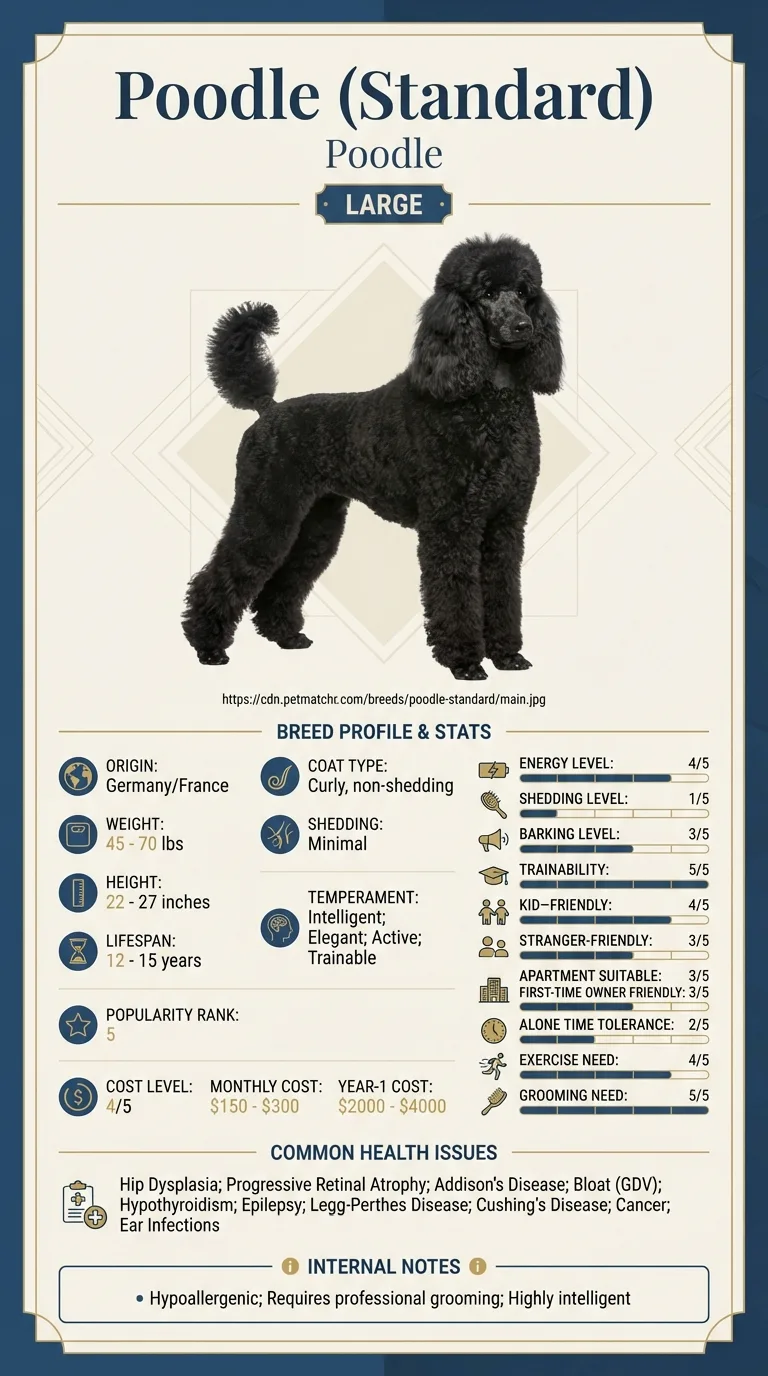
Expect to spend around $150 to $300 monthly on veterinary care and medications for your Poodle. Initial costs for diagnosis and treatment can vary widely.
The free prep sheet covers the same-day warning signs, a symptom log and the questions to ask. We are considering a fuller kit that adds a cost worksheet for the usual tests and treatments (US price ranges with their sources) and a plain-English guide to ways of covering the bill. It is not built yet; this list tells us whether it is worth building.
One email, no spam, unsubscribe anytime. Information only, not veterinary advice.