Behavior
What are some quick tips for Poodle (Standard) separation anxiety?
Gradually increase the time your Poodle is left alone, and use puzzle toys to keep them engaged. Providing a safe space can also help them feel secure.

Quick answer
What are some quick tips for Poodle (Standard) separation anxiety?
Gradually increase the time your Poodle is left alone, and use puzzle toys to keep them engaged. Providing a safe space can also help them feel secure.
Poodle (Standard) separation anxiety can cause distress and destructive behavior when left alone. This problem is not just a nuisance; it affects the well-being of both the dog and the owner.
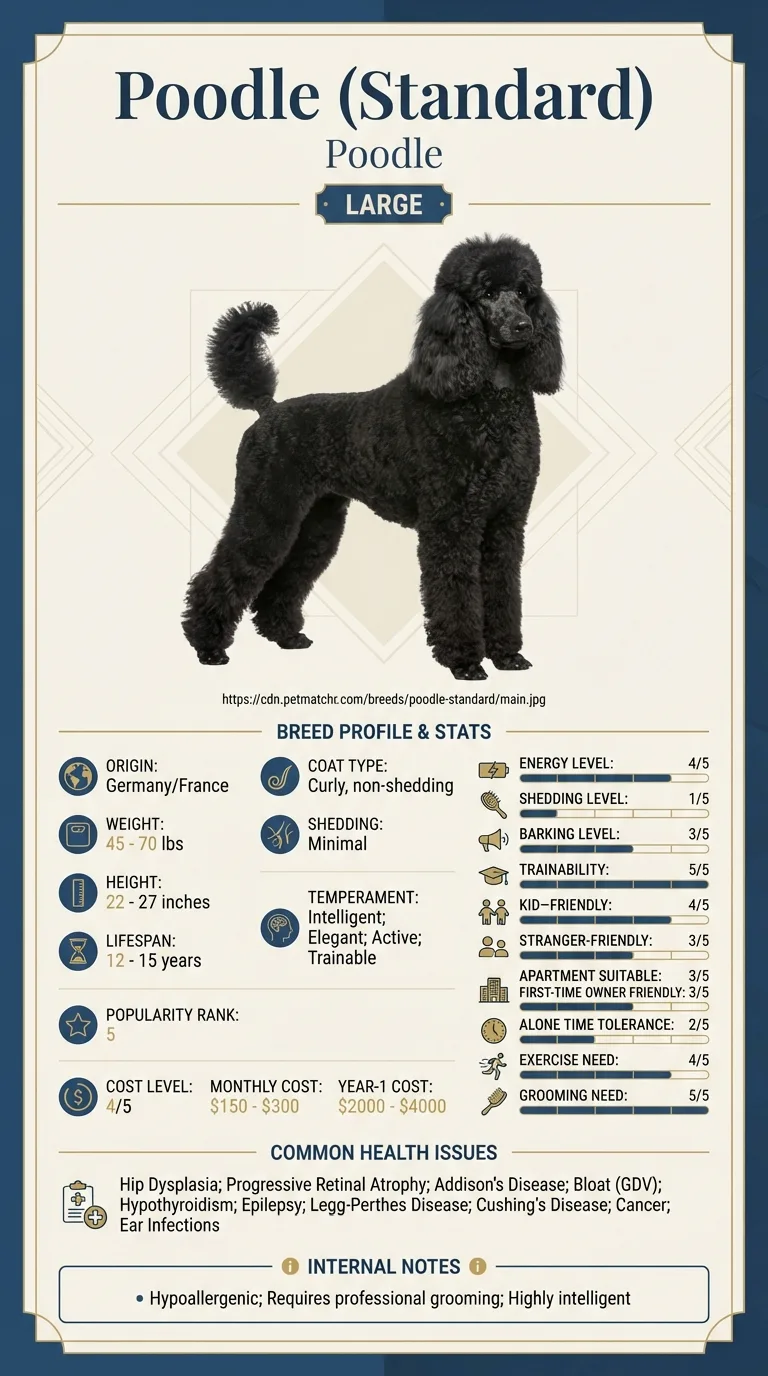
Owners who work long hours, travel frequently, or have recently changed their routines often find themselves dealing with a Poodle (Standard) struggling with separation anxiety. It can be particularly tough for first-time dog owners who may not know how to address these challenges.
This guide is not medical advice. If your dog shows pain, sudden behavior change, or worsening symptoms, consult a licensed veterinarian.
Some links may be affiliate links. We may earn a commission at no extra cost to you. We only suggest products we believe are helpful for dog owners.
We research and check what we publish, but we do not warrant that any figure, date, price, or statement is accurate, complete, or current, and we accept no liability for any loss, cost, injury, or other harm arising from the use of this site. Use it as one reference among several. You remain responsible for your own decisions and for your dog's care - confirm anything that matters with a licensed veterinarian or another qualified professional before you act on it. Full disclaimer.
Poodle (Standard) separation anxiety is a common issue that can manifest in various ways, such as excessive barking, destructive behavior, or even accidents indoors. This breed, known for its intelligence and sensitivity, often struggles with being alone for extended periods. Owners may notice their Poodle becoming distressed when they prepare to leave, which can lead to anxious behaviors.
Separation anxiety is quite common among Poodles, especially since they thrive on companionship. Many owners report that their Poodles exhibit signs of anxiety when left alone, making it a significant concern for potential and current Poodle owners alike.
Poodles (Standard) are highly intelligent and social dogs. They thrive on companionship and can become anxious when left alone for long periods. Their sensitive nature means that any changes in routine or environment can trigger their separation anxiety.
Environmental factors also play a significant role in separation anxiety. If a Poodle is not gradually acclimated to being alone, or if they experience frequent changes like moving homes or new family members, this can heighten their anxiety. Lack of proper exercise and mental stimulation can also contribute to their distress.
If your Poodle's separation anxiety persists despite your efforts, it may be time to consult a professional trainer. They can provide specialized training techniques tailored to your dog's needs, ensuring effective results.
If your Poodle shows extreme signs of distress or if their anxiety leads to destructive behavior or health issues, consult your vet. They can assess whether medication or further behavioral therapy might be necessary for your dog's well-being.
Start here: Standard Poodle Most Common Genetic Disorders: Screening
See all Poodle Standard health problems, which breeds are prone to separation anxiety, or the full Poodle Standard breed guide for temperament, exercise needs and ownership costs.
It usually takes 4 to 12 weeks of consistent training and management to see significant improvement in a Poodle (Standard) with separation anxiety.
Success means your Poodle can stay alone for several hours without distress, showing calm behavior and reduced barking or destructive actions.
Avoiding these common mistakes can help improve your Poodle's (Standard) separation anxiety.
Understanding when Poodle (Standard) separation anxiety becomes an emergency is crucial for your dog's well-being. If your Poodle shows extreme signs of distress, such as excessive barking, destructive behavior, or attempts to escape, it’s time to act. These behaviors can lead to injuries or harm if not addressed immediately.

On the other hand, if your Poodle experiences mild anxiety, such as whimpering or minor barking when left alone, you can monitor the situation. Set up a plan to gradually help your dog adjust to being alone, such as using a safe space or providing engaging toys. It’s important to be patient and consistent in your approach.

Sarah, a nurse in Chicago, adopted Max, her Standard Poodle, hoping for a loyal companion. However, she soon realized that every time she left for work, Max would bark incessantly and chew on furniture. After doing some research, she started a separation anxiety training program that included short departures and positive reinforcement. Over the weeks, she gradually increased the time away while leaving him with engaging toys. By the end of three months, Max could stay home alone for up to four hours without panic, and Sarah felt more at ease knowing Max was comfortable.
Key takeaway: Patience and consistency in training lead to success in managing Poodle (Standard) separation anxiety.
Signs of separation anxiety in a Poodle (Standard) may include excessive barking, destructive behavior, or attempts to escape when left alone. They might also show signs of distress, such as pacing or drooling. If you notice these behaviors, it’s essential to address the issue quickly.
To stop Poodle (Standard) separation anxiety, start with short departures, gradually increasing the time you're away. Use positive reinforcement when your dog remains calm alone. Consulting with a trainer can provide tailored strategies for your specific situation.
Yes, training techniques like crate training and leaving a piece of your clothing can help. Engaging in interactive toys or puzzle feeders can also keep your Poodle occupied and reduce anxiety when you’re away.
Signs of separation anxiety in Poodles include excessive barking, destructive behavior, and house soiling when left alone. You may also notice your dog pacing or showing signs of distress when you prepare to leave.
In some cases, medication may be necessary to help alleviate severe separation anxiety. Always consult your veterinarian before starting any medication, as they can recommend appropriate options based on your dog's needs.
Yes, older Poodles can develop separation anxiety, even if they haven't shown signs in the past. Changes in their environment or routine, like moving homes or the loss of a companion, can trigger anxiety. If you suspect this, consult a vet for guidance.
You can help your Poodle adjust by gradually increasing the time they spend alone. Start with short periods and slowly extend them while offering positive reinforcement, like treats or toys. This can build their confidence and reduce anxiety.
If your Poodle's separation anxiety is severe or doesn’t improve with basic training techniques, it may be time to seek professional help. A trainer or behaviorist can provide tailored strategies to address your dog's specific needs. Consulting a vet can also rule out any underlying health issues.
Medication can be an option for managing severe separation anxiety in Poodles. However, it should be seen as a last resort after trying behavioral training techniques. Always consult your veterinarian to discuss the best approach for your dog's health and well-being.
Gradually increase the time your Poodle is left alone, and use puzzle toys to keep them engaged. Providing a safe space can also help them feel secure.
Poodles can typically tolerate being alone for about 4-6 hours, but this varies by individual. Training can help extend this time.
Yes, Poodles are sensitive and can develop separation anxiety, especially if they are not used to being alone. Early training is key to prevention.
Behaviour changes often start with pain. The prep sheet for this page covers what to rule out, and what to ask.
You get: Vet visit prep sheet
No spam. One-click unsubscribe. See our privacy policy.
Preview page 1 before you decide.