Health
What should I do if my Poodle (Standard) has PRA?
Consult your veterinarian for advice on managing progressive retinal atrophy and maintaining your dog's quality of life.

Quick answer
What should I do if my Poodle (Standard) has PRA?
Consult your veterinarian for advice on managing progressive retinal atrophy and maintaining your dog's quality of life.
Poodle (Standard) progressive retinal atrophy (PRA) is a serious condition that leads to gradual vision loss.
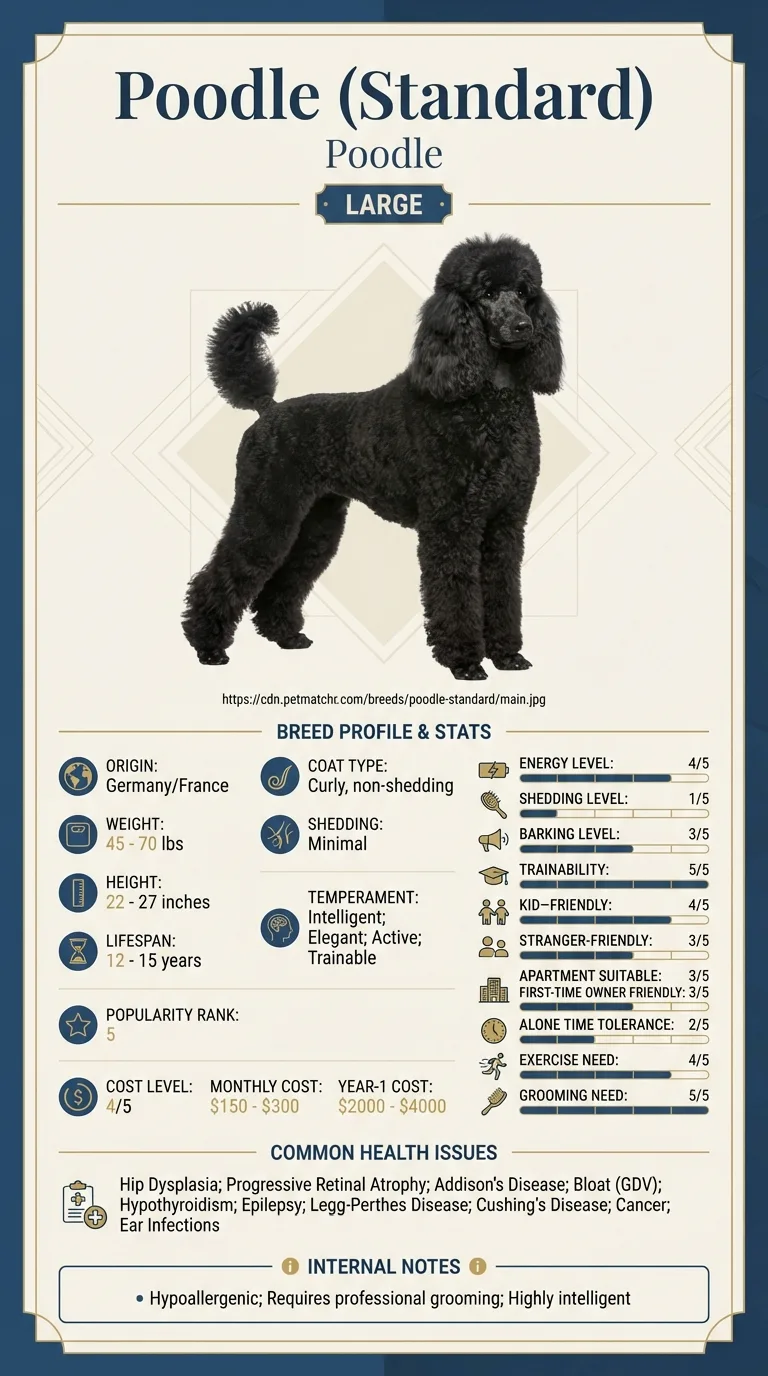
Owners of Poodles may face challenges as their dogs age and exhibit signs of vision decline. This problem is especially concerning for families who want to ensure their pets' well-being as they navigate their surroundings.
This guide is not medical advice. If your dog shows pain, sudden behavior change, or worsening symptoms, consult a licensed veterinarian.
Some links may be affiliate links. We may earn a commission at no extra cost to you. We only suggest products we believe are helpful for dog owners.
We research and check what we publish, but we do not warrant that any figure, date, price, or statement is accurate, complete, or current, and we accept no liability for any loss, cost, injury, or other harm arising from the use of this site. Use it as one reference among several. You remain responsible for your own decisions and for your dog's care - confirm anything that matters with a licensed veterinarian or another qualified professional before you act on it. Full disclaimer.
Check this first
If you notice severe symptoms in your Poodle (Standard) related to progressive retinal atrophy (PRA), it’s crucial to act quickly. Look out for signs like sudden blindness, disorientation, or bumping into objects. These indicate that your dog may be experiencing acute issues that need immediate veterinary attention.
On the other hand, if your Poodle is showing mild signs, such as slight vision changes or hesitance in low light, you can monitor the situation. It's important to keep a close watch and note any changes in behavior or worsening symptoms. A vet visit can be scheduled to discuss a long-term management plan.
In summary, call your vet immediately if you notice any of the following red flags: sudden vision loss, extreme anxiety, or significant changes in behavior. For less severe cases, maintain a watchful eye and consult your vet during regular check-ups for ongoing care.
If any of these apply, call your vet or an emergency clinic now. The rest of this page is for the cases that are not an emergency.
Poodle (Standard) progressive retinal atrophy (PRA) is a serious eye condition that leads to gradual vision loss. This condition often starts subtly, making it hard to notice at first. As the disease progresses, your Poodle may bump into objects or struggle to navigate familiar environments.
Progressive retinal atrophy is relatively common in Poodles, especially as they age. Many Poodles may experience some degree of vision impairment due to this condition, so being aware of the signs is crucial for early intervention.
Poodles (Standard) are prone to genetic conditions like progressive retinal atrophy (PRA). This inherited disorder leads to gradual vision loss due to the degeneration of the retina. If you have a Poodle, understanding their genetic predispositions is crucial for monitoring health.
Environmental factors can exacerbate PRA symptoms in Poodles. For example, a lack of mental stimulation or a sudden change in routine can make it harder for your dog to adapt to their vision loss. Additionally, poor lighting conditions may limit their ability to navigate safely.
Consult your vet if you notice signs of progressive retinal atrophy, like difficulty seeing in dim light or bumping into things. Regular check-ups are essential for monitoring your Poodle's eye health and discussing potential treatments or management options.
Many dog owners unintentionally make their Poodle (Standard) progressive retinal atrophy (PRA) worse. Here are some common mistakes to avoid, along with safer alternatives.
Start here: Standard Poodle Most Common Genetic Disorders: Screening
See all Poodle Standard health problems, which breeds are prone to progressive retinal atrophy pra, or the full Poodle Standard breed guide for temperament, exercise needs and ownership costs.
You may start noticing symptoms of Poodle (Standard) progressive retinal atrophy (PRA) within a few years. A typical timeline for managing this condition involves regular vet visits, monitoring vision changes, and potential adjustments in your dog's environment over 6 to 12 months.
Success looks like your Poodle adapting to vision loss with confidence. This includes them learning new cues and commands, as well as navigating their surroundings safely.
Emily, a dog mom in her 30s, noticed her Poodle, Max, bumping into furniture and hesitating on walks. After a vet visit confirmed progressive retinal atrophy (PRA), she was understandably worried. Determined to help Max, Emily started using sound cues and tactile markers around the house. With patience and practice, Max adapted quickly and even learned commands that helped him navigate his favorite park safely.
Key takeaway: Adapting to Poodle (Standard) progressive retinal atrophy (PRA) requires creativity and patience. With the right support and training, your dog can lead a fulfilling life despite vision loss.
Poodle (Standard) progressive retinal atrophy (PRA) is a genetic eye disorder that leads to gradual vision loss. It affects the retina, causing the light-sensitive cells to deteriorate over time. This condition can eventually lead to blindness.
Signs of PRA in Poodle (Standard) may include difficulty seeing in dim light, bumping into objects, or hesitating before jumping. If you notice these behaviors, consult your veterinarian for an eye examination. Early detection can help manage the condition.
Currently, there is no cure for PRA. However, management strategies can help your Poodle adapt to vision loss. Providing a safe, familiar environment and using commands can ease their adjustment.
PRA cannot be stopped or reversed, as it is a progressive condition. Focus on managing your dog's environment to keep it safe. Regular vet visits and discussions about potential treatments or supportive care can also be beneficial.
Training can help a visually impaired Poodle (Standard) thrive. Use verbal cues and consistent commands to guide them. Positive reinforcement for following commands can also enhance their confidence and independence.
Early signs of progressive retinal atrophy (PRA) in a Poodle (Standard) can include difficulty seeing in dim light, bumping into objects, or hesitance when navigating unfamiliar spaces. As the condition progresses, you may notice increased clumsiness or reluctance to play fetch. Regular check-ups with your vet can help catch these signs early.
To help your Poodle (Standard) adapt to vision loss from PRA, create a safe and consistent environment. Keep furniture in the same place, and use verbal cues to guide them. Training them to respond to commands can also help ease their navigation around the house.
Yes, progressive retinal atrophy (PRA) is often hereditary in Poodles (Standard). Responsible breeders screen for this condition to avoid passing it on. If you suspect your Poodle has PRA, consult your vet for advice and potential genetic testing.
If your Poodle (Standard) shows signs of anxiety due to progressive retinal atrophy (PRA), consider creating a calm environment and using soothing techniques. Training sessions can also be beneficial. If anxiety persists, consult your vet for advice on behavior modification or calming products.
Yes, progressive retinal atrophy (PRA) can affect older Poodles (Standard) as the condition may develop over time. It's important to monitor their vision and consult your vet if you notice any changes. Early detection can help manage the condition and improve their quality of life.
Consult your veterinarian for advice on managing progressive retinal atrophy and maintaining your dog's quality of life.
Yes, regular eye exams by a vet can help detect PRA early, allowing for better management of the condition.
Create a safe environment with familiar pathways and avoid rearranging furniture to help your Poodle navigate comfortably.
Caring for a Poodle (Standard) with PRA can include regular vet visits, specialized training, and potential adjustments in home care, averaging $150 to $300 monthly.
A one-page prep sheet for this condition: the signs, the questions to ask, what to get priced. Unlocks here.
You get: Vet visit prep sheet
No spam. One-click unsubscribe. See our privacy policy.
See a sample page before you decide.
Early access list
The free prep sheet covers the same-day warning signs, a symptom log and the questions to ask. We are considering a fuller kit that adds a cost worksheet for the usual tests and treatments (US price ranges with their sources) and a plain-English guide to ways of covering the bill. It is not built yet; this list tells us whether it is worth building.
One email, no spam, unsubscribe anytime. Information only, not veterinary advice.