Health
What are quick tips for Poodle (Standard) osteochondritis dissecans (OCD)?
Keep your Poodle at a healthy weight, provide balanced nutrition, and engage in low-impact exercise. Regular vet visits are key for monitoring their condition.

Quick answer
What are quick tips for Poodle (Standard) osteochondritis dissecans (OCD)?
Keep your Poodle at a healthy weight, provide balanced nutrition, and engage in low-impact exercise. Regular vet visits are key for monitoring their condition.
Poodle (Standard) osteochondritis dissecans (OCD) is a painful joint condition that can affect your dog's mobility and happiness.
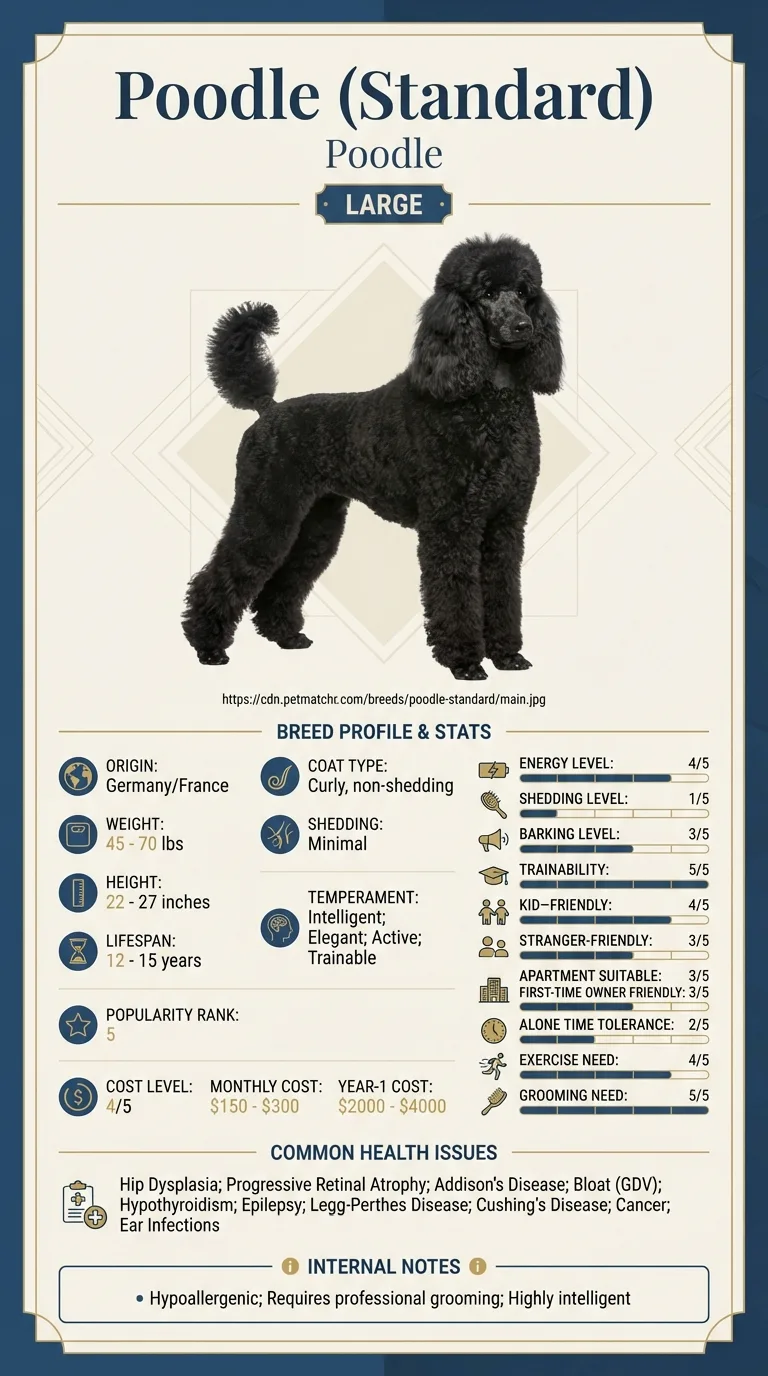
Owners of Poodles, particularly those who are active or have young dogs, often face this challenge. If your Poodle seems reluctant to play, struggles with stairs, or shows signs of lameness, you might be dealing with OCD.
This guide is not medical advice. If your dog shows pain, sudden behavior change, or worsening symptoms, consult a licensed veterinarian.
Some links may be affiliate links. We may earn a commission at no extra cost to you. We only suggest products we believe are helpful for dog owners.
We research and check what we publish, but we do not warrant that any figure, date, price, or statement is accurate, complete, or current, and we accept no liability for any loss, cost, injury, or other harm arising from the use of this site. Use it as one reference among several. You remain responsible for your own decisions and for your dog's care - confirm anything that matters with a licensed veterinarian or another qualified professional before you act on it. Full disclaimer.
Check this first
Recognizing when your Poodle (Standard) needs immediate veterinary attention is crucial. Some signs indicate a serious problem that requires urgent care, while others can be monitored at home. If your dog shows any of the following red flags, it’s time to call your vet immediately.
If any of these apply, call your vet or an emergency clinic now. The rest of this page is for the cases that are not an emergency.
Poodle (Standard) osteochondritis dissecans (OCD) is a condition that affects the cartilage in a dog's joints. This often leads to pain and discomfort, especially during movement. Symptoms may include limping, reluctance to play, and difficulty getting up after resting.
Osteochondritis dissecans is relatively common in large breeds like the Poodle (Standard). While not every Poodle will face this issue, awareness and early detection can help manage the condition effectively.
Osteochondritis Dissecans (OCD) is more common in larger breeds like the Poodle (Standard). Their rapid growth can lead to abnormal cartilage development, especially in their joints. Genetics also play a role, as some lines may be more prone to this condition.
Environmental factors such as diet, exercise, and weight management significantly influence the risk of OCD. Overfeeding or lack of proper physical activity can exacerbate joint issues. Additionally, injuries during play can lead to or worsen existing cartilage problems.
Speak with your vet if you notice persistent limping, reluctance to play, or signs of discomfort in your Poodle. Early intervention is crucial for managing OCD effectively, and your vet can recommend appropriate treatments or medications.
Certain behaviors can unintentionally worsen your Poodle's osteochondritis dissecans (OCD). Here's what to avoid and some safer alternatives to help manage the condition.
Start here: Standard Poodle Most Common Genetic Disorders: Screening
See all Poodle Standard health problems, which breeds are prone to osteochondritis dissecans ocd, or the full Poodle Standard breed guide for temperament, exercise needs and ownership costs.
Addressing Poodle (Standard) osteochondritis dissecans (OCD) typically takes 3 to 6 months. Initial improvements may be seen within a few weeks of starting treatment.
Success looks like a reduction in your Poodle's pain and discomfort, improved mobility, and a return to normal activity levels. Your dog should be able to enjoy walks and playtime without limping or favoring a leg.
In some cases, your Poodle may show mild symptoms of osteochondritis dissecans (OCD) that can be managed at home. These include occasional limping after exercise or mild stiffness. If your dog is still active and eating well, you can create a monitoring plan.

When Julia, a dedicated dog mom in Seattle, noticed her 2-year-old Poodle named Maggie limping after playtime, she was worried. After a visit to the vet, she learned that Maggie had osteochondritis dissecans (OCD). With a tailored treatment plan that included reduced activity, physical therapy, and a few lifestyle changes, Julia focused on managing Maggie's comfort. Within a few months, Maggie was back to her playful self, enjoying daily walks and playing with other dogs. Julia learned the importance of listening to her dog's needs and adjusting their routine accordingly.
Key takeaway: Early intervention and a consistent care routine are crucial in managing Poodle (Standard) osteochondritis dissecans (OCD) effectively.
The exact cause of osteochondritis dissecans (OCD) in Poodles is not fully understood, but it may involve genetic factors, rapid growth, or nutritional imbalances. Large breeds are particularly prone to this condition. Keeping your Poodle at a healthy weight and providing balanced nutrition can help reduce risks.
To manage Poodle (Standard) osteochondritis dissecans (OCD), consult your vet for a tailored treatment plan. This may include weight management, physical therapy, and possibly surgery in severe cases. Regular exercise is essential, but avoid high-impact activities until your dog is healed.
Signs of OCD in Poodles may include limping, decreased activity, and reluctance to play or jump. You might also notice swelling in the affected joint. If you see these symptoms, consult your vet for a proper diagnosis and treatment plan.
Surgery may be necessary if conservative treatments do not alleviate pain or if there are severe cartilage issues. Your vet can help determine the best course of action based on your Poodle's specific condition and needs.
At home, you can help your Poodle by providing a comfortable resting area and limiting strenuous activities. Gentle, low-impact exercises are beneficial. Regular vet check-ups are also important to monitor your dog's progress.
Signs of osteochondritis dissecans (OCD) in your Poodle (Standard) can include limping, difficulty in movement, and swelling around the joints. If your dog seems hesitant to jump or play, it may be time to consult your vet.
In some cases, osteochondritis dissecans (OCD) can be managed without surgery through rest and anti-inflammatory medications. However, it's important to have regular check-ups with your veterinarian to monitor your dog's condition.
Exercise is essential but should be tailored to your Poodle's needs. Controlled, low-impact activities can help maintain muscle strength without putting excessive strain on the joints.
While osteochondritis dissecans (OCD) typically develops in young dogs, older Poodles (Standard) can also experience joint issues. It's crucial to keep an eye on any changes in mobility as your dog ages.
A veterinary orthopedic specialist is best suited for diagnosing and treating osteochondritis dissecans (OCD). They can provide tailored advice on treatment options and management strategies for your Poodle (Standard).
Keep your Poodle at a healthy weight, provide balanced nutrition, and engage in low-impact exercise. Regular vet visits are key for monitoring their condition.
Budget for potential vet visits, treatment plans, and possible surgery. Yearly costs can range from $2,000 to $4,000, depending on the severity of the condition.
Use positive reinforcement techniques to encourage gentle play and calm behavior. Avoid high-energy training until your dog is fully healed.
A one-page prep sheet for this condition: the signs, the questions to ask, what to get priced. Unlocks here.
You get: Vet visit prep sheet
No spam. One-click unsubscribe. See our privacy policy.
Preview page 1 before you decide.