Behavior
What are quick tips for managing Poodle (Standard) neurologic disease?
Regular vet check-ups are essential. Implement a consistent routine and provide mental stimulation to keep your dog engaged.

Quick answer
What are quick tips for managing Poodle (Standard) neurologic disease?
Regular vet check-ups are essential. Implement a consistent routine and provide mental stimulation to keep your dog engaged.
Poodle (Standard) neurologic disease can pose serious challenges for both dogs and their owners. Understanding this condition is crucial for managing your pet's health.
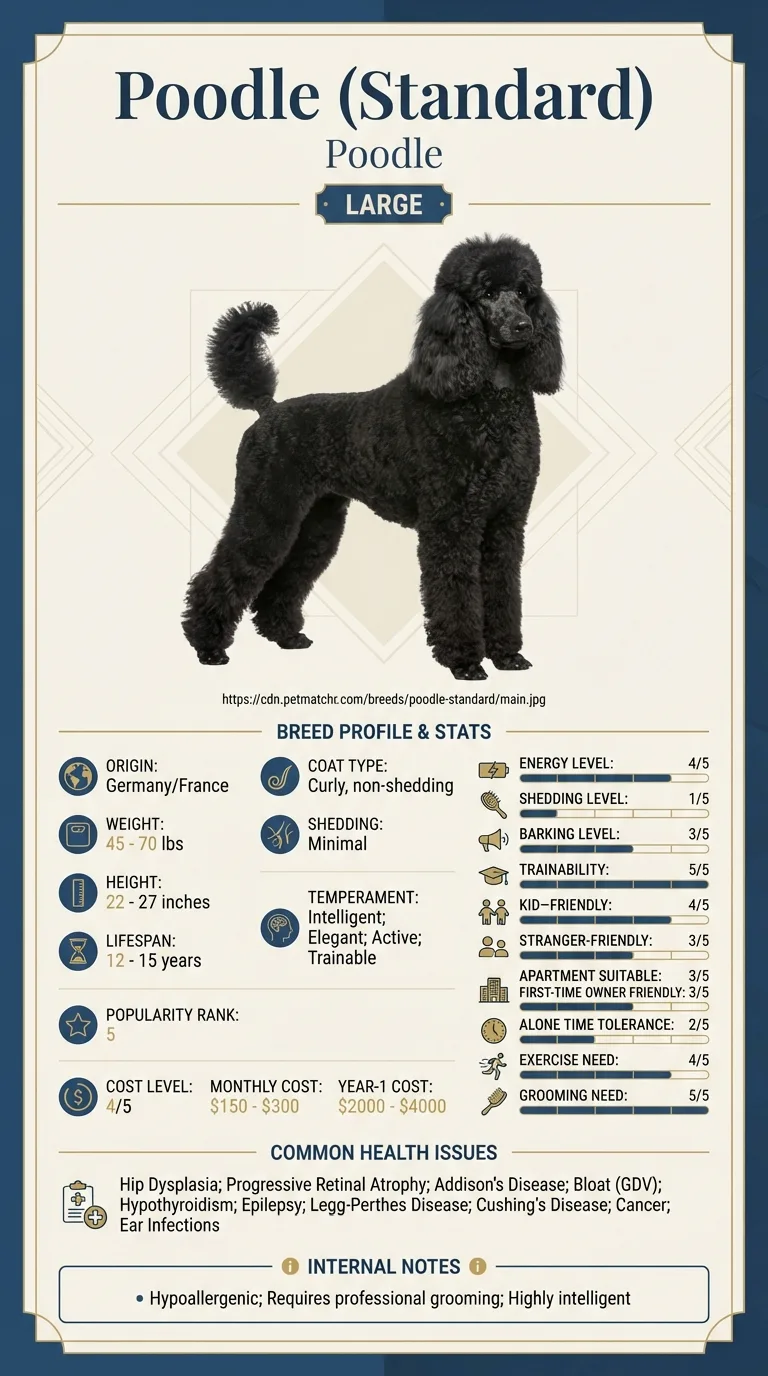
Owners of Poodles, especially first-time dog parents, often struggle with neurologic disease symptoms. Those who are unaware of the signs may find it particularly challenging to get proper help for their furry friends.
This guide is not medical advice. If your dog shows pain, sudden behavior change, or worsening symptoms, consult a licensed veterinarian.
Some links may be affiliate links. We may earn a commission at no extra cost to you. We only suggest products we believe are helpful for dog owners.
We research and check what we publish, but we do not warrant that any figure, date, price, or statement is accurate, complete, or current, and we accept no liability for any loss, cost, injury, or other harm arising from the use of this site. Use it as one reference among several. You remain responsible for your own decisions and for your dog's care - confirm anything that matters with a licensed veterinarian or another qualified professional before you act on it. Full disclaimer.
Check this first
Recognizing when Poodle (Standard) neurologic disease is an emergency can save your dog's life. Certain signs indicate you should call your vet immediately. Look for symptoms like seizures, sudden loss of coordination, or inability to walk. These can signal serious issues that require urgent care.
Milder cases, such as slight lethargy or changes in appetite, may not need immediate action. Monitor your dog closely, and if symptoms persist or worsen over a few days, consult your vet. Be prepared with notes on your dog's behavior to help your vet diagnose the issue.
In summary, trust your instincts. If something feels off, it's better to be cautious and reach out to your vet for guidance. Early intervention can lead to better outcomes for Poodles facing neurologic disease.
If any of these apply, call your vet or an emergency clinic now. The rest of this page is for the cases that are not an emergency.
Poodle (Standard) neurologic disease can be a challenging issue for both dogs and their owners. This condition may manifest through symptoms like seizures, poor coordination, and changes in behavior. Daily life for an affected Poodle can include difficulty walking or unusual responses to stimuli, which can be distressing for both the dog and the owner.
Neurologic disease is notably common in Poodles (Standard), with a reported risk increase of 291% compared to other breeds. While not every Poodle will experience neurologic issues, awareness and early detection are crucial for managing the condition.
Poodles (Standard) are known for being highly intelligent and active. However, their genetic predisposition can make them prone to certain neurologic diseases. These issues may arise due to inherited conditions that affect their nervous system, leading to symptoms like seizures or coordination problems.
Environmental factors can also play a role in the development of neurologic disease. Stressful situations, inadequate exercise, and poor nutrition can exacerbate symptoms. For instance, a Poodle in a chaotic household may show more signs of anxiety or neurologic issues.
If you notice frequent seizures, coordination problems, or significant changes in behavior, it's crucial to consult your vet. They can evaluate your Poodle's symptoms and recommend appropriate tests or treatments to address neurologic concerns.
Managing your Poodle (Standard) with neurologic disease can be challenging. Avoiding common mistakes can help improve their condition and overall quality of life. Here are some missteps to watch out for.
Start here: Standard Poodle Most Common Genetic Disorders: Screening
See all Poodle Standard health problems, which breeds are prone to neurologic disease, or the full Poodle Standard breed guide for temperament, exercise needs and ownership costs.
Managing neurologic disease in a Poodle (Standard) may take several months. Treatment plans often require adjustments every few weeks based on the dog's response.
Success looks like improved mobility, reduced symptoms, and a better quality of life for your Poodle. Regular veterinary check-ups and consistent care can lead to noticeable improvements.
When Sarah adopted Charlie, her Standard Poodle, she soon noticed he had trouble with coordination and balance. After a vet visit, she learned he had a neurologic disease. Determined to help Charlie, Sarah followed a treatment plan and worked with a dog trainer experienced in neurologic conditions. Over months, Charlie showed significant improvement, regaining strength and confidence. He now enjoys daily walks and playtime without the earlier struggles.
Key takeaway: With patience, the right care, and professional guidance, managing a Poodle (Standard) with neurologic disease can lead to a happier, healthier life.
Neurologic disease in Poodles (Standard) can be due to genetic factors or other health issues. Conditions like epilepsy or degenerative myelopathy are known to affect this breed. Regular vet check-ups can help in early detection and management.
Managing neurologic disease involves working closely with your vet to create a treatment plan. This may include medication, dietary adjustments, and physical therapy. Regular monitoring can help track progress and adjust treatment as needed.
Common signs of neurologic disease in Poodles (Standard) include unusual behavior, difficulty walking, and seizures. If you notice any sudden changes in your dog's coordination or behavior, it's essential to consult your veterinarian.
Yes, training is possible but may require specialized techniques. Positive reinforcement and patience are key. Consult a professional trainer with experience in handling dogs with health issues for tailored strategies.
Many Poodles (Standard) can lead normal lives with appropriate care and management. Regular vet visits, a healthy diet, and mental stimulation can greatly improve their quality of life. Early detection and treatment are crucial for better outcomes.
Treatments can vary but often include medications to control seizures or manage symptoms. Physical therapy and lifestyle changes, like providing a safe environment, can also be beneficial. Always consult your vet for tailored treatment options.
Supporting a Poodle with neurologic disease involves providing a safe environment and ensuring they have regular veterinary check-ups. Depending on the severity, your vet may recommend specific therapies or medications to help manage symptoms.
Some neurologic diseases in Poodles (Standard) can have a genetic component. If you're considering breeding, it's crucial to discuss potential health screenings with your veterinarian to reduce the risk of passing on genetic issues.
If your Poodle (Standard) exhibits persistent symptoms like seizures, disorientation, or difficulty with movement, you should take them to the vet as soon as possible. Early intervention can make a significant difference in management and treatment outcomes.
Yes, neurologic disease can impact your Poodle's daily life, affecting their mobility and behavior. Adjustments like providing a calm environment and modifying exercise routines may be necessary to help them live comfortably.
Regular vet check-ups are essential. Implement a consistent routine and provide mental stimulation to keep your dog engaged.
Remove hazards and provide a quiet, comfortable area for your dog. Use non-slip mats to prevent falls.
Treatment costs can range from $150 to $300 monthly, depending on medication and vet visits. Initial diagnostics may be higher.
Consider calming products like anxiety wraps or soothing music. Consistent training and positive reinforcement can also help.
Yes, gentle exercise can help maintain mobility and mental health. Always consult your vet for appropriate activity levels.
A one-page prep sheet for this condition: the signs, the questions to ask, what to get priced. Unlocks here.
You get: Vet visit prep sheet
No spam. One-click unsubscribe. See our privacy policy.
Preview page 1 before you decide.