Health
What are quick tips for Poodle (Standard) most common genetic disorders?
Choose a reputable breeder, ensure regular vet check-ups, and maintain a healthy diet and exercise routine.

Quick answer
What are quick tips for Poodle (Standard) most common genetic disorders?
Choose a reputable breeder, ensure regular vet check-ups, and maintain a healthy diet and exercise routine.
Poodle (Standard) most common genetic disorders can pose serious health risks for your furry friend. It's crucial to understand these issues to ensure a long, healthy life.
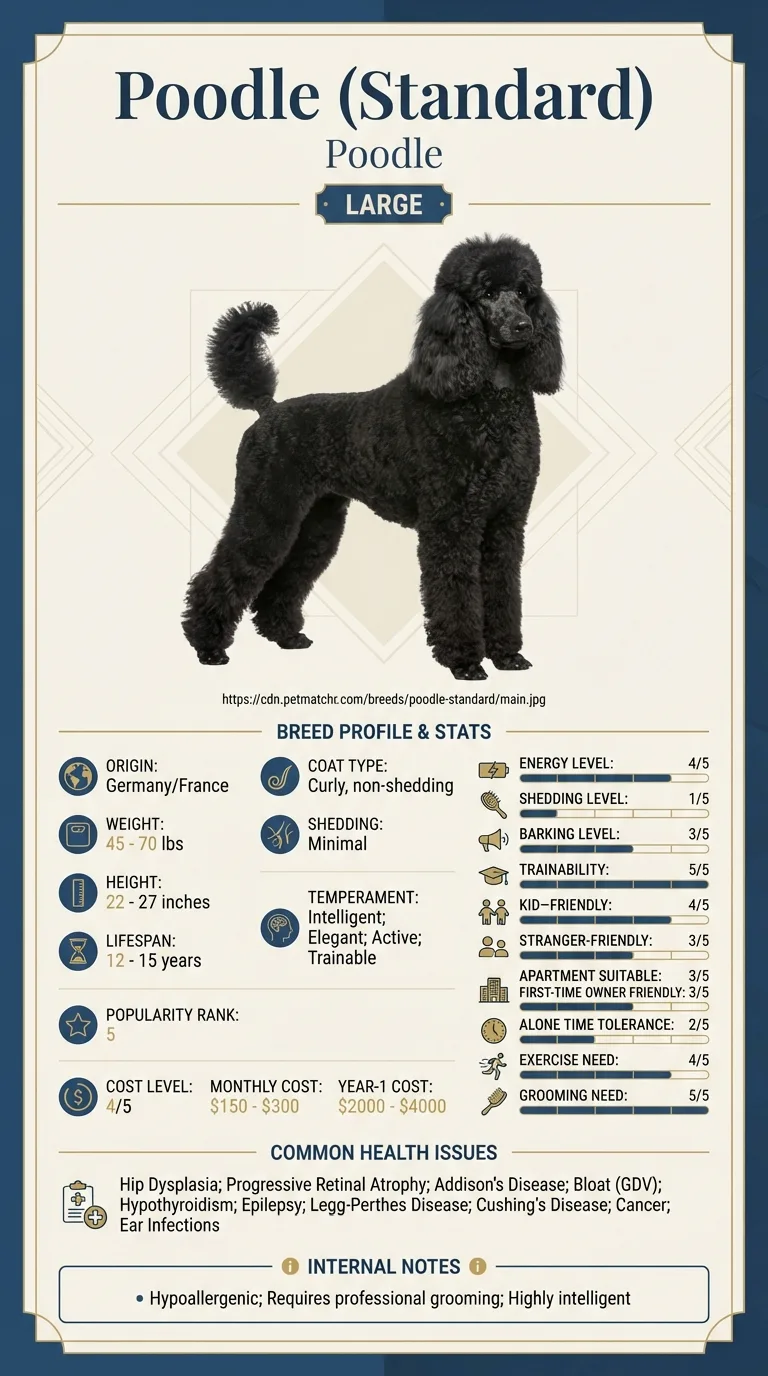
Many Poodle owners, especially first-time pet parents, may struggle with understanding these genetic disorders. If you’re busy balancing work and family, or if you're unsure how to address health concerns, this information is essential for you.
This guide is not medical advice. If your dog shows pain, sudden behavior change, or worsening symptoms, consult a licensed veterinarian.
Some links may be affiliate links. We may earn a commission at no extra cost to you. We only suggest products we believe are helpful for dog owners.
We research and check what we publish, but we do not warrant that any figure, date, price, or statement is accurate, complete, or current, and we accept no liability for any loss, cost, injury, or other harm arising from the use of this site. Use it as one reference among several. You remain responsible for your own decisions and for your dog's care - confirm anything that matters with a licensed veterinarian or another qualified professional before you act on it. Full disclaimer.
Check this first
It's crucial to know when Poodle (Standard) most common genetic disorders become an emergency. Recognizing red flags can save your dog's life. If your Poodle shows severe symptoms like sudden lethargy, difficulty breathing, or extreme pain, you need to call your vet immediately.
Other signs that warrant a quick vet visit include persistent vomiting, diarrhea, or if your dog collapses. These symptoms could indicate serious health issues like bloat or heart problems. Don't wait to see if these symptoms improve; prompt action can prevent worsening conditions.
On the other hand, some genetic disorder symptoms can be monitored at home. If your Poodle has mild signs like occasional limping or slight changes in appetite, keep an eye on them. Create a plan that includes regular vet check-ups and note any changes in behavior or health.
If your Poodle is diagnosed with a common genetic disorder, follow your vet's recommendations closely. Routine monitoring can help manage these conditions effectively, allowing you to catch any worsening signs early. Remember, it's always better to be cautious when it comes to your dog's health.
If any of these apply, call your vet or an emergency clinic now. The rest of this page is for the cases that are not an emergency.
Poodle (Standard) most common genetic disorders can lead to various health challenges that affect daily life. Owners may notice their Poodle is less active, has difficulty moving, or shows signs of discomfort. Conditions like hip dysplasia and progressive retinal atrophy are particularly concerning, as they can significantly impact a dog's quality of life.
Genetic disorders are relatively common in Poodles, particularly in purebred lines. Owners should be aware that these issues can manifest at different life stages, with some appearing in early adulthood and others later in life.
Poodles (Standard) are prone to certain genetic disorders due to their breeding. Some common issues include hip dysplasia and progressive retinal atrophy, which are hereditary traits. Breeders may not always screen for these conditions, leading to higher risks in puppies.
Environmental factors can also contribute to the development of genetic disorders. Poor nutrition, inadequate exercise, and unhealthy living conditions can exacerbate existing health issues. Stress and lack of socialization can affect a Poodle's overall well-being, making them more susceptible to genetic disorders.
If you notice persistent health issues, such as difficulty walking or changes in vision, it's crucial to consult a vet. Regular check-ups can help monitor for common genetic disorders and provide timely interventions.
Understanding the common mistakes that can worsen the situation with your Poodle's genetic disorders can help you take better action. Here are some behaviors to avoid.
See all Poodle Standard health problems, which breeds are prone to most common genetic disorders, or the full Poodle Standard breed guide for temperament, exercise needs and ownership costs.
With consistent effort over 6 to 12 months, you can manage your Poodle's genetic health risks effectively.
Success means you have a solid understanding of potential disorders, regular vet check-ups, and a tailored care plan to address any issues as they arise.
Sarah, a first-time Poodle owner, noticed her dog Bella seemed lethargic and had trouble with her back legs. After a vet visit, they discovered Bella had hip dysplasia, a common issue in Poodles. Initially overwhelmed, Sarah learned about managing the condition through exercise modifications and a special diet. With time, dedication, and a supportive vet, Bella regained much of her energy, allowing them to enjoy long walks together again.
Key takeaway: Addressing common genetic disorders in Poodles requires patience, education, and professional guidance, but the rewards of a happy, healthy dog are well worth the effort.
Poodles (Standard) can be prone to several genetic disorders. Common issues include hip dysplasia, progressive retinal atrophy, and Addison's disease. Regular vet check-ups can help catch these conditions early. This answer relates to Poodle (Standard) most common genetic disorders.
Genetic disorders in Poodles (Standard) often stem from their breeding history. Inbreeding can increase the risk of these health issues, which is why it's important to choose a reputable breeder. Proper health screenings for parent dogs can also help reduce these risks.
To help prevent genetic disorders, choose a responsible breeder who conducts health tests on their breeding dogs. Additionally, ensure your Poodle gets regular veterinary care, proper nutrition, and exercise to maintain overall health.
If you suspect your Poodle has a genetic disorder, consult your veterinarian immediately. Early diagnosis can make a significant difference in treatment options. They may recommend specific tests or referrals to specialists.
While training cannot prevent genetic disorders, it can help manage some behavior related to health issues. Positive reinforcement training can be beneficial for Poodles dealing with anxiety or discomfort from their conditions. Consult a trainer familiar with health-related training.
Treatment costs for genetic disorders can vary widely. For example, surgeries for hip dysplasia may range from $1,500 to $4,000. It's important to budget for regular vet visits and potential emergency care as well.
Common signs of genetic disorders in a Poodle (Standard) include limping, difficulty seeing, or unusual behavior. If your Poodle seems lethargic or is having trouble with everyday activities, it may be time to consult a vet.
Yes, older Poodles (Standard) can develop genetic disorders as they age. Conditions like hip dysplasia or thyroid issues may become more apparent over time, so regular vet check-ups are crucial for early detection.
Supporting your Poodle (Standard) with a proper diet, regular exercise, and mental stimulation can help manage genetic disorders. Working closely with your vet will ensure you choose the best treatment options tailored to your dog's specific needs.
Yes, there are genetic tests available for certain disorders common in Poodles (Standard), such as hip dysplasia and progressive retinal atrophy. These tests can provide valuable information about your dog's health and help guide breeding choices.
To help prevent genetic disorders in future Poodle (Standard) puppies, choose a reputable breeder who conducts health screenings. Responsible breeding practices can significantly reduce the risk of passing on genetic issues.
Choose a reputable breeder, ensure regular vet check-ups, and maintain a healthy diet and exercise routine.
You should take your Poodle for annual check-ups, or more frequently if they have known health issues.
Watch for signs like limping, changes in vision, excessive thirst, or lethargy, and consult your vet if you notice these.
Yes, positive reinforcement training can help manage anxiety. Work with a trainer experienced in health-related behaviors.
A one-page prep sheet for this condition: the signs, the questions to ask, what to get priced. Unlocks here.
You get: Vet visit prep sheet
No spam. One-click unsubscribe. See our privacy policy.
Preview page 1 before you decide.