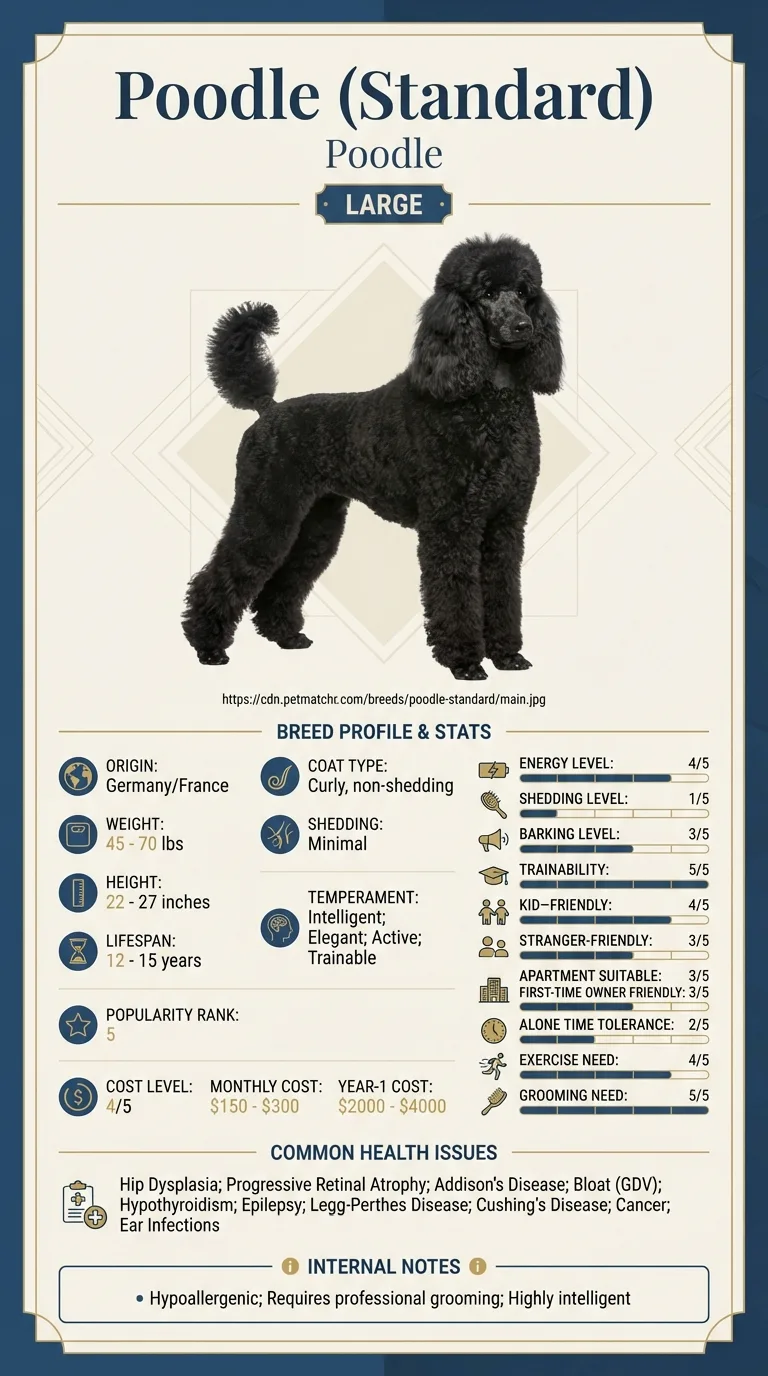
What is Poodle (Standard) legg-calvé-perthes disease?
Poodle (Standard) legg-calvé-perthes disease is a condition that affects the hip joint, leading to the death of the bone tissue. It can cause pain and difficulty in movement, especially in young dogs. Early diagnosis and treatment are key to managing this condition.
Why does my Poodle (Standard) have legg-calvé-perthes disease?
The exact cause of legg-calvé-perthes disease is not well understood, but it is believed to be related to genetic factors and blood supply issues. Some breeds, including Poodles, are more prone to this condition. If your Poodle shows symptoms, consult your vet for an evaluation.
How can I tell if my Poodle (Standard) has legg-calvé-perthes disease?
Signs may include limping, difficulty standing or jumping, and reluctance to engage in normal activities. If you notice these symptoms, it’s essential to take your Poodle to the vet for a proper diagnosis through X-rays and physical exams.
What are the treatment options for legg-calvé-perthes disease?
Treatment usually involves medication to manage pain and inflammation. In more severe cases, surgery may be necessary to address the hip joint issues. Your vet will help determine the best course of action based on your Poodle's condition.
Can I prevent legg-calvé-perthes disease in my Poodle (Standard)?
While you cannot always prevent legg-calvé-perthes disease, keeping your Poodle healthy with a good diet and regular exercise can help. Regular vet check-ups are also important to catch any health issues early.
How do I manage my Poodle's pain from legg-calvé-perthes disease?
Managing pain can include medication prescribed by your vet and ensuring your Poodle has a comfortable resting area. Limiting strenuous activities and providing gentle exercise can also help maintain mobility without causing additional pain.
What is the long-term outlook for a Poodle (Standard) with legg-calvé-perthes disease?
With proper treatment, many Poodles can lead a relatively normal life, but some may experience chronic pain or mobility issues. Early intervention is crucial for a better prognosis, so be proactive in seeking veterinary care.
Can older Poodle (Standard) dogs get legg-calvé-perthes disease?
Legg-Calvé-Perthes disease typically affects younger dogs, particularly those between 4 and 6 months old. However, older Poodles may experience similar hip issues due to other conditions. If you notice any signs of pain or discomfort in your older dog, consult your veterinarian.
What are the signs of legg-calvé-perthes disease in a Poodle (Standard)?
Common signs include limping, reluctance to use the affected leg, and difficulty getting up after resting. You may also notice your Poodle is less active or hesitant to play. If you observe these symptoms, it's important to see a vet for evaluation.
Is there a way to prevent legg-calvé-perthes disease in Poodle (Standard) puppies?
While you can't completely prevent legg-calvé-perthes disease, early intervention can help. Keeping your puppy at a healthy weight and ensuring they get proper exercise can be beneficial. Regular veterinary check-ups are also key to catch potential issues early.
How is legg-calvé-perthes disease treated in Poodle (Standard) dogs?
Treatment often involves rest, pain management, and physical therapy. In some cases, surgical intervention may be necessary to correct the hip joint. Your veterinarian will recommend the best course of action based on the severity of the condition.
Can training help a Poodle (Standard) with legg-calvé-perthes disease?
Training can be beneficial, but it should focus on gentle exercises to maintain mobility without causing pain. Avoid high-impact activities that may exacerbate the condition. Consult a professional trainer or your vet for tailored training approaches.