Health
What are quick tips for managing Poodle (Standard) kidney disease?
Ensure your Poodle has access to fresh water and get regular vet check-ups. Adjust their diet according to your vet's recommendations.

Quick answer
What are quick tips for managing Poodle (Standard) kidney disease?
Ensure your Poodle has access to fresh water and get regular vet check-ups. Adjust their diet according to your vet's recommendations.
Poodle (Standard) kidney disease can be a serious health issue, impacting your dog's quality of life.
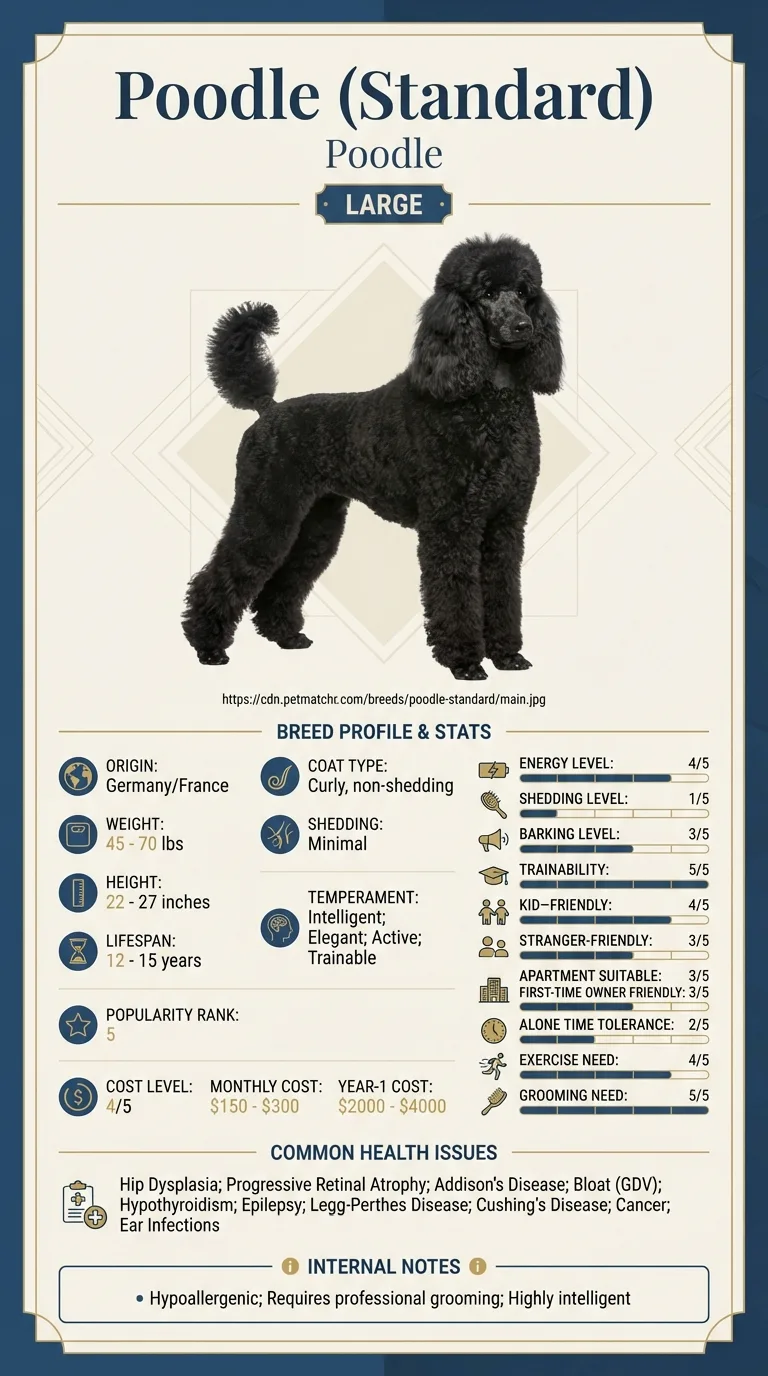
Owners of Poodles often face this challenge, especially those with older dogs or those who may not realize the importance of regular vet check-ups.
This guide is not medical advice. If your dog shows pain, sudden behavior change, or worsening symptoms, consult a licensed veterinarian.
Some links may be affiliate links. We may earn a commission at no extra cost to you. We only suggest products we believe are helpful for dog owners.
We research and check what we publish, but we do not warrant that any figure, date, price, or statement is accurate, complete, or current, and we accept no liability for any loss, cost, injury, or other harm arising from the use of this site. Use it as one reference among several. You remain responsible for your own decisions and for your dog's care - confirm anything that matters with a licensed veterinarian or another qualified professional before you act on it. Full disclaimer.
Check this first
Recognizing when Poodle (Standard) kidney disease is an emergency is crucial for your dog's health. There are clear red flags that require immediate veterinary attention. If your dog shows signs of severe lethargy, vomiting, diarrhea, or a sudden decrease in appetite, these could indicate a serious issue. Additionally, if you notice blood in their urine or an unusual increase in thirst, it’s time to call your vet right away.
On the other hand, some symptoms can be monitored with a plan. Mild signs like increased urination, occasional vomiting, or a slight decrease in energy may not be immediate emergencies. In these cases, it’s best to document the symptoms and consult your vet for guidance. Regular check-ups and lab tests can help track the progression of kidney disease.
Being proactive about your Poodle's health can make a big difference. If you’re unsure whether a symptom is serious, it’s always better to err on the side of caution and consult your vet. They can help you determine the best course of action based on your dog’s specific condition.
If any of these apply, call your vet or an emergency clinic now. The rest of this page is for the cases that are not an emergency.
Poodle (Standard) kidney disease can be a serious concern for owners. This condition often leads to symptoms like increased thirst, frequent urination, and lethargy. As the disease progresses, it may also result in weight loss and decreased appetite, making it crucial to monitor your pet's health closely.
Kidney disease is not uncommon in Poodles (Standard), particularly as they age. Many veterinarians estimate that around 10-15% of older Poodles may experience some form of kidney issue. Regular check-ups can help catch these problems early.
Poodles (Standard) are prone to certain genetic conditions, including kidney disease, due to their lineage. Their higher likelihood of developing health issues can stem from selective breeding practices aimed at enhancing specific traits. This breed's overall health can be impacted by factors like diet, exercise, and regular veterinary care.
Environmental factors can also play a significant role in kidney disease. Poor nutrition, lack of hydration, and exposure to toxins can lead to kidney problems. Additionally, stress from an unsuitable living environment or lifestyle can worsen kidney health in Poodles.
If your Poodle exhibits symptoms like increased thirst, frequent urination, or lethargy, contact your vet immediately. Regular check-ups are essential for early detection and management of kidney disease.
When dealing with Poodle (Standard) kidney disease, certain common mistakes can delay improvement or even worsen your dog's condition. Here are some pitfalls to avoid:
Start here: Standard Poodle Most Common Genetic Disorders: Screening
See all Poodle Standard health problems, which breeds are prone to kidney disease, or the full Poodle Standard breed guide for temperament, exercise needs and ownership costs.
Managing Poodle (Standard) kidney disease can take several months to see notable improvements. Regular vet visits and adjustments to diet and medication are crucial.
Success means stabilizing your Poodle's kidney function, maintaining a good quality of life, and managing symptoms effectively.
Emily, a busy nurse from Seattle, noticed her Poodle, Max, was drinking more water and losing weight. After a vet visit, they confirmed that Max had kidney disease. Initially overwhelmed, Emily learned how to modify Max's diet and administer medications. With a structured routine, regular check-ups, and plenty of love, Max's condition stabilized. Although managing kidney disease was challenging, seeing Max happy and active was worth every effort.
Key takeaway: Early detection and proactive management can lead to a better quality of life for dogs with kidney disease.
Kidney disease in Poodles (Standard) can arise from various factors, including genetics, age, and diet. Regular vet check-ups can help monitor kidney function and catch any issues early.
To manage kidney disease, it's crucial to follow a vet-prescribed diet that's low in protein and phosphorus. Regular hydration and consistent medication can also help slow the progression.
Common symptoms include increased thirst, frequent urination, and lethargy. If you notice these signs, consult your vet for a thorough evaluation.
While kidney disease is often progressive and cannot be cured, it can be managed effectively with proper care. Early intervention and lifestyle changes can improve your dog's quality of life.
A diet low in protein and phosphorus is recommended for Poodles (Standard) with kidney disease. Your vet can recommend specific brands or homemade diets tailored to your dog's needs.
Supplements may help support kidney function, but it's essential to consult your vet before adding anything to your dog's regimen. They can recommend safe and effective options.
Early signs of kidney disease in a Poodle (Standard) may include increased thirst and urination, loss of appetite, and lethargy. If you notice these changes, it's important to consult your vet promptly for a thorough evaluation.
Yes, a special diet can help manage kidney disease in Poodles. Your vet may recommend low-protein or prescription diets to support kidney function and reduce waste buildup in the body.
Yes, kidney disease can be hereditary in Poodles (Standard). It's crucial to choose a reputable breeder who screens for genetic conditions to reduce the risk of inherited health issues.
If your Poodle (Standard) has kidney disease, regular veterinary check-ups are essential. Typically, you should schedule visits at least every six months, or more frequently if your vet recommends it, to monitor their condition.
The average lifespan of a Poodle (Standard) with kidney disease varies based on the severity of the disease and treatment. With proper management, some dogs can live several years, but it's essential to follow your vet's advice closely.
Ensure your Poodle has access to fresh water and get regular vet check-ups. Adjust their diet according to your vet's recommendations.
Visit the vet at least every six months for routine checks. More frequent visits may be necessary if your dog's condition worsens.
Yes, but opt for treats specifically designed for kidney health. Always check with your vet before introducing new foods.
Poodles (Standard) with kidney disease may show signs of lethargy or decreased activity. Monitoring their behavior can provide clues about their health.
A one-page prep sheet for this condition: the signs, the questions to ask, what to get priced. Unlocks here.
You get: Vet visit prep sheet
No spam. One-click unsubscribe. See our privacy policy.
Preview page 1 before you decide.