Health
What are quick tips for managing Poodle (Standard) genetic load?
Regular vet check-ups, a balanced diet, and exercise are essential for managing genetic load. Genetic testing can also provide insights into potential health issues.

Quick answer
What are quick tips for managing Poodle (Standard) genetic load?
Regular vet check-ups, a balanced diet, and exercise are essential for managing genetic load. Genetic testing can also provide insights into potential health issues.
Poodle (Standard) genetic load refers to the concentration of harmful genetic variants that can impact your dog's health.
Owners of Poodles, especially first-time dog parents or those unaware of genetic health issues, often face challenges with their dog's wellbeing. Many are concerned about the long-term effects of genetic load on their beloved pets.
This guide is not medical advice. If your dog shows pain, sudden behavior change, or worsening symptoms, consult a licensed veterinarian.
Some links may be affiliate links. We may earn a commission at no extra cost to you. We only suggest products we believe are helpful for dog owners.
We research and check what we publish, but we do not warrant that any figure, date, price, or statement is accurate, complete, or current, and we accept no liability for any loss, cost, injury, or other harm arising from the use of this site. Use it as one reference among several. You remain responsible for your own decisions and for your dog's care - confirm anything that matters with a licensed veterinarian or another qualified professional before you act on it. Full disclaimer.
Check this first
Recognizing when Poodle (Standard) genetic load becomes critical is vital. If your Poodle shows sudden signs of distress, such as severe lethargy, difficulty breathing, or sudden weight loss, these are red flags. Other emergencies include persistent vomiting, seizures, or any signs of acute pain. These symptoms can indicate serious underlying issues that require immediate veterinary attention.
On the other hand, if your Poodle exhibits mild symptoms like occasional lethargy, slight appetite changes, or minor skin irritations, these can often be monitored. Keeping a close eye on these behaviors and establishing a plan with your vet, including regular check-ups, may be sufficient. It’s important to track any changes over time and communicate these to your veterinarian.
In summary, if you notice alarming signs in your Poodle, don’t hesitate—call your vet. However, for less severe symptoms, you can implement a management plan while observing your dog’s behavior closely. Always trust your instincts; when in doubt, it's better to err on the side of caution.
If any of these apply, call your vet or an emergency clinic now. The rest of this page is for the cases that are not an emergency.
The Poodle (Standard) genetic load refers to the presence of harmful genetic variations that can lead to health issues. Daily, this may manifest as increased susceptibility to certain diseases, leading to frequent vet visits and higher healthcare costs. Owners might notice signs of discomfort or illness that can stem from these inherited conditions.
Genetic load in Poodles (Standard) is a notable concern, as this breed can inherit a range of genetic disorders. Many owners may face these issues, especially if their dog comes from a lineage with minimal health screening.
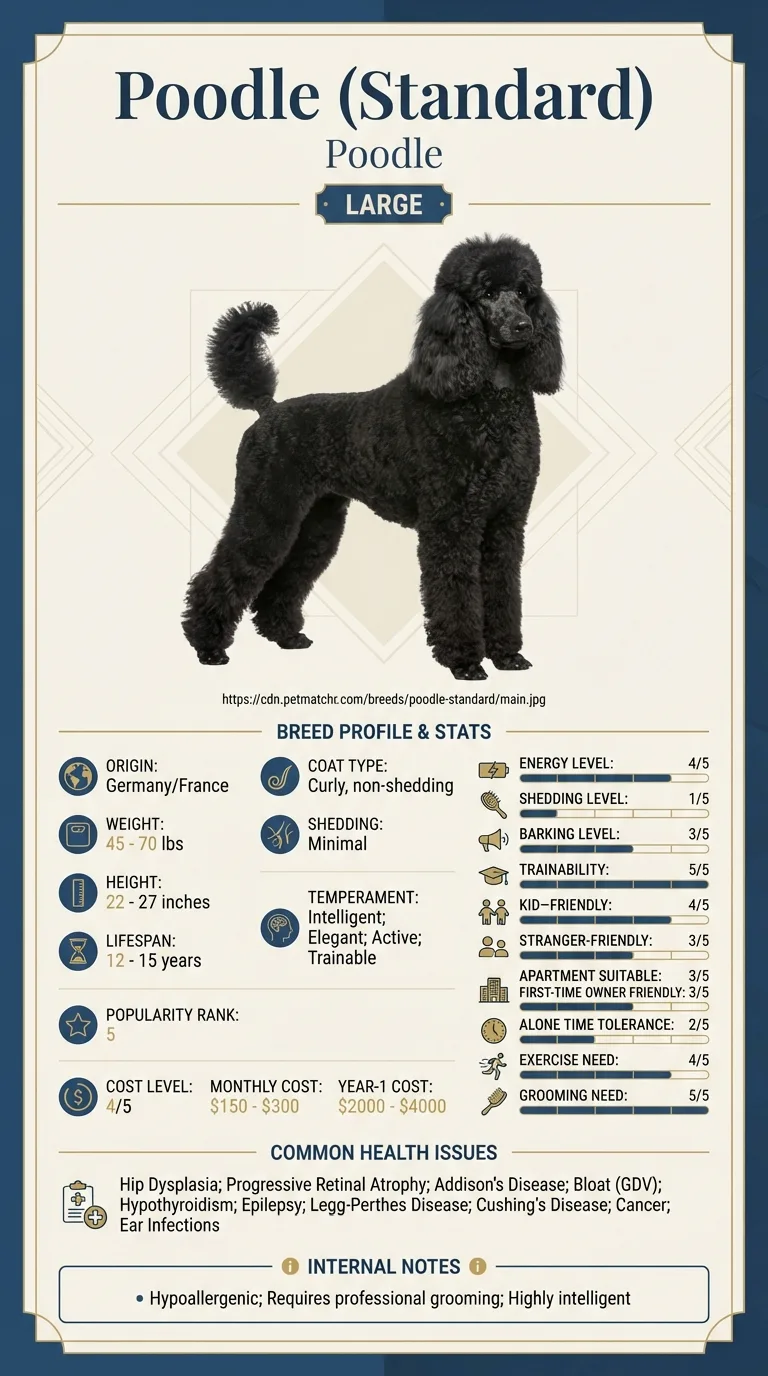
Poodles (Standard) are known for their intelligence and trainability, but they can also carry a higher genetic load. This means they might be more susceptible to certain inherited health issues due to their breeding history. Genetic predispositions can lead to problems like hip dysplasia or progressive retinal atrophy, affecting their overall well-being.
The environment plays a significant role in how a Poodle (Standard) handles its genetic load. Factors such as stress, lack of exercise, or poor nutrition can exacerbate any existing genetic conditions. Additionally, a chaotic home life or insufficient training can lead to behavioral issues, making it harder for the dog to cope.
Consult your vet if you notice any unusual symptoms or if your Poodle has persistent health issues. Early intervention is key for genetic conditions, and your vet can offer guidance on the best course of action.
Avoid these common mistakes to help manage your Poodle's genetic load effectively.
Start here: Standard Poodle Most Common Genetic Disorders: Screening
See all Poodle Standard health problems, which breeds are prone to genetic load, or the full Poodle Standard breed guide for temperament, exercise needs and ownership costs.
You may start seeing improvements in your Poodle's behavior within 4 to 6 weeks if you're consistent with care and follow-up.
Success means your Poodle is showing fewer symptoms of genetic issues, such as improved behavior and better overall health. Regular vet check-ups are key to monitoring their progress.
Emily, a busy nurse in Seattle, adopted Max, a Standard Poodle. Shortly after bringing him home, she noticed he was anxious and had some odd behaviors. After consulting her vet, Emily learned that Max had a high genetic load. Determined to help her new friend, she researched training techniques and started a consistent routine of positive reinforcement. She also worked with a professional trainer to address Max's anxiety. Over a few months, Max became more comfortable and less anxious, allowing them to enjoy their walks together more.
Key takeaway: Understanding your dog’s genetic load can be the first step in helping them thrive; with patience and the right support, improvement is possible.
Poodle (Standard) genetic load refers to the presence of harmful genetic variants that can lead to health issues. This breed has a higher concentration of these variants due to selective breeding practices. Regular health check-ups and genetic testing can help identify potential problems early.
Managing Poodle (Standard) genetic load involves regular veterinary visits, a balanced diet, and appropriate exercise. Additionally, consider genetic testing to understand any predispositions. Early intervention can mitigate some health risks associated with these genetic variants.
Common health issues include hip dysplasia, progressive retinal atrophy, and Addison's disease. Being aware of these conditions can help you prepare for potential health challenges. Regular screening can aid in early detection and management of these issues.
While you can't eliminate genetic load, you can reduce its impact by focusing on preventive care. Provide a healthy diet, regular exercise, and maintain a stress-free environment. This will help improve your dog's overall health and resilience.
Yes, training is crucial for Poodles, as it can mitigate some behavioral issues linked to genetic load. Positive reinforcement training helps build confidence and strengthen the bond with your dog. Consistent training can also reduce anxiety and improve their quality of life.
Yes, older Poodles (Standard) may experience worsening symptoms related to genetic load as they age. Conditions like Hip Dysplasia and Cushing's Disease can become more pronounced, so regular vet check-ups are essential.
To help your Poodle (Standard), focus on regular vet visits, a balanced diet, and appropriate exercise. Engaging in training sessions can also provide mental stimulation, which is crucial for their well-being.
If you suspect genetic load problems, schedule a vet appointment as soon as possible. A vet can perform tests and provide guidance on managing any health issues your Poodle may face.
Yes, some bloodlines may have a higher genetic load due to selective breeding practices. It's important to research breeders and their breeding practices to find a Poodle (Standard) that has a lower risk of genetic issues.
Regular vet check-ups, a balanced diet, and exercise are essential for managing genetic load. Genetic testing can also provide insights into potential health issues.
Choose a reputable breeder who tests for genetic disorders. Regular health screenings and a healthy lifestyle can also help prevent issues.
Poodles are intelligent and trainable, making them suitable for various training programs. Early socialization helps reduce anxiety and behavioral problems.
A one-page prep sheet for this condition: the signs, the questions to ask, what to get priced. Unlocks here.
You get: Vet visit prep sheet
No spam. One-click unsubscribe. See our privacy policy.
See a sample page before you decide.
Early access list
The free prep sheet covers the same-day warning signs, a symptom log and the questions to ask. We are considering a fuller kit that adds a cost worksheet for the usual tests and treatments (US price ranges with their sources) and a plain-English guide to ways of covering the bill. It is not built yet; this list tells us whether it is worth building.
One email, no spam, unsubscribe anytime. Information only, not veterinary advice.