DogBreedCompass
← Back to breed profile

Poodle (Standard) Gastric Dilatation-Volvulus (GDV/Bloat): What You Need to Know

Gastric dilatation-volvulus (GDV), or bloat, is a serious condition that can affect your Poodle (Standard). (Poodle (Standard) gastric dilatation-volvulus (gdv/bloat))

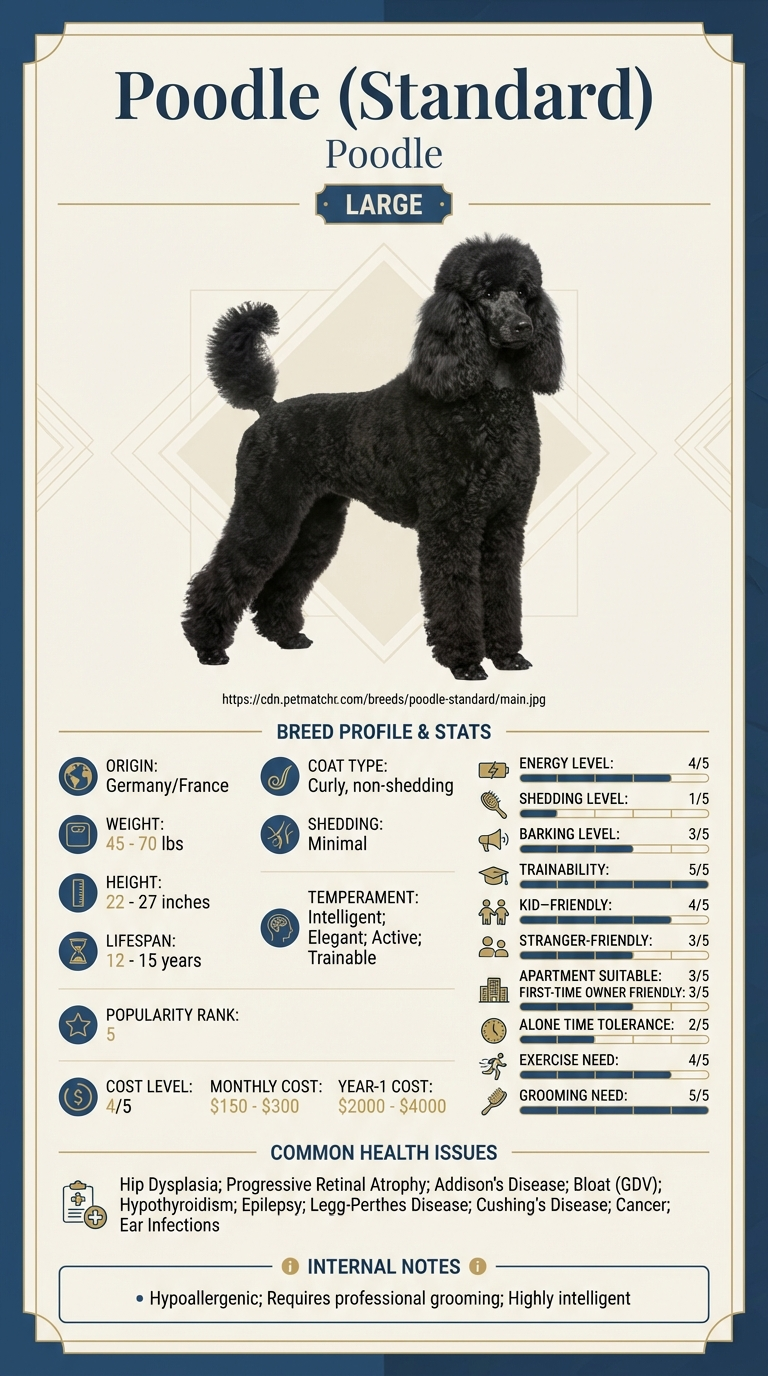
Poodle (Standard) Gastric Dilatation-Volvulus (GDV/Bloat): What You Need to Know infographic

Owners of Poodles (Standard) often face this problem due to the breed's size and anatomy. Busy pet parents, especially those who may not recognize the early signs of bloat, are particularly at risk. If your Poodle has a history of anxiety or rapid eating, you may be even more concerned about this condition.

Important reminder

This guide is not medical advice. If your dog shows pain, sudden behavior change, or worsening symptoms, consult a licensed veterinarian.

Some links may be affiliate links. We may earn a commission at no extra cost to you. We only suggest products we believe are helpful for dog owners.

What this problem looks like

Poodle (Standard) gastric dilatation-volvulus (GDV/bloat) is a serious condition that can occur suddenly. It usually presents with symptoms like a swollen abdomen, restlessness, excessive drooling, and attempts to vomit without success. This condition is particularly dangerous and requires immediate veterinary attention.

Common triggers

  • Eating large meals too quickly
  • Consuming dry food without adequate water
  • Genetic predisposition, especially in large breeds like the Standard Poodle
  • Excessive exercise immediately after eating

GDV is relatively common in large breeds, including the Poodle (Standard), with studies showing that about 20-30% of these dogs may experience bloat at some point in their lives. It is crucial for owners to be aware of the symptoms and potential triggers.

Why this happens

Breed factors

Poodles (Standard) are prone to gastric dilatation-volvulus (GDV) due to their deep chests. This anatomical trait can cause the stomach to fill with gas and twist, leading to a life-threatening situation. Stress and rapid eating can also increase the risk of this condition in Poodles.

Environment factors

Environmental factors such as sudden changes in routine, high-stress situations, or feeding practices can trigger GDV. For example, feeding your Poodle large meals right before exercise or allowing them to gulp down food can contribute to bloat. Additionally, a fast-paced lifestyle with little downtime can increase anxiety, further elevating the risk.

What you can try

At-home strategies

  • 1. Feed smaller, more frequent meals rather than one large meal each day. This can help reduce the risk of bloat.
  • 2. Use a slow feeder bowl to prevent your Poodle from eating too quickly. This can minimize the amount of air swallowed during meals.
  • 3. Avoid vigorous exercise immediately after meals. Wait at least an hour before engaging in activities like running or playing.
  • 4. Create a calm feeding environment. Reduce stress by keeping the area quiet during mealtime.
  • 5. Monitor your Poodle's behavior. If they show signs of discomfort, such as pacing, drooling, or a distended abdomen, seek veterinary help immediately.

When to consider a trainer

If your Poodle exhibits anxiety around feeding times or shows signs of stress-related behaviors, consider consulting a professional trainer. They can provide strategies to help your dog feel more relaxed during mealtime.

When to talk to your vet

If your Poodle displays symptoms of GDV, such as a swollen belly, excessive drooling, or attempts to vomit without success, contact your veterinarian immediately. This condition is a medical emergency and requires prompt attention.

Realistic expectations

Managing gastric dilatation-volvulus (GDV/bloat) in your Poodle (Standard) can take several weeks to months. Early detection and intervention are crucial, so initial signs should be addressed promptly. A successful management plan involves regular vet check-ups and dietary adjustments.

Success means your Poodle is eating comfortably without signs of distress. They should maintain a healthy weight, have regular bowel movements, and exhibit normal behavior. It's also essential to understand the signs of GDV and act quickly if they reappear.

Mistakes that make this worse

Avoiding certain behaviors can help you manage your Poodle (Standard) gastric dilatation-volvulus (GDV/bloat) better. Here are some common mistakes to steer clear of, along with safer alternatives.

  • Feeding large meals at once: This can increase the risk of bloat. Instead, try feeding smaller, more frequent meals throughout the day.
  • Allowing vigorous exercise right after eating: This can lead to stomach twisting. Wait at least an hour after meals before engaging in intense activities.
  • Ignoring early signs of discomfort: Signs like restlessness or pacing can indicate bloating. Pay attention to these behaviors and consult your vet immediately.
  • Switching diets too abruptly: This can upset your dog's stomach. Gradually transition to new foods over a week to avoid gastrointestinal issues.
  • Not keeping water available: Dehydration can exacerbate bloat. Ensure your Poodle has access to fresh water at all times, especially during hot weather.
  • Overlooking the importance of regular vet check-ups: Regular visits can catch health issues early. Schedule annual or bi-annual check-ups to monitor your dog’s health.
  • Neglecting training: Stress can contribute to bloat. Engage in consistent training to promote calm behavior, reducing the chance of anxiety-related bloat.

When Poodle (Standard) Gastric Dilatation-Volvulus (GDV/Bloat) is an Emergency

Gastric dilatation-volvulus (GDV), often referred to as bloat, can be a life-threatening condition for your Poodle (Standard). Recognizing the signs of an emergency is crucial. If your dog shows these red-flag symptoms, call your vet immediately:

- Unproductive attempts to vomit or retch - A swollen abdomen that feels hard to the touch - Signs of distress, such as pacing or whining - Rapid breathing or a racing heart - Weakness or collapse

In these cases, time is of the essence and seeking veterinary help right away can save your dog's life.

On the other hand, if your Poodle shows mild symptoms, such as slight lethargy, decreased appetite, or mild discomfort, you can monitor them at home. However, have a plan in place and contact your vet if symptoms worsen or persist.

It’s essential to keep an eye on your dog’s behavior and be prepared to act swiftly if conditions change. Always trust your instincts as a pet owner, and when in doubt, it’s better to err on the side of caution. Regular check-ups and discussions with your vet can also help you better understand your Poodle's health and what to look for.

Poodle (Standard) Gastric Dilatation-Volvulus (GDV/Bloat): What You Need to Know - When Poodle (Standard) Gastric Dilatation-Volvulus (GDV/Bloat) is an Emergency

Emily's Journey with Max: Overcoming GDV

Emily, a busy nurse in New York, adopted Max, her Poodle (Standard), excited to have a companion. One day, she noticed Max's belly was swollen and he was restless. After rushing him to the vet, she learned he had GDV. The vet performed surgery, and Max recovered, but Emily was left worried about future episodes. She learned how to change Max's feeding routine, opting for smaller meals and avoiding exercise right after eating. Over time, Max thrived, and Emily felt empowered to manage his health.

Key takeaway: Early intervention and dietary adjustments can significantly help manage GDV risks in Poodles (Standard).

Frequently asked questions

Why does my Poodle (Standard) have gastric dilatation-volvulus (gdv/bloat)?

Gastric dilatation-volvulus (gdv/bloat) occurs when a dog's stomach fills with gas and twists. Factors like eating too quickly, large meals, and genetics can contribute. Poodles, especially larger ones, are more susceptible, so it's crucial to monitor their eating habits. This answer relates to Poodle (Standard) gastric dilatation-volvulus (gdv/bloat).

How can I prevent my Poodle (Standard) from getting gdv/bloat?

To prevent gdv/bloat in your Poodle, feed smaller meals throughout the day instead of one large meal. Encourage slow eating with special bowls or food puzzles. Regular exercise and avoiding vigorous activity right after meals can also help.

What are the signs of gastric dilatation-volvulus (gdv/bloat) in my Poodle (Standard)?

Watch for symptoms like a swollen abdomen, restlessness, excessive drooling, and attempts to vomit without success. If you notice these signs, seek emergency veterinary care immediately. GDV is a critical condition.

What should I do if my Poodle (Standard) shows signs of gdv/bloat?

If your Poodle shows symptoms of gdv/bloat, get to the vet right away. This condition can deteriorate rapidly, leading to shock or death. Don't wait for symptoms to improve.

Can training help with my Poodle's (Standard) risk of gdv/bloat?

Yes, training can help establish healthy eating habits. Teaching commands like 'slow' or 'wait' during feeding times can encourage your Poodle to eat at a more manageable pace, reducing the risk of gdv.

What are the early signs of gastric dilatation-volvulus (GDV) in my Poodle (Standard)?

Early signs of GDV in your Poodle can include restlessness, pacing, or a distended abdomen. You might also notice your dog trying to vomit without producing anything. If you see these symptoms, it’s crucial to contact your vet immediately.

Can older Poodles (Standard) get gastric dilatation-volvulus (GDV) more easily?

Yes, older Poodles (Standard) may be at a higher risk for GDV due to weaker stomach muscles and slower digestion. Their age can also make them less tolerant of the symptoms. Regular vet check-ups are essential for older dogs.

Why does my Poodle (Standard) have gastric dilatation-volvulus (GDV/bloat)?

GDV in Poodles can be caused by several factors including eating too quickly, exercising after meals, or genetic predisposition. Stress can also play a role. Understanding these triggers can help prevent episodes.

How can I help prevent gastric dilatation-volvulus (GDV) in my Poodle (Standard)?

To prevent GDV, you can feed your Poodle smaller, more frequent meals and avoid vigorous exercise right after eating. Additionally, using a slow feeder bowl can help reduce the risk of bloat.

What should I do if I suspect my Poodle (Standard) has gastric dilatation-volvulus (GDV)?

If you suspect your Poodle has GDV, it’s critical to seek veterinary help immediately. This condition is life-threatening and requires prompt treatment. Don’t wait for symptoms to worsen.

Quick answers

View more answers
Behavior

What are quick tips for managing Poodle (Standard) gastric dilatation-volvulus (gdv/bloat)?

Feed smaller, more frequent meals and use slow-feed bowls to prevent gulping. Avoid strenuous exercise after eating. Monitor your Poodle for any unusual behaviors.

Health

What should I include in my Poodle (Standard) diet to prevent gdv/bloat?

A balanced diet with smaller meal portions can help reduce the risk of gdv. Consult your vet for specific dietary recommendations.

Costs

How much does treatment for gdv/bloat cost?

Emergency treatment for gdv can range from $1,500 to $5,000, depending on severity and needed procedures. It's essential to have a financial plan for emergencies.

Related DogBreedCompass guides

  • Poodle (Standard) cost breakdownUnderstanding the costs associated with owning a Poodle can help you prepare for potential medical expenses like GDV.
  • Poodle (Standard) behavior problemsLearn more about common Poodle behavior issues to ensure your dog stays happy and healthy.
  • Poodle (Standard) separation anxiety guideSeparation anxiety may exacerbate health issues like GDV, so it's vital to address it early.
  • Poodle (Standard) training tipsIf you're worried about GDV, training can help reduce stress and improve your Poodle's behavior.
  • How to stop Poodle (Standard) gastric dilatation-volvulus (gdv/bloat)Discover how to prevent gastric dilatation-volvulus in your Poodle to keep them safe and healthy.

Related guides