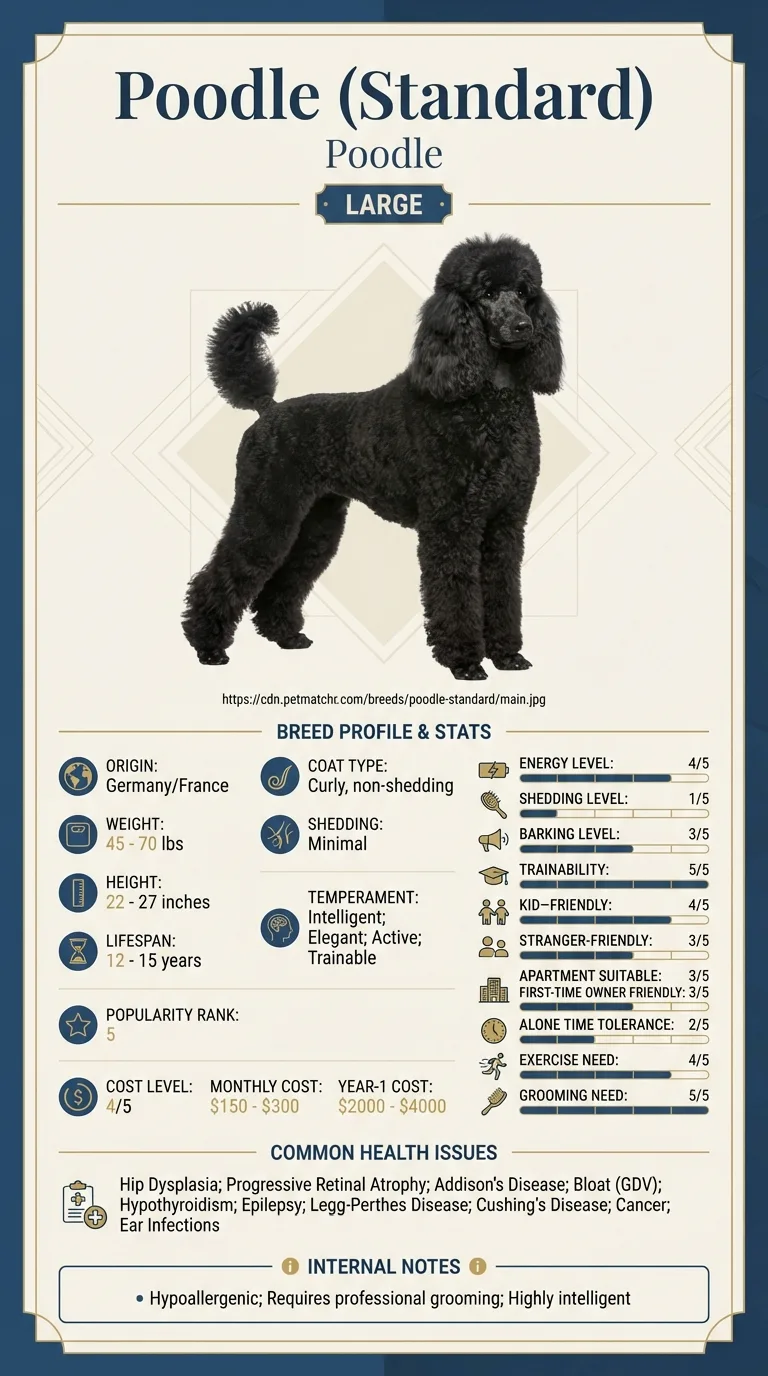
What should I do if my Poodle (Standard) is limping?
If your Poodle (Standard) is limping, limit their activity and consult your vet for an evaluation. Early intervention is key to managing potential injuries.
Poodle (Standard) cruciate ligament injuries can cause significant pain and mobility issues for your dog. Understanding this problem is crucial for their well-being.

Owners of Poodles (Standard) who are active or have older dogs may notice this issue more frequently. It's particularly concerning for those who enjoy outdoor activities with their pets, as it can limit their dog's mobility and enjoyment.
This guide is not medical advice. If your dog shows pain, sudden behavior change, or worsening symptoms, consult a licensed veterinarian.
Some links may be affiliate links. We may earn a commission at no extra cost to you. We only suggest products we believe are helpful for dog owners.
Poodle (Standard) cruciate ligament injuries can be a painful and frustrating issue for both dogs and their owners. This injury typically affects the knee, leading to lameness and difficulty in movement, which can disrupt your dog's daily activities. Owners may notice their Poodle limping, especially after exercise, or hesitating to jump or run.
Cruciate ligament injuries are relatively common in Poodles, especially as they age. Larger breeds like the Standard Poodle are more prone to these injuries due to their size and activity level. Many owners may experience this issue at some point, particularly if their Poodle is active or has other health concerns.
Poodles (Standard) are large, active dogs, which can put extra stress on their knees. Their high energy levels combined with their playful nature may lead to sudden movements that increase the risk of cruciate ligament injuries. Additionally, certain inherited traits in Poodles may predispose them to joint issues.
Inadequate exercise or sudden changes in activity can contribute to injuries. Slippery surfaces, such as tile or hardwood floors, can also increase the chances of accidents. Poor footing or uneven terrain during playtime can lead to unexpected twists and strains.
If your Poodle consistently struggles with coordination or shows signs of discomfort during play, consider consulting a professional trainer. They can help develop a customized training plan that includes safe exercises and techniques to strengthen your dog's legs.
If you notice any signs of limping, swelling, or reluctance to move, it's essential to contact your vet. Early intervention can prevent further damage and help manage any existing injuries effectively.
Recovery from cruciate ligament injuries in Poodles typically takes 4 to 6 months, depending on the severity and treatment chosen. Consistent rehab and care are crucial during this time.
Success looks like your Poodle regaining strength and mobility, resuming normal activities like walking and playing without pain or discomfort. Regular check-ups with your vet will ensure progress.
Avoid these common mistakes that could worsen Poodle (Standard) cruciate ligament injuries or delay recovery.
Recognizing when Poodle (Standard) cruciate ligament injuries require immediate veterinary attention is crucial. Look for red-flag signs that indicate a serious condition. If your Poodle is unable to bear weight on a leg, shows extreme pain, or has a swollen knee joint, call your vet right away. These symptoms might mean a complete tear or other complications that need urgent care.
Mild cases, however, can often be managed at home. If your Poodle has a slight limp, shows minor discomfort, or is still able to play and walk normally, monitor their condition closely. Create a plan to restrict their activity and observe how they respond to rest and gentle care. It's essential to keep an eye on the situation, as things can change quickly.
Always trust your instincts as a dog owner. If you're unsure about your Poodle's condition, it’s better to err on the side of caution and consult your vet. Early intervention can make a significant difference in recovery outcomes.

When Sarah, a busy nurse in Seattle, noticed her Standard Poodle, Maggie, limping, she was worried. After a vet visit, Maggie was diagnosed with a cruciate ligament injury. Sarah felt overwhelmed but committed to helping Maggie recover. They started a strict routine of vet-recommended exercises and physical therapy. Though it wasn’t easy, especially with her long work hours, Sarah prioritized Maggie's needs. With consistent efforts, Maggie regained her strength and was soon back to her playful self, running around the park again.
Key takeaway: The journey through recovery from cruciate ligament injuries requires patience, commitment, and a structured rehabilitation plan, but the results are worth it.
Poodle (Standard) cruciate ligament injuries often occur due to a combination of genetics, age, and activity level. Large breeds like Poodles are particularly prone to these injuries. Factors such as obesity and lack of conditioning can also increase the risk.
To prevent Poodle (Standard) cruciate ligament injuries, keep your dog at a healthy weight and ensure regular, controlled exercise. Avoid high-impact activities that strain the knees, especially on hard surfaces. It may also be beneficial to consult a vet for specific exercise recommendations.
Signs of cruciate ligament injuries in Poodles include limping, difficulty in jumping or climbing stairs, and a reluctance to put weight on the affected leg. If you notice these symptoms, it's important to consult your veterinarian for a proper diagnosis.
Treatment for Poodle (Standard) cruciate ligament injuries often includes rest, anti-inflammatory medications, and possibly physical therapy. In severe cases, surgical intervention may be necessary to repair the ligament. Always follow your vet's advice for the best recovery plan.
Yes, specific training can help strengthen your Poodle's muscles and improve joint stability, which may reduce the risk of cruciate ligament injuries. Focus on low-impact exercises and consult a professional trainer or veterinarian for tailored training programs.
Signs of cruciate ligament injuries in your Poodle (Standard) can include limping, reluctance to bear weight on a leg, and difficulty with jumping or climbing stairs. You might also notice swelling around the knee joint or changes in behavior, such as increased irritability or reluctance to play.
To prevent cruciate ligament injuries in older Poodles, focus on maintaining a healthy weight and providing low-impact exercise. Regular vet check-ups can help catch any underlying issues early, and physical therapy may also be beneficial for older dogs to keep their joints healthy.
Surgery is often recommended for cruciate ligament injuries in Poodles to ensure proper healing and recovery. However, the decision depends on the severity of the injury, your dog's age, and overall health. Always consult with your vet to determine the best course of action.
Yes, a proper diet can influence your Poodle's risk for cruciate ligament injuries. Maintaining a healthy weight through balanced nutrition helps reduce stress on their joints, which can contribute to injury. Consult your vet for specific dietary recommendations.
If you suspect your Poodle (Standard) has a cruciate ligament injury, limit their activity and schedule a vet appointment as soon as possible. The vet can assess the injury and recommend a treatment plan, which may include rest, medication, or surgery.
If your Poodle (Standard) is limping, limit their activity and consult your vet for an evaluation. Early intervention is key to managing potential injuries.
Yes, Poodles, especially larger ones, are prone to cruciate ligament injuries due to their size and activity levels. Preventive care is essential.
Treatment costs for Poodle (Standard) cruciate ligament injuries can vary widely, typically ranging from $1,500 to $3,500, depending on the severity and required procedures.