What are quick tips for Poodle (Standard) chondrodystrophy (cddy)?
Maintain a healthy weight and provide low-impact exercise to minimize joint stress. Regular vet visits are essential for monitoring your dog's condition.
Poodle (Standard) chondrodystrophy (cddy) is a serious developmental disorder affecting your dog's bone structure.

Typically, owners of Standard Poodles may face challenges with chondrodystrophy. This includes those who notice unusual growth patterns or mobility issues in their pets.
This guide is not medical advice. If your dog shows pain, sudden behavior change, or worsening symptoms, consult a licensed veterinarian.
Some links may be affiliate links. We may earn a commission at no extra cost to you. We only suggest products we believe are helpful for dog owners.
Poodle (Standard) chondrodystrophy (CDDY) is a developmental disorder that affects bone growth, particularly in the legs and spine. This condition can cause discomfort and mobility issues for your Poodle, making daily activities challenging. You might notice symptoms like difficulty walking, stiffness, or unusual posture, which can be concerning for any dog owner.
Chondrodystrophy is more prevalent in Poodles compared to other breeds, particularly due to their genetic background. While not every Standard Poodle will develop this condition, it's essential to be aware of its signs and consult your vet if you suspect any problems.
Poodle (Standard) chondrodystrophy (cddy) is a genetic condition that affects bone development. It is typically inherited and can lead to abnormal growth patterns. This breed's unique genetics make them more susceptible to this disorder.
Environmental factors can also play a role in the severity of cddy. Poor nutrition during critical growth periods can exacerbate bone issues. Additionally, lack of exercise can lead to weight gain, putting extra stress on their bones and joints.
If your Poodle is showing signs of anxiety or behavioral issues, consider hiring a trainer. A professional can help you develop a structured training plan tailored to their needs.
If you notice persistent pain, difficulty walking, or other concerning symptoms, consult your vet immediately. They can provide guidance on treatment options and necessary interventions.
You may start noticing improvements in your Poodle (Standard) within 1 to 3 months of dedicated training and management.
Success means your Poodle (Standard) shows reduced symptoms of chondrodystrophy (cddy) and engages more comfortably in daily activities.
It's easy to unintentionally make Poodle (Standard) chondrodystrophy (cddy) worse. Here are some common mistakes to avoid, along with safer alternatives.
Chondrodystrophy (CDDY) in Poodles can range from mild to severe. It’s crucial to recognize the signs that warrant immediate veterinary attention versus those that can be monitored at home. If your Poodle shows severe pain, inability to walk, or sudden swelling, you should call your vet immediately. These symptoms could indicate serious complications that need urgent care.
On the other hand, mild symptoms such as slight limping or occasional discomfort may not require an emergency visit. You can create a monitoring plan, keeping an eye on your dog's behavior and mobility. Make sure to document any changes and schedule a check-up with your vet to discuss ongoing management.
Emergency signs to look for include: - Severe pain or distress - Inability to stand or walk - Dramatic changes in appetite or behavior - Swelling or deformity of the limbs - Breathing difficulties
If your Poodle is displaying only mild symptoms, consider maintaining a calm environment and ensuring they have a comfortable resting area. Regular but gentle exercise can help with mobility, but be cautious not to push them too hard. Always consult your vet if you’re uncertain about your dog's condition. Monitoring closely can help prevent further issues, but err on the side of caution with any alarming signs.

Sarah, a first-time dog owner from Seattle, adopted Max, a lively Poodle (Standard). Shortly after bringing him home, she noticed he struggled with mobility and seemed hesitant to play. After researching, Sarah learned about chondrodystrophy (cddy) and the importance of tailored training. With the help of a local trainer, she started a regimen focused on gentle exercises and specific commands to help Max move more easily. Over three months, Max became more active and confident, and Sarah felt more equipped to manage his condition.
Key takeaway: With patience and the right training, you can help your Poodle (Standard) navigate the challenges of chondrodystrophy (cddy) and improve their quality of life.
Poodle (Standard) chondrodystrophy (cddy) is a developmental disorder affecting bone growth. It can lead to skeletal deformities and affect your dog's mobility. Early diagnosis and management are crucial for better outcomes.
Chondrodystrophy (cddy) in Poodles is primarily genetic. It's important to consult a vet if you notice signs like limping or difficulty moving. Responsible breeding practices can help reduce the incidence of this condition.
Managing Poodle (Standard) chondrodystrophy (cddy) involves regular vet check-ups and possibly physical therapy. Weight management is also crucial to reduce strain on their joints. A balanced diet and appropriate exercise can help maintain their quality of life.
Signs include limping, difficulty standing, or unusual postures. You may also notice a decreased activity level or reluctance to play. Early recognition can lead to more effective management strategies.
Training can be beneficial for Poodles with chondrodystrophy (cddy), focusing on low-impact commands and routines. Positive reinforcement methods work best. Always consult with a trainer experienced in dealing with physical limitations.
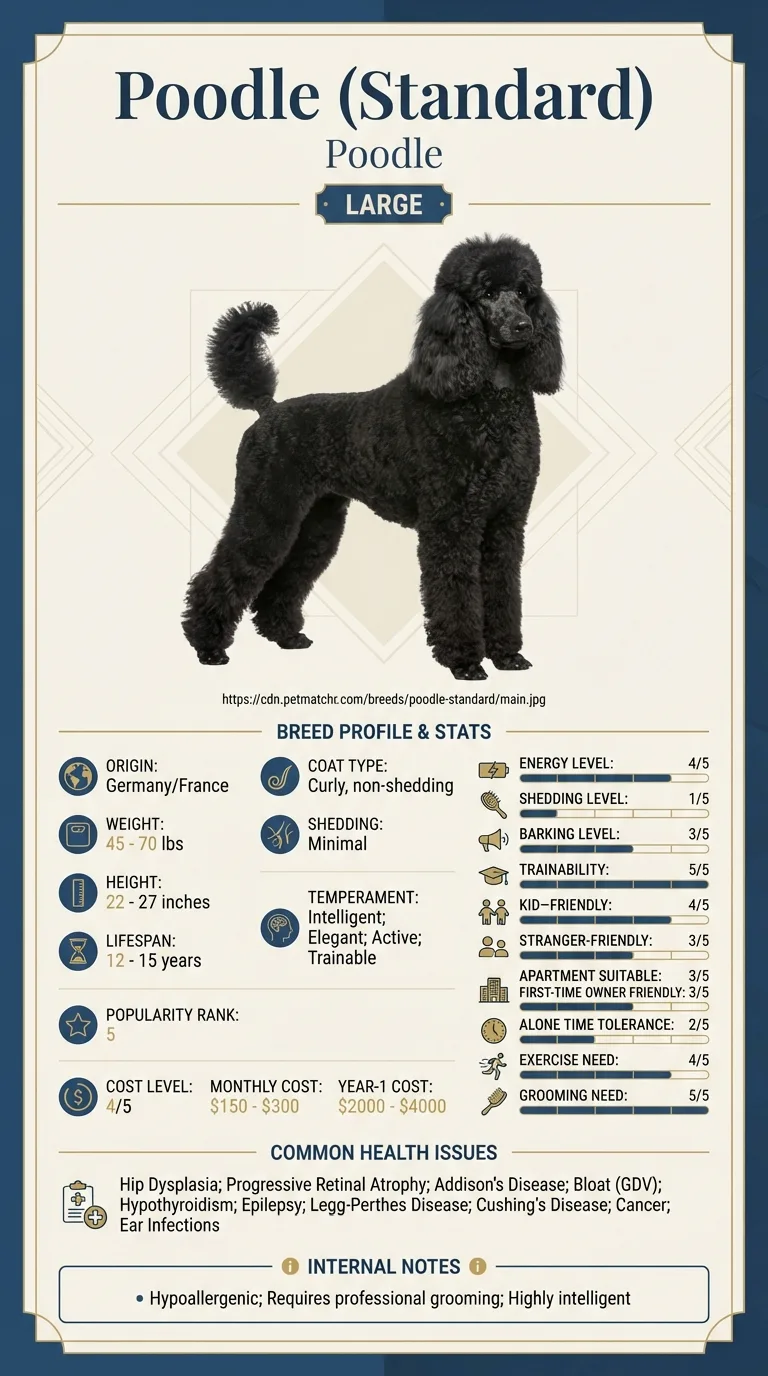
Managing chondrodystrophy (cddy) may involve additional vet visits, therapies, and possibly medications, leading to increased monthly costs. Budgeting around $150 to $300 a month for regular care can be a good starting point.
Signs of chondrodystrophy in Poodles may include difficulty in walking, abnormal bone growth, and noticeable changes in posture. You might also see your Poodle struggling with jumping or climbing stairs. If you observe these symptoms, consult your vet for a thorough evaluation.
Chondrodystrophy is a developmental disorder typically seen in younger Poodles. However, older dogs can show symptoms if the condition has been left untreated. Regular check-ups are important to catch any potential issues early.
Chondrodystrophy can lead to complications that may affect your Poodle's overall health and lifespan. These complications might include joint problems and mobility issues. It's crucial to manage these conditions with your veterinarian to help your dog live a longer, healthier life.
Treatment for chondrodystrophy in Poodles often involves physical therapy and weight management to reduce strain on joints. In some cases, medication for pain relief may be necessary. Always consult your vet for a tailored treatment plan that suits your Poodle's specific needs.
Chondrodystrophy in Poodles is primarily genetic, meaning it can be inherited from their parents. Environmental factors may also contribute, but genetics play a significant role. If you suspect your Poodle has this condition, a vet can provide a proper diagnosis and guidance.
Maintain a healthy weight and provide low-impact exercise to minimize joint stress. Regular vet visits are essential for monitoring your dog's condition.
Yes, it can be painful, especially if untreated. Consult your vet for pain management options to ensure your Poodle is comfortable.
Creating a cozy, supportive environment with soft bedding can help. Avoiding slippery floors and providing ramps can also ease mobility.