Behavior
What are some quick tips for Poodle (Standard) bloat (GDV)?
Feed smaller, more frequent meals and avoid exercise right before eating. Monitor your Poodle for signs of distress after meals.

Quick answer
What are some quick tips for Poodle (Standard) bloat (GDV)?
Feed smaller, more frequent meals and avoid exercise right before eating. Monitor your Poodle for signs of distress after meals.
Poodle (Standard) bloat (GDV) is a serious condition that can lead to life-threatening situations. Understanding its causes and symptoms is crucial for every owner.
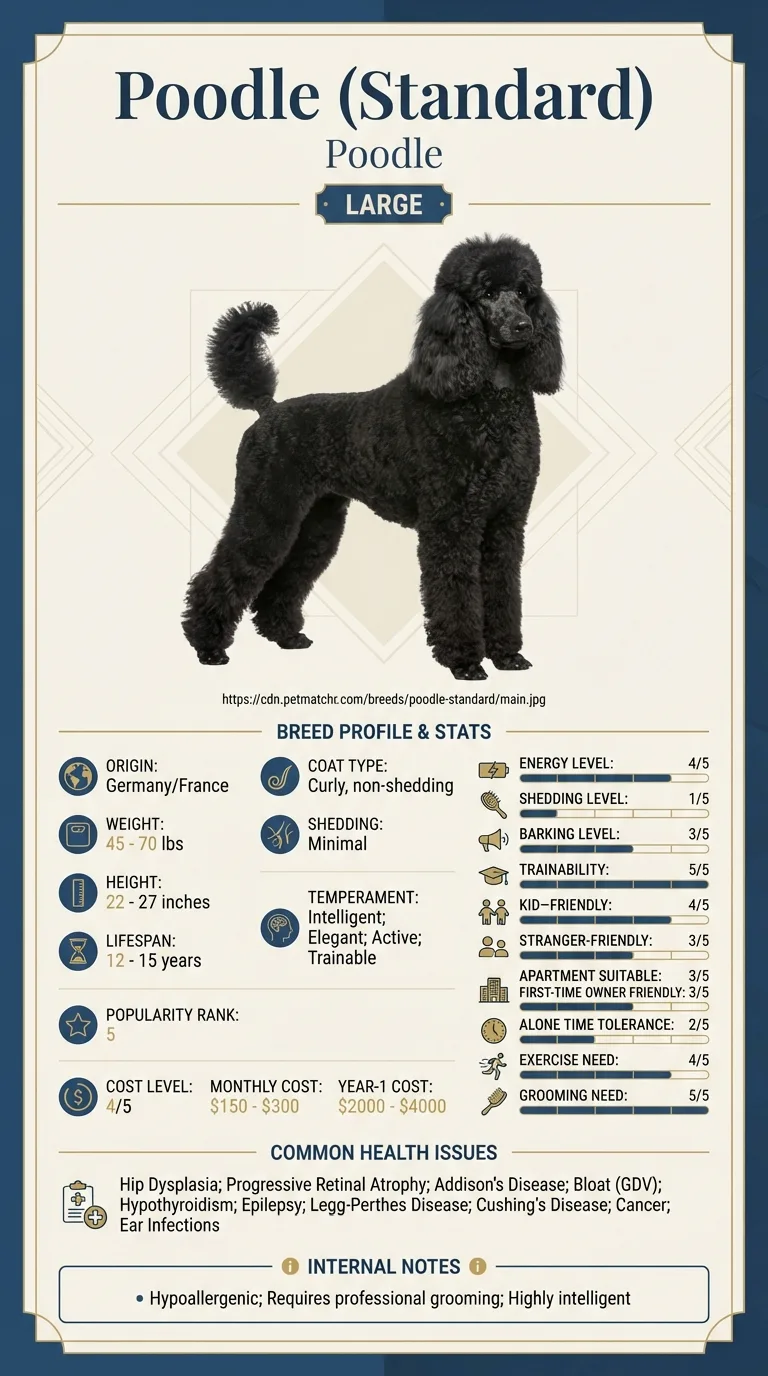
Owners of Poodle (Standards) may struggle with bloat, especially those who are first-time dog parents or are unaware of their dog's specific health risks. Busy lifestyles and lack of experience can make it challenging to monitor their dog's eating habits and potential stress triggers.
This guide is not medical advice. If your dog shows pain, sudden behavior change, or worsening symptoms, consult a licensed veterinarian.
Some links may be affiliate links. We may earn a commission at no extra cost to you. We only suggest products we believe are helpful for dog owners.
We research and check what we publish, but we do not warrant that any figure, date, price, or statement is accurate, complete, or current, and we accept no liability for any loss, cost, injury, or other harm arising from the use of this site. Use it as one reference among several. You remain responsible for your own decisions and for your dog's care - confirm anything that matters with a licensed veterinarian or another qualified professional before you act on it. Full disclaimer.
Check this first
Bloat (GDV) can be life-threatening and requires immediate veterinary attention. Look for red-flag signs that indicate your Poodle is in serious trouble. If your dog is experiencing severe abdominal swelling, unproductive attempts to vomit, or signs of shock such as weakness or collapse, call your vet right away.
In contrast, if your Poodle shows mild signs like slight bloating, restlessness, or a reduced appetite, it may not be an emergency. Monitor them closely, and consider implementing a plan to manage their diet and feeding schedule. It’s essential to keep an eye on any changes in their behavior or condition.
When in doubt, it’s better to err on the side of caution. If your Poodle’s symptoms worsen or don’t improve, seek veterinary care as soon as possible. Remember, bloat can escalate quickly, making prompt action critical to your dog's health.
If any of these apply, call your vet or an emergency clinic now. The rest of this page is for the cases that are not an emergency.
Poodle (Standard) bloat, also known as GDV (gastric dilatation-volvulus), is a serious condition where the stomach twists and fills with gas. This can lead to severe distress and can be life-threatening. Day-to-day, a Poodle experiencing bloat may appear restless, have a swollen abdomen, and show signs of distress such as pacing or trying to vomit without success.
Bloat is relatively common in larger breeds like the Poodle (Standard), affecting about 10% of them at some point in their lives. It's especially prevalent in older dogs or those with a family history of the condition.
Bloat (GDV) is more common in large breeds like the Poodle (Standard). Their deep chests can cause the stomach to twist, especially after eating or drinking quickly. Genetic predisposition may also play a role in some Poodles.
Environmental factors can contribute to bloat as well. Stress during mealtime, rapid eating, and excessive exercise right after eating can increase the risk. Additionally, feeding from elevated bowls has been linked to a higher incidence of bloat.
If your Poodle shows symptoms like a swollen abdomen, restlessness, or retching without vomiting, seek veterinary care immediately. Bloat is a serious condition that requires prompt medical attention.
Avoiding certain common mistakes can help manage and prevent bloat (GDV) in your Poodle (Standard). Here are some behaviors to steer clear of, along with safer alternatives.
Start here: Standard Poodle Most Common Genetic Disorders: Screening
See all Poodle Standard health problems, which breeds are prone to bloat gdv, or the full Poodle Standard breed guide for temperament, exercise needs and ownership costs.
If you notice signs of bloat (GDV) in your Poodle (Standard), seek veterinary care immediately. Treatment may involve hospitalization and monitoring for several days. Long-term management includes diet adjustments and preventive measures, which can take weeks to implement effectively.
Success means your Poodle (Standard) has a stable digestive health and does not show signs of bloat. You should also feel confident in recognizing symptoms early and have a plan in place to prevent future occurrences.
Sara, a busy nurse in New York, noticed her Standard Poodle, Bella, was restless and drooling. After a quick search, she learned about bloat (GDV) and rushed Bella to the vet, where she was treated for stomach torsion. Following this scare, Sara made dietary changes and learned how to monitor Bella's behavior closely, reducing her risk of future episodes.
Key takeaway: Recognizing early signs of bloat and acting quickly can save your dog's life. Always consult your vet for dietary and health management.
Bloat, or GDV, occurs when a dog's stomach fills with gas and twists. This can happen due to rapid eating, exercising too soon after meals, or stress. It's crucial to recognize the signs early and seek immediate veterinary help. This answer relates to Poodle (Standard) bloat (gdv).
To prevent bloat, feed your Poodle smaller meals throughout the day instead of one large meal. Avoid vigorous exercise right before and after meals. Additionally, consider using elevated feeding bowls to promote slower eating.
Common symptoms of bloat include a swollen abdomen, unproductive vomiting, restlessness, and signs of distress. If your Poodle shows these symptoms, take them to a vet immediately, as GDV can be life-threatening.
If you suspect bloat, get your Poodle to the vet right away. Time is critical, and treatment often involves surgery to untwist the stomach and release trapped gas. Early intervention can save your dog's life.
Feeding your Poodle a high-quality, low-fat diet can help reduce the risk of bloat. Also, avoid feeding dry kibble alone; consider soaking it in water to make it easier to digest. Always consult your vet for personalized dietary advice.
Yes, older Poodles (Standard) can be at higher risk for bloat (gdv). Factors like age, previous episodes, and underlying health issues can contribute to the likelihood of developing this serious condition.
Bloat (gdv) is often more likely to occur after vigorous exercise or eating large meals. It's best to wait at least an hour after feeding before allowing your dog to engage in any intense activities.
If you notice any symptoms of bloat (gdv) or if your Poodle (Standard) seems unusually lethargic, it's essential to consult a veterinarian promptly. Early intervention can make a significant difference in outcomes.
Feed smaller, more frequent meals and avoid exercise right before eating. Monitor your Poodle for signs of distress after meals.
You can use slow feeder bowls or puzzle toys to make mealtime more engaging and prevent rapid eating.
A high-quality, low-fat diet with added moisture can help. Consult your vet for specific recommendations.
Yes, larger breeds like the Standard Poodle are at higher risk. Factors like genetics and previous bloat episodes also play a role.
A one-page prep sheet for this condition: the signs, the questions to ask, what to get priced. Unlocks here.
You get: Vet visit prep sheet
No spam. One-click unsubscribe. See our privacy policy.
Preview page 1 before you decide.