Behavior
What are quick tips for managing Poodle (Miniature) wobbler syndrome?
Keep your Poodle's environment safe by removing obstacles and providing a non-slip surface. Regular vet check-ups are essential to monitor their condition.

Quick answer
What are quick tips for managing Poodle (Miniature) wobbler syndrome?
Keep your Poodle's environment safe by removing obstacles and providing a non-slip surface. Regular vet check-ups are essential to monitor their condition.
Poodle (Miniature) wobbler syndrome is a serious condition that affects mobility and quality of life. It involves instability in the cervical spine, leading to wobbling and coordination issues.
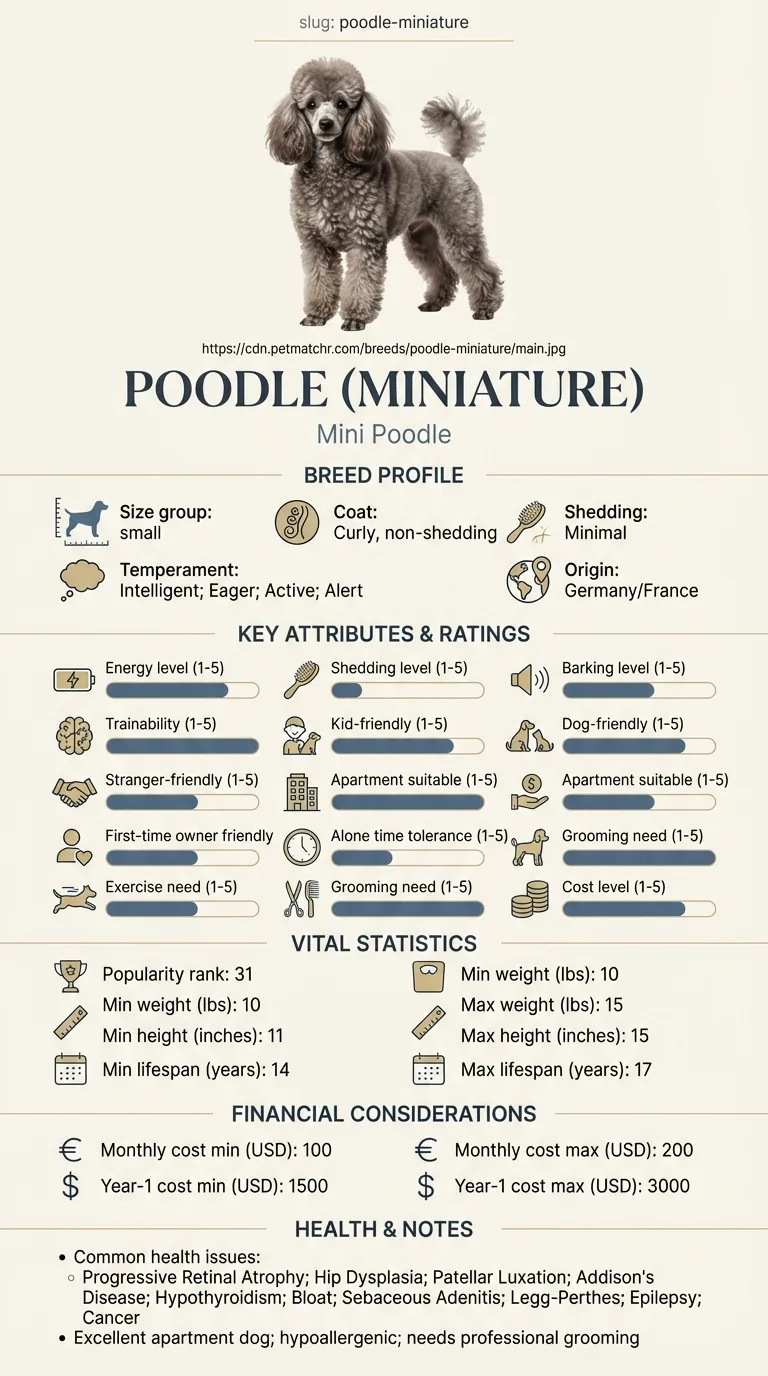
Owners of Mini Poodles, especially first-time dog parents or those with busy lifestyles, often face challenges in recognizing and managing wobbler syndrome. It can be particularly distressing for families who want their pets to enjoy an active lifestyle.
This guide is not medical advice. If your dog shows pain, sudden behavior change, or worsening symptoms, consult a licensed veterinarian.
Some links may be affiliate links. We may earn a commission at no extra cost to you. We only suggest products we believe are helpful for dog owners.
We research and check what we publish, but we do not warrant that any figure, date, price, or statement is accurate, complete, or current, and we accept no liability for any loss, cost, injury, or other harm arising from the use of this site. Use it as one reference among several. You remain responsible for your own decisions and for your dog's care - confirm anything that matters with a licensed veterinarian or another qualified professional before you act on it. Full disclaimer.
Check this first
When dealing with Poodle (Miniature) wobbler syndrome, it's crucial to know when to act fast. Emergency signs include severe neck pain, inability to walk or stand, sudden collapse, or any signs of distress such as whining or panting. If your dog shows these symptoms, don't hesitate to call your vet immediately.
Milder cases can often be monitored at home. If your Mini Poodle is wobbling slightly or having trouble with coordination but is still able to walk, you may choose to watch and wait. Keep a close eye on them and note any changes in behavior or mobility. If they seem comfortable, a vet visit can be scheduled for later.
However, if there’s no improvement in a short period or if symptoms worsen, seek veterinary advice. For many owners, knowing these red flags can significantly impact the health and happiness of their beloved pets. Always trust your instincts; when in doubt, a vet is your best resource.
If any of these apply, call your vet or an emergency clinic now. The rest of this page is for the cases that are not an emergency.
Poodle (Miniature) wobbler syndrome is a neurological condition that causes uncoordinated movements, often seen as a wobbling gait. This can be alarming for owners, as their beloved pet may appear to be unsteady or even fall over. The syndrome is more common in Miniature Poodles due to their genetic predisposition, leading to cervical vertebral instability.
Wobbler syndrome is relatively common among Miniature Poodles, particularly those aged 3 to 7 years. While not every Mini Poodle will develop this condition, it's important for owners to be aware of the symptoms and seek veterinary advice promptly.
Poodles (Miniature) are prone to certain genetic conditions, including wobbler syndrome. This condition stems from cervical vertebral instability, which can be influenced by their small size and delicate bone structure. Their inherent intelligence and energy levels can also lead to increased activity, exacerbating the issue.
Environmental factors play a significant role in wobbler syndrome. If your Mini Poodle frequently jumps or runs on hard surfaces, they may be more likely to develop this condition. Additionally, a lack of proper exercise can lead to muscle weakness and joint issues, contributing to wobbling symptoms.
If your Poodle (Miniature) shows signs of severe wobbling, difficulty in movement, or pain, it's crucial to consult a veterinarian. They can provide a proper diagnosis and discuss treatment options, which may include medication or surgery.
Avoiding common mistakes can help your Poodle (Miniature) with wobbler syndrome improve. Here are some behaviors to steer clear of.
Start here: Miniature Poodle Most Common Genetic Disorders: Screening
See all Poodle Miniature health problems, which breeds are prone to wobbler syndrome, or the full Poodle Miniature breed guide for temperament, exercise needs and ownership costs.
You can expect to see improvements in your Mini Poodle's wobbler syndrome symptoms within 4 to 8 weeks of consistent care and management strategies.
Success means your dog will have improved mobility, reduced wobbling, and an overall better quality of life. Regular follow-up with your vet will help track progress.
Sarah, a busy nurse in Seattle, noticed her Mini Poodle, Daisy, wobbling more than usual. After a vet visit, she learned that Daisy had wobbler syndrome, which was affecting her balance and mobility. Determined to help, Sarah started researching management strategies and joined a local dog training group focused on behavior issues. With guidance from trainers and consistent practice at home, Sarah learned how to support Daisy’s mobility and engage her in gentle exercises. Over weeks, Daisy showed significant improvement, regaining her confidence and energy.
Key takeaway: With patience and the right resources, owners can effectively manage Poodle (Miniature) wobbler syndrome and improve their dog's quality of life.
Wobbler syndrome in Poodle (Miniature) can stem from genetic factors or developmental issues in the spine. If your dog shows signs like difficulty walking or a wobbly gait, it's essential to consult a vet for an accurate diagnosis and treatment options.
Stopping the progression of Poodle (Miniature) wobbler syndrome involves veterinary intervention. Treatment may include medication, physical therapy, or even surgery in severe cases. Always follow your vet's recommendations for the best outcome.
Common symptoms include wobbling while walking, difficulty standing, and neck pain. Your Poodle may also show signs of weakness in the rear legs. Monitoring these symptoms early can help in getting timely veterinary care.
Treatment costs for Poodle (Miniature) wobbler syndrome can range from $500 to $7,000, depending on the severity and type of treatment required. Always discuss financial options with your vet to find a plan that works for you.
Training can support your Poodle's overall well-being, but it won't cure wobbler syndrome. Focus on gentle exercises to maintain strength and coordination, and consult your vet for specific training recommendations.
Yes, wobbler syndrome can have a genetic component in Poodles. Responsible breeding practices can help reduce the incidence, so consider researching breeders who prioritize health testing.
Yes, older Poodles may show more pronounced symptoms due to age-related health issues. It's crucial to monitor their mobility closely and consult a vet if you notice any changes, as older dogs may need different treatment approaches.
Providing a safe and comfortable environment is key. You should avoid slippery floors and provide soft bedding. Gentle exercise can help maintain strength, but consult your vet about appropriate activities.
If you notice any signs of wobbler syndrome, such as difficulty walking or signs of pain, it's best to visit your vet promptly. Early diagnosis can lead to better management of the condition.
Treatment options for Poodle (Miniature) wobbler syndrome may include medication for pain relief, physical therapy, and, in severe cases, surgery. Your vet will recommend the best course of action based on your dog's specific needs.
Keep your Poodle's environment safe by removing obstacles and providing a non-slip surface. Regular vet check-ups are essential to monitor their condition.
Provide a supportive bed and ensure they have easy access to food and water. Keeping their weight in check can also alleviate pressure on their spine.
If your dog appears to be in pain, contact your vet immediately. They may need adjustments to their treatment plan or medication.
Engage in mild, low-impact exercises several times a week. Consult your vet for a tailored exercise plan that suits your dog's condition.
There isn't a specific diet for wobbler syndrome, but a balanced, nutrient-rich diet can aid in maintaining overall health. Always consult your vet for dietary recommendations.
A one-page prep sheet for this condition: the signs, the questions to ask, what to get priced. Unlocks here.
You get: Vet visit prep sheet
No spam. One-click unsubscribe. See our privacy policy.
Preview page 1 before you decide.