Behavior
What are quick tips for managing Poodle (Miniature) brachycephalic obstructive airway syndrome (boas)?
Keep your Poodle cool and avoid hot weather. Limit strenuous activities and ensure regular vet visits to monitor their condition.
Brachycephalic obstructive airway syndrome (BOAS) is a common issue in Poodle (Miniature) dogs, leading to breathing difficulties. (Poodle (Miniature) brachycephalic obstructive airway syndrome (boas))
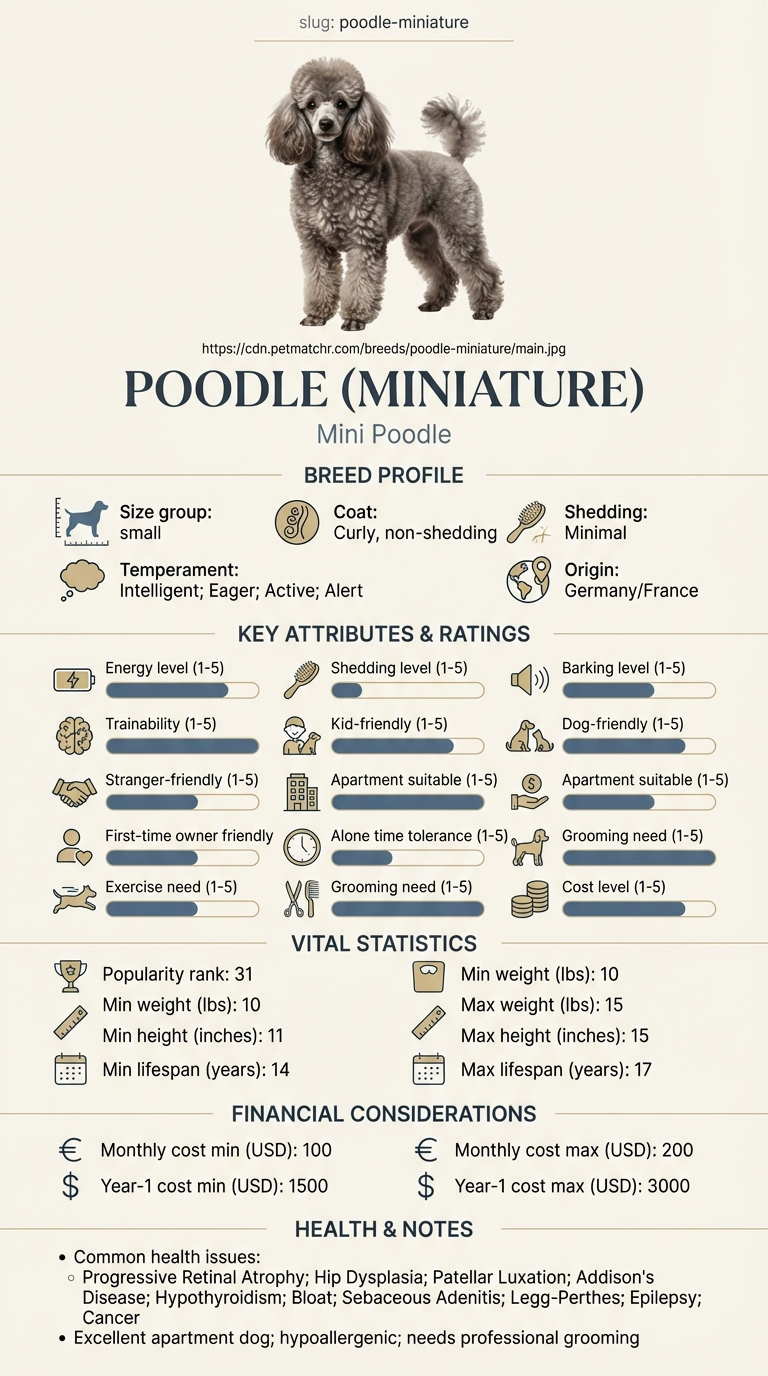
Owners of Mini Poodles often face challenges with this condition. Those who are first-time dog owners or live in hot climates may find it especially tough to manage.
This guide is not medical advice. If your dog shows pain, sudden behavior change, or worsening symptoms, consult a licensed veterinarian.
Some links may be affiliate links. We may earn a commission at no extra cost to you. We only suggest products we believe are helpful for dog owners.
Poodle (Miniature) brachycephalic obstructive airway syndrome (BOAS) can lead to daily challenges for both the dog and its owner. This condition causes breathing difficulties, snoring, and heat sensitivity, making it tough for these small dogs to enjoy their usual activities. Owners may notice their Mini Poodle struggling to breathe, especially during exercise or in hot weather.
BOAS is fairly common in the Mini Poodle breed due to their distinctive facial structure. Many Mini Poodles experience some level of this condition, which can be mild to severe.
The Poodle (Miniature) is a brachycephalic breed, meaning it has a short snout that can lead to narrowed airways. This anatomical trait can cause breathing difficulties, especially under stress or during exercise. Their small size can also make them more susceptible to these airway issues.
Environmental factors play a significant role in exacerbating BOAS. Hot or humid weather can make breathing even more challenging for Mini Poodles. Additionally, being overweight can further restrict airflow, so a proper diet and exercise are crucial.
If your Mini Poodle exhibits persistent breathing difficulties or becomes overly anxious during routine activities, consider consulting a dog trainer. They can help with behavior modification techniques and create a training plan tailored to your dog's needs.
If your Poodle (Miniature) shows severe signs of distress, such as wheezing or excessive panting, it's essential to consult a vet. They can assess your dog's health and recommend treatments, including potential surgical options if necessary.
Improving your Poodle (Miniature) with brachycephalic obstructive airway syndrome (BOAS) can take 2 to 6 months. Consistent management and training efforts are key.
Success means your Poodle (Miniature) shows fewer signs of distress when breathing, enjoys daily activities without heavy panting, and is more comfortable overall.
Avoiding common pitfalls is essential in managing Poodle (Miniature) brachycephalic obstructive airway syndrome (BOAS). Here are some mistakes to watch out for and safer alternatives.
Recognizing when your Poodle (Miniature) is experiencing a true emergency due to Brachycephalic Obstructive Airway Syndrome (BOAS) is crucial. If your dog shows severe signs of distress, such as extreme difficulty breathing, blue-tinged gums, or unresponsiveness, call your vet immediately. These signs indicate that your dog's airway is severely compromised and requires urgent medical attention.
On the other hand, if your Mini Poodle is occasionally snoring, breathing heavily after play, or exhibiting mild panting during warm weather, these may be normal BOAS symptoms. You can monitor these situations closely and create a management plan with your vet. Keeping your dog cool and avoiding strenuous exercise can help alleviate mild symptoms and ensure they stay comfortable.
Always err on the side of caution; if you're unsure whether a situation is an emergency, it's best to consult your veterinarian. They can guide you on how to manage your Poodle's condition effectively.
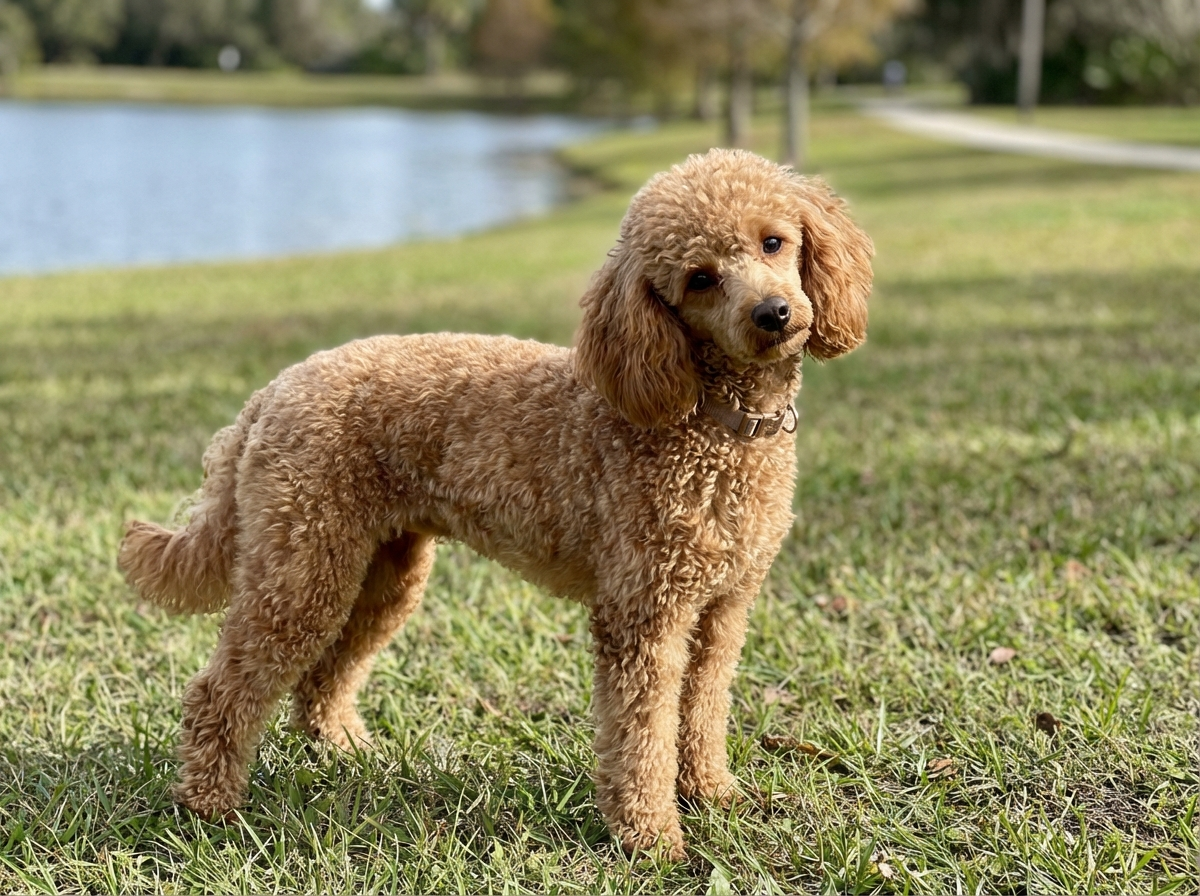
Emma, a busy nurse in a city apartment, adopted Charlie, a Mini Poodle. Soon, she noticed he struggled to breathe, especially during walks. After a vet visit, she learned about BOAS and began implementing changes. Emma adjusted Charlie's exercise routine, opting for shorter, cooler walks instead of long runs. She also invested in a harness to reduce strain on his neck. Over time, Charlie became more comfortable, and Emma felt relieved to see him enjoying his walks again.
Key takeaway: Managing a Poodle (Miniature) with BOAS requires a mix of vet advice, lifestyle adjustments, and patience. Small changes can lead to big improvements.
Poodle (Miniature) brachycephalic obstructive airway syndrome (boas) is a condition that affects their breathing. It occurs due to their short noses and flat faces, leading to snoring and difficulty breathing, especially in hot weather.
This condition is often genetic and is common in brachycephalic breeds. It results from the shape of their skulls, which can lead to structural issues in their airways.
To help your Poodle, ensure they stay cool and avoid strenuous exercise in hot weather. Regular vet check-ups are essential to monitor their breathing and overall health.
Common signs include excessive snoring, difficulty breathing, and lethargy during physical activity. If you notice these symptoms, consult your vet for advice.
While training cannot cure BOAS, it can help your dog stay calm and reduce stress, which may alleviate some breathing issues. Focus on gentle training methods that promote relaxation.
Signs of BOAS in a Poodle (Miniature) include excessive snoring, labored breathing, and difficulty exercising. You might also notice your dog being unusually heat-sensitive or having trouble catching their breath during play.
To help your Poodle (Miniature) cope with BOAS in hot weather, keep them indoors during peak heat hours. Provide plenty of fresh water and consider using fans or air conditioning to keep the environment cool.
Yes, surgery can be an option for Poodles (Miniature) with severe BOAS. A vet can perform procedures to open the airways, but it's important to discuss the risks and benefits with your vet to determine if it's necessary for your dog.
If your Poodle (Miniature) suddenly struggles to breathe, it's crucial to seek veterinary assistance immediately. This could indicate a severe episode of BOAS or another health issue that requires urgent attention.
While training won't cure BOAS, it can help manage symptoms. Focus on low-impact activities and use positive reinforcement to keep training sessions short and enjoyable, ensuring your dog doesn't overexert themselves.
Keep your Poodle cool and avoid hot weather. Limit strenuous activities and ensure regular vet visits to monitor their condition.
Aim for at least biannual check-ups to monitor their breathing and overall health, especially during warmer months.
Yes, keeping your Poodle at a healthy weight can reduce pressure on their airways, making breathing easier.
In severe cases, surgery may be recommended to correct airway obstructions. Consult your vet for more information.