Behavior
What are Poodle (All Sizes) wobbler syndrome quick tips?
Keep your Poodle's environment safe and avoid slippery surfaces. Regular vet check-ups are essential for monitoring the condition.

Quick answer
What are Poodle (All Sizes) wobbler syndrome quick tips?
Keep your Poodle's environment safe and avoid slippery surfaces. Regular vet check-ups are essential for monitoring the condition.
Poodle (All Sizes) wobbler syndrome can lead to serious mobility issues, affecting your dog's quality of life.
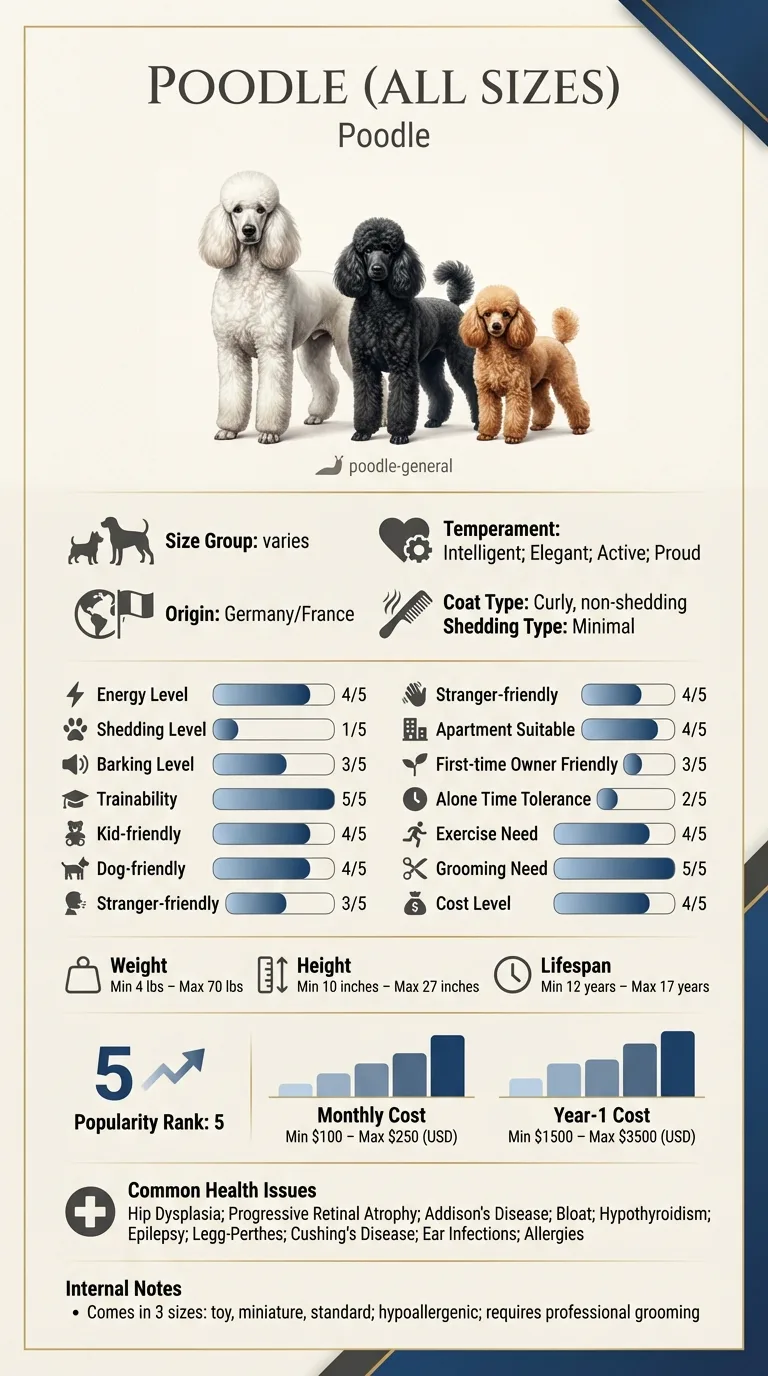
Typically, owners of Poodles—whether they have a toy, miniature, or standard size—face this challenge. Those who notice their dog struggling to walk or experiencing neck pain often seek guidance on how to help.
This guide is not medical advice. If your dog shows pain, sudden behavior change, or worsening symptoms, consult a licensed veterinarian.
Some links may be affiliate links. We may earn a commission at no extra cost to you. We only suggest products we believe are helpful for dog owners.
We research and check what we publish, but we do not warrant that any figure, date, price, or statement is accurate, complete, or current, and we accept no liability for any loss, cost, injury, or other harm arising from the use of this site. Use it as one reference among several. You remain responsible for your own decisions and for your dog's care - confirm anything that matters with a licensed veterinarian or another qualified professional before you act on it. Full disclaimer.
Check this first
Wobbler syndrome in Poodles can be serious, and it's important to know when to seek immediate veterinary help. If your Poodle shows signs of severe neck pain, inability to walk, or sudden weakness in the legs, these are red-flag symptoms that require urgent care. Also, if your dog is unable to eat or drink, this can indicate a critical issue that needs fast action.
On the other hand, some symptoms of wobbler syndrome may be mild and manageable. If your Poodle is experiencing slight wobbling or a less severe gait change, you can monitor their condition at home. In such cases, it's wise to have a plan in place, noting any changes in their behavior or mobility. Regular vet check-ups are essential to track the progression of the condition and to discuss potential treatment options.
Understanding the difference between emergency symptoms and those that can be monitored is crucial. Call your vet if you notice any severe symptoms, while less critical signs may allow for a wait-and-see approach with careful observation and documentation.
If any of these apply, call your vet or an emergency clinic now. The rest of this page is for the cases that are not an emergency.
Poodle (All Sizes) wobbler syndrome is a condition that affects the neck, causing a lack of coordination and balance. This leads to a wobbling gait, difficulty moving, and potential pain. Owners may notice their Poodle struggling to run or play, often appearing unsteady on their feet.
Wobbler syndrome is relatively common in Poodles, particularly in older dogs or those with a history of neck injuries. While not every Poodle will experience this issue, it's important for owners to be aware of the symptoms and seek veterinary advice if they notice any signs.
Wobbler syndrome can sometimes be linked to the Poodle's genetic makeup. Certain sizes of Poodles may be more prone to cervical vertebral instability. This condition is largely influenced by their physical structure, especially in larger Poodles.
Environmental factors can also contribute to wobbler syndrome. Injuries from rough play or trauma can exacerbate the issue. Additionally, lack of proper exercise and an unhealthy diet may lead to weight gain, putting extra pressure on their spine.
If your Poodle experiences severe wobbling, pain, or changes in behavior, it’s important to talk to a vet. They can evaluate the condition and recommend treatment options, which may include medication or even surgery in severe cases.
Understanding common mistakes can help you manage Poodle (All Sizes) wobbler syndrome better. Here are some behaviors to avoid and safer alternatives.
Start here: Poodle (All Sizes) Genetic Disorders: What to Screen For
See all Poodle General health problems, which breeds are prone to wobbler syndrome, or the full Poodle General breed guide for temperament, exercise needs and ownership costs.
Improvement in your Poodle's wobbler syndrome can take anywhere from a few weeks to several months. Consistent care and follow-up with your vet are essential for noticeable progress.
Success means your Poodle shows reduced wobbling and increased mobility. They should be able to walk more steadily and engage in daily activities with less discomfort.
When Sarah adopted Max, her Standard Poodle, she noticed he often stumbled and appeared unsteady. After a vet diagnosed him with wobbler syndrome, Sarah felt overwhelmed. With guidance, she created a tailored training plan that included gentle exercises and adjustments to his diet. Over time, Max's wobbling decreased, and he became more active, even enjoying walks again. While it wasn't a quick fix, Sarah's consistent efforts made a significant difference.
Key takeaway: Patience and a structured approach are crucial when managing wobbler syndrome in Poodles. Regular vet check-ups and a dedicated training plan can lead to remarkable improvements over time.
Wobbler syndrome in Poodles (All Sizes) is often due to cervical vertebral instability. This condition can develop from genetic factors, age, or injury. Regular vet check-ups can help catch early signs.
Look for signs like wobbling, difficulty walking, or neck pain. If your Poodle seems unsteady or reluctant to move, consult your vet. Early diagnosis is key to managing the condition.
While you can't completely stop wobbler syndrome, you can manage it. Focus on providing a safe environment, regular vet visits, and tailored exercise. Medication or surgery may be necessary for severe cases.
Treatment options include medications for pain relief and inflammation, physical therapy, and in some cases, surgery. Your vet will recommend the best approach based on your Poodle's condition.
Training can help your Poodle adapt to its condition. Focus on low-impact activities and use positive reinforcement techniques. Always consult your vet before starting any training regimen.
Early signs of Poodle (All Sizes) wobbler syndrome include difficulty walking, a wobbly gait, and sometimes dragging of the hind legs. You might also notice your dog becoming hesitant when jumping or climbing stairs. If you observe these symptoms, it's best to consult your vet.
Yes, wobbler syndrome tends to occur more frequently in larger Poodles, particularly standard sizes. However, all sizes can be affected. Regular vet check-ups can help catch any potential issues early.
To help your Poodle with wobbler syndrome, consider low-impact exercises and maintaining a healthy weight. Physical therapy may also be beneficial. Consult your vet for personalized advice on managing your dog's condition.
Surgery for Poodle (All Sizes) wobbler syndrome is usually considered when conservative treatments fail to improve symptoms. If your dog shows severe signs of pain or mobility issues, consult your vet about surgical options as a potential solution.
Yes, wobbler syndrome can impact your Poodle's quality of life by causing pain and difficulty moving. Early intervention and treatment can help manage symptoms and improve their overall well-being. Regular vet visits are essential for monitoring your dog's condition.
Keep your Poodle's environment safe and avoid slippery surfaces. Regular vet check-ups are essential for monitoring the condition.
Treatment costs can range from $500 to $7,000, depending on the severity and type of treatment needed.
Common signs include wobbling, neck pain, and difficulty walking. If you notice these, consult your vet immediately.
Surgery may be necessary for severe cases. Your vet will evaluate your Poodle's condition to determine the best course of action.
A one-page prep sheet for this condition: the signs, the questions to ask, what to get priced. Unlocks here.
You get: Vet visit prep sheet
No spam. One-click unsubscribe. See our privacy policy.
See a sample page before you decide.
Early access list
The free prep sheet covers the same-day warning signs, a symptom log and the questions to ask. We are considering a fuller kit that adds a cost worksheet for the usual tests and treatments (US price ranges with their sources) and a plain-English guide to ways of covering the bill. It is not built yet; this list tells us whether it is worth building.
One email, no spam, unsubscribe anytime. Information only, not veterinary advice.