Behavior
What are quick tips for managing Poodle (All Sizes) skin infections?
Maintain regular grooming, use hypoallergenic products, and keep their skin dry. Consult a vet for persistent issues.

Quick answer
What are quick tips for managing Poodle (All Sizes) skin infections?
Maintain regular grooming, use hypoallergenic products, and keep their skin dry. Consult a vet for persistent issues.
Poodle (All Sizes) skin infections can lead to discomfort and health issues for your furry friend. It's important to address these infections promptly to keep your dog happy and healthy.
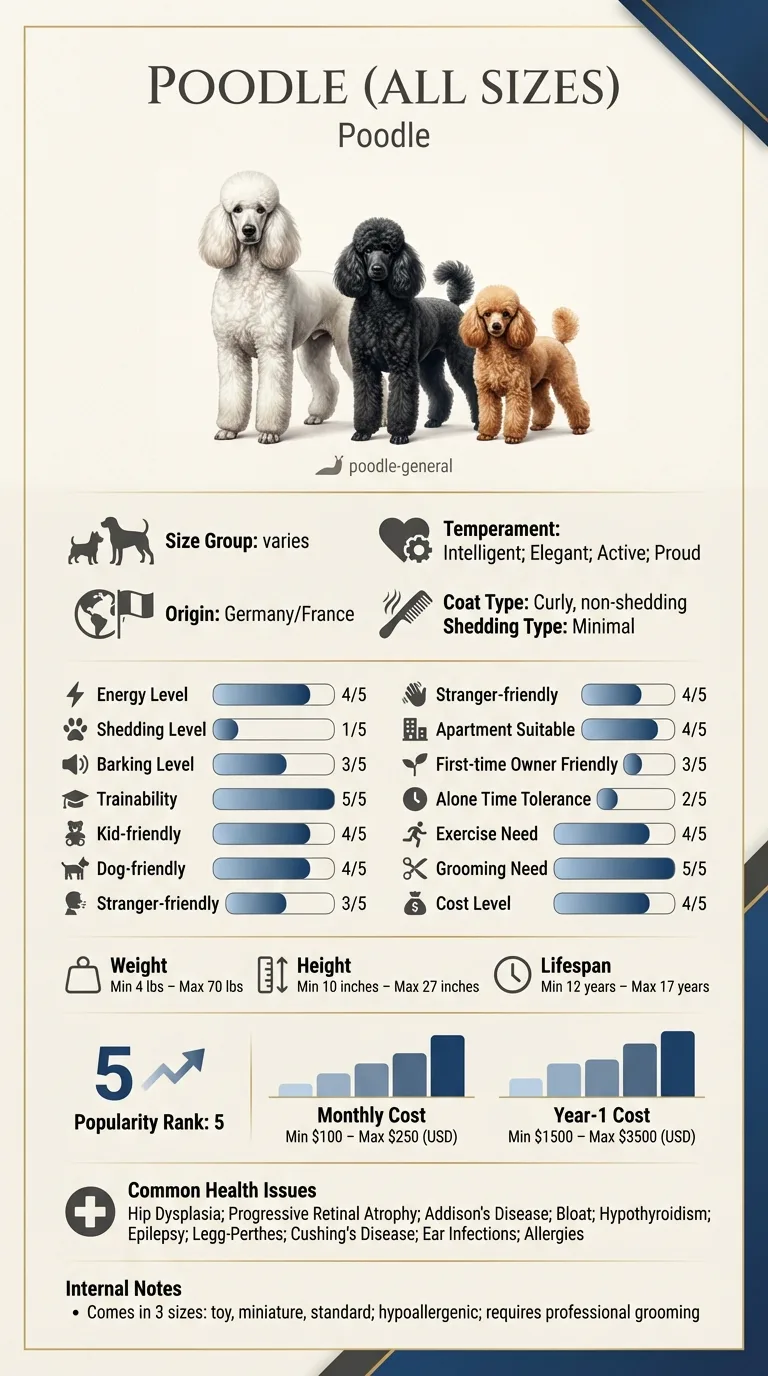
Owners of Poodles, especially first-time pet parents or those living in humid climates, may find their dogs prone to skin infections. Busy families or individuals who might overlook grooming can also struggle, as regular care is essential in preventing these issues.
This guide is not medical advice. If your dog shows pain, sudden behavior change, or worsening symptoms, consult a licensed veterinarian.
Some links may be affiliate links. We may earn a commission at no extra cost to you. We only suggest products we believe are helpful for dog owners.
We research and check what we publish, but we do not warrant that any figure, date, price, or statement is accurate, complete, or current, and we accept no liability for any loss, cost, injury, or other harm arising from the use of this site. Use it as one reference among several. You remain responsible for your own decisions and for your dog's care - confirm anything that matters with a licensed veterinarian or another qualified professional before you act on it. Full disclaimer.
Check this first
Call your vet right away if you notice: - Severe swelling or redness around the infected area. - Pus or any discharge that has a foul odor. - Your Poodle is excessively scratching, biting, or licking the affected area. - Signs of fever, such as lethargy or loss of appetite. These symptoms indicate a more serious infection that may require medical intervention.
In contrast, if your dog has mild irritation or a small rash, you can monitor it for a few days. Keep the area clean and avoid letting your Poodle scratch. Look for improvements over time, but if there’s no change or the condition worsens, it’s time for a vet visit.
Understanding these signs can help you act quickly. When in doubt, don’t hesitate to consult your vet to ensure your Poodle (All Sizes) stays healthy and happy.
If any of these apply, call your vet or an emergency clinic now. The rest of this page is for the cases that are not an emergency.
Poodle (All Sizes) skin infections can be a persistent issue, often appearing as red, inflamed areas on the skin. These infections frequently occur in warm, damp environments, especially in facial folds where moisture can accumulate. Owners may notice their Poodle scratching or licking excessively, indicating discomfort.
Skin infections are relatively common among Poodles, particularly due to their dense, curly coats that can trap moisture. Regular grooming and proper care are essential to minimize these issues.
Poodles, regardless of size, can be prone to skin infections due to their curly, non-shedding coat. This coat can trap moisture and dirt, creating an environment where bacteria and fungi can thrive. Additionally, certain genetics may make some Poodles more susceptible to allergies that can lead to skin issues.
Environmental factors also play a significant role in skin infections. Poor grooming practices can lead to matting, which can irritate the skin. Changes in weather, humidity, or exposure to irritants like pollen or chemicals can also trigger skin problems in your Poodle.
If your Poodle shows persistent signs of skin infections, such as redness, swelling, or discharge, it’s time to consult a vet. They can diagnose the issue and may recommend treatments like medicated shampoos or antibiotics.
Avoiding common pitfalls can help manage Poodle (All Sizes) skin infections effectively. Here are some mistakes to watch out for and safer alternatives.
Start here: Poodle (All Sizes) Genetic Disorders: What to Screen For
See all Poodle General health problems, which breeds are prone to skin infections, or the full Poodle General breed guide for temperament, exercise needs and ownership costs.
You can expect to see improvements in your Poodle's skin condition within 4 to 8 weeks of consistent care and treatment.
Success means your Poodle's skin infections are significantly reduced, with healthy skin returning and fewer flare-ups. Regular grooming and a proper skincare routine will also help maintain their comfort and happiness.
When Sarah adopted Bella, her Poodle, she noticed that Bella often scratched her skin and had some red patches, especially in the folds of her face. After a vet visit, Sarah learned that Bella had a skin infection due to allergies and lack of proper grooming. Determined to help her pup, Sarah started a strict grooming schedule and used vet-recommended ointments. Within a few weeks, Bella's skin began to clear up, and her energy returned. Sarah also learned to keep Bella's environment clean and free of allergens, which made a big difference.
Key takeaway: Regular grooming and prompt veterinary care are essential in managing Poodle skin infections effectively.
Poodles can develop skin infections for several reasons, including allergies, poor grooming, or moisture trapped in their coat. Regular grooming and keeping their skin dry can help prevent these issues. If infections persist, consult your vet for more tailored advice.
To stop Poodle (All Sizes) skin infections, maintain a consistent grooming schedule and keep their coat clean and dry. Use hypoallergenic shampoos if allergies are suspected, and ensure any folds in their skin are cleaned regularly. If infections continue, a vet visit is essential.
Common signs of skin infections in Poodles include redness, swelling, itching, or unusual odors. You might also notice excessive scratching or licking in affected areas. If you observe these symptoms, it's best to consult your veterinarian for a proper diagnosis.
Yes, diet can significantly affect your Poodle's skin health. A balanced diet rich in omega-3 fatty acids can promote healthy skin and reduce inflammation. If you suspect a food allergy, consider a hypoallergenic diet after discussing with your vet.
Poodles require grooming every 4 to 6 weeks to prevent matting and skin issues. Regular brushing at home can also help keep their coat healthy between professional grooming sessions. Don't forget to check their skin for any signs of irritation during grooming.
Yes, Poodles with more facial folds or those who are overweight may be more susceptible to skin infections. Keeping these areas clean and dry is essential. Regular vet check-ups can help monitor their skin health.
If your Poodle has persistent skin infections, take them to a vet for a thorough examination. Your vet might recommend allergy testing, medication, or specialized shampoos to manage the condition effectively.
Poodle (All Sizes) skin infections can result from allergies, bacteria, or yeast. Other factors like moisture, poor grooming, or environmental irritants can also contribute.
Regular grooming is key to preventing skin infections in Poodles. Keeping their coat clean and dry, along with monitoring for any irritations, can significantly reduce the risk.
If your Poodle shows persistent redness, swelling, or discomfort, it's time to see a vet. Early intervention can help prevent more serious conditions from developing.
Yes, older Poodles may have weaker immune systems, making them more susceptible to skin infections. Regular check-ups can help catch issues early and maintain their skin health.
If your Poodle experiences frequent skin infections, consult your vet for a comprehensive assessment. They may recommend allergy testing or a specialized treatment plan tailored to your dog's needs.
Maintain regular grooming, use hypoallergenic products, and keep their skin dry. Consult a vet for persistent issues.
Feeding a diet rich in omega-3 fatty acids can promote skin health and reduce infections. Consider hypoallergenic options if allergies are suspected.
Look for redness, swelling, and excessive scratching. If you notice these signs, a vet visit is recommended.
Groom your Poodle every 4 to 6 weeks to prevent matting and skin problems. Regular brushing at home is also beneficial.
Yes, untreated skin infections can lead to more severe health issues. It's important to address them early with your vet.
A one-page prep sheet for this condition: the signs, the questions to ask, what to get priced. Unlocks here.
You get: Vet visit prep sheet
No spam. One-click unsubscribe. See our privacy policy.
Preview page 1 before you decide.