Behavior
What are some quick tips for Poodle (All Sizes) separation anxiety?
Start by leaving your Poodle alone for short periods and gradually increase the duration. Provide engaging toys and create a cozy space for them to feel secure.
Poodle (All Sizes) separation anxiety is a common issue that can lead to distress when your dog is left alone. This condition can result in destructive behaviors and excessive barking.
Typical owners struggling with Poodle (All Sizes) separation anxiety often include busy families, professionals with long work hours, or individuals who travel frequently. These owners may notice their pets becoming anxious or destructive when left alone, leading to stress for both the dog and the owner.
This guide is not medical advice. If your dog shows pain, sudden behavior change, or worsening symptoms, consult a licensed veterinarian.
Some links may be affiliate links. We may earn a commission at no extra cost to you. We only suggest products we believe are helpful for dog owners.
Poodle (All Sizes) separation anxiety is a common issue where your dog becomes distressed when left alone. This can manifest through excessive barking, destructive behavior, or attempts to escape. Owners may find their Poodle is clingy, follows them everywhere, or shows signs of distress like drooling or pacing when they sense they might be left behind.
Separation anxiety is relatively common in Poodles due to their high intelligence and strong attachment to their owners. Many Poodle owners report experiencing this issue, especially in younger dogs or those who haven't been properly socialized.
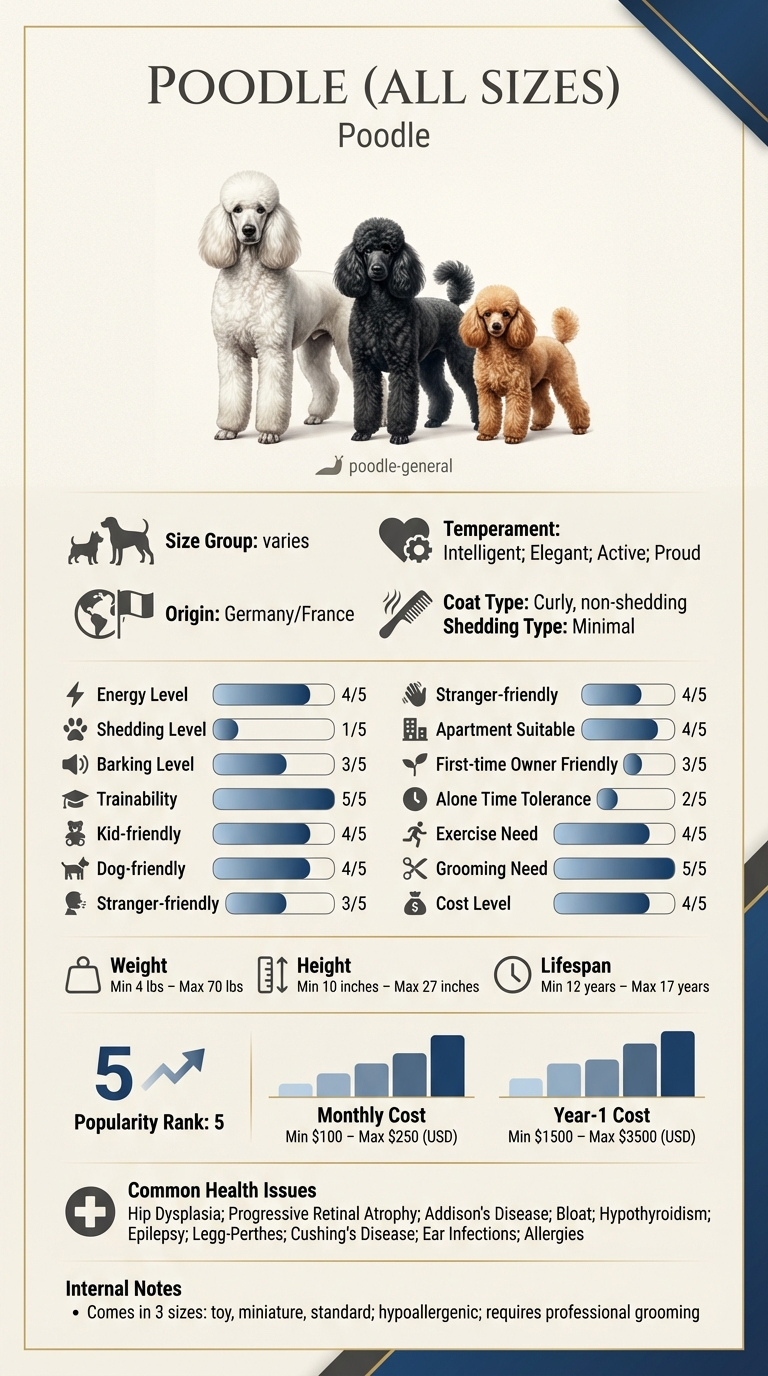
Poodles, regardless of size, are known for their intelligence and strong bond with their owners. This breed thrives on companionship and can become anxious when separated from their family. Their high energy levels and need for mental stimulation also mean they may feel distressed without proper engagement.
Environmental factors play a significant role in separation anxiety. Changes in routine, such as moving to a new home or a sudden change in the owner's schedule, can trigger anxiety. Additionally, if a Poodle has experienced past trauma or frequent separations, they may develop a heightened sensitivity to being alone.
If your Poodle's separation anxiety persists despite your efforts, it may be time to consult a professional trainer. A trainer experienced in behavioral issues can provide tailored strategies to help your dog adjust.
If you notice severe signs of anxiety, such as destructive behavior or excessive barking, consult your vet. They can rule out any underlying health issues and discuss potential medication options if necessary.
Most Poodles (All Sizes) can show improvement in their separation anxiety within 4 to 8 weeks of consistent training and behavior modification.
Success looks like your Poodle feeling more relaxed when you leave, allowing you to go out without excessive barking or destructive behavior.
Avoiding these common mistakes can help you better manage your Poodle's separation anxiety. Here are some behaviors to steer clear of, along with safer alternatives.
Understanding when your Poodle's separation anxiety requires immediate attention is crucial. If your dog exhibits severe symptoms, it’s essential to contact your vet right away. Signs such as excessive barking, destructive behavior, or attempts to escape can indicate a serious problem that may lead to injury or harm.
In contrast, if your Poodle shows mild signs of anxiety, like whining or pacing when you leave, you can often manage these symptoms at home. Implementing a consistent routine and gradual desensitization can help your dog adjust to being alone. Monitoring their behavior and creating a comforting environment can make a big difference.
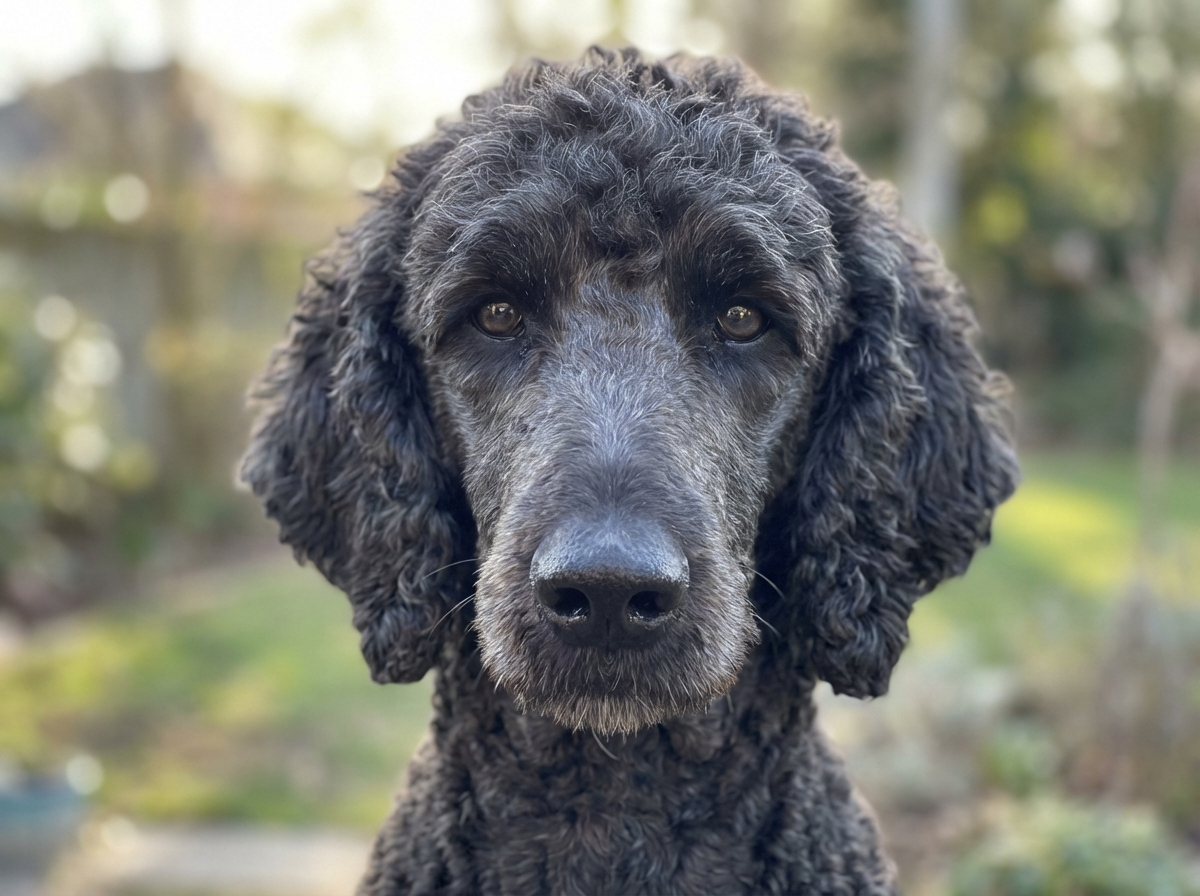
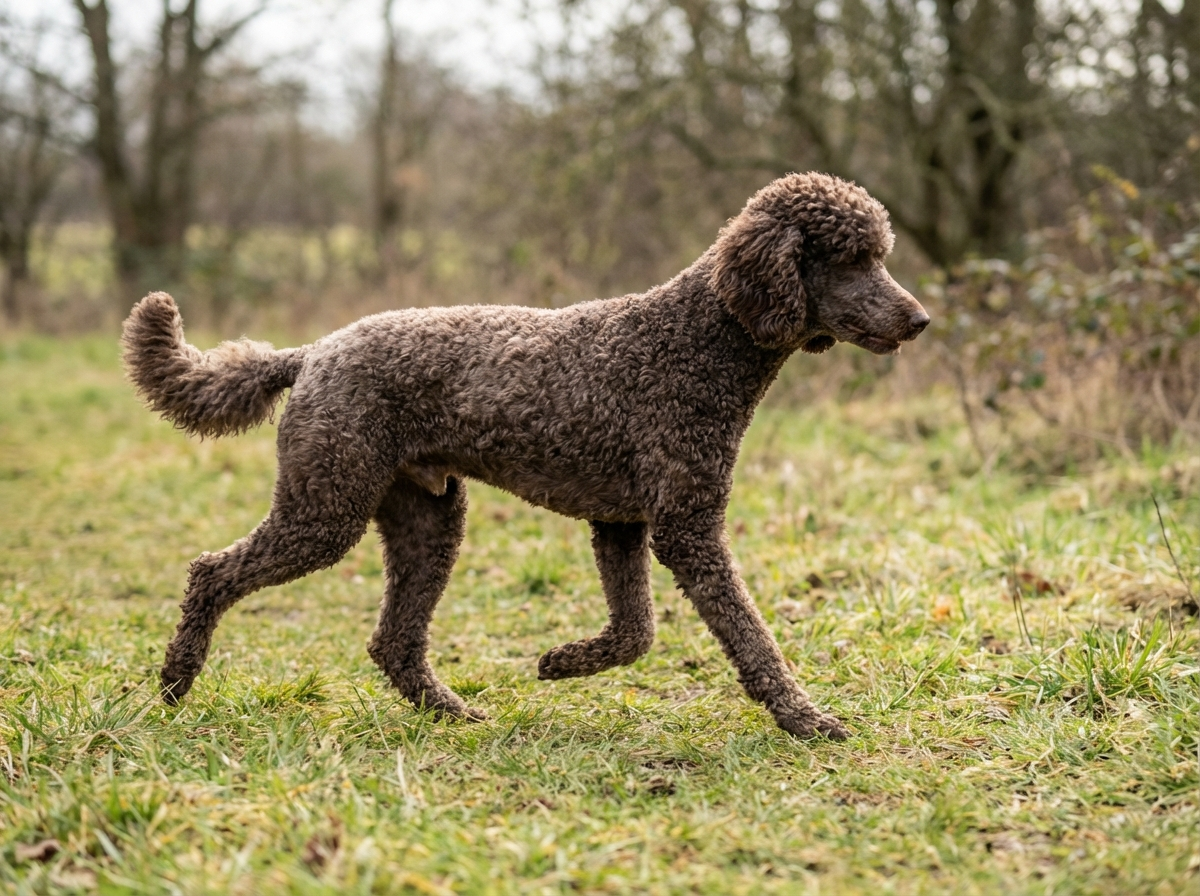
When Sarah adopted Maggie, her Standard Poodle, she quickly noticed Maggie's distress whenever she left the house. Maggie would bark incessantly and chew on furniture, making Sarah worry about her well-being. After researching how to stop Poodle (All Sizes) separation anxiety, Sarah decided to implement a gradual desensitization approach. She started by leaving Maggie alone for just a few minutes at a time and slowly increased the duration. Alongside this, she provided puzzle toys to keep Maggie occupied. Within weeks, Maggie began to feel more comfortable being alone, and their home life became much calmer.
Key takeaway: With patience and a structured training plan, it’s possible to help your Poodle manage separation anxiety.
Poodles are social dogs that thrive on companionship. If they are left alone for long periods, they can become anxious. Factors like previous abandonment, lack of socialization, or changes in routine can intensify their distress.
To help your Poodle, start by gradually increasing the time they spend alone. Create a safe, comfortable space with their favorite toys. Consistent training and positive reinforcement can also help reduce their anxiety.
Techniques like desensitization and counter-conditioning can be effective. Begin with short departures and gradually extend the time away. Reward calm behavior when you return to reinforce their confidence.
Yes, consider using calming sprays, anxiety wraps, or interactive toys to keep your Poodle engaged while you're away. These tools can help reduce their stress levels and provide comfort.
If your Poodle's anxiety leads to destructive behavior, excessive barking, or severe distress, it's time to consult a veterinarian or a dog behaviorist. They can provide tailored strategies and may suggest medication if necessary.
Signs of separation anxiety in a Poodle can include excessive barking, destructive behavior, and attempts to escape. You may also notice your Poodle becoming overly clingy or anxious when you prepare to leave the house.
Yes, older Poodles can develop separation anxiety, especially if their routine changes or if they experience a loss. It's important to monitor their behavior and consult a veterinarian if you notice signs of distress.
To help your Poodle adjust, try leaving them with engaging toys or puzzles to keep their mind occupied. Gradually increase the time you spend away to help them become more comfortable being alone.
If your Poodle's separation anxiety leads to severe destructive behavior or self-harm, it's time to consult a veterinarian. They can help assess the situation and suggest potential treatments or therapies.
Yes, training your Poodle to be more independent is possible with gradual desensitization techniques. Start with short periods of separation and gradually increase the duration as your Poodle becomes more comfortable being alone.
Start by leaving your Poodle alone for short periods and gradually increase the duration. Provide engaging toys and create a cozy space for them to feel secure.
Poodles can typically be left alone for about 4 to 6 hours, but individual tolerance may vary. Longer durations can increase anxiety and stress.
Absolutely! Consistent training focused on positive reinforcement can help your Poodle feel more secure when left alone.
Yes, due to their social nature, Poodles can be prone to separation anxiety, especially if they are not accustomed to being alone.