DogBreedCompass
← Back to breed profile

Understanding Poodle (All Sizes) Patellar Luxation

Poodle (All Sizes) patellar luxation is a common knee issue that can lead to pain and mobility problems.

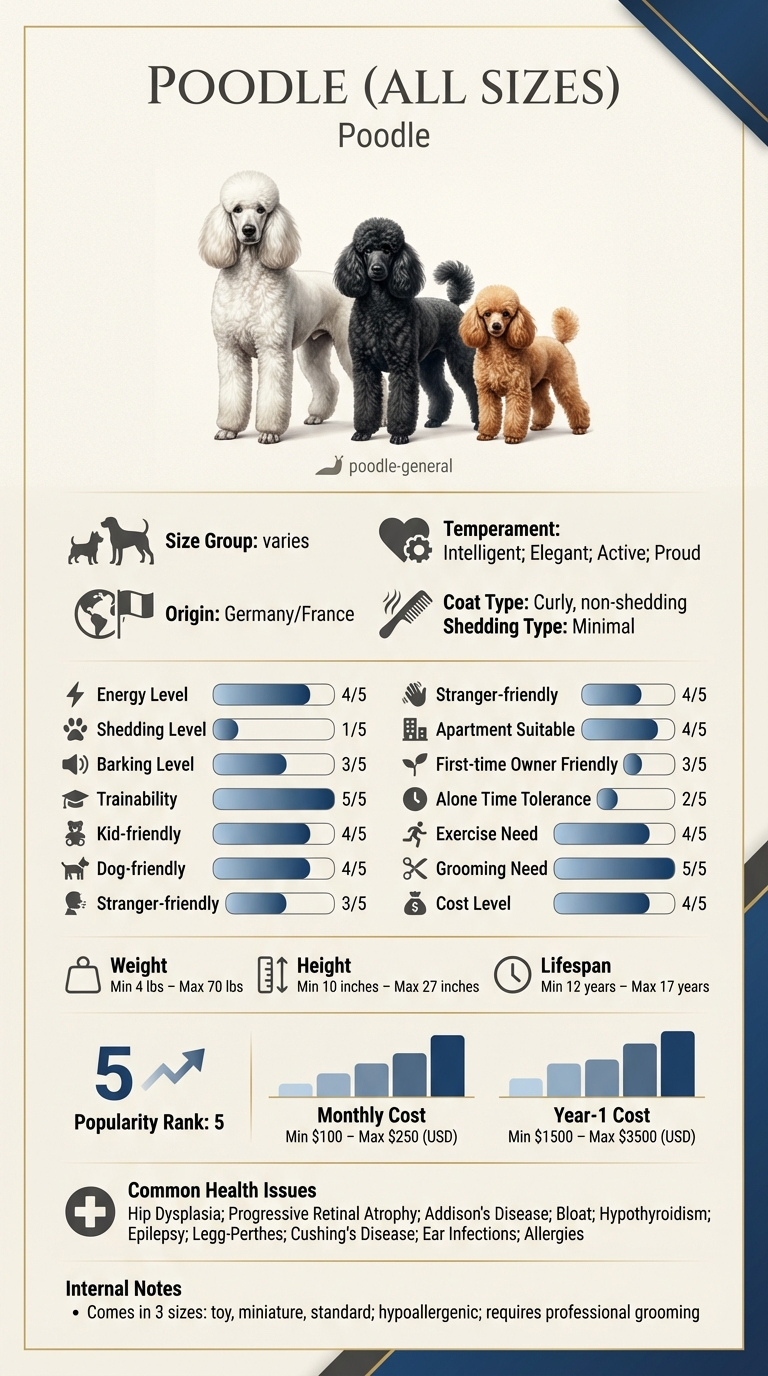
Understanding Poodle (All Sizes) Patellar Luxation infographic

Owners of Poodles, especially those with active lifestyles, may find their dogs struggling with this condition. Busy families or first-time dog owners might not recognize the signs until they affect their pet's daily activities.

Important reminder

This guide is not medical advice. If your dog shows pain, sudden behavior change, or worsening symptoms, consult a licensed veterinarian.

Some links may be affiliate links. We may earn a commission at no extra cost to you. We only suggest products we believe are helpful for dog owners.

What this problem looks like

Poodle (All Sizes) patellar luxation is a common issue where the knee cap dislocates, causing pain and mobility problems. This condition can occur frequently, especially in active and playful Poodles. Owners may notice their dog limping, favoring one leg, or having difficulty jumping and running.

Common triggers

  • High-impact activities like jumping and running
  • Genetic predisposition, especially in smaller sizes
  • Obesity, which can increase stress on the knees
  • Inadequate warm-up before exercise

Patellar luxation is quite common in Poodles, particularly in smaller sizes. Estimates suggest that up to 20% of Poodles may experience this condition at some point in their lives.

Why this happens

Breed factors

Poodles, regardless of size, can be prone to patellar luxation due to their genetic makeup. The structure of their knees may not be strong enough to keep the kneecap in place, especially in active dogs. Additionally, factors like obesity can exacerbate this issue.

Environment factors

Environmental factors such as lack of proper exercise, slippery floors, and inadequate support during play can lead to joint instability. If your Poodle is jumping or running on hard surfaces frequently, this can contribute to knee problems over time.

What you can try

At-home strategies

  • Limit jumping on and off furniture: Create a safe space with ramps or steps to help your Poodle access higher areas without straining their knees.
  • Maintain a healthy weight: Monitor your Poodle's diet to keep them at a healthy weight, which helps reduce pressure on their joints.
  • Provide joint supplements: Talk to your vet about adding glucosamine and chondroitin supplements to support joint health.
  • Create a safe play area: Use rugs or mats to reduce slipping and injuries while your Poodle plays.

When to consider a trainer

If your Poodle is showing signs of anxiety or difficulty following commands, hiring a professional trainer can help address behavioral issues that may contribute to their physical problems. A trainer can also assist in teaching safe play techniques.

When to talk to your vet

If you notice your Poodle limping, favoring one leg, or showing signs of pain, consult your vet immediately. They can assess the severity of the patellar luxation and recommend treatment options, which may include physical therapy or surgery.

Realistic expectations

Addressing Poodle (All Sizes) patellar luxation typically takes several weeks to months, depending on the severity. Consistent training and care can lead to noticeable improvements within a few weeks.

Success means your Poodle can move comfortably without limping or showing signs of pain. You'll notice increased activity levels and improved overall happiness.

Mistakes that make this worse

Avoiding these common mistakes can help improve your Poodle's patellar luxation condition.

  • Ignoring symptoms
  • Over-exercising your Poodle
  • Forgetting to monitor weight
  • Neglecting regular vet visits
  • Using harsh training methods

When Poodle (All Sizes) Patellar Luxation is an Emergency

Patellar luxation can be a serious condition for your Poodle (All Sizes). It's essential to know when to call your vet right away and when you can wait and monitor the situation. Here are the signs to look for:

Understanding Poodle (All Sizes) Patellar Luxation - When Poodle (All Sizes) Patellar Luxation is an Emergency
  • Severe limping or inability to walk on the affected leg
  • Swelling around the knee joint
  • Signs of pain when you touch the leg
  • Sudden onset of lameness without injury
  • Persistent crying or whimpering

When to Watch and Wait

If your Poodle is showing mild symptoms of patellar luxation, you may not need to rush to the vet. Here are some scenarios where monitoring is appropriate:

Understanding Poodle (All Sizes) Patellar Luxation - When to Watch and Wait
  • Occasional limping that resolves quickly
  • Slight discomfort after play or exercise
  • Intermittent clicking sound in the knee without swelling

Sarah's Journey with Bella's Patellar Luxation

Sarah, a busy nurse in Chicago, noticed her Poodle, Bella, limping after walks. After a vet visit, she learned Bella had patellar luxation. Feeling overwhelmed, Sarah decided to take action. She began a gentle training routine focused on strengthening Bella's legs, combined with regular vet check-ups. Over the next few months, Bella's limping decreased significantly, and she became more active, even playing with kids in the park again.

Key takeaway: Patellar luxation can be managed effectively with proper training and care, making a big difference in your dog's quality of life.
Frequently asked questions

Why does my Poodle (All Sizes) have patellar luxation?

Patellar luxation in Poodles can occur due to genetics, injury, or developmental issues. It's often seen in smaller breeds and may be influenced by how the knee joint and surrounding tissues are formed. If your Poodle is showing signs of discomfort or limping, a vet visit is essential.

How can I stop Poodle (All Sizes) patellar luxation?

Stopping patellar luxation involves a mix of lifestyle changes and medical intervention. Regular, low-impact exercise can help maintain muscle strength around the knee. In severe cases, surgical options may be necessary, so consult your vet for tailored advice.

What are the signs of patellar luxation in Poodles?

Signs include limping, skipping or holding up a leg, and difficulty in jumping or climbing stairs. You may also notice your Poodle suddenly straightening its leg after a period of limping. If these symptoms appear, it's important to seek veterinary advice.

Can Poodle (All Sizes) patellar luxation be treated at home?

While minor cases of patellar luxation may improve with rest and controlled exercise, it's crucial to get a vet's opinion before starting any home treatment. Physical therapy and weight management can also help, but professional guidance is key.

Is patellar luxation common in Poodles?

Yes, patellar luxation is relatively common in Poodles, especially smaller sizes. It can be hereditary, so if you’re considering getting a Poodle, ask breeders about their health testing practices. Early detection can significantly improve outcomes.

What are the signs of patellar luxation in my Poodle (All Sizes)?

Common signs include limping, difficulty jumping, or sudden changes in their gait. You might also notice your Poodle seems to skip or hold their leg up occasionally. If you see these signs, it’s best to consult your vet.

Can older Poodles develop patellar luxation?

Yes, older Poodles can develop patellar luxation due to wear and tear on their joints. This can make existing conditions worse. Regular vet check-ups can help catch issues early.

What should I do if my Poodle (All Sizes) is diagnosed with patellar luxation?

Treatment can vary from weight management and physical therapy to surgery in severe cases. Your vet will recommend a tailored plan based on your dog's specific condition.

How can I prevent patellar luxation in my Poodle (All Sizes)?

Maintaining a healthy weight, providing regular exercise, and avoiding high-impact activities can help. Consistent training to strengthen their muscles is also beneficial.

Is patellar luxation painful for my Poodle (All Sizes)?

Yes, patellar luxation can be painful, especially when the kneecap dislocates. If you notice signs of discomfort or changes in behavior, contact your vet for an evaluation.

Quick answers

View more answers
Behavior

What are quick tips for Poodle (All Sizes) patellar luxation?

Keep your Poodle at a healthy weight to reduce stress on the joints. Regular, low-impact exercises like walking can also help. Always consult your vet for tailored advice and treatment options.

Costs

How much does it cost to treat Poodle (All Sizes) patellar luxation?

Treatment costs can vary widely, ranging from $1,500 to $3,500 depending on the severity and whether surgery is needed. Regular vet check-ups will add to the annual cost, so budget accordingly.

Health

What should I do if my Poodle (All Sizes) shows signs of patellar luxation?

If your Poodle shows signs like limping or reluctance to move, schedule a vet appointment as soon as possible. Early intervention can prevent worsening of the condition.

Related DogBreedCompass guides

  • Common health issues in PoodlesLearn more about common health issues that could affect your Poodle.
  • Poodle (All Sizes) behavior problemsFind training techniques specifically for managing behavior problems in Poodles.
  • Poodle (All Sizes) patellar luxation trainingGet tips on training your Poodle to help prevent patellar luxation.
  • Poodle (All Sizes) separation anxiety guideDiscover strategies for helping your Poodle cope with separation anxiety.
  • Poodle (All Sizes) cost breakdownUnderstand the costs associated with owning a Poodle, including health care.

Related guides