Behavior
What are quick tips for managing Poodle (All Sizes) neurologic disease?
Stay in close contact with your vet, provide a stable home environment, and ensure regular exercise. Mental stimulation is key to keeping your Poodle engaged.

Quick answer
What are quick tips for managing Poodle (All Sizes) neurologic disease?
Stay in close contact with your vet, provide a stable home environment, and ensure regular exercise. Mental stimulation is key to keeping your Poodle engaged.
Poodle (All Sizes) neurologic disease can be a serious concern for dog owners. It poses risks that can affect your pet's quality of life.
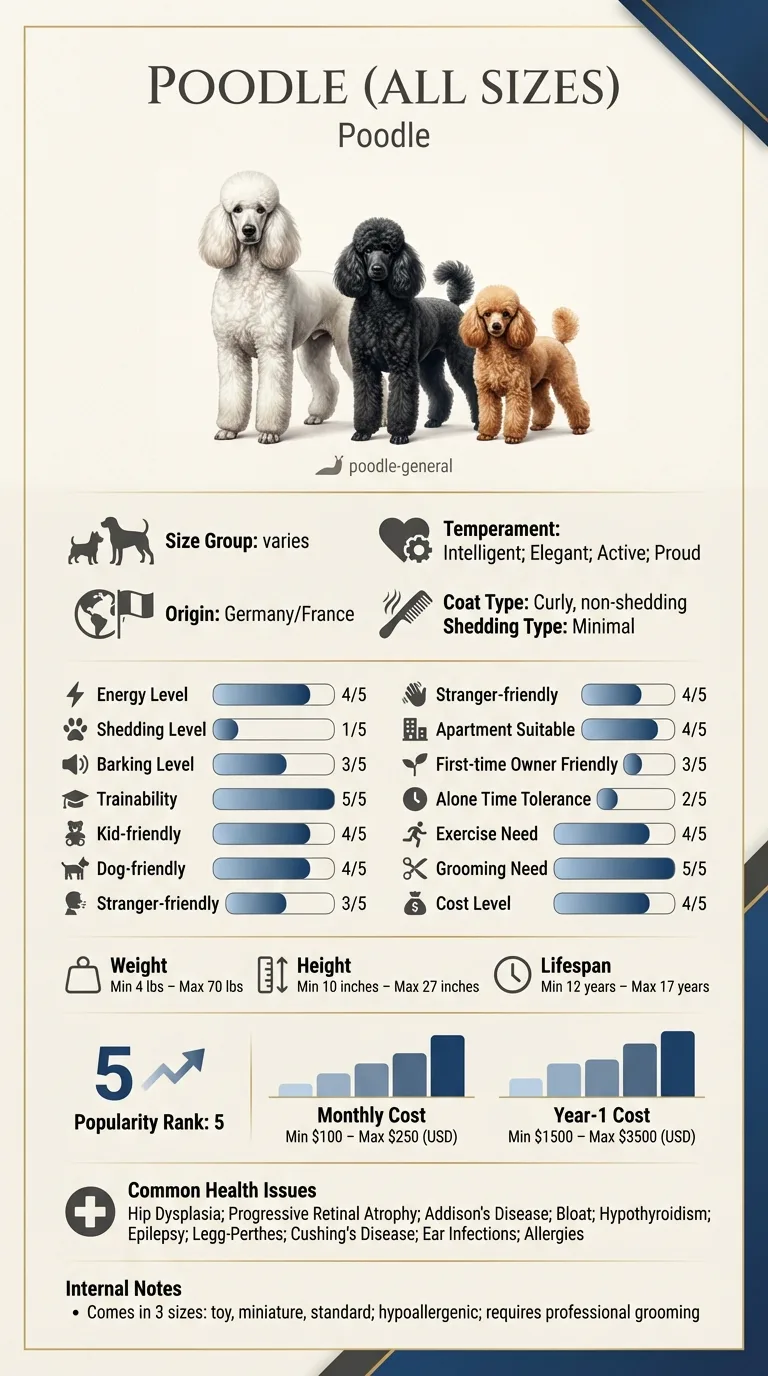
Typical owners facing this problem include families with Poodles, seniors who love their loyal companions, and first-time dog parents who may not be prepared for health challenges.
This guide is not medical advice. If your dog shows pain, sudden behavior change, or worsening symptoms, consult a licensed veterinarian.
Some links may be affiliate links. We may earn a commission at no extra cost to you. We only suggest products we believe are helpful for dog owners.
We research and check what we publish, but we do not warrant that any figure, date, price, or statement is accurate, complete, or current, and we accept no liability for any loss, cost, injury, or other harm arising from the use of this site. Use it as one reference among several. You remain responsible for your own decisions and for your dog's care - confirm anything that matters with a licensed veterinarian or another qualified professional before you act on it. Full disclaimer.
Check this first
Recognizing when a Poodle (All Sizes) is experiencing neurologic issues can be challenging, but some signs clearly indicate an emergency. If your dog shows sudden changes in behavior, such as confusion, seizures, or inability to walk, it’s critical to call your vet immediately. These symptoms can signal serious conditions that require urgent care.
If any of these apply, call your vet or an emergency clinic now. The rest of this page is for the cases that are not an emergency.
Poodle (All Sizes) neurologic disease can show up in various ways. You might notice unusual behavior, weakness, or even seizures. These symptoms can be alarming and are often triggered by stress, genetic factors, or underlying health issues.
Neurologic disease is relatively common in Poodles, with studies suggesting they have a 291% higher risk compared to other breeds. Early detection and management are crucial for their well-being.
Poodles are intelligent and sensitive dogs, which can make them more prone to certain neurologic issues. Their genetic makeup may predispose them to conditions like epilepsy and other neurological disorders. Additionally, factors like inbreeding can increase the likelihood of these health issues.
Environmental factors can also contribute to neurologic diseases in Poodles. Stressful living conditions, lack of mental stimulation, or improper nutrition may exacerbate health problems. Exposure to toxins or infections can lead to neurological symptoms as well.
If you notice persistent symptoms like seizures, unusual behavior, or changes in mobility, it's essential to consult your vet. A veterinarian can perform necessary tests to diagnose underlying conditions. Early intervention is crucial for managing health issues effectively.
Many dog owners unintentionally make neurologic issues in Poodles worse. Here are some common mistakes to avoid and safer alternatives to consider.
Start here: Poodle (All Sizes) Genetic Disorders: What to Screen For
See all Poodle General health problems, which breeds are prone to neurologic disease, or the full Poodle General breed guide for temperament, exercise needs and ownership costs.
Managing neurologic disease in Poodles typically takes several weeks to months of consistent effort. Owners should anticipate regular vet visits, care routine, and adjustments to care routines.
Success means seeing gradual improvement in your Poodle's mobility and behavior, along with a stable treatment plan that enhances their quality of life.
Not every issue means an immediate trip to the vet. If your Poodle (All Sizes) has mild symptoms like occasional disorientation or slight coordination problems, monitoring at home might be appropriate. Keep a close eye on any changes and maintain a calm environment to reduce stress for your dog.


Emma, a busy nurse in Seattle, noticed her Poodle, Benny, was having trouble with coordination and seemed anxious. After a vet visit, she learned Benny had a neurologic disease affecting his mobility. Emma dedicated time to work with a veterinarian and a dog trainer to create a tailored exercise and training program, focusing on calming techniques and gradual physical activities. Over time, Benny became more stable and less anxious, helping Emma feel more confident in managing his condition.
Key takeaway: With patience and a proactive approach, you can improve your Poodle's life quality despite neurologic disease.
Poodles can be prone to neurologic diseases due to genetic factors, age, or underlying health issues. Regular vet check-ups can help identify problems early. If you notice unusual behavior or symptoms, consult your veterinarian for guidance.
Supporting your Poodle involves a mix of medical treatment and lifestyle adjustments. Follow your vet's advice on medications, and provide a calm, stable environment. Regular exercise and mental stimulation can also help maintain their quality of life.
Common signs include changes in behavior, difficulty walking, or seizures. You might also notice disorientation or changes in appetite. Keep an eye on any unusual symptoms and report them to your vet.
While some neurologic diseases can be managed effectively, many are chronic and require ongoing care. Consult with your vet to understand your Poodle's specific condition and treatment options. Early detection can significantly improve outcomes.
Treatment varies based on the specific condition but may include medication, dietary changes, or physical therapy. Your veterinarian will develop a treatment plan tailored to your Poodle's needs.
Preventive care, including regular vet visits, a balanced diet, and proper exercise, can help reduce the risk of neurologic diseases. Additionally, being aware of hereditary issues in Poodles can guide your breeding choices if you're considering getting a puppy.
Signs of neurologic disease in Poodles may include unusual behavior, weakness, seizures, or difficulty walking. If you notice any of these symptoms, it's essential to consult your vet for a proper diagnosis.
While some aspects of neurologic disease may be managed at home with medication and lifestyle adjustments, professional veterinary guidance is crucial. Your vet can recommend the best approach to ensure your Poodle's comfort and health.
Certain neurologic diseases can have hereditary components in Poodles. It's important to research and choose a reputable breeder who screens for health issues to reduce the risk of inherited conditions.
Symptoms of neurologic disease can appear at various ages, but many conditions become noticeable in middle to older age. Regular vet check-ups can help catch these issues early.
Neurologic disease can impact your Poodle's quality of life depending on the severity and type of condition. Working with your vet to develop a treatment plan can help maintain your dog's well-being and comfort.
Stay in close contact with your vet, provide a stable home environment, and ensure regular exercise. Mental stimulation is key to keeping your Poodle engaged.
Costs can vary widely based on treatment needs, ranging from $100 to $300 monthly for medications and vet visits. Always budget for unexpected expenses.
Yes, positive reinforcement training can be very effective. Focus on short, consistent sessions to help your Poodle learn without becoming overwhelmed.
A one-page prep sheet for this condition: the signs, the questions to ask, what to get priced. Unlocks here.
You get: Vet visit prep sheet
No spam. One-click unsubscribe. See our privacy policy.
Preview page 1 before you decide.