Behavior
What are quick tips for managing Poodle (All Sizes) myotonia congenita?
Provide regular, gentle exercise and avoid strenuous activities to help manage myotonia congenita symptoms.

Quick answer
What are quick tips for managing Poodle (All Sizes) myotonia congenita?
Provide regular, gentle exercise and avoid strenuous activities to help manage myotonia congenita symptoms.
Myotonia congenita is a condition that causes muscle stiffness in Poodles of all sizes. It can affect your dog’s mobility and quality of life. (Poodle (All Sizes) myotonia congenita)
Owners of Poodles with myotonia congenita often include first-time dog parents and those unfamiliar with this specific health issue. They may notice their dog having difficulty with movement, leading to concerns about exercise and play.
This guide is not medical advice. If your dog shows pain, sudden behavior change, or worsening symptoms, consult a licensed veterinarian.
Some links may be affiliate links. We may earn a commission at no extra cost to you. We only suggest products we believe are helpful for dog owners.
We research and check what we publish, but we do not warrant that any figure, date, price, or statement is accurate, complete, or current, and we accept no liability for any loss, cost, injury, or other harm arising from the use of this site. Use it as one reference among several. You remain responsible for your own decisions and for your dog's care - confirm anything that matters with a licensed veterinarian or another qualified professional before you act on it. Full disclaimer.
Check this first
If your Poodle experiences severe muscle stiffness accompanied by inability to move, collapse, or difficulty breathing, you should call your vet immediately. These signs can indicate a life-threatening situation that requires urgent medical intervention.
In contrast, if your dog shows mild stiffness after exercise but can still move around and play normally, you can monitor the situation. Keep an eye on their activity levels and comfort. A plan that includes rest and gentle stretching can often help in less severe cases.
Always trust your instincts. If anything feels off about your Poodle's condition, it’s better to err on the side of caution and consult a veterinarian. They can provide proper guidance tailored to your dog's specific needs.
If any of these apply, call your vet or an emergency clinic now. The rest of this page is for the cases that are not an emergency.
Poodle (All Sizes) myotonia congenita is a muscle stiffness condition that affects daily movement. Dogs may appear stiff or have difficulty getting up after resting. This can be frustrating for both the pet and the owner, especially when engaging in play or exercise.
Myotonia congenita is relatively rare in Poodles but can occur. It's more commonly seen in specific breeds, but Poodles can still be affected, particularly if there is a genetic predisposition. Being aware of this condition helps in early detection and management.
Myotonia congenita in Poodles is a genetic condition that affects muscle function. This breed may inherit the tendency for muscle stiffness, leading to difficulty in movement. As a result, affected dogs may struggle with muscle relaxation after exertion.
Environmental factors can also influence myotonia congenita. Stressful situations or lack of proper exercise may exacerbate the symptoms. A Poodle living in a high-stress environment may show more pronounced muscle stiffness.
If your Poodle shows severe stiffness or pain, it’s essential to talk to your vet. They can provide a thorough examination and determine if any underlying health issues need to be addressed. Regular check-ups can help manage the condition effectively.
Avoiding these common mistakes can help you manage your Poodle's myotonia congenita more effectively.
Start here: Poodle (All Sizes) Genetic Disorders: What to Screen For
See all Poodle General health problems, which breeds are prone to myotonia congenita, or the full Poodle General breed guide for temperament, exercise needs and ownership costs.
You can expect to see some improvement in your Poodle's myotonia congenita within 4 to 8 weeks of consistent care and management.
Success means your Poodle will experience reduced muscle stiffness and have an easier time with movement, allowing them to enjoy walks and playtime without discomfort.
Emma, a first-time dog owner in a busy city, noticed that her Poodle, Max, seemed stiff and slow to get moving after resting. Concerned, she sought advice and learned about myotonia congenita. Emma started a gentle exercise routine and worked with a trainer to help Max feel more comfortable. After a few weeks, Max was more active and playful, which delighted Emma.
Key takeaway: With patience and the right approach, managing myotonia congenita can significantly improve your Poodle's quality of life.
Poodle (All Sizes) myotonia congenita is a condition that causes muscle stiffness and difficulty relaxing after exertion. This can lead to a noticeable delay in movement and may affect your dog's ability to play or run freely.
To help your Poodle manage myotonia congenita, engage in regular, controlled exercise. Avoid intense activities that may lead to muscle fatigue, and consider physical therapy or massage to ease stiffness.
Training should focus on positive reinforcement and gentle commands. Short training sessions with frequent breaks can help your Poodle learn without becoming overly fatigued.
While there is no cure for myotonia congenita, treatment options can help manage symptoms. Your vet may recommend specific medications or lifestyle adjustments to improve your Poodle's comfort and mobility.
Symptoms of myotonia congenita in Poodles include muscle stiffness, difficulty relaxing their muscles after activity, and occasional spasms. These signs can vary in severity, so it's important to observe your dog's behavior closely.
Yes, myotonia congenita is often a hereditary condition in Poodles. If you're considering getting a Poodle, it's wise to ask breeders about their health screening practices to reduce the risk of this condition.
If your Poodle shows signs of muscle stiffness or has difficulty moving, it's time to consult your vet. Early diagnosis and appropriate management can greatly improve your dog's quality of life.
To support a Poodle with myotonia congenita, consider adjusting their exercise routine to include low-impact activities. Keeping their environment stress-free and ensuring they have a comfortable resting place can also be beneficial.
Provide regular, gentle exercise and avoid strenuous activities to help manage myotonia congenita symptoms.
Myotonia congenita is relatively rare but can occur in Poodles. Genetic factors often play a role.
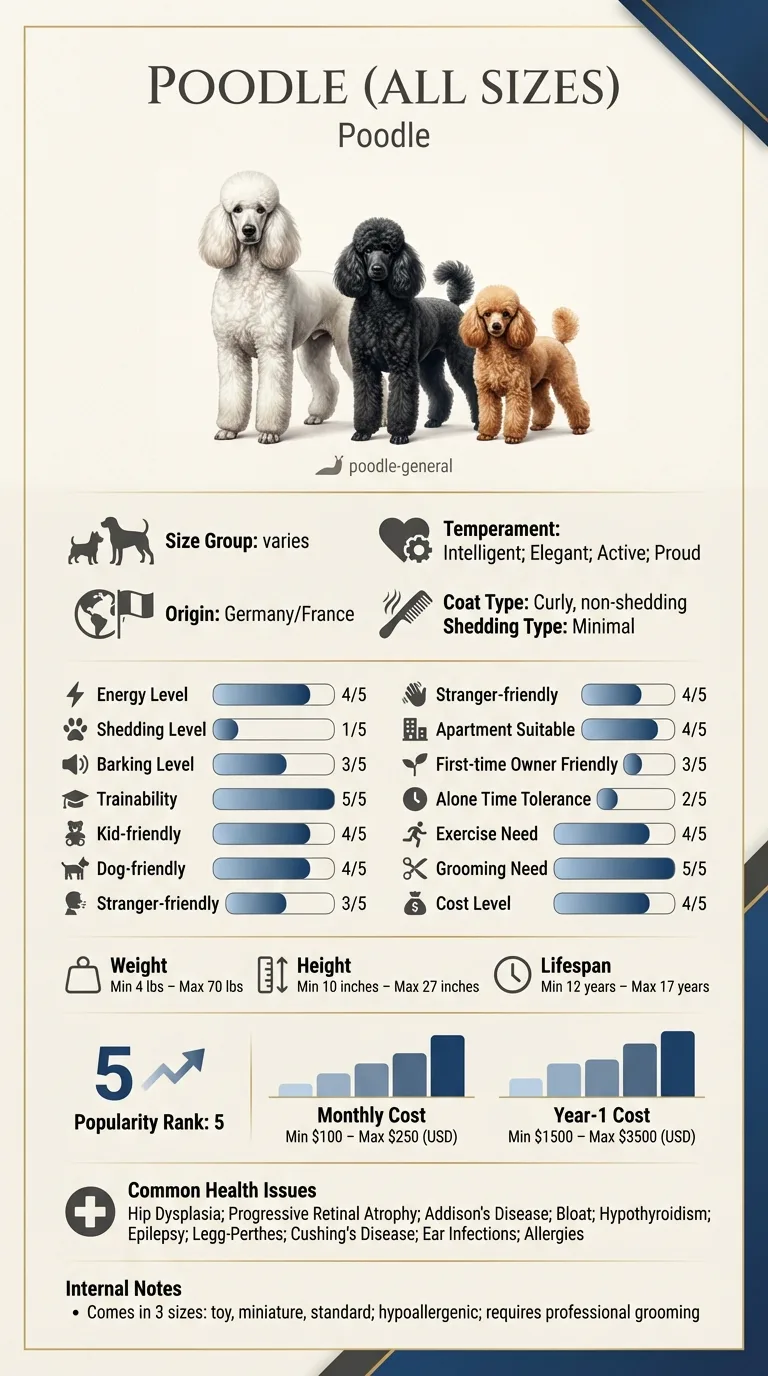
Monthly costs for a Poodle typically range from $100 to $250, depending on their health needs and care requirements.
Use positive reinforcement and keep training sessions short to avoid fatigue for your Poodle.
A one-page prep sheet for this condition: the signs, the questions to ask, what to get priced. Unlocks here.
You get: Vet visit prep sheet
No spam. One-click unsubscribe. See our privacy policy.
See a sample page before you decide.
Early access list
The free prep sheet covers the same-day warning signs, a symptom log and the questions to ask. We are considering a fuller kit that adds a cost worksheet for the usual tests and treatments (US price ranges with their sources) and a plain-English guide to ways of covering the bill. It is not built yet; this list tells us whether it is worth building.
One email, no spam, unsubscribe anytime. Information only, not veterinary advice.