Behavior
What are quick tips for handling Poodle (All Sizes) EIC?
Monitor your Poodle's activity and reduce high-intensity exercise, especially in warm weather. Provide plenty of water and cool down your dog after play.

Quick answer
What are quick tips for handling Poodle (All Sizes) EIC?
Monitor your Poodle's activity and reduce high-intensity exercise, especially in warm weather. Provide plenty of water and cool down your dog after play.
Poodle (All Sizes) exercise-induced collapse (EIC) can be a scary condition that leads to sudden collapse during or after exercise. Understanding it is crucial for your dog's safety.
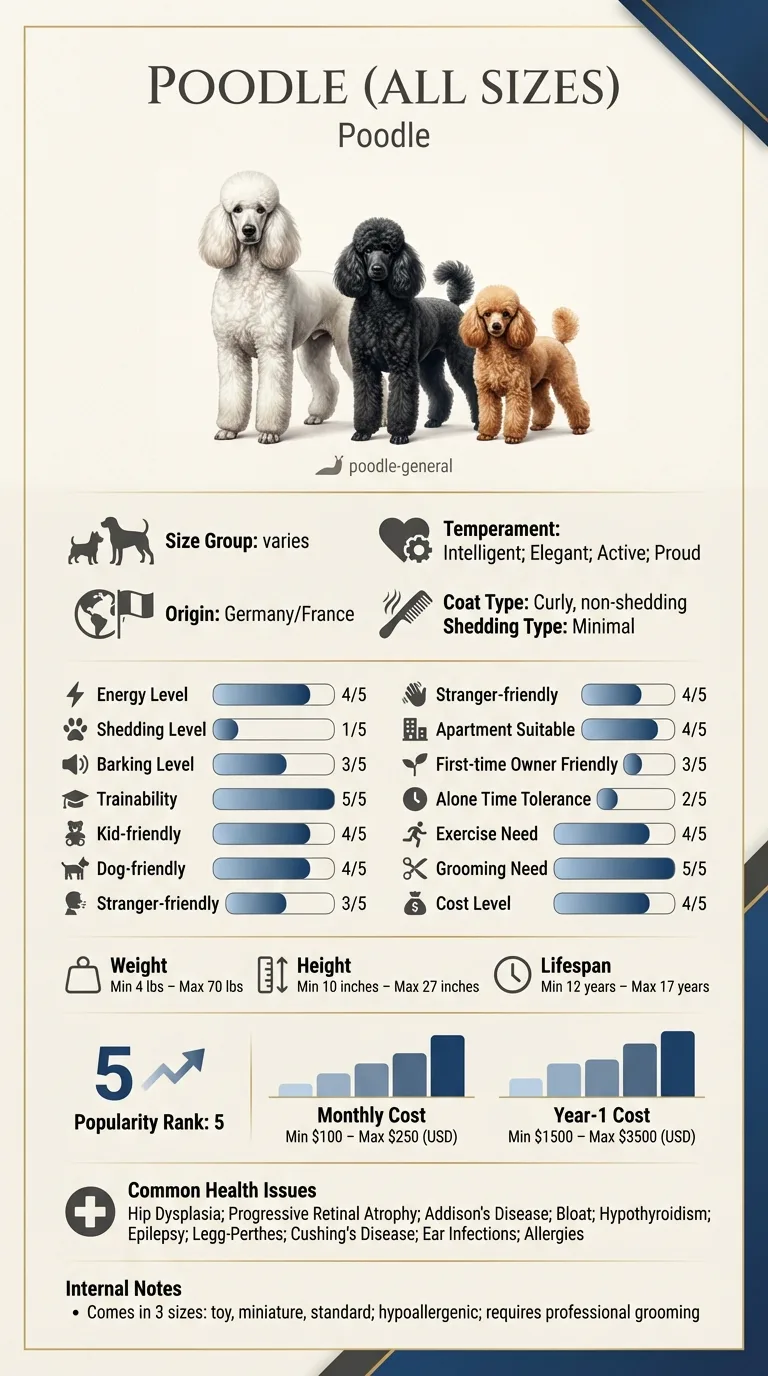
Poodle owners, especially those with high-energy dogs, often struggle with EIC. This includes families who enjoy outdoor activities and want their pets to join in, as well as first-time dog owners who may not recognize the signs early.
This guide is not medical advice. If your dog shows pain, sudden behavior change, or worsening symptoms, consult a licensed veterinarian.
Some links may be affiliate links. We may earn a commission at no extra cost to you. We only suggest products we believe are helpful for dog owners.
We research and check what we publish, but we do not warrant that any figure, date, price, or statement is accurate, complete, or current, and we accept no liability for any loss, cost, injury, or other harm arising from the use of this site. Use it as one reference among several. You remain responsible for your own decisions and for your dog's care - confirm anything that matters with a licensed veterinarian or another qualified professional before you act on it. Full disclaimer.
Check this first
Exercise-Induced Collapse (EIC) can pose serious risks, so knowing when to act is crucial. If your Poodle (All Sizes) suddenly collapses during or after exercise, this is a red flag. Other emergency signs include difficulty breathing, excessive panting, unresponsive behavior, or if your dog seems disoriented. In these cases, you should call your vet immediately.
On the other hand, if your Poodle experiences mild fatigue or a slight decrease in activity after play, you can typically monitor their condition. Give them water and allow them to rest in a cool area. However, you should still keep an eye on them for any worsening symptoms. If the fatigue persists or if your dog collapses again, then it’s time to get professional help.
Remember, while some symptoms may seem minor, EIC can escalate quickly, so erring on the side of caution is always best. Keeping track of your pet's activity levels and being aware of their usual energy can help you make informed decisions. If you’re ever unsure, don’t hesitate to reach out to your vet.
If any of these apply, call your vet or an emergency clinic now. The rest of this page is for the cases that are not an emergency.
Poodle (All Sizes) exercise-induced collapse (EIC) is a serious condition that can cause your dog to suddenly collapse during or after intense exercise. This can be alarming for owners, as it often occurs without warning. While EIC is more common in certain breeds, Poodles can also experience this issue, especially those with higher energy levels who engage in vigorous activities.
EIC is relatively rare but can occur in Poodles, particularly in those who are highly active. It's essential for owners to be aware of this condition, especially if their Poodle shows signs of unusual fatigue or collapses during exercise. Monitoring your Poodle closely during playtime can help catch any potential issues early.
Poodles, regardless of size, can be predisposed to exercise-induced collapse (EIC) due to their genetic makeup. This condition can occur during or after intense exercise, especially in younger dogs. It's linked to their high energy levels and physical activity, which can trigger this alarming response.
Environmental factors can also contribute to EIC. Heat, humidity, and overexertion can increase the likelihood of collapse. Additionally, if your Poodle is not gradually conditioned to exercise, they may be more susceptible to this condition.
If the episodes of collapse become more frequent or severe, it's important to consult your veterinarian. They can rule out other health issues and provide guidance on managing your Poodle's exercise safely.
Avoiding these common mistakes can help your Poodle (All Sizes) manage exercise-induced collapse (EIC) better. Here are some behaviors to steer clear of.
Start here: Poodle (All Sizes) Genetic Disorders: What to Screen For
See all Poodle General health problems, which breeds are prone to exercise induced collapse eic, or the full Poodle General breed guide for temperament, exercise needs and ownership costs.
It may take several weeks to months to see improvement in your Poodle's exercise-induced collapse (EIC) symptoms. Consistent care and monitoring are key.
Success means your Poodle can engage in exercise without collapsing or showing severe fatigue, allowing for enjoyable walks and playtime.
Emily, a busy nurse in Seattle, adopted Charlie, a spirited Poodle. During their morning runs, she noticed Charlie collapsing unexpectedly after just a few minutes of activity. Concerned about his health, she researched and learned about exercise-induced collapse (EIC). With the help of a vet, Emily adjusted Charlie's exercise routine to include shorter, more frequent walks instead of long runs. They also incorporated mental stimulation games to keep him active without over-exerting him. Over time, Charlie became more resilient and could enjoy longer play sessions without collapsing.
Key takeaway: Adjusting exercise routines and understanding your Poodle's limits can help manage EIC effectively.
Poodle (All Sizes) exercise-induced collapse (EIC) is a condition where dogs suddenly collapse during or after intense exercise. It typically occurs in young, active Poodles and can be triggered by overheating or excessive exertion.
Watch for signs like sudden weakness, collapse, or loss of coordination after vigorous exercise. If your Poodle shows these symptoms, it's crucial to stop the activity immediately and cool them down.
To manage EIC, consider reducing the intensity and duration of your Poodle's exercise sessions. Regular, moderate activity is better than intense bursts, and always ensure your dog is well-hydrated and cool.
While there is no specific training to eliminate EIC, you can train your Poodle to recognize their limits. Consistent training that focuses on balanced exercise can help mitigate the risks of collapse.
Prevention involves careful management of exercise routines. Avoid high-intensity activities in hot weather and always monitor your Poodle during play to catch any warning signs early.
Yes, it's important to consult a vet if you suspect your Poodle has EIC. A vet can provide guidance on managing the condition and suggest a suitable exercise plan tailored to your dog's needs.
Signs of EIC often include sudden weakness, staggering, or even complete collapse after intense exercise. Poodles may also appear disoriented or unable to stand, particularly during warmer weather or after strenuous play. If you notice these symptoms, it's important to stop activity immediately and consult your vet.
Exercise-induced collapse (EIC) can affect Poodles of all sizes, but it may be more frequently reported in larger ones. However, any Poodle, regardless of size, can experience EIC, especially during high-energy activities. It's crucial for all Poodle owners to be aware of the condition, regardless of their dog's size.
For older Poodles, it's essential to manage their exercise routine carefully. Opt for shorter, low-intensity walks instead of vigorous play sessions. Always monitor your dog closely during exercise and consult your vet for tailored advice on ensuring their safety and well-being.
If your Poodle shows signs of exercise-induced collapse (EIC), it's best to consult a vet as soon as possible. Even if the symptoms seem to resolve quickly, a vet can provide guidance on managing the condition and preventing future episodes. Regular check-ups can also help catch any underlying health issues.
While EIC cannot be cured, it can often be managed through careful exercise planning. Avoid high-intensity activities, especially in hot weather, and ensure your Poodle has plenty of rest. Training them to recognize their limits can also help, along with consulting a vet for personalized strategies.
Monitor your Poodle's activity and reduce high-intensity exercise, especially in warm weather. Provide plenty of water and cool down your dog after play.
If your Poodle collapses after vigorous exercise or shows signs of weakness, they may be at risk for EIC. Consult your vet for a proper evaluation.
Avoid long runs or high-energy play sessions, especially in hot weather. Focus on shorter, controlled exercises instead.
Symptoms include sudden weakness, lethargy, or collapse after exercise. If you notice these, seek veterinary advice immediately.
A one-page prep sheet for this condition: the signs, the questions to ask, what to get priced. Unlocks here.
You get: Vet visit prep sheet
No spam. One-click unsubscribe. See our privacy policy.
See a sample page before you decide.
Early access list
The free prep sheet covers the same-day warning signs, a symptom log and the questions to ask. We are considering a fuller kit that adds a cost worksheet for the usual tests and treatments (US price ranges with their sources) and a plain-English guide to ways of covering the bill. It is not built yet; this list tells us whether it is worth building.
One email, no spam, unsubscribe anytime. Information only, not veterinary advice.