Behavior
How to stop Pomeranian behavioral issues?
To stop behavioral issues, implement consistent training and socialization early. Use positive reinforcement to encourage good behavior.

Quick answer
How to stop Pomeranian behavioral issues?
To stop behavioral issues, implement consistent training and socialization early. Use positive reinforcement to encourage good behavior.
Choosing between a Pomeranian purebred and a mixed breed can be tough. It’s essential to understand the potential advantages and challenges of each.
First-time dog owners or those unfamiliar with breed specifics often struggle with this decision. Families looking for a dog that fits their lifestyle may also find it challenging to choose between a purebred Pomeranian and a mixed breed.
This guide is not medical advice. If your dog shows pain, sudden behavior change, or worsening symptoms, consult a licensed veterinarian.
Some links may be affiliate links. We may earn a commission at no extra cost to you. We only suggest products we believe are helpful for dog owners.
We research and check what we publish, but we do not warrant that any figure, date, price, or statement is accurate, complete, or current, and we accept no liability for any loss, cost, injury, or other harm arising from the use of this site. Use it as one reference among several. You remain responsible for your own decisions and for your dog's care - confirm anything that matters with a licensed veterinarian or another qualified professional before you act on it. Full disclaimer.
Check this first
Emergency signs include sudden changes in behavior, such as aggression, excessive barking, or signs of distress. If your Pomeranian shows signs of severe anxiety, like trembling or hiding, this can be a cause for concern. Additionally, if they refuse food or water for more than 24 hours, that’s a red flag.
On the other hand, mild anxiety can often be managed at home. If your Pomeranian is simply more vocal than usual or seems slightly more anxious during storms, you can try calming techniques. Monitoring their behavior and keeping a consistent routine can also help.
When in doubt, trust your instincts as a pet owner. If you’re worried about your Pomeranian's well-being, it’s better to err on the side of caution and consult your vet.
If any of these apply, call your vet or an emergency clinic now. The rest of this page is for the cases that are not an emergency.
When deciding between a Pomeranian purebred and mixed breed, there are unique challenges. Owners may notice behavioral issues, health concerns, or even anxiety stemming from breed traits. This can lead to daily struggles, such as excessive barking or difficulty with training.
Many Pomeranians, whether purebred or mixed, experience these issues. It's not uncommon for owners to face challenges, especially if they aren't prepared for the breed's energetic and sometimes anxious nature.
Pomeranians, whether purebred or mixed, have specific traits that can influence their behavior. Purebreds may be more predictable in temperament and health, but they can also inherit breed-specific issues, such as anxiety or aggression. Mixed breeds may show a blend of behaviors from both parent breeds, which can create unique challenges.
The environment also plays a big role in a Pomeranian's behavior. Factors like a stressful household, lack of socialization, or insufficient exercise can lead to anxiety or behavioral issues. A noisy, chaotic home may exacerbate a Pomeranian's natural tendency to bark, regardless of being purebred or mixed.
If you notice sudden changes in behavior, such as increased anxiety or aggression, it may be time to consult a vet. They can check for underlying health issues that might be affecting your Pomeranian's behavior.
Avoiding these common mistakes can help you better manage your Pomeranian's behavior, whether it’s related to being a purebred or mixed breed. Here are some key pitfalls to watch out for.
Start here: Pomeranian Most Common Genetic Disorders: What to Screen For
See all Pomeranian health problems, which breeds are prone to purebred vs mixed breeds, or the full Pomeranian breed guide for temperament, exercise needs and ownership costs.
Expect to see improvements in behavior within 4 to 6 months, with consistent care under your vet's plan.
Success means your Pomeranian can engage in positive behaviors, respond to commands, and show reduced anxiety or aggression towards other dogs.
Jenna, a busy nurse in San Diego, adopted Max, a Pomeranian. Initially, Max exhibited signs of anxiety and aggression towards other dogs, making walks stressful. After researching training methods and committing to daily training sessions, Jenna noted gradual changes. She used positive reinforcement techniques and focused on socializing Max with other dogs. After several months, Max became more relaxed, allowing Jenna to enjoy walks without worry.
Key takeaway: Consistent training and socialization can transform anxious Pomeranians into well-adjusted companions.
Pomeranian purebreds typically have more predictable traits, including size and temperament. Mixed breeds may combine characteristics from multiple breeds, leading to variations in behavior and appearance. Some owners prefer mixed breeds for their unique traits and potentially lower health risks. This answer relates to Pomeranian purebred vs. mixed breeds.
Pomeranians can face specific health issues, especially if they are purebred. Purebreds, for example, are 1.9 times more likely to develop cancer than mixed breeds. If your Pomeranian shows signs of health problems, consult your vet for advice.
To tackle behavioral issues in your Pomeranian, focus on consistent training and socialization. Use positive reinforcement techniques to encourage good behavior. If problems persist, consider hiring a professional trainer familiar with breed-specific needs.
Training your Pomeranian might vary depending on whether they are purebred or mixed. Purebreds may have stronger instincts related to their breed traits, while mixed breeds might require more tailored training approaches. Always adapt your training methods to your dog's unique personality.
Generally, mixed breed Pomeranians may have a lower risk of certain genetic health issues compared to purebreds. This is due to a wider gene pool that can lead to more robust health. However, it’s essential to monitor any dog’s health closely and consult with a vet regularly.
When deciding between a purebred and a mixed breed Pomeranian, consider factors like health, temperament, and your lifestyle. Purebreds may offer consistency in traits, while mixed breeds can be more unpredictable but often healthier. Evaluate your needs and preferences carefully.
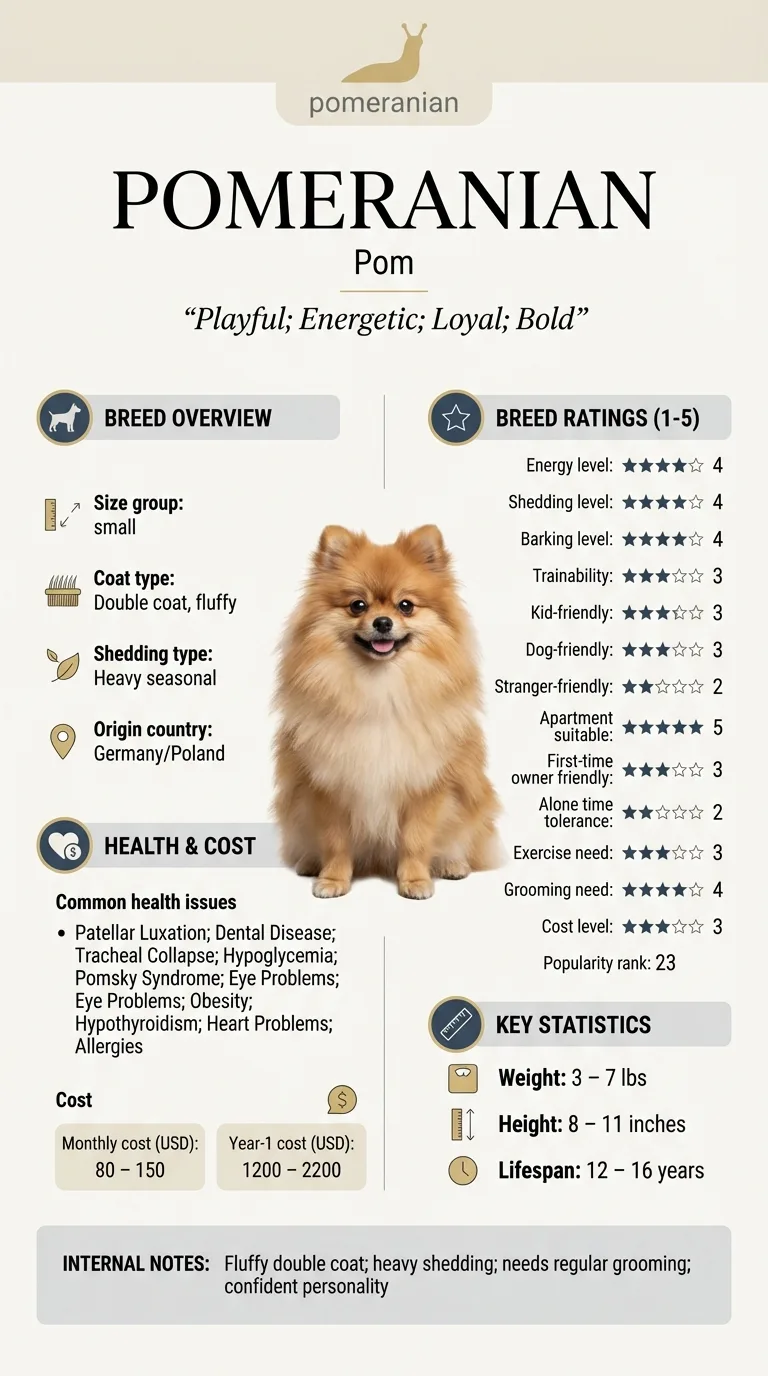
Pomeranian purebreds can be prone to specific genetic health issues, such as patellar luxation and dental disease. In contrast, mixed breeds often have a lower risk for certain inherited conditions, thanks to genetic diversity. However, each dog's health can vary, so it's important to monitor them closely.
You can identify a purebred Pomeranian by its characteristics, like size and coat type. If your dog has traits that vary significantly from breed standards, it may be a mixed breed. DNA testing is an option for a definitive answer.
While the basic training methods are similar, purebred Pomeranians may have more predictable behavior due to their genetic traits. Mixed breeds can exhibit a wider range of personalities and learning styles. Tailoring your approach based on your dog's individual temperament is key.
If your Pomeranian shows sudden changes in behavior or anxiety, it's wise to consult a vet. This is especially true if they exhibit excessive barking or signs of distress. Early intervention can help address underlying issues, whether they're behavioral or health-related.
Separation anxiety can affect both purebreds and mixed breeds alike. Gradual desensitization to being alone, combined with positive reinforcement training, can help. If issues persist, consider consulting a professional trainer or therapist who specializes in dog behavior.
To stop behavioral issues, implement consistent training and socialization early. Use positive reinforcement to encourage good behavior.
Regular grooming helps manage their fluffy double coat. Ensure they get enough exercise to keep them happy and healthy.
Pomeranians can face health issues like dental disease and patellar luxation. Regular vet check-ups can help catch these early.
Training a Pomeranian can be challenging due to their strong-willed nature. Start with basic commands and be patient.
Monthly costs for owning a Pomeranian range from $80 to $150. Initial costs in the first year can vary between $1,200 and $2,200.
A one-page prep sheet for this condition: the signs, the questions to ask, what to get priced. Unlocks here.
You get: Vet visit prep sheet
No spam. One-click unsubscribe. See our privacy policy.
Preview page 1 before you decide.