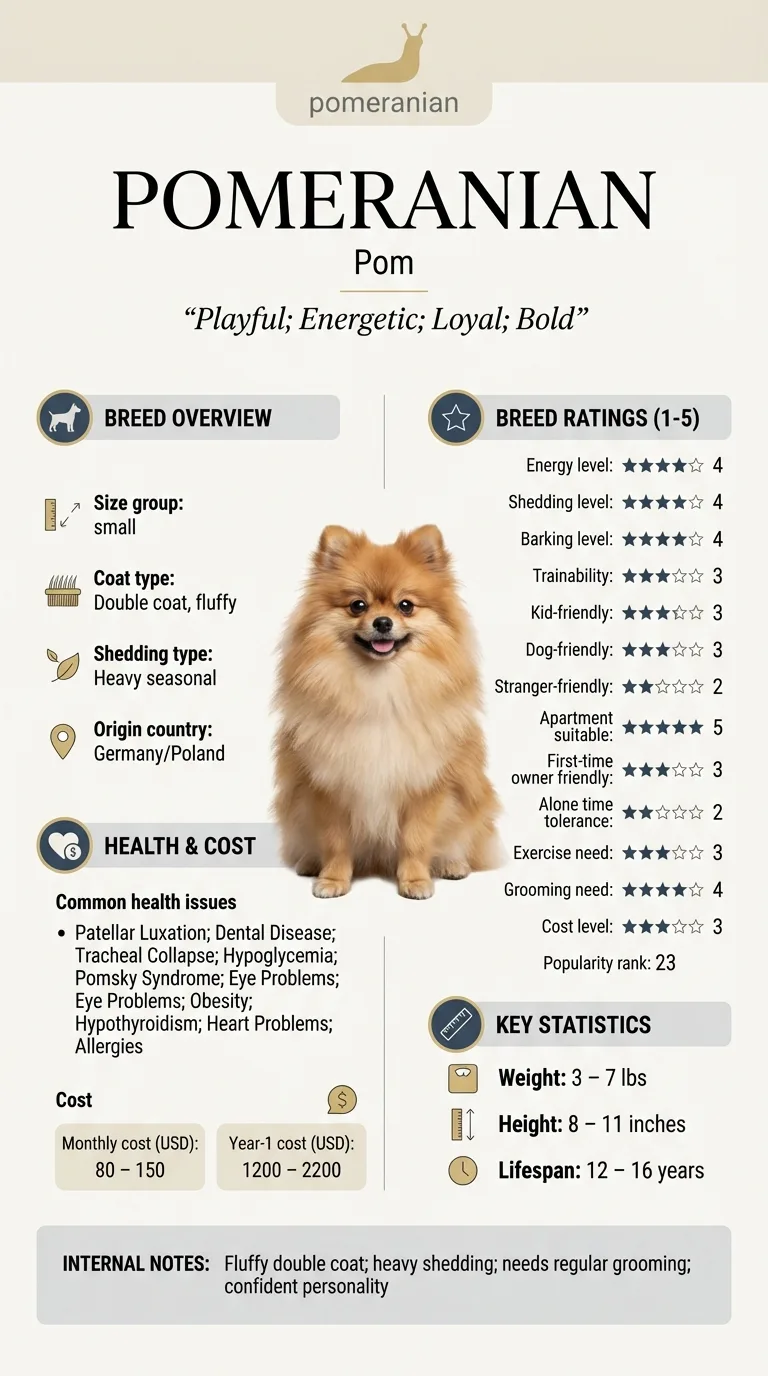
What are quick tips for Pomeranian heart disease?
Maintain a healthy weight, provide a balanced diet, and schedule regular vet visits to monitor heart health.
Pomeranian heart disease can be a serious issue for your furry friend. This condition often involves dilated cardiomyopathy and heart murmurs, which can lead to more severe health problems.

This problem typically impacts owners of older Pomeranians, especially those who may not recognize the subtle signs of heart disease. Busy families or first-time dog owners might find it challenging to keep track of their pet's health needs.
This guide is not medical advice. If your dog shows pain, sudden behavior change, or worsening symptoms, consult a licensed veterinarian.
Some links may be affiliate links. We may earn a commission at no extra cost to you. We only suggest products we believe are helpful for dog owners.
Pomeranian heart disease can manifest as lethargy, coughing, or difficulty breathing. Owners may notice their Pom becoming less active or even fainting during play. This condition can develop due to genetic factors or other health issues, making it a serious concern for this breed.
Heart disease is relatively common in Pomeranians, especially as they age. It's important for owners to stay vigilant and monitor their dog's health regularly.
Pomeranians are prone to certain genetic heart issues, such as dilated cardiomyopathy and heart murmurs. Their small size can also make them more susceptible to heart problems as they age. Additionally, the energetic nature of Pomeranians can sometimes lead to stress, which may affect their heart health.
Poor diet and lack of exercise can contribute to heart disease in Pomeranians. Overweight dogs are at an even higher risk, as excess weight puts extra strain on the heart. Environmental factors like stress from loud noises or separation anxiety can also negatively impact their heart health.
If your Pomeranian shows signs of separation anxiety or stress that affects their heart health, consider hiring a professional trainer. They can help you develop a plan to reduce anxiety through positive reinforcement training techniques.
If you observe any symptoms like coughing, fatigue, or difficulty breathing, consult your vet immediately. Early intervention is crucial for managing Pomeranian heart disease effectively.
Managing Pomeranian heart disease can take several months to years, depending on the severity and treatment plan. Regular vet check-ups and monitoring are essential.
Success means stabilizing your Pom's condition, improving their quality of life, and managing symptoms effectively. A happy, active dog who enjoys playtime and walks is a positive sign.
Avoid these common mistakes to help your Pomeranian manage heart disease effectively.
Recognizing when Pomeranian heart disease becomes an emergency is crucial for your dog's health. Certain red-flag signs indicate that you should call your vet immediately. These include persistent coughing, difficulty breathing, fainting, or a rapid heartbeat. If your Pomeranian shows any of these symptoms, do not wait. Contact your veterinarian right away to get the care they need.
On the other hand, there are milder cases of Pomeranian heart disease that can be monitored at home. If your dog shows slight lethargy, reduced exercise tolerance, or occasional coughing, these may not be immediate emergencies. In these instances, you can create a plan with your vet to monitor their condition. Regular check-ups and a balanced diet can help manage these symptoms effectively.
Always keep an eye on any changes in your dog's behavior or health. If symptoms worsen or new ones develop, it may become an emergency situation. Understanding these differences can help you make informed decisions about your Pomeranian's care.

Sarah, a busy nurse in Seattle, noticed her Pomeranian, Bella, was more lethargic than usual. After a vet visit, she learned Bella had mild heart disease. Determined to help her furry friend, Sarah created a daily routine that included a special diet, gentle exercise, and regular vet check-ups. Over time, Bella's energy improved, and she even returned to her playful self. Sarah learned to recognize Bella's signals and adjusted activities according to her energy levels.
Key takeaway: With proper management and care, Pomeranians with heart disease can lead fulfilling lives. Consistent communication with your vet and a tailored routine are key to success.
Pomeranians can develop heart disease due to genetic factors, age, or obesity. Regular vet check-ups can help catch early signs, such as heart murmurs or irregular heartbeats. It's crucial to monitor your Pom's health and maintain a balanced diet and exercise.
To prevent heart disease, keep your Pomeranian at a healthy weight through a balanced diet and regular exercise. Routine vet visits are essential for monitoring heart health and addressing any issues early. Avoid excessive stress and provide a calm environment.
Symptoms of heart disease in Pomeranians include coughing, difficulty breathing, lethargy, and fainting spells. If you notice these signs, consult your vet immediately. Early detection can lead to better management and treatment options.
Treatment for Pomeranian heart disease may include medications to manage symptoms and improve heart function. Your vet might recommend lifestyle changes, such as a special diet or exercise regimen. In severe cases, surgery could be an option.
Yes, managing Pomeranian heart disease at home includes providing a low-sodium diet and ensuring regular, moderate exercise. Regular vet check-ups are crucial to adjust treatment as needed. Keep track of any changes in behavior or health.
Heart disease can be common in Pomeranians, especially as they age. Regular vet visits can help detect early signs and manage the condition effectively. Understanding your Pom's health risks can help you take preventative measures.
Early signs of Pomeranian heart disease can include lethargy, reduced exercise tolerance, and a persistent cough. If you notice your Pom becoming easily fatigued or having difficulty breathing, it's important to consult your vet.
Yes, Pomeranians can develop heart disease as they age, with conditions like dilated cardiomyopathy becoming more common in older dogs. Regular vet check-ups are crucial to monitor their heart health as they grow older.
To support a Pomeranian with heart disease, ensure they maintain a healthy weight and follow a heart-friendly diet. Regular, low-impact exercise and routine vet visits can help manage their condition effectively.
If your Pomeranian is diagnosed with heart disease, follow your vet's recommendations for treatment and lifestyle changes. This may include medication, dietary adjustments, and monitoring their activity levels closely.
While Pomeranians are prone to heart disease, other breeds like Cavalier King Charles Spaniels and Boxers are also at higher risk. It's essential to be aware of the health issues in your dog's breed and take preventive measures.
Maintain a healthy weight, provide a balanced diet, and schedule regular vet visits to monitor heart health.
Engage in short, gentle walks and interactive play to keep your Pom active without overexertion.
Look for increased coughing, lethargy, or changes in breathing patterns as signs of worsening condition.
Costs can vary widely but expect to spend between $50 to $200 monthly for medications and vet visits.
Training can help reduce stress, making it beneficial for a Pomeranian with heart disease. Focus on positive reinforcement methods.