Health
What are quick tips for Pembroke Welsh Corgis with X-SCID?
Keep your Corgi in a clean, low-risk environment and ensure regular vet visits. Monitor their health closely for any signs of infection.

Quick answer
What are quick tips for Pembroke Welsh Corgis with X-SCID?
Keep your Corgi in a clean, low-risk environment and ensure regular vet visits. Monitor their health closely for any signs of infection.
Pembroke Welsh Corgi x-scid can lead to serious behavior issues due to their health condition.
Many Corgi owners, especially those who are first-time pet parents, may find themselves struggling with X-SCID-related behavior problems. These challenges can be overwhelming, particularly for families with young children or busy lifestyles.
This guide is not medical advice. If your dog shows pain, sudden behavior change, or worsening symptoms, consult a licensed veterinarian.
Some links may be affiliate links. We may earn a commission at no extra cost to you. We only suggest products we believe are helpful for dog owners.
We research and check what we publish, but we do not warrant that any figure, date, price, or statement is accurate, complete, or current, and we accept no liability for any loss, cost, injury, or other harm arising from the use of this site. Use it as one reference among several. You remain responsible for your own decisions and for your dog's care - confirm anything that matters with a licensed veterinarian or another qualified professional before you act on it. Full disclaimer.
Check this first
Understanding when your Pembroke Welsh Corgi x-scid requires immediate veterinary attention is crucial. X-SCID is a serious condition that affects the immune system, making dogs highly susceptible to infections. If you notice any of the following red-flag symptoms, contact your vet right away: severe lethargy, persistent vomiting or diarrhea, unusual bleeding or bruising, and any signs of respiratory distress. These symptoms indicate that the situation may be critical and needs urgent care.
On the other hand, there are mild cases that can be monitored at home. If your Corgi shows some mild signs of illness, such as a slight cough, low-grade fever, or minor digestive upset, it’s wise to keep a close watch. In these situations, you can create a plan to monitor their symptoms over the next few days. Make sure to keep your dog comfortable and hydrated, and reach out to your vet if their condition worsens.
Always err on the side of caution. If you're unsure about your Pembroke Welsh Corgi's symptoms or condition, it's better to seek professional advice. Remember, timely intervention can make all the difference in managing x-scid effectively.
If any of these apply, call your vet or an emergency clinic now. The rest of this page is for the cases that are not an emergency.
Pembroke Welsh Corgis can face a serious health issue known as X-SCID, or Severe Combined Immunodeficiency. This genetic disorder severely weakens their immune system, making them highly susceptible to infections. Owners often notice their Corgi experiencing recurrent illnesses, which can be distressing and overwhelming.
While X-SCID is rare, it is particularly concerning within certain breeding lines of Pembroke Welsh Corgis. Awareness of this condition is crucial for prospective owners, as it can drastically impact a dog’s quality of life.
Pembroke Welsh Corgis are known for their strong herding instincts. This breed can be predisposed to certain health issues, including X-SCID, which is a rare genetic disorder affecting their immune system. This condition makes them more vulnerable to infections and can lead to behavioral changes due to discomfort or illness.
Environmental factors also play a role in how your Corgi behaves. Stressful situations, such as loud noises or changes in routine, can exacerbate anxiety. Additionally, lack of proper socialization or training can lead to behavioral problems, making it crucial to create a stable and supportive atmosphere.
If you suspect your Corgi's anxiety is linked to their health, especially with a condition like X-SCID, consult your veterinarian. They can assess your dog's overall health and may recommend treatments or behavioral therapies to help manage their anxiety.
Avoiding common mistakes can significantly improve your Pembroke Welsh Corgi’s x-scid condition. Here are some common pitfalls and safer alternatives.
Start here: Pembroke Welsh Corgi Most Common Genetic Disorders
See all Pembroke Welsh Corgi health problems, which breeds are prone to x scid, or the full Pembroke Welsh Corgi breed guide for temperament, exercise needs and ownership costs.
With consistent care and follow-up with your vet, you can see improvement in your Pembroke Welsh Corgi x-scid's behavior within 4 to 6 weeks. However, ongoing support and management are essential.
Success means your Corgi shows reduced anxiety, is more comfortable being alone, and responds positively to training. You'll notice them relaxing more and barking less when you're away.
Sarah, a busy nurse in Seattle, adopted Benny, her Pembroke Welsh Corgi, hoping for a loyal companion. However, she quickly realized Benny struggled with severe anxiety, especially when left alone. After researching, she learned about x-scid and its effects. Sarah implemented a structured training routine using positive reinforcement. She also created a cozy space for Benny and gradually increased the time he spent alone. Within a couple of months, Benny became more relaxed and even enjoyed his alone time with toys and treats.
Key takeaway: With patience and the right approach, you can help your Pembroke Welsh Corgi x-scid feel secure and confident, turning anxiety into comfort.
X-SCID, or severe combined immunodeficiency, is a genetic disorder. It prevents your Corgi from developing a functional immune system, making them highly susceptible to infections. If your Corgi has this condition, it's essential to consult a vet for proper diagnosis and management. This answer relates to Pembroke Welsh Corgi x-scid.
While there is no cure for X-SCID, you can help your Corgi by minimizing exposure to potential infections. Keep them away from crowded places and consult with your vet on vaccination options. Regular health check-ups will also be crucial to monitor their condition.
Common signs of X-SCID include frequent infections, slow growth, and lethargy. If you notice these symptoms, it's vital to visit a veterinarian promptly. Early detection can help manage the illness more effectively.
With strict care and management, some Corgis with X-SCID can lead a somewhat normal life. However, they'll require special attention to their health and environment. This condition will limit their activities and social interactions.
Yes, training is possible and beneficial for a Pembroke Welsh Corgi with X-SCID. Focus on basic commands and positive reinforcement techniques in a safe environment. This can help improve their quality of life and strengthen your bond.
If your Pembroke Welsh Corgi exhibits symptoms of X-SCID, such as recurrent infections or difficulty in healing, it's crucial to consult a veterinarian immediately. Early diagnosis and intervention can significantly impact your dog's health and quality of life.
While X-SCID is a serious condition, older Pembroke Welsh Corgis can still receive supportive care. Regular vet check-ups and a tailored health plan can help manage symptoms and improve their overall well-being.
To support a Pembroke Welsh Corgi with X-SCID at home, maintain a clean environment and minimize stress. Providing a balanced diet and ensuring they receive regular veterinary care are also key components of effective management.
Training Pembroke Welsh Corgis with X-SCID should focus on positive reinforcement techniques. Keeping training sessions short and stress-free can help maintain their mental health, making it easier for them to learn and adapt.
Keep your Corgi in a clean, low-risk environment and ensure regular vet visits. Monitor their health closely for any signs of infection.
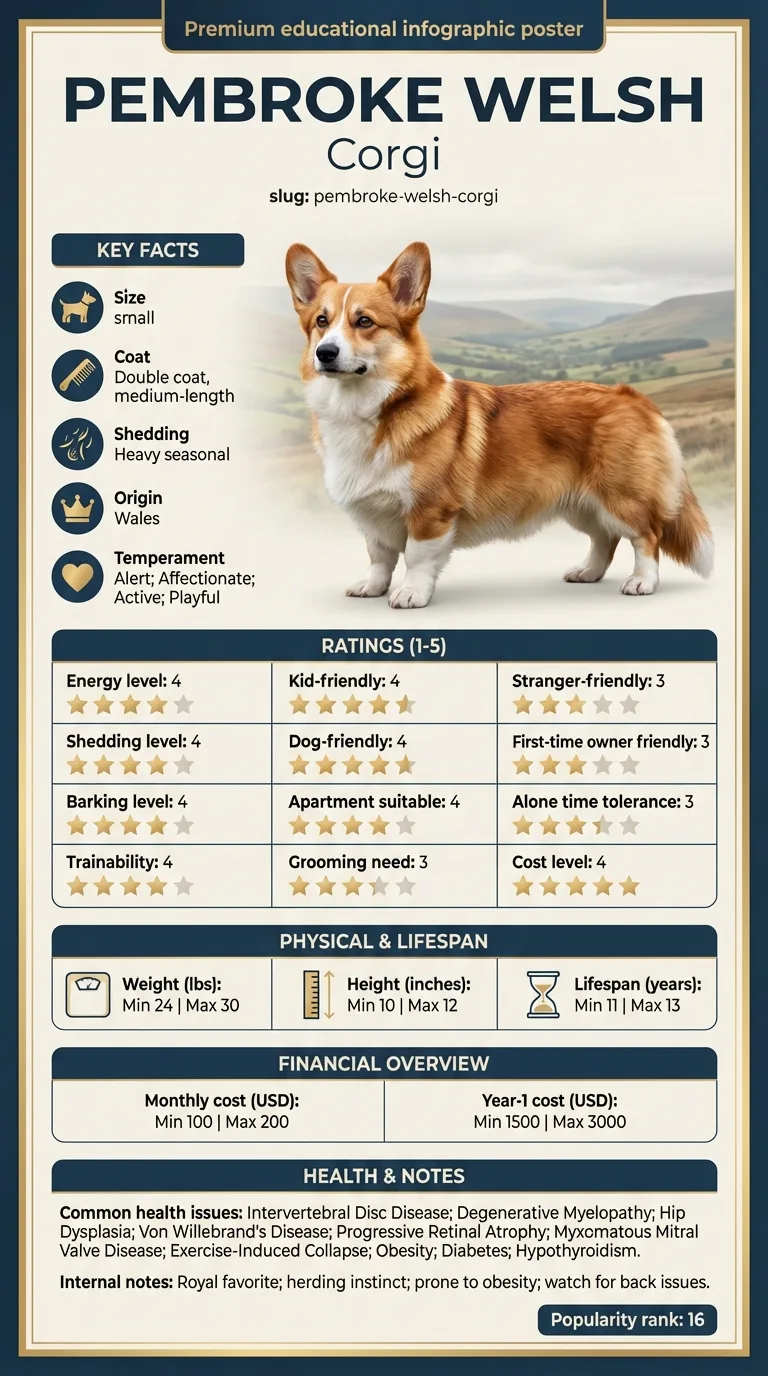
Monthly costs for a Pembroke Welsh Corgi typically range from $100 to $200, but could increase with vet visits and special care for X-SCID.
Training should be gentle and focused on basic commands, using positive reinforcement to keep sessions short and enjoyable.
A one-page prep sheet for this condition: the signs, the questions to ask, what to get priced. Unlocks here.
You get: Vet visit prep sheet
No spam. One-click unsubscribe. See our privacy policy.
Preview page 1 before you decide.