Health
What are some Pembroke Welsh Corgi eye disorders quick tips?
Keep your Corgi's eyes clean and consult your vet if you notice any changes. Regular check-ups can help catch issues early.

Quick answer
What are some Pembroke Welsh Corgi eye disorders quick tips?
Keep your Corgi's eyes clean and consult your vet if you notice any changes. Regular check-ups can help catch issues early.
Pembroke Welsh Corgi eye disorders can be a concern for many owners. These issues, which include cataracts and eyelid disorders, affect your dog's vision and overall quality of life.
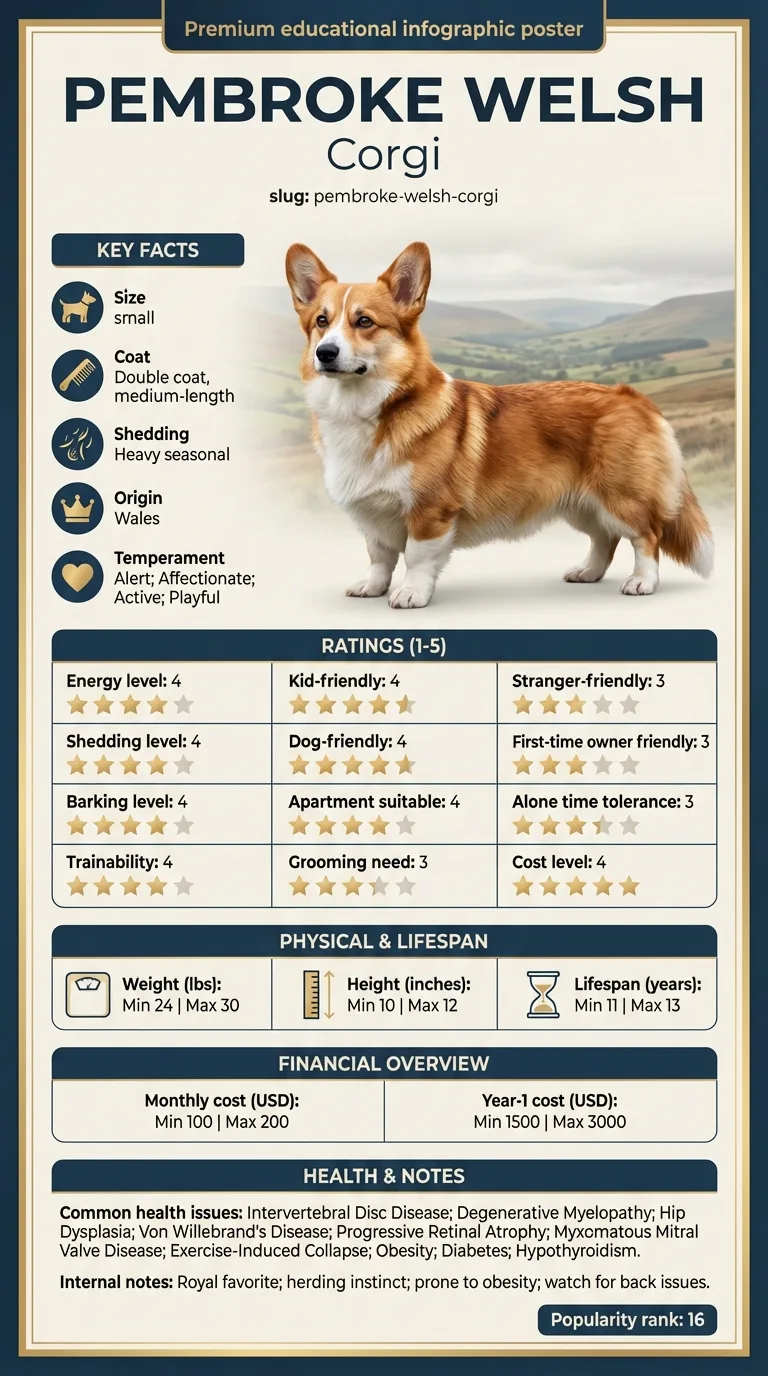
Typical owners facing these issues include first-time Corgi parents and busy families who might not notice early signs of eye problems. If you're unsure what to look for or how to address these disorders, you're not alone.
This guide is not medical advice. If your dog shows pain, sudden behavior change, or worsening symptoms, consult a licensed veterinarian.
Some links may be affiliate links. We may earn a commission at no extra cost to you. We only suggest products we believe are helpful for dog owners.
We research and check what we publish, but we do not warrant that any figure, date, price, or statement is accurate, complete, or current, and we accept no liability for any loss, cost, injury, or other harm arising from the use of this site. Use it as one reference among several. You remain responsible for your own decisions and for your dog's care - confirm anything that matters with a licensed veterinarian or another qualified professional before you act on it. Full disclaimer.
Check this first
It's crucial to recognize when eye disorders in your Pembroke Welsh Corgi require immediate veterinary attention. If you notice severe symptoms, it's best to act quickly. Signs such as persistent squinting, excessive tearing, or a sudden change in eye appearance mean you should call your vet right away.
Another red-flag sign is if your dog is pawing at their eyes or exhibiting signs of pain, like whining or reluctance to open their eyes. Any visible redness, swelling, or discharge should also prompt an urgent call to the vet. These could indicate serious conditions like corneal ulcers or glaucoma that require fast intervention.
On the other hand, if your Corgi has mild symptoms, like occasional watery eyes or slight discharge that isn't worsening, you can monitor the situation at home. Keep an eye on their behavior and check for any changes. If the symptoms persist beyond a few days or worsen, then it's time to consult your vet. Having a plan for routine eye check-ups can also help catch issues early, reducing the risk of emergencies.
If any of these apply, call your vet or an emergency clinic now. The rest of this page is for the cases that are not an emergency.
Pembroke Welsh Corgi eye disorders can manifest in various ways, including cataracts, eyelid and eyelash disorders, and corneal ulcers. Daily signs may include excessive tearing, squinting, or rubbing of the eyes. These conditions can cause discomfort and affect your dog’s quality of life, making early detection and treatment essential.
Eye disorders are relatively common in Pembroke Welsh Corgis, particularly as they age. Regular vet check-ups can help identify these issues early on, as some breeds are genetically predisposed to specific eye conditions.
Pembroke Welsh Corgis can be genetically predisposed to certain eye disorders. For instance, conditions like Progressive Retinal Atrophy (PRA) are more common in this breed. Their unique eye structure and size can also make them more vulnerable to other issues.
Environmental factors can contribute significantly to eye disorders in Corgis. Dust, allergens, and exposure to harsh weather can irritate their eyes. Additionally, inadequate grooming can lead to tear staining and other complications.
Consult your vet if you notice persistent redness, discharge, or changes in your Corgi's vision. Early intervention is crucial for eye disorders. If you suspect any genetic conditions, your vet can recommend screening tests.
Avoiding certain behaviors can greatly improve your Pembroke Welsh Corgi’s eye health. Here are common mistakes owners make and safer alternatives to consider.
Start here: Pembroke Welsh Corgi Most Common Genetic Disorders
See all Pembroke Welsh Corgi health problems, which breeds are prone to eye disorders, or the full Pembroke Welsh Corgi breed guide for temperament, exercise needs and ownership costs.
Addressing Pembroke Welsh Corgi eye disorders can take several weeks to months. Regular vet visits and consistent care are essential.
Success means your Corgi shows improvement in eye health, with fewer symptoms and a better quality of life.
Emily, a first-time dog owner, noticed her Pembroke Welsh Corgi, Max, squinting and rubbing his eyes a lot. After a vet visit, she learned that Max had early signs of cataracts. Determined to help him, Emily followed the vet's advice on medication and adjusted Max's diet for better eye health. Over the next few months, she saw significant improvements in his symptoms. Max was more comfortable and playful again, and Emily felt relieved and grateful for the guidance she received.
Key takeaway: With proper care and attention, many eye disorders in Pembroke Welsh Corgis can be managed effectively, leading to a happier dog.
Pembroke Welsh Corgis can develop eye disorders due to genetic factors or age-related changes. Common issues include cataracts and eyelid disorders. Regular vet check-ups can help catch these problems early.
Preventative care is key. Ensure your Corgi has regular eye exams, maintain a balanced diet, and keep their environment clean. Protect their eyes from injury and excessive sun exposure.
Look for symptoms like squinting, redness, excessive tearing, or cloudiness in the eyes. If your Corgi seems to have trouble seeing or is rubbing their eyes frequently, consult your vet.
Management often involves regular vet visits for monitoring. For some conditions, medications or surgeries may be necessary. Always follow your vet's advice for the best treatment plan.
Yes, they are particularly susceptible to cataracts and progressive retinal atrophy. These conditions can lead to vision loss if not treated. Early detection is crucial for effective management.
If you notice any changes in your Corgi's eyes or behavior, such as pawing at their face or signs of discomfort, schedule a vet appointment right away. Early intervention can make a big difference.
You should consult a vet if you notice persistent symptoms like swollen eyelids, significant tearing, or changes in vision. Early diagnosis is key to managing eye disorders effectively.
Yes, older Pembroke Welsh Corgis may be more susceptible to eye disorders like cataracts and progressive retinal atrophy. Regular vet check-ups can help monitor their eye health as they age.
Certain eye disorders, like progressive retinal atrophy, can be hereditary in Pembroke Welsh Corgis. It's important to choose a reputable breeder who screens for genetic conditions to reduce risks.
Keep your Corgi's eyes clean and consult your vet if you notice any changes. Regular check-ups can help catch issues early.
Feed a nutritious diet and provide adequate hydration. Regular exercise also supports overall health, including eye health.
Redness can indicate irritation or infection. Contact your vet to assess the situation and determine the best treatment.
Yes, many eye disorders can be inherited. Choosing a reputable breeder who screens for these conditions can help reduce risk.
A one-page prep sheet for this condition: the signs, the questions to ask, what to get priced. Unlocks here.
You get: Vet visit prep sheet
No spam. One-click unsubscribe. See our privacy policy.
Preview page 1 before you decide.