DogBreedCompass
← Back to breed profile

Understanding Pembroke Welsh Corgi Arthritis

Arthritis in Pembroke Welsh Corgis is a common issue that affects their mobility and quality of life. This age-related joint disease can lead to discomfort and pain. (Pembroke Welsh Corgi arthritis)

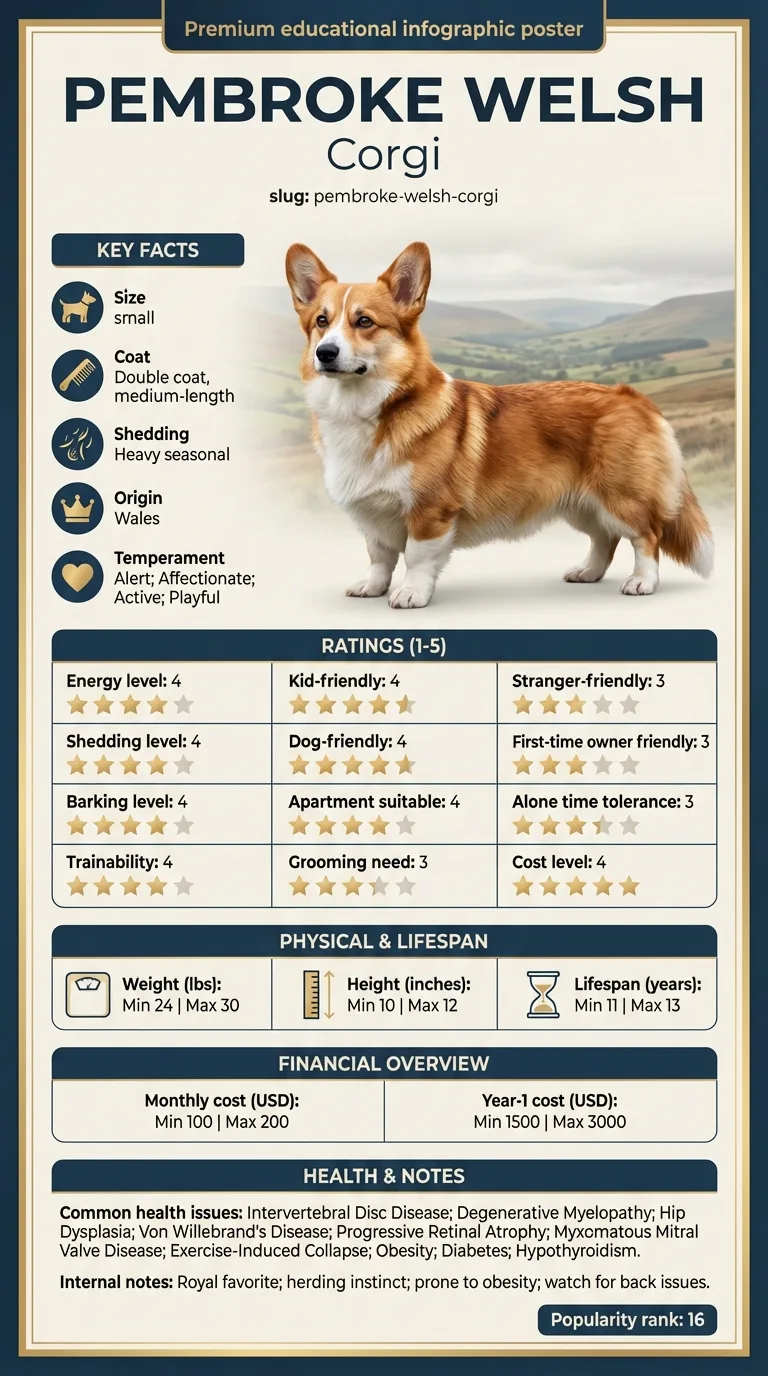
Understanding Pembroke Welsh Corgi Arthritis infographic

Typically, owners of older Pembroke Welsh Corgis face this problem. Those who notice their pets slowing down or showing signs of discomfort should pay special attention to their health.

Important reminder

This guide is not medical advice. If your dog shows pain, sudden behavior change, or worsening symptoms, consult a licensed veterinarian.

Some links may be affiliate links. We may earn a commission at no extra cost to you. We only suggest products we believe are helpful for dog owners.

What this problem looks like

Pembroke Welsh Corgi arthritis is a common issue that can affect your furry friend as they age. This condition often manifests as stiffness, limping, or reluctance to jump or climb stairs. Daily activities, like going for walks or playing, may become challenging due to pain and discomfort.

Common triggers

  • Age-related wear and tear on joints
  • Obesity, which adds extra strain
  • Genetics, as some Corgis are predisposed to joint issues
  • Injury or trauma to joints

Arthritis is fairly common in Pembroke Welsh Corgis, especially in older dogs. Many Corgis will experience some form of joint pain by the age of 7. It's essential to monitor their activity and weight as they grow older to help manage this condition.

Why this happens

Breed factors

Pembroke Welsh Corgis are prone to several health issues, including arthritis. Their body structure, which is low to the ground and long, can put extra strain on their joints, especially as they age. Additionally, their tendency to gain weight can exacerbate joint problems.

Environment factors

Environmental factors also play a crucial role in the development of arthritis. Lack of exercise can weaken muscles around joints, leading to increased wear and tear. Also, cold or damp conditions may aggravate joint pain, making it essential to provide a comfortable living environment.

What you can try

At-home strategies

  • Maintain a healthy weight for your Corgi. Monitor their diet and avoid overfeeding to reduce stress on joints.
  • Incorporate low-impact exercises into their routine. Short walks and gentle play can help keep their joints moving without overexertion.
  • Provide a warm and comfortable resting area. Use soft bedding to cushion their joints and consider using raised food and water bowls to minimize strain.

When to consider a trainer

If your Corgi struggles with mobility or shows reluctance to exercise, consider consulting a professional dog trainer. They can create a customized exercise plan that suits your dog's needs and abilities.

When to talk to your vet

If you notice signs of severe pain, difficulty getting up, or changes in behavior such as irritability, it's time to consult your veterinarian. They can provide advice on pain management or medication options for your Pembroke Welsh Corgi arthritis.

Realistic expectations

Managing Pembroke Welsh Corgi arthritis typically involves a gradual approach over several weeks to months. Initial improvements may be seen within 2-4 weeks of starting treatment, but it can take longer for more significant changes.

Success means your Corgi shows improved mobility, reduced pain during activities, and a happier demeanor. Regular vet check-ups and adjusted care plans will ensure your dog maintains a good quality of life.

Mistakes that make this worse – Pembroke Welsh Corgi arthritis

Avoid these common mistakes that can worsen Pembroke Welsh Corgi arthritis.

  • Neglecting Regular Vet Visits: Skipping vet check-ups can lead to unnoticed progression of arthritis. Regular visits help track your Corgi's joint health and adjust treatment plans.
  • Overfeeding: Excess weight puts extra strain on your Corgi’s joints. Control portions and choose high-quality food to maintain a healthy weight.
  • Ignoring Signs of Pain: Dismissing limping or reluctance to play can worsen the condition. Pay attention to your Corgi's behavior and consult your vet if you notice any signs of discomfort.
  • Lack of Controlled Exercise: Letting your Corgi run freely without supervision can lead to injury. Instead, provide structured, low-impact exercises like swimming or short walks to keep joints healthy.
  • Inconsistent Medication: Stopping or altering prescribed medications without vet approval can lead to flare-ups. Always follow your vet’s instructions for medication and report any side effects.
  • Avoiding Joint Supplements: Not using supplements like glucosamine can miss out on preventive care. Talk to your vet about adding joint-friendly supplements to your Corgi's diet.

When it is an emergency

Recognizing the difference between a mild case of Pembroke Welsh Corgi arthritis and an emergency can be crucial. If your Corgi shows severe pain, such as whimpering when touched or refusing to walk, it’s time to call your vet immediately. Other alarming signs include sudden swelling of joints, inability to rise, or shaking. These symptoms could indicate a serious condition that needs prompt attention.

On the other hand, if your Corgi is showing mild stiffness after exercise or seems a bit slower to get up, it may not be an emergency. You can monitor these symptoms by keeping a close eye on your dog’s activity levels and looking for any changes in behavior. Regular exercise and a well-balanced diet can help manage mild arthritis. Keeping a journal of your Corgi’s behavior can also help you determine if a vet visit is necessary.

When in doubt about your Pembroke Welsh Corgi's condition, it's better to be safe than sorry. Always consult with your vet if you notice any concerning signs, even if they seem mild at first.

Understanding Pembroke Welsh Corgi Arthritis - When it is an emergency

Finding Comfort for Bella the Corgi

Lisa, a busy nurse from Seattle, noticed her Pembroke Welsh Corgi, Bella, struggling to jump onto the couch. After a vet visit, she learned Bella had arthritis. Lisa started Bella on joint supplements and adjusted her exercise routine, incorporating gentle walks instead of intense play. Over time, Bella became more active and comfortable, allowing her to enjoy family outings again.

Key takeaway: With the right adjustments and support, managing Pembroke Welsh Corgi arthritis can lead to a happier, more active life for your furry friend.

Frequently asked questions

Why does my Pembroke Welsh Corgi have arthritis?

Arthritis in Pembroke Welsh Corgis is often due to age-related wear and tear on their joints. This breed is prone to certain health issues, including hip dysplasia, which can lead to arthritis. Regular vet check-ups can help catch early signs of joint problems.

How can I stop my Pembroke Welsh Corgi from suffering from arthritis?

While you can't completely stop arthritis, you can manage the symptoms. Keep your Corgi at a healthy weight, provide joint supplements, and ensure they have a comfortable resting area. Regular, low-impact exercise can also help maintain joint flexibility.

What are the signs of arthritis in Pembroke Welsh Corgis?

Signs of arthritis can include limping, difficulty getting up, or reluctance to engage in activities they once enjoyed. You may also notice stiffness after resting. If you see these signs, consult your vet to discuss treatment options.

Are there specific exercises for Pembroke Welsh Corgis with arthritis?

Gentle exercises like short walks or swimming can be beneficial for Corgis with arthritis. Avoid high-impact activities like jumping or running on hard surfaces. Always consult your vet before starting a new exercise routine.

What treatments are available for Pembroke Welsh Corgi arthritis?

Treatment options include anti-inflammatory medications, joint supplements, and physical therapy. In severe cases, your vet may recommend surgery. Always discuss the best treatment plan tailored to your Corgi's specific needs.

Can diet help manage arthritis in Pembroke Welsh Corgis?

Yes, a balanced diet rich in Omega-3 fatty acids can help reduce inflammation. Consider a weight management plan if your Corgi is overweight, as excess weight can strain their joints. Consult your vet for dietary recommendations.

How often should I take my Pembroke Welsh Corgi to the vet for arthritis management?

Regular check-ups every 6 to 12 months are recommended for Corgis with arthritis. Your vet can monitor their condition and adjust treatments as needed. Early intervention can significantly improve their quality of life.

What are the signs that my Pembroke Welsh Corgi might have arthritis?

Common signs of arthritis in Pembroke Welsh Corgis include limping, difficulty climbing stairs, reluctance to play, and stiffness after resting. If you notice these symptoms, it's essential to consult your vet for an accurate diagnosis.

How can I help my older Pembroke Welsh Corgi with arthritis?

For older Corgis with arthritis, consider providing joint supplements and maintaining a healthy weight to reduce strain on their joints. Gentle exercise like short walks can also help keep them active without overdoing it.

Can I train my Pembroke Welsh Corgi with arthritis?

Training your Pembroke Welsh Corgi with arthritis is possible, but it’s important to keep sessions short and positive. Focus on low-impact activities and incorporate mental stimulation to keep them engaged without physical strain.

Is Pembroke Welsh Corgi arthritis hereditary?

Yes, certain conditions like hip dysplasia can contribute to arthritis in Pembroke Welsh Corgis, making genetics a factor. It's essential to be aware of the breed's common health issues and monitor their joints as they age.

When should I take my Pembroke Welsh Corgi to the vet for arthritis?

If your Pembroke Welsh Corgi shows persistent signs of pain, difficulty moving, or changes in behavior, it's time to visit the vet. Early intervention can help manage arthritis more effectively and improve your dog's quality of life.

Quick answers

View more answers
Behavior

What are quick tips for managing Pembroke Welsh Corgi arthritis?

Maintain a healthy weight and provide joint supplements to support joint health. Regular, low-impact exercise can help keep joints flexible. Always consult your vet for specific treatment plans.

Health

How can I tell if my Pembroke Welsh Corgi is in pain from arthritis?

Look for signs like limping, reluctance to move, or changes in behavior. If your Corgi seems uncomfortable or shows signs of pain, consult your vet for advice.

Health

Are there any home remedies for Pembroke Welsh Corgi arthritis?

Some owners find heat therapy or massage can provide relief. However, it’s crucial to consult your vet before trying home remedies to ensure they are safe.

Costs

What is the average cost for treating Pembroke Welsh Corgi arthritis?

Costs can vary widely, but expect to spend between $100 and $200 monthly for medications and supplements. Initial vet visits and treatments can range from $150 to $500.

Related DogBreedCompass guides

Related guides