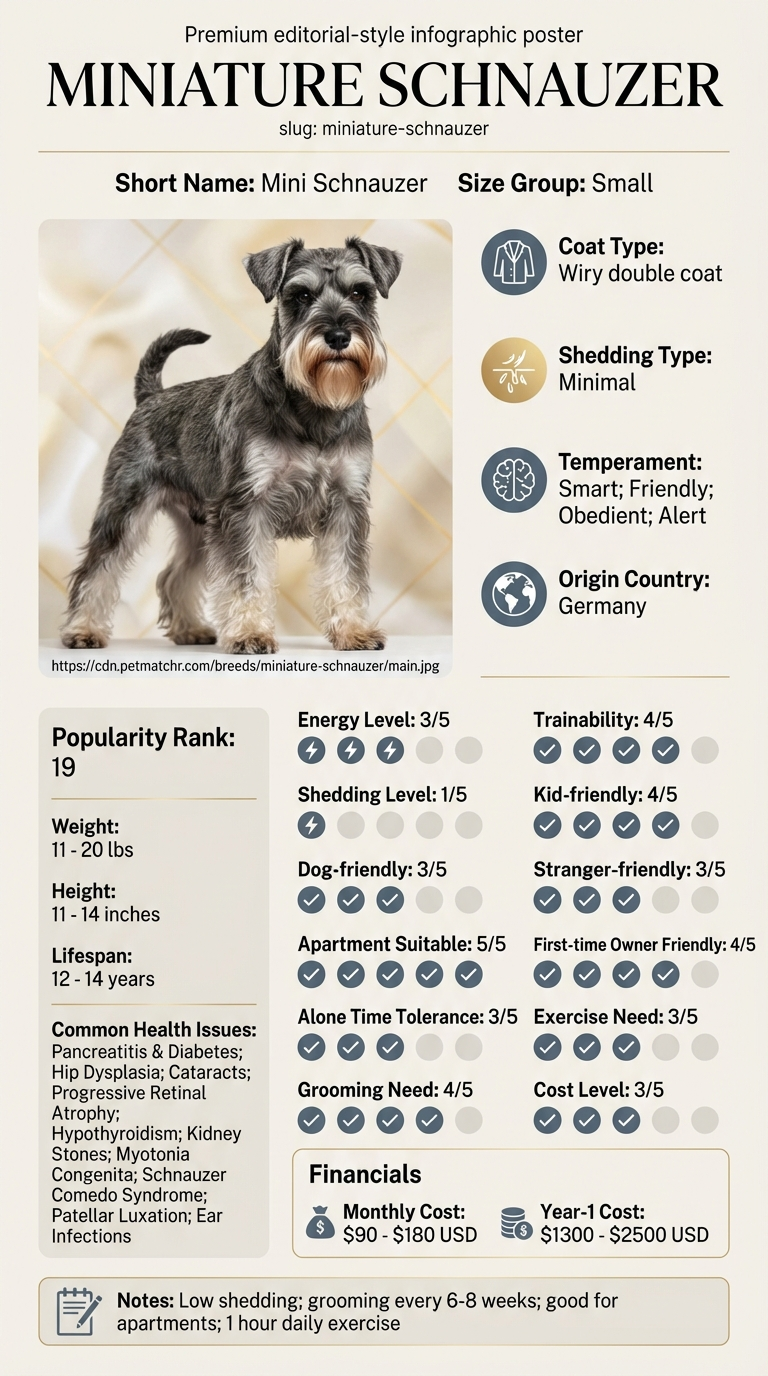
What quick tips can I follow for Miniature Schnauzer von Willebrand's disease (vWD1)?
Manage your Miniature Schnauzer's vWD1 by scheduling regular vet check-ups and avoiding risky activities. Always keep a first-aid kit handy for minor injuries.
Miniature Schnauzer von Willebrand's disease (vWD1) is a serious genetic bleeding disorder that affects your dog's health and well-being.

Typical owners who face this issue are those with Miniature Schnauzers, especially first-time dog parents or families unaware of their pet's genetic predispositions. This can be particularly challenging for busy households that may overlook subtle signs of health issues.
This guide is not medical advice. If your dog shows pain, sudden behavior change, or worsening symptoms, consult a licensed veterinarian.
Some links may be affiliate links. We may earn a commission at no extra cost to you. We only suggest products we believe are helpful for dog owners.
Miniature Schnauzers can be affected by von Willebrand's disease (vWD1), a genetic bleeding disorder. This condition can make everyday activities challenging, as it affects the dog's ability to form blood clots. You might notice excessive bleeding from minor cuts, or your Mini Schnauzer might bruise easily, which can be concerning for any owner.
Von Willebrand's disease is relatively common in Miniature Schnauzers compared to other breeds. It's important for owners to be aware of this condition, especially if they have a family history of the disease.
Miniature Schnauzers are genetically predisposed to von Willebrand's Disease (vWD1), a bleeding disorder. This inherited condition affects their ability to clot blood properly, making them more susceptible to excessive bleeding. If your Miniature Schnauzer has a family history of this disease, there's a higher chance they may be affected.
Environmental factors can also play a role in the severity of vWD1 symptoms. Stressful situations, such as loud noises or aggressive play, can trigger bleeding episodes. Additionally, injuries, whether minor or major, can become more serious due to their clotting difficulties.
If you notice your Miniature Schnauzer displaying anxiety or fear behaviors, consider consulting a professional trainer. They can provide tailored strategies to help your dog cope with stressful situations and improve their overall behavior.
If you observe any unusual bleeding, such as from the nose or gums, or if your dog experiences frequent bruising, it's crucial to consult your vet. They can conduct tests to confirm if your Miniature Schnauzer has vWD1 and discuss potential treatment options.
Managing Miniature Schnauzer von Willebrand's disease (vWD1) is an ongoing process that can take several weeks to several months. Regular vet visits and monitoring are essential.
Success means your Miniature Schnauzer can lead a happy life with minimal bleeding episodes. You'll also have a solid understanding of how to manage the condition effectively.
When dealing with Miniature Schnauzer von Willebrand's disease (vWD1), owners can unintentionally make the situation worse. Here are some common mistakes to avoid.
Recognizing when Miniature Schnauzer von Willebrand's disease (vWD1) becomes an emergency is crucial for your dog's health. If your Mini Schnauzer experiences severe bleeding, such as from the gums or nose, or if you notice blood in their urine or stool, it’s time to call your vet immediately. Additionally, if your dog is lethargic or shows signs of shock—like a rapid heartbeat or difficulty breathing—this requires urgent care.

In less severe cases of vWD1, such as minor bleeding or bruising that resolves on its own, you can usually monitor your Mini Schnauzer at home. Keep an eye on their behavior, appetite, and energy levels. If the bleeding does not worsen and your dog remains active and alert, it’s generally safe to wait and consult your vet for guidance once you notice any persistent symptoms.

When Sarah adopted Benny, her Miniature Schnauzer, she noticed he was prone to excessive bleeding from minor cuts. After a vet visit, she learned he had von Willebrand's disease (vWD1). At first, it was overwhelming, but she committed to regular vet check-ups and learned to manage his condition through careful monitoring and a tailored exercise routine. With these adjustments, Benny enjoyed a joyful, active life despite his diagnosis.
Key takeaway: Consistent vet care and education about the condition can enable your Miniature Schnauzer to thrive, even with challenges like von Willebrand's disease.
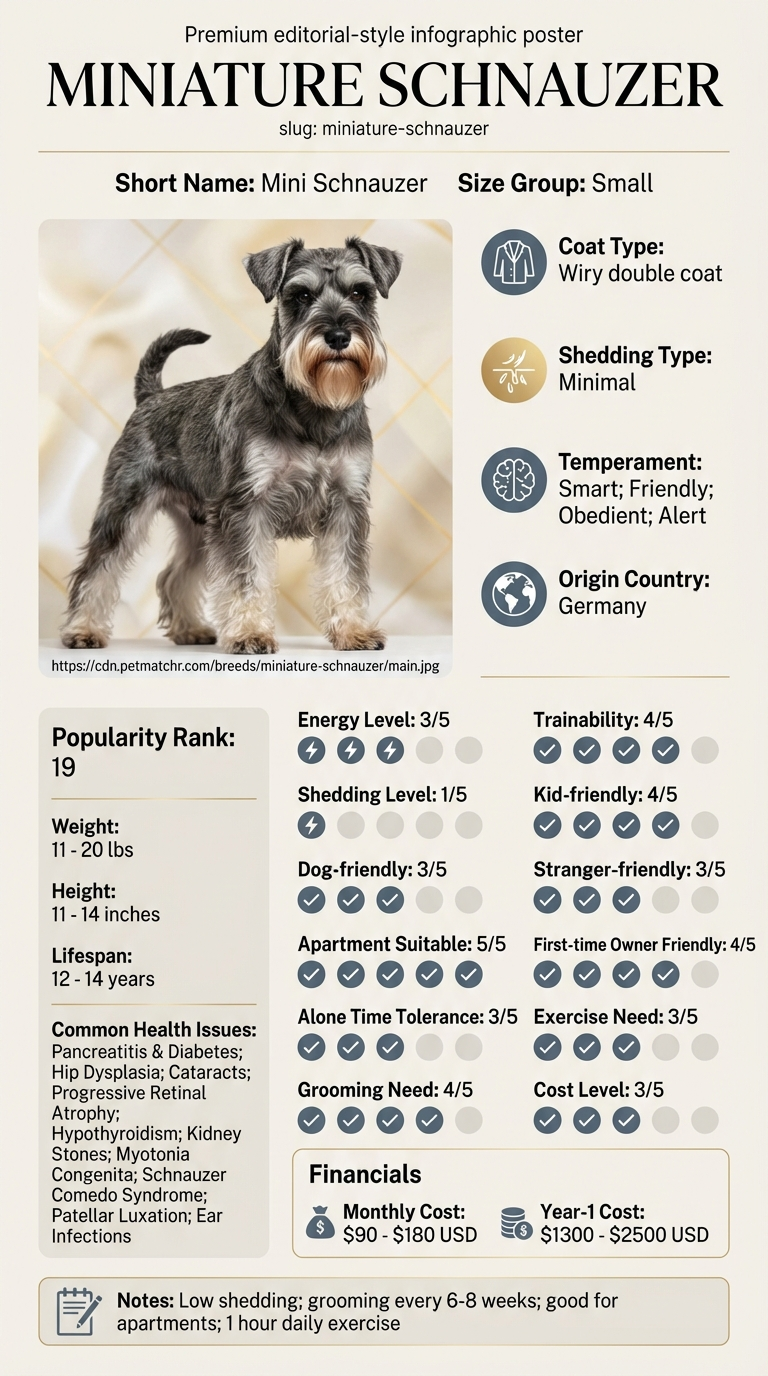
Miniature Schnauzer von Willebrand's disease (vWD1) is a genetic bleeding disorder that affects your dog's ability to clot blood. It's important to know that this condition can lead to excessive bleeding from minor injuries, which can be serious.
vWD1 is inherited from the parents, so if your Miniature Schnauzer has this disease, it likely comes from their genetic background. It's essential to consult with a vet for genetic testing if you're considering breeding.
Managing vWD1 involves regular check-ups with your vet to monitor your dog's health. Keeping your Schnauzer away from high-risk situations, like strenuous activities or rough play, can help reduce the chances of bleeding.
Yes, many Miniature Schnauzers with vWD1 can live happily and healthily with proper care. Regular veterinary visits and avoiding situations that could lead to injury are key to ensuring a good quality of life.
Signs of vWD1 include excessive bleeding from cuts or injuries, nosebleeds, or blood in urine. If you notice any of these symptoms, consult your vet immediately.
While vWD1 cannot be cured, you can prevent complications by keeping your Miniature Schnauzer's environment safe and following your vet's advice. Regular health check-ups will help manage the condition effectively.
Common symptoms include excessive bleeding, nosebleeds, and prolonged bleeding from cuts. You might also notice unusual bruising or blood in the urine. If your Miniature Schnauzer shows any of these signs, it's important to consult a vet.
While there is no cure for von Willebrand's disease, treatment options can help manage the condition. This may include medications that promote blood clotting and avoiding situations where injuries could occur. Always follow your vet's advice for the best care.
Yes, von Willebrand's disease is one of the more common genetic disorders in Miniature Schnauzers. It’s important to be aware of this risk when considering this breed and to consult breeders about their health practices.
To support your Miniature Schnauzer, keep them in a safe environment and minimize the risk of injury. Regular vet check-ups are crucial for monitoring their health and adjusting care as needed. Training them to avoid rough play can also help.
You should be concerned if your Miniature Schnauzer experiences unusual bleeding or bruising, or seems lethargic. If you notice these signs, schedule a vet visit promptly. Early intervention can make a significant difference in managing the condition.
Manage your Miniature Schnauzer's vWD1 by scheduling regular vet check-ups and avoiding risky activities. Always keep a first-aid kit handy for minor injuries.
While there’s no special diet for vWD1, a balanced diet helps maintain overall health. Consult your vet for specific dietary recommendations.
Training should focus on basic commands and gentle activities to avoid any injuries. Positive reinforcement techniques work best for keeping them engaged without stress.